7 Best Benchtop Band Saw of 2026: Quality Without Premium Price

Find a benchtop bandsaw that delivers straight cuts and reliable performance without overspending. Helps hobbyists choose the right throat size and motor for their projects.

A benchtop bandsaw under $300 often means compromising on build quality or cutting accuracy. Many budget saws arrive with blade tracking issues, vibration, or underpowered motors that stall on thick hardwood. But the real story is that some lesser-known brands are delivering cast-iron-like rigidity and smooth operation at prices that undercut household names by hundreds of dollars.

The key is knowing which specs actually affect your cuts: throat depth, motor amperage, and guide quality matter more than a brand badge. A saw that initially seems finicky can become a precise tool after proper setup and a blade upgrade. This guide focuses on the models that get the fundamentals right, from table flatness to blade tension, so you can buy with confidence.

1

Best Overall

WEN BA3962 10-Inch

86 /100
Craft Score Excellent

Key details

Blade Speed
2-speed
Motor Power
3.5 A
Throat Depth
9.75 in
Table and Tilt
14.1x12.5 in, 45° tilt
View on Amazon

The two-speed motor (1520 and 2620 FPM) provides adequate power for ripping and resawing shorter boards, while the cast-aluminum table bevels 45 degrees and remains stable during cuts. This saw handles typical hobbyist tasks without stalling on 6-inch-thick material.

Assembly is straightforward — the saw arrives nearly ready to cut. The included work light is dim and poorly positioned, a minor annoyance rather than a functional issue. The guide bearings can require readjustment after extended use, which is typical for a saw in this price bracket.

This saw suits budget-conscious home woodworkers who want a full-size benchtop model with stand included, without the need for floor-standing capacity or out-of-the-box precision. Beginners and hobbyists comfortable with occasional guide bearing tweaks will find it a capable entry-level option. For those requiring heavy daily resawing in thick hardwood, other saws warrant consideration.

💡 Check guide bearing alignment after the first few hours of use and adjust as needed to maintain consistent cuts.

Pros

  • Includes stand, work light, and dust port at a competitive price
  • Solid build quality for a benchtop model
  • Easy assembly and nearly ready to cut

Cons

  • Work light is dim and poorly positioned
  • Guide bearings can drift out of alignment
Our verdict

For hobbyists seeking a capable 10-inch bandsaw without spending twice the price, this WEN model delivers the essential features with manageable tradeoffs.
Check Latest Price
2

Best Build Quality for the Price

QD-KYOHO QBS9 9-Inch

91 /100
Craft Score Outstanding

Key details

Blade Speed
Single (2526 FPM)
Motor Power
2.5 A (1/3 HP)
Throat Depth
9 in
Table and Tilt
11.75x11.75 in, 45° R/5° L
View on Amazon

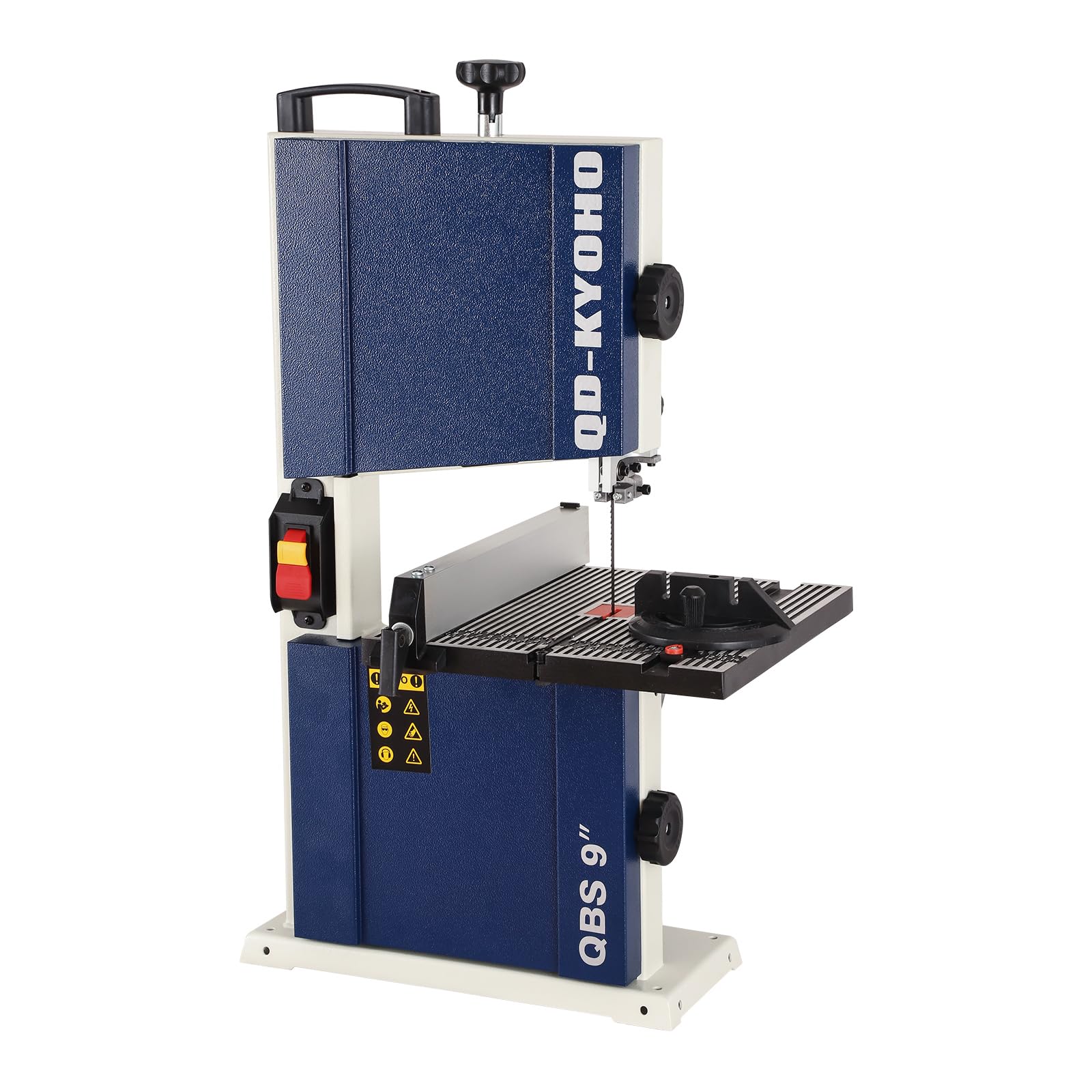
The QD-KYOHO QBS9 stands out for its all-metal build quality — the kind you’d expect from a saw costing twice as much. Out of the box it cuts wood and soft metals cleanly, runs quietly, and sets up with minimal fuss. Where it steps back compared to the top-pick WEN is in its guide system: narrow blades under 1/8 inch can be tricky to track, and the brand is new enough that replacement parts may be hard to source down the road. This is a strong fit for hobbyists doing trim carpentry or pen blanks who value fit and finish over heavy resaw capacity.

💡 For reliable tracking with blades under 1/8 inch, expect to modify or upgrade the guides.

Pros

  • All-metal frame and tight tolerances give the feel of a much more expensive saw
  • Priced well below competitors while delivering cutting performance that reviewers call a steal
  • Quick setup and low noise make it ready for light-duty workshop use right away

Cons

  • Guide system can struggle with blades narrower than 1/8 inch, limiting intricate scroll cuts
  • Occasional quality control hiccups like missing hardware or minor machining flaws have been reported
Our verdict

If build quality is your top priority and you don't need to cut thin stock, this saw delivers exceptional value for the price.

Check Latest Price
3

Most Popular Budget Choice

Woodskil BS0901 9-Inch

88 /100
Craft Score Excellent

Key details

Blade Speed
Single (2500 FPM)
Motor Power
3 A (1/2 HP)
Throat Depth
9 in
Table and Tilt
12.3x11.9 in, 0-45° tilt
View on Amazon

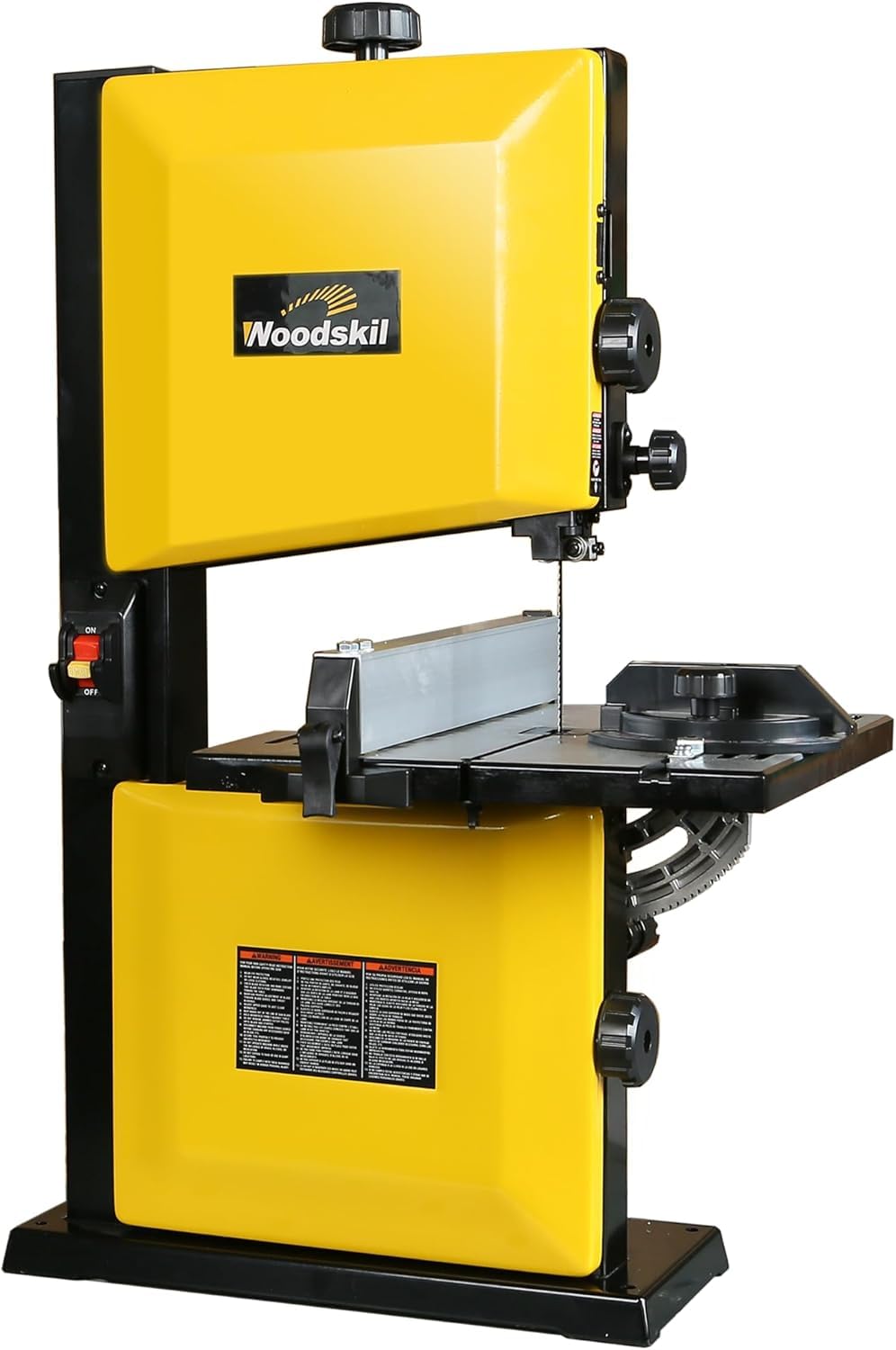
With over 500 reviews backing its reputation, this 9-inch bench saw is the go-to budget option for cost-conscious DIYers who prioritize low noise and easy assembly. It handles common hobbyist cuts like 2x4s and plywood well once the blade guides and table are properly tuned. The tradeoff: a small number of units can arrive with tracking issues or motor problems, and consistent straight cuts require adjustment work that buyers looking for a turnkey tool may find frustrating.

💡 Spending time tuning the blade guides and table alignment can resolve most tracking and square-cut issues.

Pros

  • Quiet enough for an indoor workshop or shared space
  • Straightforward assembly with clear instructions
  • Capable of clean cuts in plywood and 2x4s after initial tuning

Cons

  • Motor can lock up after short use in some units, requiring replacement
Our verdict

A strong value for hobbyists who don't mind spending an hour on setup and want a quiet saw for light woodworking. The motor risk makes it less ideal for anyone who needs guaranteed day-one reliability.

Check Latest Price
4

Compact and Lightweight

SKIL BW9501-00 9-Inch

85 /100
Craft Score Excellent

Key details

Blade Speed
2-speed
Motor Power
2.8 A induction
Throat Depth
9 in
Table and Tilt
Steel base, rack-pinion tilt
View on Amazon

The SKIL 9-inch benchtop band saw occupies a 24x15-inch footprint and weighs under 30 pounds, making it easy to store on a shelf or cart. Users note a quick 5-minute setup and rack-and-pinion table adjustment. For light woodworking tasks like cutting curves or small stock, it delivers clean cuts after proper tuning.

This saw suits hobbyists with limited bench space who are willing to invest time in initial setup and occasional tweaking. Build quality can vary between units, and blade tracking with thin blades may need repeated adjustment. If you want a tool that works reliably without tinkering, a more consistent option like the WEN BA3962 is a safer bet.

💡 Take time to adjust blade tension and tracking on first use – it helps maintain alignment for thinner blades.

Pros

  • Small footprint and light weight simplify storage in tight shops
  • Quick blade tension and rack-and-pinion table make setup straightforward
  • Capable of clean cuts on light woodworking projects after adjustment

Cons

  • Blade tracking can be difficult to maintain, especially with thinner blades
  • Some units may arrive with vibration or blade wobble that is not fully fixable
Our verdict

A space-saving option for hobbyists who are comfortable fine-tuning the saw, but not a set-it-and-forget-it tool.

Check Latest Price
5

Entry-Level Brand Trust

Ryobi BS904G 9-Inch

86 /100
Craft Score Excellent

Key details

Blade Speed
Motor Power
2.5 A
Throat Depth
9 in
Table and Tilt
View on Amazon

Unlike the top pick's larger throat and included stand, the Ryobi BS904G prioritizes simplicity and brand familiarity. It delivers basic bandsaw functionality for hobbyists who already own Ryobi tools and value the 3-year warranty and easy returns. This is a saw for beginners who want a known brand and don't need verified resawing accuracy or advanced guide systems. The limited user feedback means specific performance claims cannot be confirmed, so it's best for light, occasional cutting where minor setup adjustments are acceptable.

Pros

  • Good performance for an entry-level saw, with ease of use noted in top reviews.
  • Familiar Ryobi brand with wide parts and accessory availability for existing owners.

Cons

  • Resawing precision is unverified through detailed feedback
Our verdict

A safe choice for beginners who want a known brand and easy returns, though it lacks the verified performance of more reviewed alternatives.

Check Latest Price
6

Premium Build, Light Duty

JET JWB-10 10-Inch

76 /100
Craft Score Very Good

Key details

Blade Speed
Motor Power
1/2 HP induction
Throat Depth
10 in
Table and Tilt
View on Amazon

JET's ball-bearing blade guides and solid stand give the JWB-10 a refined feel that budget saws can't match. But the 1/2 HP motor stalls on dense wood over 2 inches, and vibration can throw off precision — limitations that make it a poor value next to the top pick's stronger, more affordable package. This saw suits occasional users who value fit and finish and seldom cut thick hardwood.

💡 Keep cuts shallow — the motor handles best on material under 2 inches thick; use sharp blades to reduce load.

Pros

  • Ball-bearing blade guides reduce friction and improve tracking.
  • Accurate cuts on 4-inch walnut after proper setup.

Cons

  • Motor can stall when feeding thick or dense wood.
  • Vibration may become noticeable during use, affecting precision.
Our verdict

If JET craftsmanship matters more than cutting capacity, this saw delivers — but the top pick offers more power for less money.

Check Latest Price
7

Metalworkers

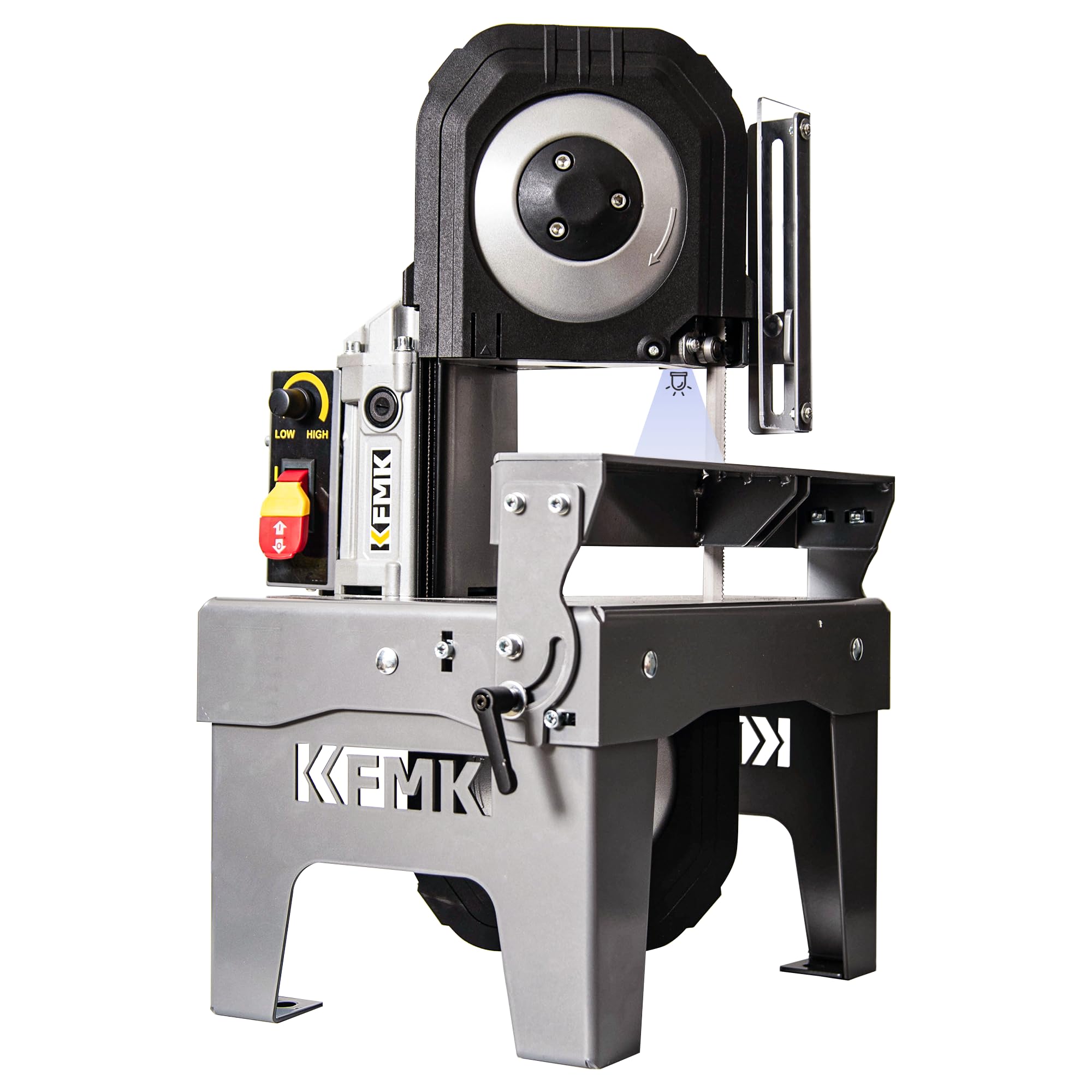
KFMK MBS125V Metal

78 /100
Craft Score Very Good

Key details

Blade Speed
Variable (137-472 FPM)
Motor Power
10 A
Throat Depth
5 in
Table and Tilt
Dual tables, flip-up
View on Amazon

This saw cuts steel and aluminum with its powerful 10-amp motor and variable speed, and setup is straightforward. However, its 5-inch throat and metal-only design exclude it from woodworking use. Loud operation and potential belt issues after limited use are tradeoffs for home metalworkers.

Pros

  • Cuts steel and aluminum cleanly with its 10-amp variable-speed motor.
  • Assembly is straightforward with clear instructions.

Cons

  • Durability concerns: belt slippage or blade tracking may occur after limited use.
Our verdict

If you need a compact metal-cutting saw for occasional steel or aluminum projects and can accommodate noise and potential belt adjustments, this is a budget-friendly option.

Check Latest Price

How to Choose

Throat Depth

Throat depth determines the widest board you can cut. A 9-inch throat handles most hobbyist projects up to 8-inch stock, while 10 inches lets you resaw boards just under that width. The extra inch matters if you regularly break down larger panels.

Smaller throats also reduce wheel size, which can limit blade flexibility and increase tensioning difficulty. For general furniture work, 9 inches is sufficient; only step up to 10 if you need that extra clearance.

Motor Power

Motor amperage directly affects ability to cut thick hardwood without stalling. A 2.5-amp motor works for softwoods and thin stock, but a 3-amp or higher unit maintains speed through 2-inch oak. Induction motors deliver consistent torque and last longer than universal motors.

The trade-off: higher amp motors often weigh more and generate more vibration. A well-built 3-amp saw with proper blade tension will outcut a flimsy 5-amp machine. Focus on real-world cutting reports rather than peak amperage.

Blade Speed Options

Single-speed saws run around 2500 FPM (feet per minute), ideal for wood cutting. Two-speed models add a lower speed for metal or plastics, expanding versatility. Variable-speed saws let you dial in exactly the right surface feet for different materials.

For strictly woodworking, a single speed is fine. Two speeds are convenient if you occasionally cut non-ferrous metals. The extra speed range rarely justifies the price jump unless you know you will use it.

Table Size and Tilt

A larger table provides better support for wide boards and increases stability during bevel cuts. Look for cast-aluminum tables that resist warping over steel sheets. Tilt range matters: most saws tilt 0-45 degrees, but some offer 5 degrees left tilt for compound cuts.

Rack-and-pinion tilt adjustments are more precise and hold position better than friction locks. Table size interacts with throat depth; a 12x12 inch table on a 9-inch throat is common, but a 14-inch table on a 10-inch saw gives more room for sleds or jigs.

Included Accessories

A stand saves $50-100 and provides a dedicated base, but check for vibration-dampening feet. A rip fence and miter gauge are standard, but quality varies: plastic fences flex under pressure, while cast-iron ones stay square. Dust ports (2.5-inch or 4-inch) reduce cleanup if you have a shop vac.

Some saws include work lights, but these are often dim and poorly placed. Don't pay extra for accessories you can easily upgrade later. The most important included item is a decent stock blade—many budget saws ship with dull or narrow blades that need immediate replacement.

Frequently Asked Questions