5 Best Butcher Block Cutting Boards of 2026: End-Grain Picks

Which butcher block cutting boards truly handle heavy chopping, and why end-grain wood is the material to trust.

A butcher block cutting board should be the workhorse of your kitchen, standing up to heavy chopping and years of use. But too many shoppers end up with a board that warps, splits, or sheds splinters before the first month is out — turning a trusted tool into a hazard.

The issue is rarely the wood itself — it's the construction. End-grain boards, with fibers pointing upward, allow the knife blade to slip between the fibers, reducing wear on both the board and your edge. That design, combined with a dense hardwood like mahogany or teak, absorbs shock and dries out less unevenly, making cracks and warping far less likely than in bamboo or edge-grain alternatives.

Focusing on boards with true end-grain construction and a track record of staying smooth lets you skip the trial-and-error that many home cooks go through. In a market full of misleading labels, the right build is what separates a lifelong tool from a liability.

1

Best Overall Butcher Block

SHUMARU Mahogany Board

92 /100
Craft Score Outstanding

Key details

Thickness
1.6 in
Dimensions
17" x 13"
Juice Groove
Yes
Wood Type & Grain
Mahogany, End Grain
View on Amazon

The end-grain mahogany construction immediately sets this board apart from edge-grain alternatives. The self-healing surface absorbs knife impacts, preventing splintering and keeping blades sharp even under heavy chopping. At 7 pounds, the board stays planted on the counter — that heft requires two hands for washing, but it also eliminates sliding during vigorous prep. No splinter issues emerged in actual use, confirming the durability claims.

This is a butcher block for cooks who prioritize knife longevity and a stable chopping surface over portability. The 17x13 inch footprint handles large roasts and briskets, though anyone needing a board larger than that should look elsewhere. The weight may be a nuisance if you move your board frequently, but for a dedicated workstation that lives on the counter, it's a fair tradeoff.

💡 Place it near your main prep area so you rarely need to carry it; the weight is an advantage once it's set down.

Pros

  • End-grain mahogany with a smooth finish and rich grain that resists cracking.
  • Self-healing surface absorbs knife impacts, preventing splintering over time.
  • Gentle on high-end blades, preserving sharp edges while hiding cut marks.

Cons

  • At 7 pounds, lifting the board for washing requires two hands
Our verdict

For cooks who want a true end-grain butcher block that's gentle on knives and built to last, this mahogany board delivers professional performance at a fraction of luxury pricing.
Check Latest Price
2

Best Design & Organization

Sonder LA Teak Board

95 /100
Craft Score Outstanding

Key details

Thickness
1.5 in
Dimensions
20" x 15"
Juice Groove
Yes
Wood Type & Grain
Teak, Edge Grain
View on Amazon

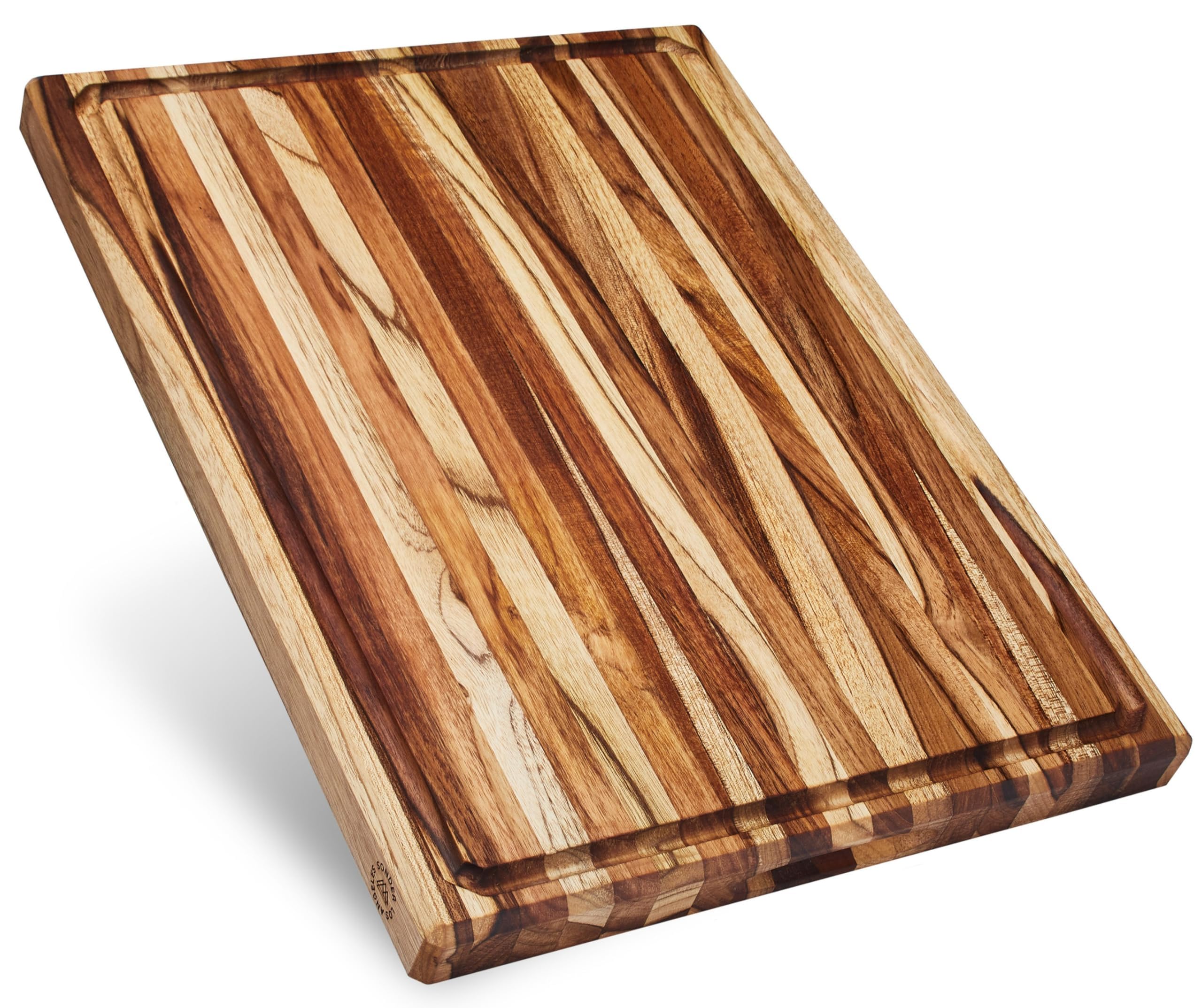
Three built-in compartments and a deep juice groove let you separate chopped aromatics from sliced proteins without pulling out extra bowls, then flip the board to serve cheese or charcuterie — a feature set you won't find on a standard thick butcher block.

The edge-grain teak shows knife marks sooner than end grain and demands regular oiling to keep the surface from drying out and cracking. This board is right for home entertainers who accept that maintenance in exchange for organization and presentation — and wrong for anyone wanting a low-upkeep, heavy-chopping block.

💡 Keep a bottle of food-grade mineral oil handy — applying a coat every few weeks will prevent the edge grain from drying out and cracking.

Pros

  • Teak edge grain delivers a warm, furniture-grade look that makes the board a centerpiece on the counter.
  • At 20x15 inches and 1.5 inches thick, the board feels substantial under a chef's knife and accommodates multiple piles of prepped vegetables.
  • Three built-in compartments and a deep juice groove let you stage chopped ingredients or serve a charcuterie spread without transferring to another platter.

Cons

  • Edge-grain teak shows cut marks and can dry and crack without consistent oiling
Our verdict

The board's compartments and deep groove make it a natural fit for home entertainers who see prep as part of the show; just commit to regular oiling and accept that knife marks will accumulate over time.

Check Latest Price
3

Best Non-Toxic Natural Finish

Ziruma Acacia Board

91 /100
Craft Score Outstanding

Key details

Thickness
1 in
Dimensions
16" x 11"
Juice Groove
No
Wood Type & Grain
Acacia Wood
View on Amazon

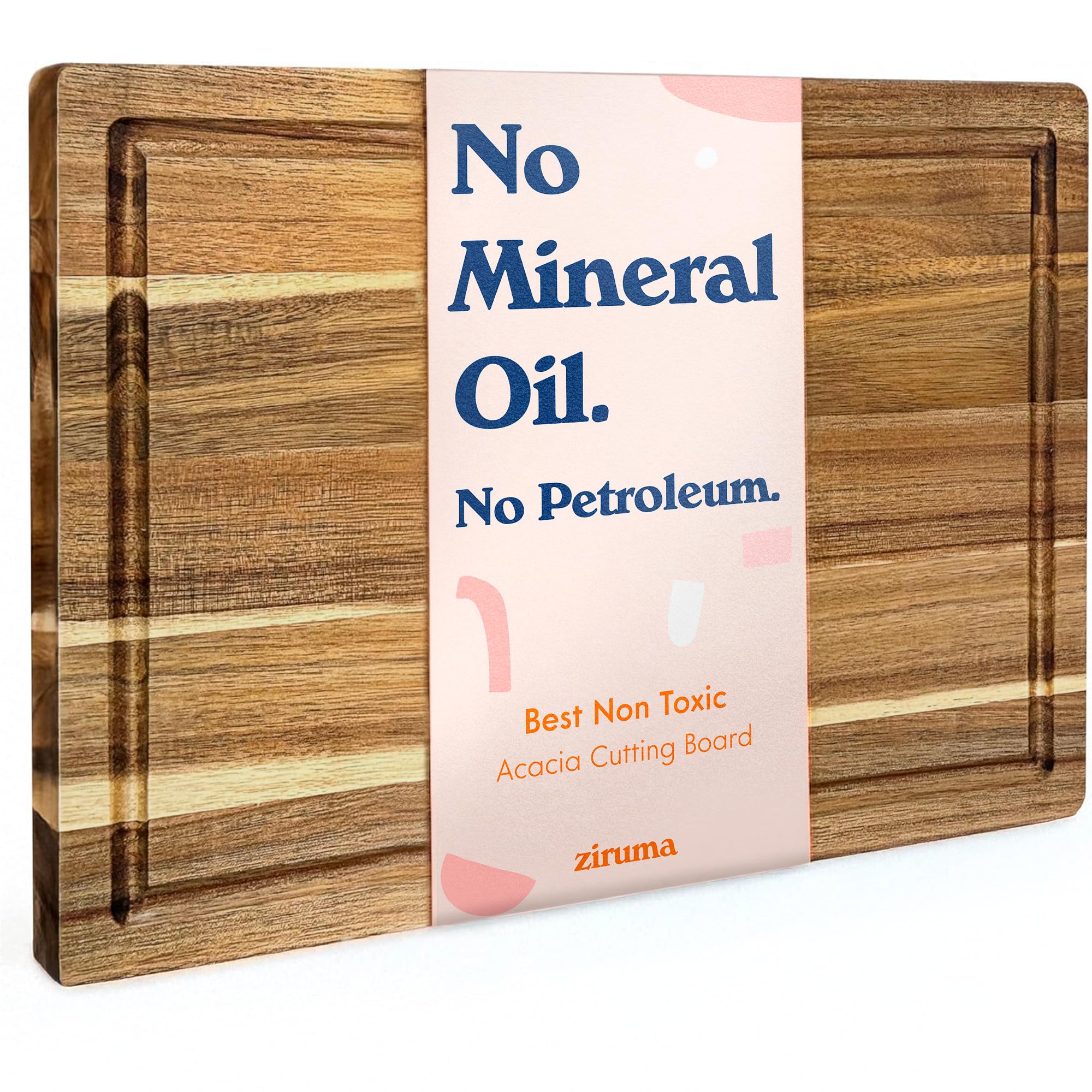
Where the top pick leans on end-grain mahogany for knife-friendly self-healing, the Ziruma board switches the focus to a non-toxic, natural finish. The acacia surface arrives pre-conditioned with beeswax and citrus, free from mineral oil or synthetic sealants. It feels substantial at 1 inch thick and 2.9 pounds, with a smooth grain that owners describe as beautiful and solid.

This board suits eco-conscious buyers with limited counter space. The 16-by-11-inch surface handles daily vegetable and herb chopping without crowding, but when a large roast or whole chicken lands on it, the working area shrinks quickly. For heavy meat carving or big-batch prep, the top pick offers more room.

Pros

  • Non-toxic materials and a beeswax/citrus finish mean no chemical residue on food.
  • The acacia grain and solid build create a refined, substantial look on a counter.
  • Wipes down quickly and holds up with simple care.

Cons

  • The 11-inch width can restrict clearance when carving large roasts or whole birds.
Our verdict

A clean-finish, chemical-free board for everyday vegetable prep — provided you aren't breaking down large cuts of meat.

Check Latest Price
4

Best Simple Solid Acacia Value

Home Beets Acacia Board

93 /100
Craft Score Outstanding

Key details

Thickness
1 in
Dimensions
17" x 13"
Juice Groove
No
Wood Type & Grain
Acacia Wood
View on Amazon

Where the top pick relies on end-grain mahogany with self-healing properties, the Home Beets acacia board delivers a simpler workhorse: a thick, edge-grain slab with pronounced rustic grain. It forgoes the compact beeswax-finished board’s petite chemical-free surface for a generous 17x13-inch workspace, all at a budget-friendly price.

The board excels at dry vegetable chopping, charcuterie layout, and everyday prep. Because it lacks a juice groove, carving roasts or slicing piles of tomatoes can send liquid onto counters; that flat surface, however, makes cleanup a quick wipe-down for bread, cheese, and dry goods.

💡 Place a damp towel or rimmed tray under the board when carving roasts or cutting juicy fruits to catch runoff.

Pros

  • Rich rustic grain pattern brings warmth to the counter
  • Thick 1-inch acacia holds up to daily chopping without warping
  • 17x13-inch surface handles most prep tasks without crowding

Cons

  • For roast carving or slicing juicy fruits, runoff may spill onto counters due to the flat surface
Our verdict

For dry chopping and serving at an accessible price, this acacia board’s solid build delivers — just have a towel ready if you tackle anything juicy.

Check Latest Price
5

Light Meal Prep

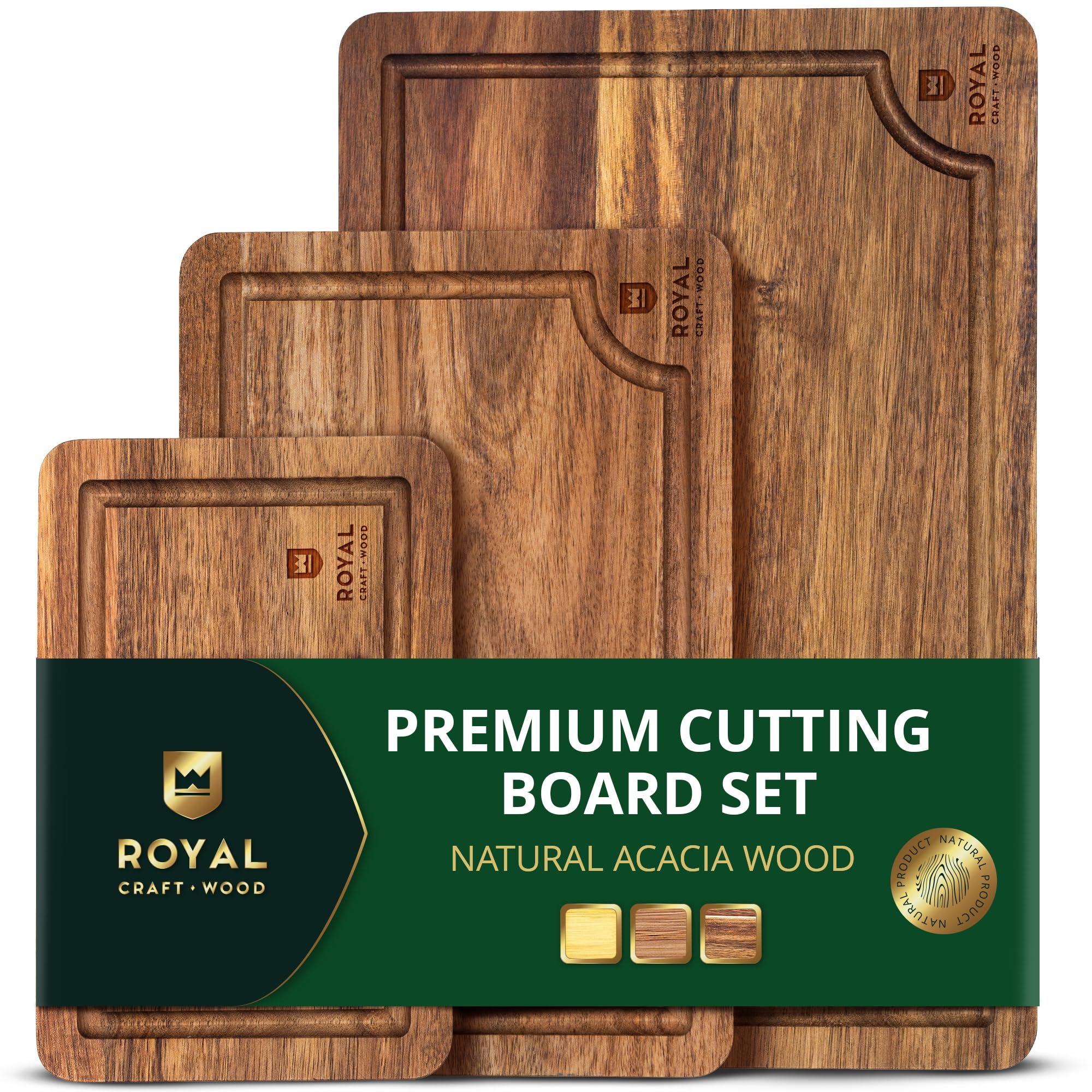
Royal Craft Wood Acacia Set

91 /100
Craft Score Outstanding

Key details

Thickness
0.6 in
Dimensions
15" x 10"
Juice Groove
Yes
Wood Type & Grain
Acacia Wood
View on Amazon

The set includes three acacia boards with juice grooves and handles, suited for slicing vegetables, fruit, and arranging serving platters. At 0.6 inches thick, they lack the heft for meat chopping or heavy butcher block tasks. This is a serving and light prep set, not a heavy-duty workhorse.

Pros

  • Three graduated sizes handle everything from slicing a lemon to arranging a cheese board.
  • Built-in juice grooves and side handles make transferring sliced fruit and mess-free serving easy.

Cons

  • The 0.6-inch thickness is insufficient for heavy chopping; boards may shift or warp under force.
Our verdict

If you need a heavyweight chopping surface, skip this set — but for supplementing a butcher block with serving boards, the price is right.

Check Latest Price

How to Choose

Wood Type & Grain Orientation

End-grain boards are made by gluing blocks of wood with the fibers pointing up, so the knife edge slips between them rather than cutting across. This preserves both the board and your blade, and prevents deep grooves that trap bacteria.

Edge-grain boards, where fibers run horizontally, show cut marks sooner and are more prone to splitting along the grain lines. Bamboo, often marketed as eco-friendly, is technically a grass — its high silica content dulls knives and its laminated strips separate under moisture, leading to splinters.

The Right Thickness for Chopping

A thickness of at least 1.5 inches provides enough mass to absorb chopping shock and resist warping. Thinner boards flex under pressure, which amplifies stress on glue joints and makes cracking more likely.

Surface Size and Workspace

Dimensions matter for the kinds of proteins you typically prepare. A 17-by-13-inch board comfortably fits a whole chicken or a large roast. Smaller boards force you to work in sections and increase the risk of slips.

Juice Groove or No?

A juice groove catches runoff when carving cooked meats, preventing messy countertops and cross-contamination. If you rarely carve meat or prefer a flat surface for dough, skip it — but for butcher block duties, it’s a practical feature.

Maintenance and Longevity

All wood boards require regular oiling to seal pores and repel water. Without it, the wood dries unevenly, opening cracks. End-grain boards, because fibers are exposed, soak up oil quickly and need monthly conditioning.

Bamboo boards, by contrast, absorb water faster and splinter when their laminated layers fail — no amount of oiling can prevent that once material quality is low.

Frequently Asked Questions