8 Best Chainsaw of 2026: Match Your Cutting Needs Without the Hassle

Which chainsaw is powerful enough for your yard work but won't leave you struggling with starting or battery life? This guide cuts through the noise.

Most homeowners grab a chainsaw expecting it to start on command and cut until the job is done. The reality is messier: gas saws under $300 often refuse to start after a season, and battery models can run out of steam mid-way through a fallen oak. The complaints stack up — chains that jump off, oilers that fail, pull cords that snap.

The root of the problem isn't a bad brand. It's a mismatch between the tool and the task. A 24-inch gas saw built for land clearing is overkill for pruning a maple, and a compact battery pruner won't touch a 20-inch log. The market is splitting: gas still rules heavy work, but battery tech has closed the power gap for most home use.

This guide maps chainsaws to real-world jobs, from light trimming to full-on firewood processing. The right pick is the one that fits your typical cut — not the one with the longest bar or the most hype.

1

Best Overall

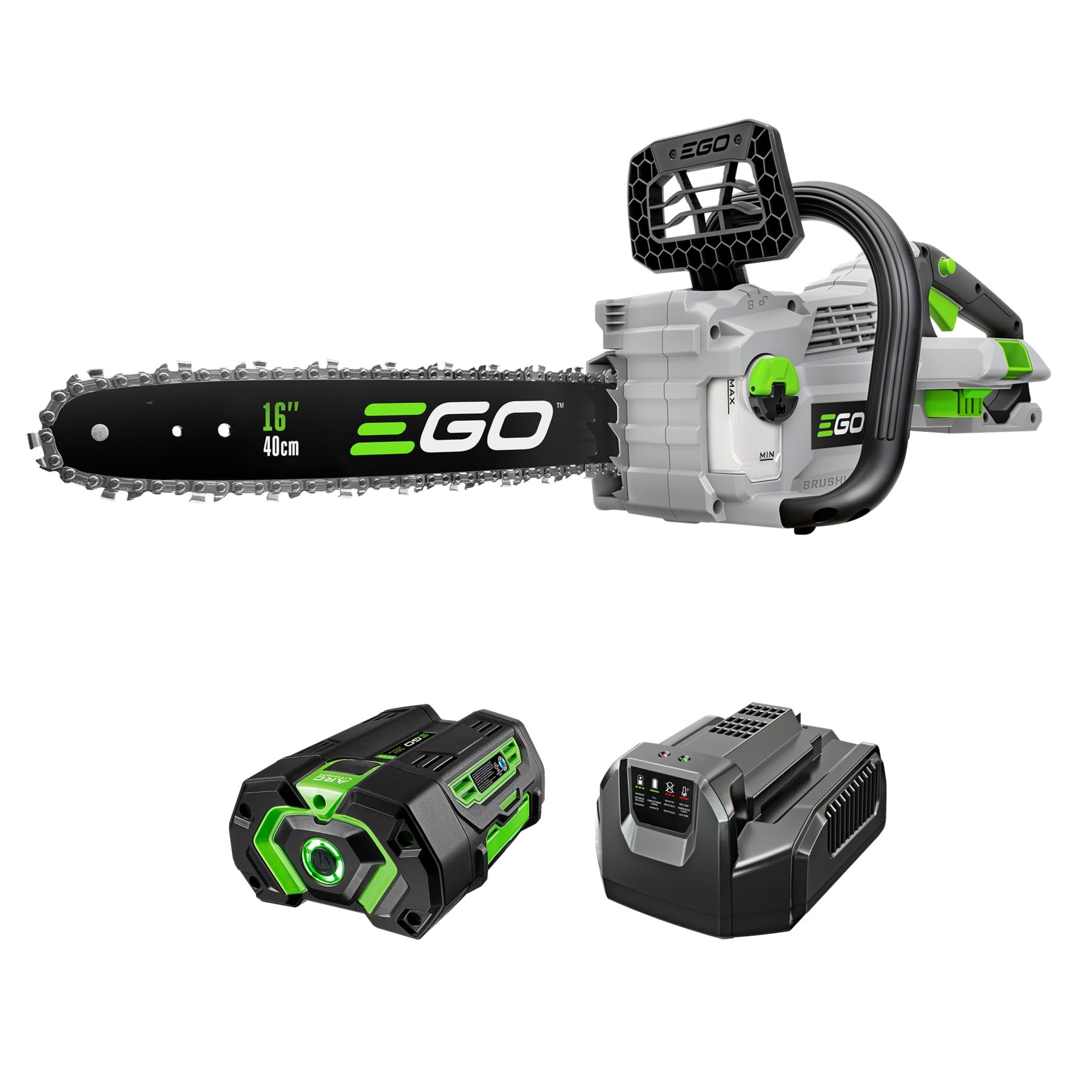
EGO 16" Battery

92 /100
Craft Score Outstanding

Key details

Weight
20.9 lbs
Bar Length
16 in
Power Source
Battery 56V
View on Amazon

The EGO 16-inch battery saw cuts through hardwood limbs with speed and smoothness that rivals gas models, yet starts instantly with a push button and runs quietly enough for residential use. The brushless motor maintains consistent torque through 12-inch logs without bogging down, making it a capable partner for most yard tasks.

For routine pruning and firewood cutting, the 4.0Ah battery provides enough runtime to finish typical weekend jobs. On heavier sessions — like processing multiple large limbs — the saw may run out of charge before the work is done, so having a spare battery or planning breaks is practical. The 20.9-pound weight is noticeable during overhead trimming, but the saw balances well for ground-level use.

This saw suits homeowners who value convenience and want to avoid gas engine upkeep. The instant start and low noise make it a good neighbor in suburban settings. However, if your day involves hours of continuous heavy cutting, a gas model with longer run time is a better match. The weight and battery range are the main tradeoffs for those used to lighter electric saws.

💡 Keep a spare battery charged for longer sessions — the stock 4.0Ah battery handles typical yard tasks but runs low during heavy cutting.

Pros

  • Cuts through hardwood as fast as many gas saws, with less vibration and noise.
  • Starts instantly with a push button
  • Motor delivers strong torque for consistent cutting through dense wood.
  • Runs quietly enough to use in noise-sensitive neighborhoods without disturbance.
  • Smooth cutting action with minimal kickback helps maintain control during use.

Cons

  • At 20.9 pounds, the saw feels heavier during overhead trimming than lighter electric models.
  • Battery runtime may require a second battery for larger cleanup jobs or multiple hours of cutting.
Our verdict

For homeowners who want gas-like performance without fuel mixing or pull starts, the EGO 16-inch battery saw is the most practical pick in its price range.

Check Latest Price
2

Best for Heavy-Duty Cutting

Husqvarna 460 Rancher

88 /100
Craft Score Excellent

Key details

Weight
13.2 lbs
Bar Length
24 in
Power Source
Gas 60.3cc
View on Amazon

The 24-inch bar and 3.6 HP engine give the Husqvarna 460 Rancher the ability to cut through large logs that would strain smaller saws. On heavy land clearing tasks, it delivers sustained torque that keeps the chain moving through hardwood without bogging down.

Where battery saws like the top pick excel in convenience and quiet operation, the 460 Rancher offers the extended runtime and raw power needed for hours of cutting. The tradeoff is weight and noise – at 13.2 lbs, it's a solid unit that requires two hands and good footing.

This saw suits users who regularly cut firewood from large diameter timber or need to clear land with trees over 20 inches. It's not intended for light pruning or occasional yard work – the 20-inch Husqvarna 445 is a better fit for those tasks. Some owners note the chain guard can break under heavy use, and the starting procedure may take a few pulls to master – these are quirks of a powerful gas saw that reward patience.

💡 Run the saw for 30 seconds before cutting to warm the engine – a steady, slow pull on the starter rope reduces effort.

Pros

  • Durable construction withstands heavy land clearing without loosening.
  • 24-inch bar cuts through large logs up to 20+ inches in one pass.
  • High torque engine delivers consistent power for hours of cutting.
  • Priced competitively for a professional-grade gas saw.

Cons

  • Chain guard may break after heavy use
  • Starting can require several pulls, especially when cold.
Our verdict

For those who need a gas saw that can handle large logs and heavy clearing, the Husqvarna 460 Rancher delivers the essential cutting power – but be prepared for a learning curve with starting and occasional chain guard checks.

Check Latest Price
3

Best Corded Electric

Oregon CS1500

89 /100
Craft Score Excellent

Key details

Weight
12.6 lbs
Bar Length
18 in
Power Source
Corded 15A
View on Amazon

The Oregon CS1500 stands apart from battery-powered competitors by eliminating chain maintenance entirely. Its built-in sharpener engages with a button press, keeping the chain cutting cleanly without manual filing. This is the defining feature that makes it more convenient than any gas or battery saw for homeowners who always have power nearby.

Cutting performance is strong for a corded electric: the 15A motor pulls through 18-inch logs without bogging down, and the bar length handles most yard debris and firewood. Build quality feels substantial, though at 12.6 pounds the saw is heavier than some battery alternatives. That weight is noticeable during prolonged overhead limbing, but for bucking on sawhorses or ground-level cutting it feels balanced.

This saw suits homeowners with a garage or shed near their work area — anywhere a heavy-duty extension cord can reach. If your yard has outlets within 50-75 feet, the cord is a minor inconvenience against the benefit of never sharpening a chain. Avoid this model if you need to carry the saw into a remote lot or up a ladder for extensive pruning; a battery saw from the top pick would serve better there.

💡 Using a shoulder strap or taking breaks during overhead work helps manage the weight for longer sessions.

Pros

  • Self-sharpening chain saves time and maintains cutting efficiency without manual work
  • Strong motor cuts through hardwood logs smoothly at full bar length
  • Solid build quality holds up well over repeated use
  • Budget-friendly price for the features offered compared to gas models

Cons

  • When working in a yard without outlets nearby, the cord restricts reach and requires careful planning
  • During extended overhead pruning or limbing, the 12.6-pound weight can cause arm fatigue
Our verdict

If you have power within extension-cord range and want to skip chain sharpening forever, this is the most practical electric saw for the money.

Check Latest Price
4

Best for Pruning & Light Work

SEESII 12" Mini

93 /100
Craft Score Outstanding

Key details

Weight
12 lbs
Bar Length
12 in
Power Source
Battery 40V
View on Amazon

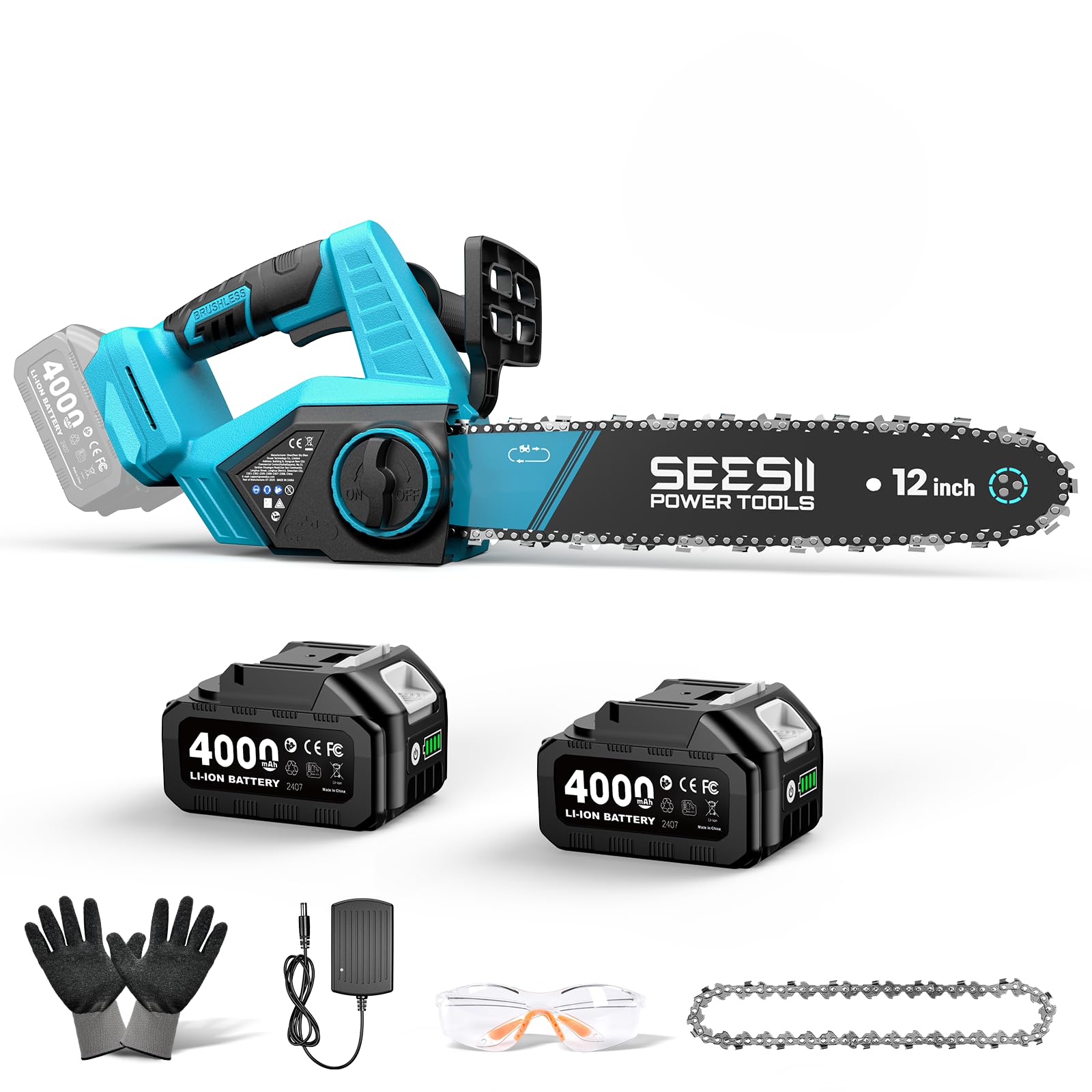
The SEESII 12-Inch Mini is built for quick, one-handed pruning. Its 12-pound body and compact bar let you reach into tight branches without fatigue, and the dual 4.0Ah batteries provide enough runtime for a typical trimming session.

This saw targets homeowners who need a grab-and-go tool for light yard maintenance: trimming branches up to 6 inches in diameter, shaping shrubs, or clearing small storm debris. It is not designed for felling trees or cutting firewood logs larger than the bar length.

Build quality holds up well at this price point — the plastic housing and metal chain components feel solid. The chain tensioning is tool-less, which simplifies adjustments between cuts. Noise levels are low enough for residential use without hearing protection for short bursts.

💡 To avoid stalling, keep cuts within the bar's reach — forcing larger branches can overload the motor.

Pros

  • Lightweight enough for single-handed operation during overhead trimming.
  • Cuts branches up to 6 inches quickly with a clean finish.
  • Sturdy build with minimal vibration for a budget battery saw.

Cons

  • 12-inch bar limits maximum cut diameter to roughly 6 inches
Our verdict

If your yard work revolves around pruning and light trimming, this saw is a cost-effective, low-fuss option. For heavier cutting, step up to a larger bar and more power.

Check Latest Price
5

Best Mid-Size Gas Saw

Husqvarna 445

87 /100
Craft Score Excellent

Key details

Weight
11.2 lbs
Bar Length
18 in
Power Source
Gas 50cc
View on Amazon

The Husqvarna 445 starts easily, cuts quickly with its sharp chain, and the 11.2-pound weight keeps fatigue in check during medium-duty sessions. It’s more dependable than budget gas saws for similar tasks, though it doesn’t have the bar length or horsepower of the Husqvarna 460 for oversized logs.

This gas saw fits homeowners who need a reliable tool for firewood preparation, tree pruning, and general yard cleanup — jobs where a battery saw’s runtime might fall short. It handles logs up to about 16 inches in diameter without issue, but tackling larger trunks or heavy professional use requires moving up to a 24-inch bar model.

Build quality is high for the price, and the power-to-weight ratio makes it easy to maneuver for limbing and longer cutting sessions. Some owners note that starting consistency can become less predictable after extended storage, but this tends to respond well to routine fuel system care.

💡 If starting becomes inconsistent after storage, check the fuel system and spark plug — proper maintenance minimizes this.

Pros

  • Strong cutting performance from a sharp chain that moves through wood quickly
  • Easy to start with good throttle response once warm
  • Solid build quality that feels durable for regular home use
  • Good power-to-weight ratio reduces fatigue during longer cutting jobs

Cons

  • Some saws develop starting issues or pull cord failure after a period of use
  • Not powerful enough for large-diameter logs or heavy professional cutting
  • Throttle response can lag initially before the engine is warm
Our verdict

For homeowners who want a dependable gas saw for medium work without the cost or weight of a pro model, the Husqvarna 445 delivers consistent cutting speed and build quality — just keep expectations in line with its 18-inch bar.

Check Latest Price
6

Occasional Trimming

Greenworks 80V 18"

88 /100
Craft Score Excellent

Key details

Weight
~12 lbs
Bar Length
18 in
Power Source
Battery 80V
View on Amazon

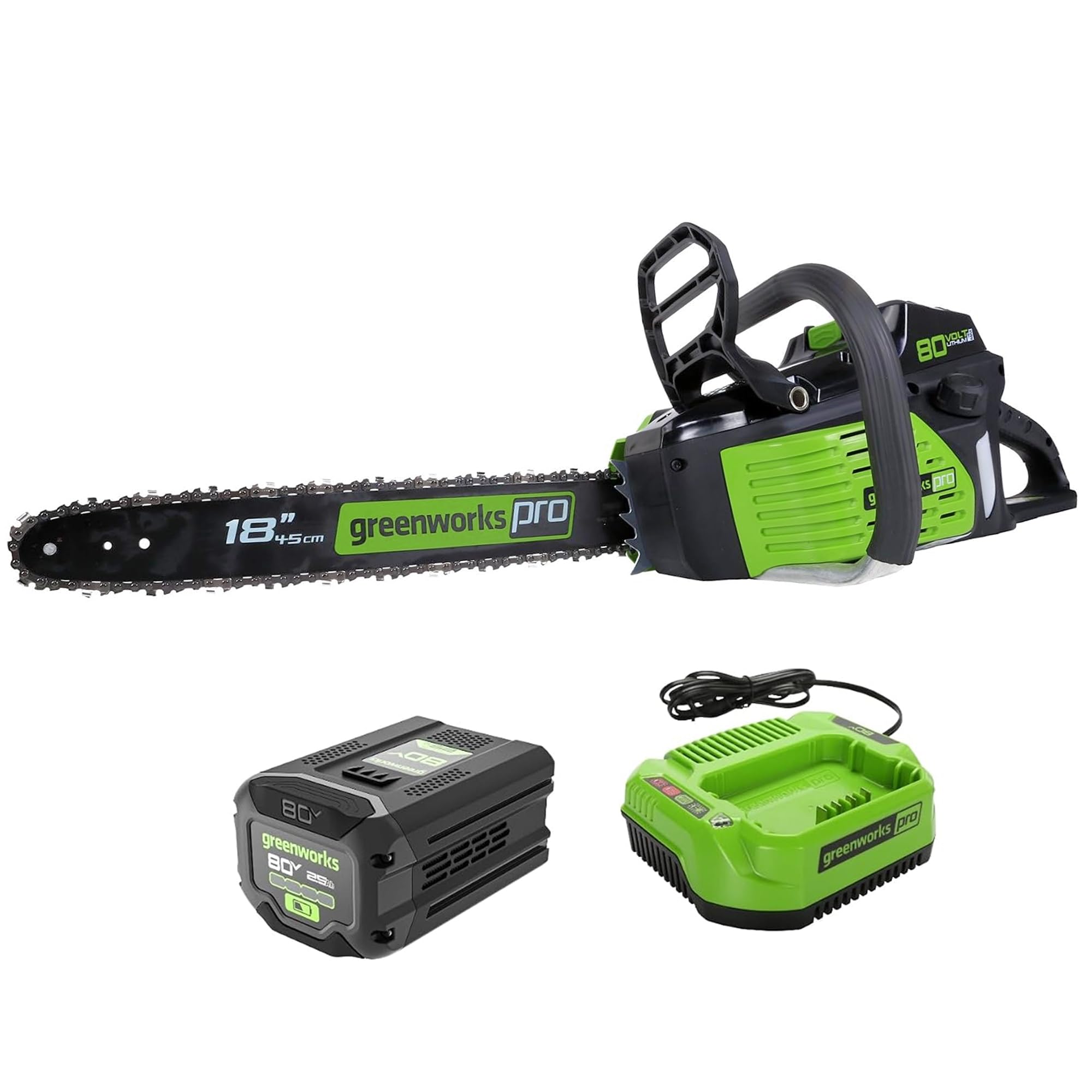
The Greenworks 80V cuts through 12-inch logs with satisfying power, and the brushless motor starts instantly every time. However, the chain can loosen or come off during use, and battery life runs short when cutting larger wood or under continuous load. These limitations make it a good fit for light, occasional trimming rather than frequent or heavy cutting. For homeowners already in the Greenworks 80V ecosystem, the convenience of shared batteries adds value.

Pros

  • Good cutting ability on logs up to 12 inches
  • Easy push-button start with no pull cord
  • Satisfactory power for home trimming tasks

Cons

  • Chain can loosen and come off during use, requiring adjustment
  • Battery capacity drops quickly under continuous heavy cutting
Our verdict

Best for light yard trimming and pruning where portability matters and you already own Greenworks 80V batteries.

Check Latest Price
7

Budget Home Use

SEESII 16" Cordless

87 /100
Craft Score Excellent

Key details

Weight
10.3 lbs
Bar Length
16 in
Power Source
Battery 40V
View on Amazon

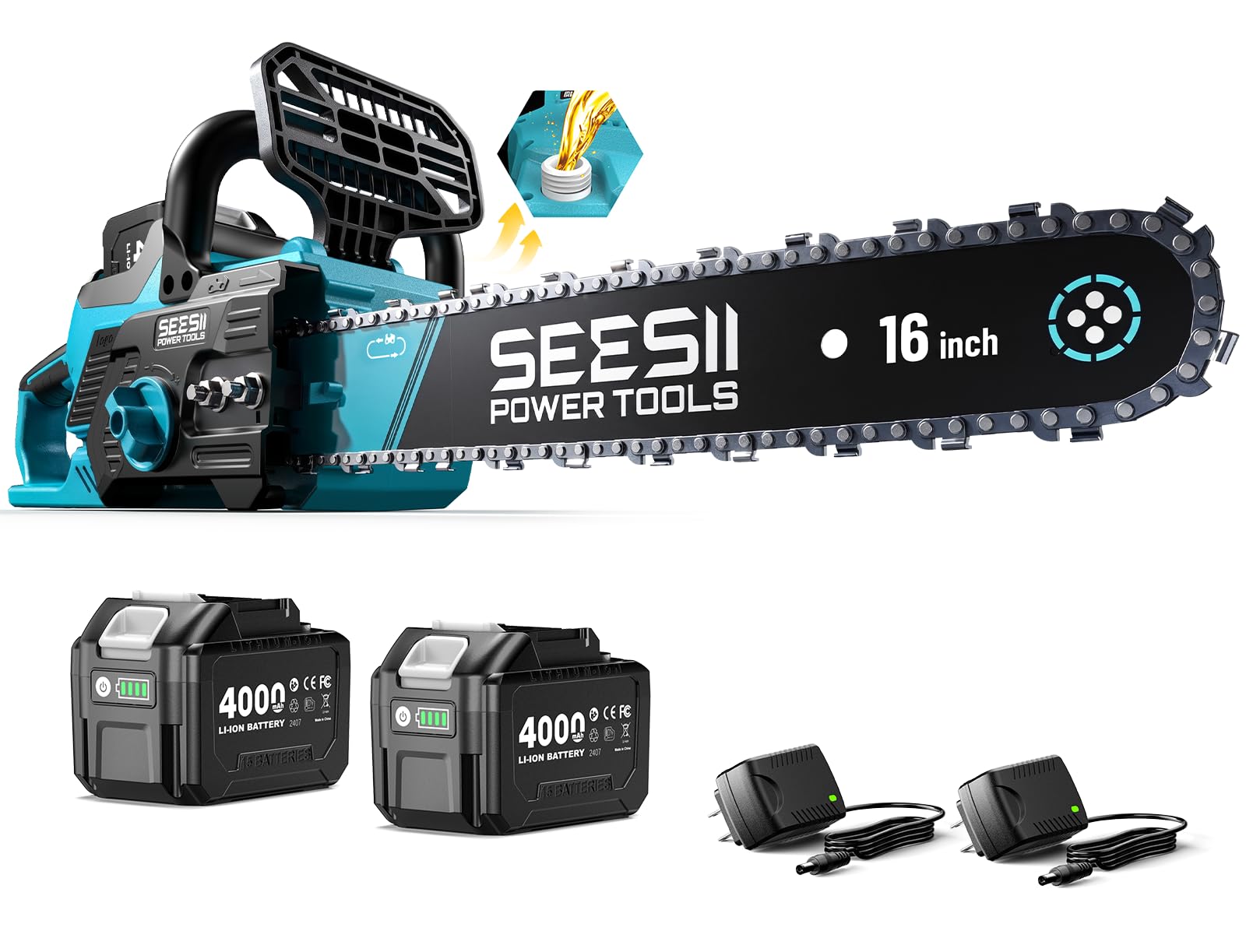
The SEESII 40V chainsaw delivers enough power for occasional pruning and branch trimming, and the kit includes two 4.0Ah batteries plus an extra chain - a strong value. Assembly is quick and the saw starts instantly. However, durability varies between units; some owners note the chain tensioning or battery life falls short of premium cordless models. For homeowners who need a reliable tool for frequent or heavy cutting, the trade-offs in consistency make it a secondary option rather than a primary workhorse.

Pros

  • Two batteries and an extra chain included at a budget-friendly price.
  • Cuts well for light home tasks like pruning and small branches.

Cons

  • Durability can vary between units - some may need chain tension adjustments.
  • Battery life under heavy cutting is shorter than premium alternatives - best suited for short sessions.
Our verdict

A sensible choice for budget-conscious homeowners who only need a saw for occasional yard cleanup and are comfortable with the possibility of minor quality variance.

Check Latest Price
8

Brand Loyalists

Stihl MS 162

84 /100
Craft Score Excellent

Key details

Weight
13.3 lbs
Bar Length
16 in
Power Source
Gas 1.2kW
View on Amazon

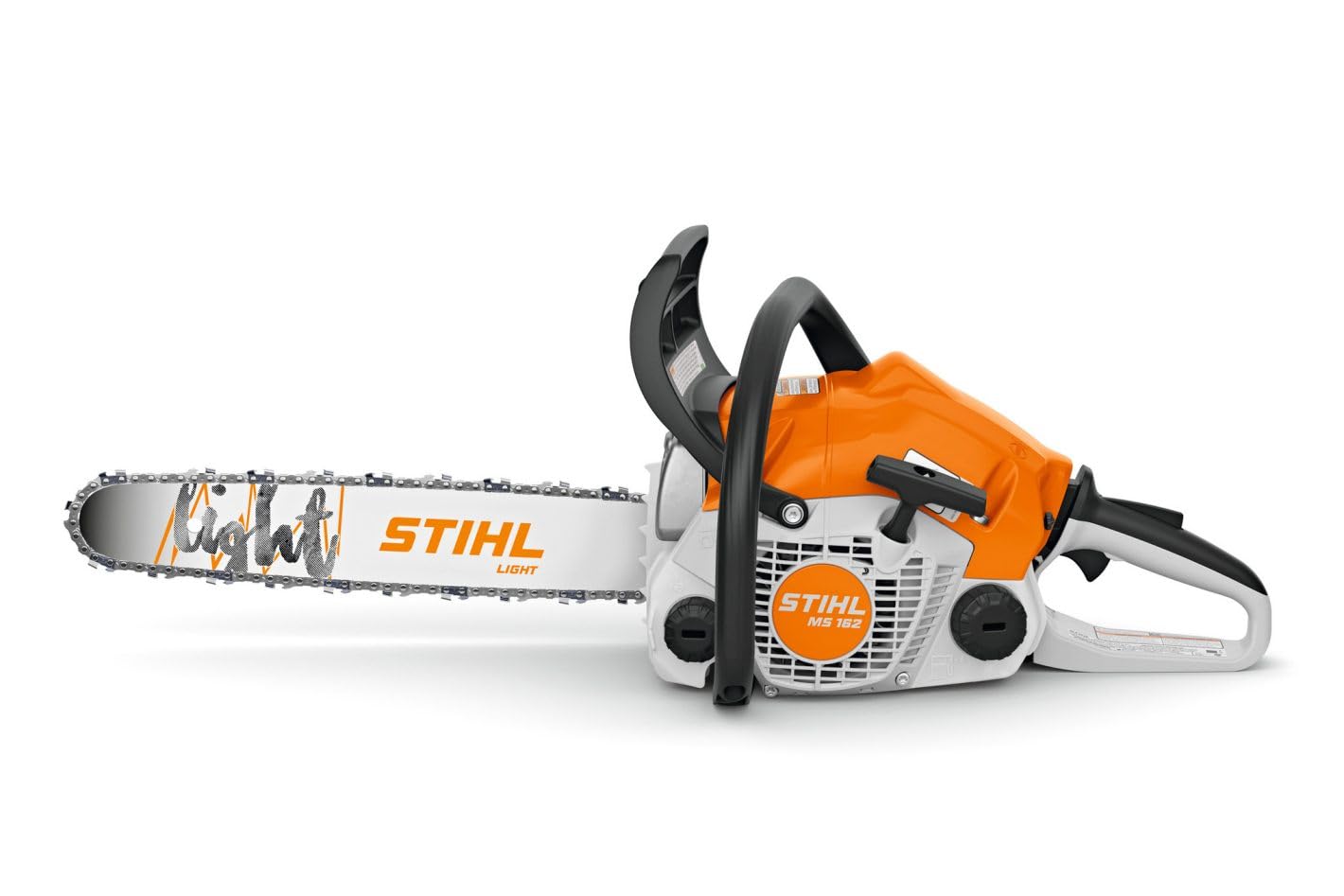
The Stihl MS 162 offers the brand's characteristic build in a lightweight 16-inch gas saw, appropriate for routine branches and firewood. Yet the sparsity of detailed owner experiences means day-to-day performance and durability are less certain than models with broader feedback. This makes it a fit for those who prioritize brand trust over a verified track record.

Pros

  • Lightweight 13.3-pound design reduces fatigue during extended cutting.
  • 16-inch bar handles typical yard debris and medium firewood.

Cons

  • Long-term consistency is less documented than for other models in this price range.
Our verdict

Best for buyers who value Stihl's brand heritage and want a standard gas saw without expecting a large sample of owner reviews to guide their decision.

Check Latest Price

How to Choose

Bar Length

Bar length determines the maximum diameter of wood you can cut in one pass. A 12-inch bar handles branches up to 10 inches thick; an 18-inch bar handles 14-inch logs; a 24-inch bar can fell trees over 20 inches in diameter.

Longer bars add weight and require more engine torque to drive the chain through the cut. A homeowner who only prunes small limbs will wrestle an extra 3 pounds with a 20-inch bar for no benefit. Match bar length to your largest typical log, not the biggest tree you might eventually tackle.

Power Source

Gas chainsaws deliver unlimited runtime and high torque for heavy work, but require mixing fuel, pulling a starter cord, and routine maintenance like carburetor cleaning. Battery saws offer instant start, lower noise, and zero fumes, but limited runtime per charge and longer recharge intervals.

For most homeowners, a battery saw with 56V or higher (like EGO's) now matches gas power for tasks up to 12-inch logs. If you cut firewood for hours or clear large property, gas is still the practical choice. Corded electric is the cheapest and most reliable option if an outlet is always within reach, but the cord limits mobility.

Weight

Every pound of saw weight is felt in your arms during overhead pruning and extended cutting. A 7-pound top-handle saw is easy to one-hand, while a 13-pound gas saw quickly fatigues even strong users. Battery saws often weigh more than equivalent gas models because of the battery pack.

A saw under 11 pounds is comfortable for most homeowners. Heavier saws (13+ pounds) are best reserved for tasks where the saw rests on the log, like bucking firewood. If you plan to carry the saw for long periods, lighter is better.

Ease of Starting

Gas chainsaw starting is a common pain point. Models with a primer bulb, decompression valve, and easy-start spring (like Husqvarna's Smart Start) reduce effort significantly. Even then, cold starts often require 3-5 pulls; a saw that sat for months may need a carburetor clean.

Battery saws eliminate this entirely — press a button and pull the trigger. If you are not comfortable with engine maintenance, a battery saw is the more reliable choice. Corded electric saws also start instantly once plugged in.

Chain Tensioning

A loose chain is dangerous and reduces cutting efficiency. Tool-free chain tensioning systems (a side-mounted knob) let you adjust in seconds without a wrench. Many budget gas saws require a tool (screwdriver or socket) for tensioning, which is annoying when the chain stretches mid-job.

Self-sharpening systems like Oregon's PowerSharp automatically grind the chain teeth to a sharp edge each time you engage the mechanism. This saves filing time but adds weight and complexity. For occasional users, tool-free tensioning is the most practical feature.

Frequently Asked Questions