11 Best Electric Hand Planer of 2026: Get the Right Power for Your Woodwork

Find the electric hand planer that suits your shop - from budget DIY to pro-grade finish. No hype, just what matters for your projects.

An electric hand planer can turn rough lumber into finished stock in seconds - but the wrong one leaves you fighting uneven cuts, clogged dust ports, or dead batteries mid-project. Most under-$100 models handle occasional door trimming well, while premium cordless options offer real convenience for on-site work.

The key is matching the tool to how you work: a lightweight trim-oriented planer for cabinet installs, a powerful corded unit for heavy stock removal, or a budget-friendly entry for the weekend shop. Battery ecosystem, blade quality, and depth adjustment matter more than raw specs.

The right planer makes your work easier, not harder - and that means picking based on your actual use, not the price tag.

1

Best Overall

DEWALT DCP580B

94 /100
Craft Score Outstanding

Key details

RPM
15000
Motor
Brushless
Weight
7.4 lb
Cut Width
3.25 in
View on Amazon

The brushless motor on the DCP580B spins at 15,000 rpm for 30,000 cuts per minute, allowing aggressive 2mm passes across a 3.25-inch cutting width without bogging down on dense hardwoods. The calibrated depth adjustment knob provides repeatable, precise settings, and the ergonomic handle keeps the tool balanced during multiple passes. Dust collection connects to a shop vac or DEWALT dust extractor for a cleaner workspace.

This bare-tool planer is best for existing DEWALT 20V and 60V users who want cordless freedom without sacrificing cutting speed. It rivals corded planers in stock removal while offering jobsite mobility. Contractors and serious woodworkers will appreciate the build quality and consistent finish on door trimming, scribing, and leveling tasks. At 7.4 lb, the weight helps stabilize cuts, though it can cause fatigue during overhead work. The tradeoff: standard 2Ah batteries deplete quickly under heavy cuts, so a FlexVolt pack or several spares are recommended for all-day use.

Pros

  • Brushless motor provides ample power for aggressive stock removal, even with standard 20V packs.
  • Calibrated depth adjustment and ergonomic handle make setup and control intuitive for new and experienced users.
  • Build quality and consistent performance hold up to daily jobsite use.

Cons

  • When tackling heavy stock removal on a single standard battery, runtime can fall short.
  • In some cases, the cut may be deeper on one side; checking blade alignment before first use corrects it for most.
Our verdict

For DEWALT battery owners who need a cordless planer with professional cutting speed and build quality, the DCP580B is a practical investment that doesn't compromise on performance.

Check Latest Price
2

Best Budget Pick

WEN 6530

91 /100
Craft Score Outstanding

Key details

RPM
34000
Motor
6 Amp
Weight
6.5 lb
Cut Width
3.25 in
View on Amazon

For under $45, the WEN 6530 handles door edges and thin stock with surprising ease. Its simple depth adjustment and zero setup time get you planing within minutes. However, the dust collection bag clogs quickly, and some units may experience blade or motor issues after limited use. This planer suits first-time buyers or DIYers on a tight budget who need a tool for a few projects and can accept the possibility of early wear.

💡 Attach a shop vacuum to the dust port for better chip collection — the included bag fills quickly.

Pros

  • Exceptional value for money, outperforming expectations at its price point.
  • Simple setup and depth adjustment, ready to use out of the box.
  • Works well for door trimming and small planing tasks that don't demand heavy use.

Cons

  • Dust collection bag fills quickly and does little to keep the workspace clean.
  • Durability can be hit-or-miss; occasional blade shattering or motor issues after limited use have been noted.
Our verdict

A cost-effective entry point for one-off projects, this planer works well enough for light duties if you accept the trade-offs in dust management and long-term consistency.

Check Latest Price
3

Best for Wide Stock

WEN 6534

92 /100
Craft Score Outstanding

Key details

RPM
32000
Motor
8 Amp
Weight
9.5 lb
Cut Width
4-3/8 in
View on Amazon

With a 4-3/8-inch cutting width, this WEN clears a 4x4 in one pass — a speed advantage over narrower budget planers like the WEN 6530. The 8-amp motor delivers enough power for deck boards and timbers, and the depth adjustment is easy to set. At 9.5 lb, it’s noticeably heavy for overhead work or long sessions, and some units arrive with blades that cut slightly deeper on one side. That weight and potential QC variance make it a better fit for DIYers working on large stock at a bench than for finish carpenters who need precision straight from the box.

💡 Rest the planer on a benchtop when adjusting depth — the weight makes one-handed setup awkward.

Pros

  • 4-3/8-inch width planes 4x4s in one pass, saving time on wide stock.
  • Solid build and good cutting power at a budget-friendly price.

Cons

  • Heavy weight (9.5 lb) makes extended overhead or vertical use tiring.
  • Blade sharpness can vary between units; some cut unevenly out of the box.
Our verdict

Best for DIYers who need to flatten wide timbers or decking quickly and don't mind the weight or a possible blade tweak.

Check Latest Price
4

Best Cordless Finish

Makita XPK01Z

94 /100
Craft Score Outstanding

Key details

RPM
14000
Motor
Brushless
Weight
7.2 lb
Cut Width
3.25 in
View on Amazon

The Makita XPK01Z delivers smooth, clean cuts with the build quality that makes the brand a favorite among professionals. Its brushless motor runs at 14,000 RPM, lower than the top pick's 30,000 cuts per minute, but the tradeoff is a noticeably finer surface finish and less vibration. The tool is well-balanced at 7.2 lb, reducing fatigue during extended use. This planer is best for carpenters already invested in Makita's 18V LXT batteries, as it comes as a bare tool. The added cost of batteries and charger makes it a significant investment for anyone not already in the ecosystem.

💡 Pair with a Makita 18V LXT starter kit to get batteries and charger at a bundled price.

Pros

  • Solid construction and long-lasting build typical of Makita tools.
  • Smooth cutting action produces a clean surface finish with little tear-out.
  • Lightweight and well-balanced for comfortable one-handed use over extended periods.

Cons

  • As a bare tool, it requires separate purchase of batteries and charger, raising total cost for new users.
Our verdict

A top choice for Makita loyalists who need a smooth finish; for others, the DEWALT DCP580B offers more power and lower entry cost.

Check Latest Price
5

Best Compact Planer

Bosch GHO12V-08N

91 /100
Craft Score Outstanding

Key details

RPM
14500
Motor
Brushless
Weight
3.3 lb
Cut Width
2.2 in
View on Amazon

At 3.3 pounds, this 12V planer lets you work door edges and cabinet trim with one hand — no fatigue from balancing a heavier tool. Its 2.2-inch cut width is fine for that purpose, and the brushless motor keeps the blade spinning smoothly at 14,500 RPM for clean passes on softwood and paint-grade material.

This is a tool for trim carpenters and cabinet installers who already own Bosch 12V batteries and want a lightweight edge planer. The narrow cut width means it cannot plane a full 2x4 in one pass, and the 12V system has less reserve power than 18V models — heavy cuts can slow it down. For users doing occasional touch-ups or fine edge work, those limits are acceptable.

💡 Using a higher-capacity 12V battery (4.0 Ah or above) helps sustain power on longer passes.

Pros

  • Weighs 3.3 lb, easy to use one-handed on vertical surfaces and overhead.
  • Brushless motor provides smooth, controlled cuts on door edges and trim.
  • Fits neatly into a Bosch 12V battery ecosystem with shared chargers.

Cons

  • 2.2-inch cut width is too narrow for planing standard lumber or wide boards.
  • 12V battery can bog down under heavy cuts compared to 18V cordless planers.
Our verdict

Best for trim-focused pros who already run Bosch 12V gear — the weight and size payoff is real, but buyers needing general-purpose planing should look at 18V options.

Check Latest Price
6

Best Lightweight Corded

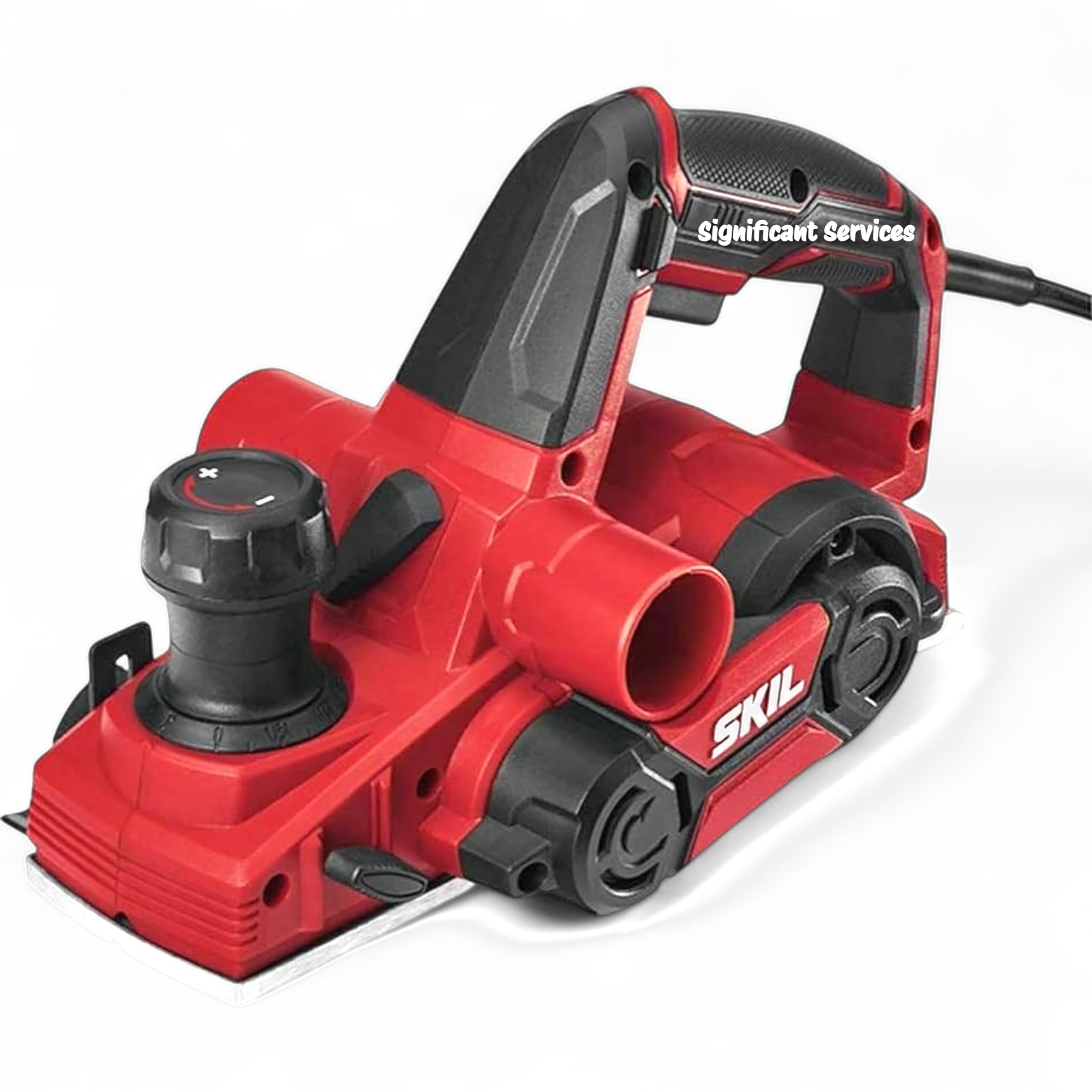
SKIL PL201201

90 /100
Craft Score Outstanding

Key details

RPM
16000
Motor
6.5 Amp
Weight
6 lb
Cut Width
3.25 in
View on Amazon

The SKIL PL201201 weighs just 6 lb and uses dual chip exhaust to keep sawdust away from your line of sight—making it one of the easier corded planers to maneuver and keep clean. It suits homeowners and DIYers trimming doors or smoothing boards. The plastic depth knob can feel less precise, and the cut may leave a slightly rough edge that needs sanding—acceptable for occasional use where absolute finish isn't the priority.

💡 Check the depth setting on a scrap piece before committing to your workpiece.

Pros

  • Delivers solid planing performance at a mid-range price.
  • Dual chip exhaust keeps dust away from the work area.
  • Lightweight at 6 lb, reducing fatigue during extended use.

Cons

  • Plastic depth adjustment knob can feel imprecise for fine work.
  • Cut may require a sanding pass to achieve a smooth finish.
Our verdict

A capable lightweight planer for DIY projects where portability and dust control matter more than precise depth adjustments.

Check Latest Price
7

Precision

PORTER-CABLE PC60THP

92 /100
Craft Score Outstanding

Key details

RPM
16500
Motor
6 Amp
Weight
8.2 lb
Cut Width
3.25 in
View on Amazon

The PORTER-CABLE PC60THP delivers a well-engineered depth adjustment system with positive steps that make fine-tuning straightforward. Performance is strong for the price, often matching pricier models in stock removal and finish. The tradeoff: blades are brittle and can chip when encountering nails or knots, and some units may have minor alignment issues. This planer is best for homeowners and DIYers who plan occasional door trimming and can work around these boundaries.

Pros

  • Depth adjustment knob provides clear, positive steps for accurate planing.
  • Performance rivals more expensive planers, delivering smooth cuts on common projects.

Cons

  • Blades can chip when hitting nails or knots, requiring careful use.
Our verdict

Ideal for the budget-conscious DIYer who prioritizes precise adjustments over blade durability.

Check Latest Price
8

Ryobi Users

RYOBI P611

93 /100
Craft Score Outstanding

Key details

RPM
11000
Motor
Brushed
Weight
5.6 lb
Cut Width
3.25 in
View on Amazon

For Ryobi ONE+ users, this bare tool offers a lightweight way to trim doors or chamfer edges without dragging a cord. The 11,000 RPM brushed motor and shallow 1.5 mm cut depth suit quick touch-ups, but the low speed and rapid battery drain make it unsuitable for dimensioning rough lumber or heavy stock removal – stick to light tasks only.

Pros

  • Lightweight and easy to handle for small jobs around the house.
  • Good value as a bare tool for existing Ryobi battery owners.

Cons

  • Battery life can be short when planing dense hardwoods, so spare packs are needed for longer tasks.
Our verdict

Best for Ryobi loyalists who need a cordless planer for occasional light trimming – not for heavy-duty dimensioning.

Check Latest Price
9

Complete Kit

Bosch PL2632K

88 /100
Craft Score Excellent

Key details

RPM
16500
Note
Case included
Motor
6.5 Amp
Weight
14.5 lb
View on Amazon

The ratcheting depth knob provides foolproof adjustments without re-zeroing, and the reversible carbide blades deliver good finish. The included hard case adds value. That said, the weight and potential alignment inconsistencies make it less suitable for professionals who need consistent parallelism across cuts.

Pros

  • Ratcheting depth knob allows tool-free depth changes without recalibrating, saving time on the job.
  • Reversible carbide blades hold an edge well and produce a clean finish on most woods.

Cons

  • In precision joinery, cuts that deviate from parallel to the base can create uneven surfaces, so checking alignment is advisable.
Our verdict

This kit suits woodworkers who prioritize the depth adjustment feature and want a ready-to-go package, provided they are comfortable with the tool's weight and willing to verify alignment.

Check Latest Price
10

Premium Corded

Makita KP0800K

92 /100
Craft Score Outstanding

Key details

RPM
17000
Motor
6.5 Amp
Weight
10.1 lb
Cut Width
3.25 in
View on Amazon

Makita's corded planer offers the solid build and smooth finish expected from the brand, at a lower price than the KP0810. The 6.5 amp motor removes stock quickly with clean cuts. At 10.1 pounds it may cause fatigue, and occasional internal gear or motor issues have been noted. Best for woodworkers who prioritize finish quality and own other Makita tools, not casual DIYers on a budget.

Pros

  • Solid construction delivers a consistently smooth finish on hardwoods and softwoods alike.
  • High RPM motor handles fast stock removal without bogging down.

Cons

  • At 10.1 pounds it can tire the arms during long sessions
Our verdict

A capable corded planer for serious woodworkers who prize finish quality and are comfortable with its weight, not an obvious choice for budget-minded or occasional users.

Check Latest Price
11

Budget Cordless

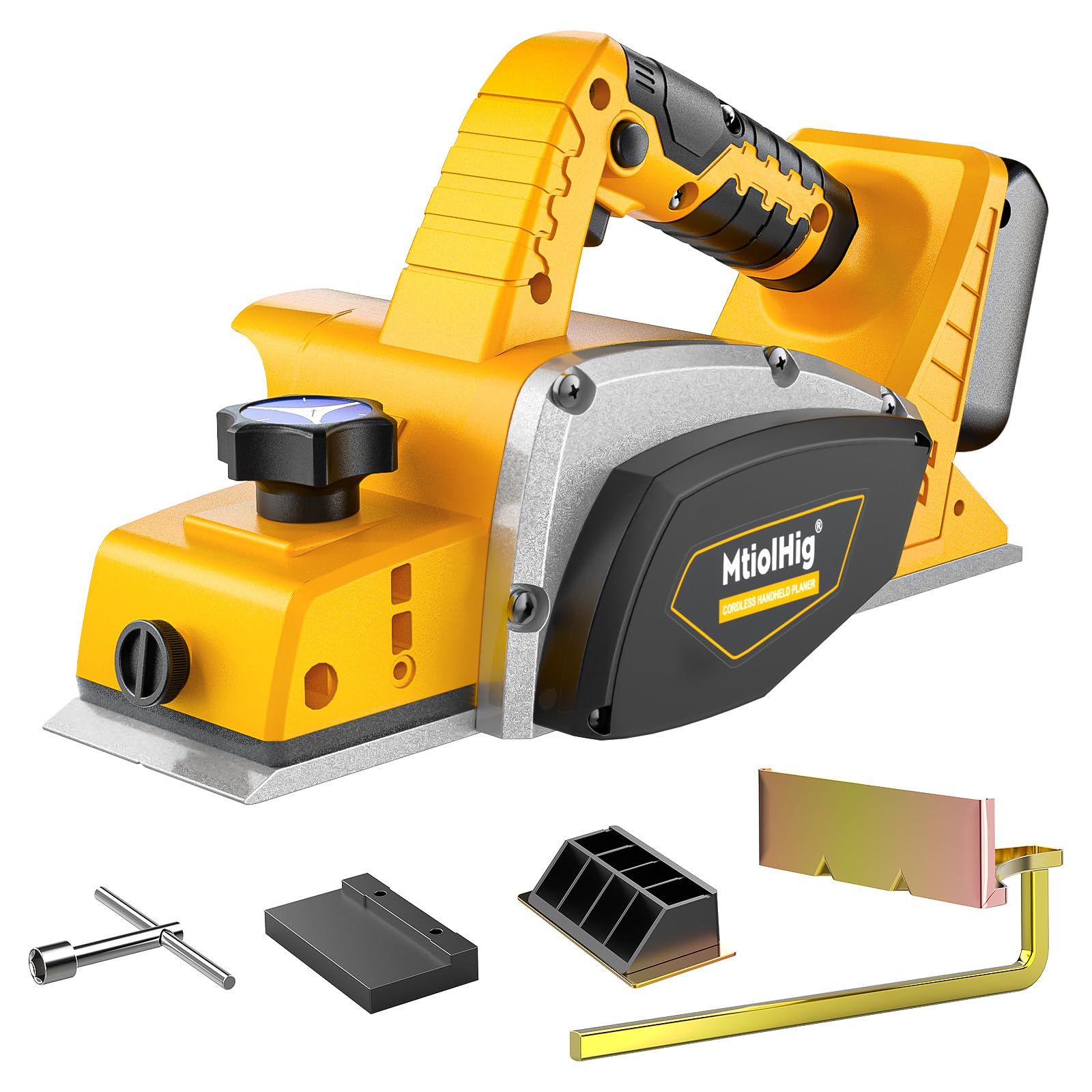
MtiolHig Planer

85 /100
Craft Score Excellent

Key details

RPM
15000
Motor
Brushless
Weight
Cut Width
3.25 in
View on Amazon

This planer offers a low-cost way to use DeWalt 20V batteries in a cordless planer, with a brushless motor handling light planing tasks. However, no manual is included, and some units may cut unevenly due to quality control. It's a gamble for users who can tolerate setup hassle and occasional results.

Pros

  • Affordable cordless option that works with DeWalt 20V batteries
  • Brushless motor provides decent power for small tasks

Cons

  • Cutting consistency can vary between units, leading to uneven surfaces
Our verdict

For light-duty trimming and smoothing where perfect flatness isn't required, this planer delivers cordless convenience at a low price — if you're willing to accept potential setup hassle and quality variance.

Check Latest Price

How to Choose

Cut Width

The standard 3-1/4 inch width handles most boards in two passes. A wider 4-3/8 inch planer clears a 2x4 in one pass, saving time on large decks or framing projects.

The trade-off is weight and maneuverability. Wide models are heavier and less suited for overhead work or trimming doors. Choose based on whether you plane wide stock regularly or prioritize a compact tool for finish work.

Max Depth of Cut

Shallow cuts (1/16 to 1/8 inch per pass) give a smoother finish and reduce blade wear. Deep cuts (up to 5/32 inch) remove material faster but require more power and can tear grain on hardwoods.

Most planers have adjustable depth stops. For fine woodworking, a planer with micro-adjustment in 0.1 mm increments is worth the extra cost. For rough stock removal, any planer with a simple knob works fine.

Motor Power

Corded planers range from 3.8 to 8 amps. Higher amps mean more torque for dense hardwoods without bogging down, but also more weight and noise. For occasional pine or door trimming, 6 amps is plenty.

Cordless planers rely on battery voltage and motor efficiency. Brushless motors last longer and run cooler. A 20V/18V brushless planer is comparable to a 6-amp corded model for medium cuts, but battery drain becomes a factor on heavy jobs.

RPM (Blade Speed)

Higher RPM (34,000 cuts per minute) removes material faster but can leave a rougher finish if the blades or shoe are not perfectly aligned. Lower RPM (14,000) is often smoother on the cut because the blade dwells longer.

Speed also affects blade wear. Very high RPM accelerates dulling, especially when planing nail-embedded or knotty lumber. For finish work, a moderate RPM with sharp blades yields the best surface quality.

Weight

Light planers (3-6 lb) reduce fatigue during overhead or vertical use, making them ideal for trim carpenters. Heavier units (8-10 lb) offer more stability and power but become tiring for extended freehand work.

Weight distribution matters as much as the number. A well-balanced tool feels lighter in use. Test the balance if possible - a front-heavy planer pulls the cut deeper on one side in vertical work.

Frequently Asked Questions