8 Best Iron on Edge Banding of 2026: Real Wood Options That Stay Put

Find iron-on edge banding that bonds properly without peeling – tested picks for furniture repairs and DIY woodworking projects.

Iron-on edge banding promises fast, clean edges for plywood and MDF. But the reality is that many rolls fail to stick, chip during trimming, or sand through after a few passes. The difference between a frustration-free finish and a peeling mess comes down to adhesive quality, veneer thickness, and the right application technique.

Most products claim ‘easy iron-on,’ but results depend heavily on iron temperature and pressure. Budget options often cut corners on adhesive consistency, leading to returns. This guide focuses on rolls that actually bond, trim, and sand as expected, across real wood and melamine choices.

Whether you are edging a single shelf or an entire kitchen of cabinets, the right edge banding saves hours of rework. The picks here balance adhesion, grain appearance, and project scale so you know which roll to reach for.

1

Best Overall

Edge Supply Birch 3/4x50 ft

94 /100
Craft Score Outstanding

Key details

Size
3/4 in x 50 ft
Adhesive
Hot melt
Material
Birch Wood
Thickness
View on Amazon

This birch veneer roll adheres firmly after a standard iron-on application and trims cleanly with a sharp knife or trimmer. The wood surface accepts stain and finish well, blending into plywood edges without a plastic look. Finger joints appear every few feet; under light finishes or close inspection the seams may be visible — a known tradeoff of real wood veneer rolls.

Best for furniture makers, cabinet builds, and shelving where the occasional splice won't matter. Not ideal for tabletops or visible surfaces that require a seamless continuous grain — melamine or a larger sheet of raw veneer would suit those projects better.

💡 Test a short piece with your finish on scrap to gauge how visible the finger joints will be in your specific project.

Pros

  • Real birch veneer with a natural wood appearance that takes stain well
  • Strong adhesion after ironing
  • Easy to apply and trim with basic tools, minimal learning curve

Cons

  • Finger joints appear every few feet that may be visible in light finishes
Our verdict

A solid choice for edging projects where the occasional finger joint is acceptable — delivers consistent results at a fair price.
Check Latest Price
2

Best Budget Real Wood

BEVTEE Birch Edge Banding 3/4x50

89 /100
Craft Score Excellent

Key details

Size
3/4 in x 50 ft
Adhesive
Hot melt
Material
Birch Wood
Thickness
0.6 mm
View on Amazon

This BEVTEE birch edge banding delivers strong adhesion and a natural look at a budget-friendly price. While the top pick offers thicker veneer for heavy-duty use, this roll is well-suited for small to medium projects where cost matters. Keep in mind the 0.6mm veneer can sand through if you are too aggressive, so use light pressure when finishing.

💡 Sand with light pressure and fine grit to avoid sanding through the veneer.

Pros

  • Good quality birch veneer at a budget price
  • Strong adhesion when applied with an iron
  • Easy to trim and apply without bubbling

Cons

  • Thin veneer can be damaged during sanding if too aggressive
Our verdict

A solid budget pick for cost-conscious DIYers who need a real wood edge banding for smaller projects, but be prepared to sand gently.

Check Latest Price
3

Best for Large Projects

FAKILO White Melamine 3/4x100 ft

87 /100
Craft Score Excellent

Key details

Size
3/4 in x 100 ft
Adhesive
Hot melt
Material
Melamine
Thickness
0.6 mm
View on Amazon

This 100-foot roll covers more linear footage than standard 25- or 50-foot options at a lower per-foot cost, making it the economical choice for whole-kitchen or multi-cabinet jobs.

Best for DIYers and contractors working on multiple white melamine panels who want consistent adhesion across a long run. The melamine is somewhat brittle – take care when ironing and trimming to avoid tears.

Pros

  • Easy to apply with consistent heat-activated adhesion
  • Great value

Cons

No notable drawbacks to flag.

Our verdict

The best pick for bulk white melamine edging if you're comfortable with careful iron-on technique.

Check Latest Price
4

Best for Standard MDF Panels

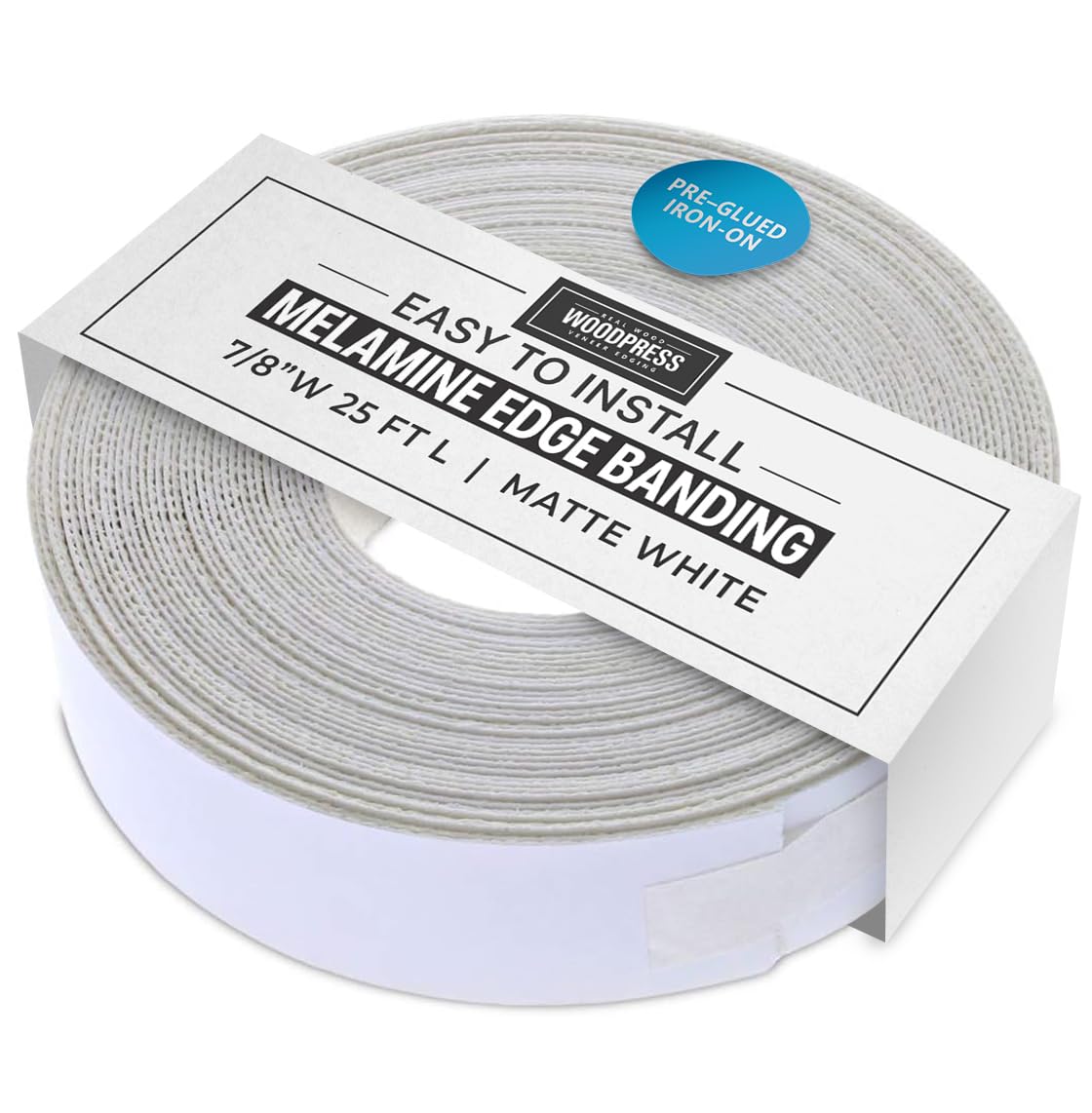
WoodPress Matt White 7/8x25 ft

88 /100
Craft Score Excellent

Key details

Size
7/8 in x 25 ft
Adhesive
Hot melt
Material
Melamine
Thickness
1/64 in
View on Amazon

The WoodPress 25-foot melamine roll is cut to exactly cover one 8x4 MDF panel, making it a convenient choice for single-sheet cabinet or shelf projects. The roll may arrive with taped sections rather than one continuous strip, so checking it before cutting is advisable. This edge banding suits DIYers working on standard MDF edging or kitchen cabinets where a clean white melamine finish is the goal.

Pros

  • Strong adhesion when ironed onto standard MDF panels; smooth, consistent finish.
  • Precise 7/8 inch width and 1/64 inch thickness ensure a flush edge.

Cons

  • Melamine material is brittle and can chip or crack when applied to tight curves
Our verdict

A solid fit for one-panel projects if you verify the roll's continuity and stick to straight edges.

Check Latest Price
5

Best White Melamine for Cabinets

Edge Supply White Mel 7/8x25 ft

90 /100
Craft Score Outstanding

Key details

Size
7/8 in x 25 ft
Adhesive
Hot melt
Material
Melamine
Thickness
0.88 in (stated)
View on Amazon

Edge Supply White Melamine Edge Banding matches white melamine surfaces closely and applies quickly with a household iron, making it a convenient option for refreshing shelving or cabinet edges. Color match is strong, and the pre-glued backing activates with medium heat for a tidy finish. However, adhesion can be inconsistent on some surfaces, and the melamine material may chip when trimmed with a knife. This tape suits quick repairs where the edge won’t see heavy contact — for high-traffic areas or curved edges, a more durable banding is a safer bet.

💡 Iron on medium heat and trim with a sharp utility knife to reduce chipping.

Pros

  • Matches white melamine surfaces for seamless repairs
  • Easy to apply with a household iron
  • Provides a clean finished look

Cons

  • Adhesion can be inconsistent on certain surfaces
  • Melamine may chip when trimming with a knife
Our verdict

Good for fast cosmetic fixes on white melamine, but not the choice for edges that get daily bumps or need to stay crack-free under pressure.

Check Latest Price
6

Budget Real Wood

GSCIT Club Birch 3/4x50 ft

86 /100
Craft Score Excellent

Key details

Size
3/4 in x 50 ft
Adhesive
Pre-glued
Material
Birch Wood
Thickness
0.6 mm
View on Amazon

GSCIT Club Birch Edge Banding offers real birch veneer at the lowest per-foot cost for iron-on projects. The pre-glued backing and 0.6mm thickness work for basic cabinet repairs and furniture restoration where appearance is secondary. However, unlike the more established Edge Supply option, detailed feedback on adhesion consistency and grain continuity is sparse — quality can vary between rolls. This suits one-off budget jobs where you can adjust expectations, but not projects where finish reliability matters.

Pros

  • Real birch veneer at the lowest price for budget-friendly edging projects.
  • Pre-glued flexible backing simplifies iron-on application without separate adhesive.

Cons

  • Finish consistency may differ between rolls due to limited verified user feedback.
Our verdict

Best for cost-sensitive one-off repairs where imperfect veneer is acceptable — not for visible furniture where reliable finish matters.

Check Latest Price
7

Budget Melamine Projects

ZYJT Melamine 7/8x25 ft

88 /100
Craft Score Excellent

Key details

Size
7/8 in x 25 ft
Adhesive
Pre-glued
Material
Melamine
Thickness
0.3 mm
View on Amazon

Priced well below most melamine tapes, this 25-foot roll is sized for a single cabinet or shelf repair. The white finish matches standard melamine panels. However, with no customer feedback to verify adhesion or brittleness, performance is unconfirmed – best reserved for low-stakes jobs where a second attempt is acceptable.

Pros

  • Low cost per foot for small melamine edging tasks
  • White color blends with typical melamine surfaces

Cons

  • Adhesion and chip resistance are unverified
Our verdict

Use this tape for a low-cost facelift on a closet shelf or cabinet edge that won't see daily wear – but keep a backup roll handy.

Check Latest Price
8

Oak-Matching Projects

Skelang Red Oak 3/4x50 ft

88 /100
Craft Score Excellent

Key details

Size
3/4 in x 50 ft
Adhesive
Pre-glued
Material
Red Oak
Thickness
View on Amazon

This red oak veneer shows nice grain and takes stain well, making it suitable for oak-matching repairs or small furniture builds. Application goes smoothly with an iron, and trimming is manageable with a sharp blade. However, adhesion may be patchy in spots, requiring extra heat or clamping in some areas, and the wood can splinter during trimming if cut too aggressively. The finger joints are visible every few feet, so light finishes will reveal them. Best for DIYers who don't mind a bit of fussing to get reliable bonding on non-critical edges.

Pros

  • Good quality oak veneer with attractive grain
  • Easy to apply and trim with standard tools

Cons

  • Adhesion can be inconsistent
Our verdict

A decent option for budget-conscious DIYers working on low-traffic oak furniture or craft projects where occasional adhesive touch-ups are acceptable.

Check Latest Price

How to Choose

Material: Real Wood vs Melamine

Real wood veneer (birch, oak, maple) stains and matches surrounding panels but almost always has finger joints every few feet. Melamine offers a consistent white or solid-color finish but is more brittle and prone to chipping when trimmed.

Choose real wood for visible edges where you want grain continuity after finishing. Choose melamine for cabinets or shelves that will be painted or already have a white laminate surface.

Width and Length

Width must match the thickness of your substrate — 3/4 inch for standard plywood, 7/8 inch for MDF or thicker panels. Length determines how many linear feet of edge you can cover: a 25-ft roll handles a single 8x4 panel, while 50-ft or 100-ft rolls save money on larger jobs.

Measure all edges before buying. Cutting a roll means splicing on long runs, which adds visible seams and extra work.

Adhesive Quality

Pre-glued hot melt adhesives vary widely in how well they bond. A good adhesive requires a hot iron (cotton setting) held for 8–10 seconds per section and a roller or block to press while cooling. Inconsistent glue is the top reason edge banding peels within days.

Products with a higher percentage of positive adhesion mentions in customer feedback tend to use thicker, higher-grade hot melt. Brand reputation and review volume are practical proxies here.

Thickness

Thicker veneer (0.6 mm and above) sands without breaking through to the substrate. Ultra-thin rolls (0.3 mm) work for quick repairs but require gentle sanding or they will sheer. For visible furniture edges, aim for at least 0.5 mm.

Thickness also affects trimming: thicker material cuts cleaner with a sharp knife or flush trim bit. Thin material can splinter or tear.

Visible Splices or Joints

Real wood veneer rolls are made by joining smaller veneer pieces end-to-end (finger joints). These appear every 2–4 feet and are more visible under light stains or clear finishes. If seamless grain is critical, look for continuous rolls (rare) or accept the joints as part of the look.

Some brands join sections with tape rather than finger joints — these can detach during ironing or create a visible line. Check reviews for mentions of 'splices' before buying.

Application Tips

Pre-glued edge banding needs a hot iron at maximum setting (no steam) and firm pressure for at least 8 seconds per section. After ironing, immediately use a roller or a block of wood to press the banding into the edge while it cools.

Trim excess with a sharp flush trim knife or a router with a flush trim bit. Sand lightly with 150-grit to blend, then apply finish.

Frequently Asked Questions