6 Best Wood Hardener of 2026: Avoid Drips, Get Deep Hardening

Choose a wood hardener that actually hardens deep rot and stays on vertical surfaces without dripping. This guide matches formulas to your repair.

Wood hardeners promise to consolidate rotted wood, but the results vary drastically with formula viscosity and application method. A water-thin hardener can drip off vertical window sills, while a thick one may not penetrate deep rot pockets. The key insight: multiple thin coats outwork a single thick one, especially on vertical surfaces.

This guide focuses on the real-world trade-offs: cure time, viscosity, one-part versus two-part, and water versus solvent base. Whether you need a fast-drying fix for a small trim piece or a structural epoxy for a load-bearing beam, the best wood hardener is the one that matches your rot depth and surface orientation.

Budget-friendly options like water-based formulas excel for indoor repairs with easy cleanup, while premium two-part epoxies provide deep penetration for severe rot. Knowing these boundaries helps you avoid common frustrations like tacky finishes or runny application.

1

Best Overall Wood Hardener

PC-Petrifier Water-Based 16oz

90 /100
Craft Score Outstanding

Key details

Base
Water
Type
One-part
Value
High
Cure Time
24 hours
View on Amazon

A 16-ounce bottle costs less than half of most solvent-based alternatives, and water-based cleanup means no harsh chemicals or ventilation requirements. The milky liquid penetrates rotted wood — including particle board — and restores enough strength to hold filler or paint.

The thin, water-like consistency works well on horizontal surfaces like window sills and table tops, but drips easily from vertical repairs. Applying multiple thin coats and allowing each to dry fully before the next is the standard approach — a single coat may not provide deep enough penetration on severely punky wood.

Best suited for budget-conscious DIYers tackling small indoor projects where the surface can be placed flat or tilted to control runoff. Avoid this for tall fence boards or exterior siding where drips become a nuisance — those jobs call for a thicker solvent-based product like Minwax. Drying time can extend past 24 hours in humid conditions, so plan accordingly.

💡 In humid conditions, allow extra drying time and apply several thin coats rather than one heavy layer.

Pros

  • Effectively hardens rotted wood, including particle board, preparing it for filler
  • Water-based formula allows brush-on or spray application and cleanup with soap and water
  • Budget-friendly price delivers similar performance to pricier alternatives

Cons

  • Drying time may take more than 24 hours in humid conditions or with thick coats
  • Thin consistency drips from vertical surfaces, requiring multiple coats for adequate coverage
Our verdict

For indoor repairs where you can control application, this is the budget pick that hardens wood effectively without the odor and cleanup hassle of solvent-based products.
Check Latest Price
2

Best for General Use – Solvent-Based

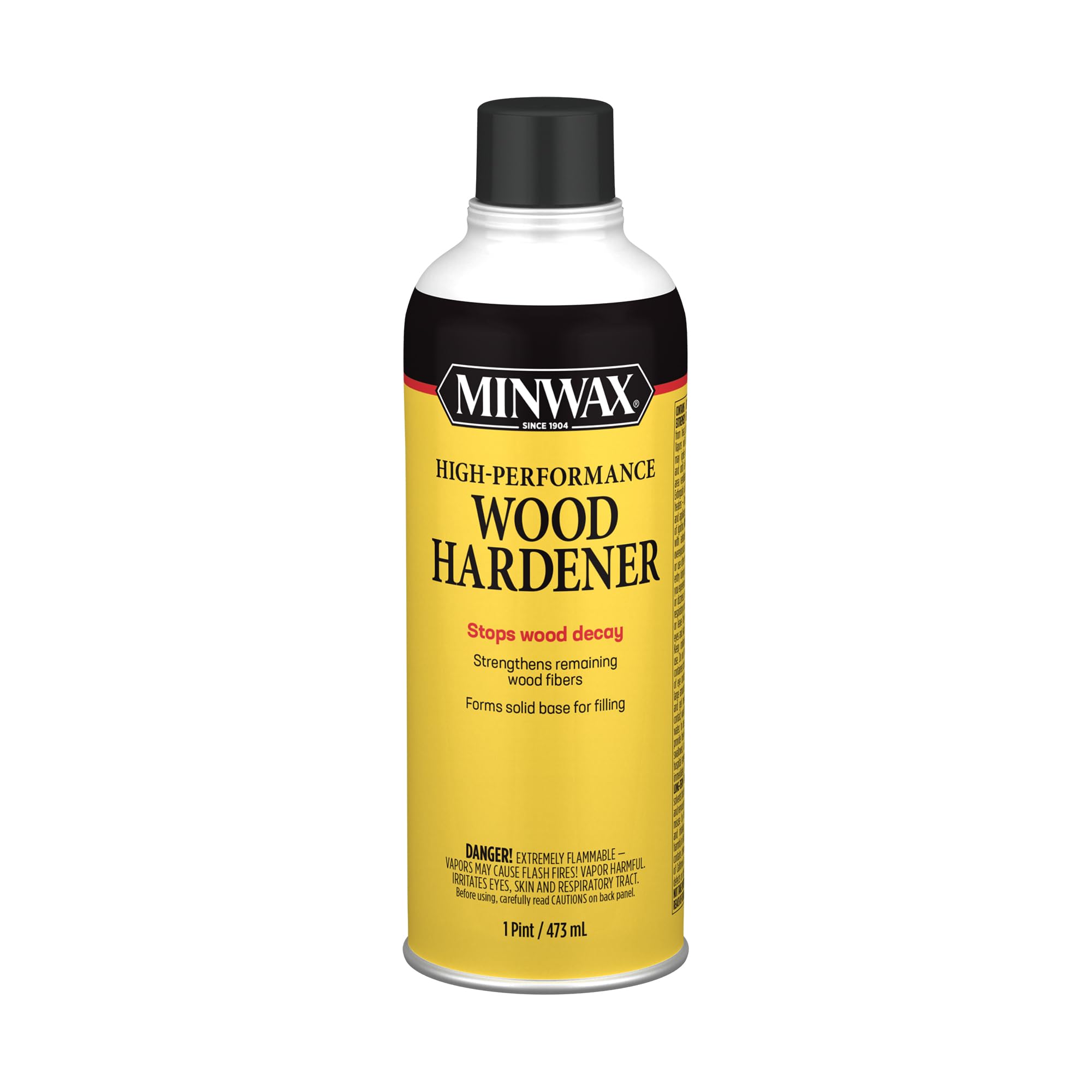
Minwax High Performance 1pt

90 /100
Craft Score Outstanding

Key details

Base
Solvent
Type
One-part
Value
Moderate
Cure Time
8-12 hours
View on Amazon

The Minwax Wood Hardener's medium viscosity (similar to paint) clings to vertical surfaces better than thinner water-based alternatives, reducing runoff on window sills, door frames, and furniture legs. Once cured overnight, it creates a solid base that sands smooth and accepts paint or filler without issue.

This solvent-based formula suits DIYers who prioritize drip control over quick cleanup or low cost. The strong fumes require decent ventilation, so it's not ideal for small enclosed spaces unless you have a respirator on hand. For horizontally placed repairs or heavily rotted wood that needs deep saturation, a two-part epoxy or the water-based PC-Petrifier may be a better fit.

💡 Work in a well-ventilated space and consider a respirator to manage the solvent fumes without discomfort.

Pros

  • Hardens soft and dry-rotted wood effectively for interior and exterior repairs.
  • Creates a sandable and paintable finish that holds filler well.
  • Medium viscosity reduces drips on vertical surfaces compared to water-based hardeners.

Cons

  • Solvent fumes are strong; working in a ventilated area or using a respirator is necessary.
  • May need multiple coats for severely rotted wood since it doesn't penetrate as deeply as two-part epoxies.
Our verdict

Best for vertical repairs where drip control matters and you have decent ventilation; the water-based top pick is a smarter choice for budget-conscious or indoor-only jobs.

Check Latest Price
3

Quickest Drying – Best for Fast Repairs

Bondo Rotted Wood Restorer 8oz

88 /100
Craft Score Excellent

Key details

Base
Solvent
Type
One-part
Value
Low
Cure Time
2 hours tack-free
View on Amazon

Tack-free in just two hours, the Bondo Rotted Wood Restorer delivers the fastest cure among solvent-based hardeners. The built-in brush allows direct application from the can, making small repairs quick and tidy. While two-part epoxies offer higher structural strength, this single-part formula prioritizes speed for urgent jobs.

This 8-ounce can is priced at a premium per ounce, and the lid tends to seal shut after first use — making it best for buyers who can apply the entire contents in one session. The strong solvent fumes require a mask and good ventilation, so it suits outdoor or workshop use. For small repairs on columns, siding, or decks where time is critical, this restorer hardens and seals rotted wood effectively before applying filler.

💡 Clean the cap threads immediately after use or transfer remaining product to a glass jar to prevent the lid from sealing shut.

Pros

  • Fast drying
  • Effective at hardening and sealing rotted wood on columns, siding, and decks.
  • Built-in applicator brush makes small repairs convenient.

Cons

  • Expensive for the volume at 8 oz per can.
  • Lid becomes difficult to open after first use if any product dries in the cap.
Our verdict

For small, urgent repairs where speed matters, this is the clear choice — but plan to use the whole can in one go and work in a ventilated area.

Check Latest Price
4

Professional Grade – Best for Structural Repair

Abatron LiquidWood 2pt Kit

88 /100
Craft Score Excellent

Key details

Base
Epoxy (low VOC)
Type
Two-part
Value
Low
Cure Time
24 hours
View on Amazon

The Abatron LiquidWood penetrates deeply into rotted wood, restoring structural integrity with a low-odor, low-VOC formula that works well in occupied spaces. Its medium-to-high viscosity reduces drips on vertical surfaces, and the 30-45 minute pot life allows time for thorough saturation. This contrasts with the thinner water-based top pick, which may require multiple coats for comparable depth. The 1:1 mixing ratio is straightforward, but leftover epoxy hardens quickly in the container.

This kit suits DIYers tackling heavy-duty beam or log repairs where maximum strength is needed. The premium price is justified for interior structural restoration where low fumes are critical, but users must mix thoroughly and apply in thin layers to avoid a tacky finish. For small cosmetic fixes, a simpler hardener is more cost-effective. It excels in scenarios where the wood is severely rotted and requires a deep-penetrating consolidant rather than a surface hardener.

💡 Mix the two parts thoroughly and apply in thin layers to ensure a non-tacky, fully cured surface.

Pros

  • High structural strength restores deeply rotted wood to near-original condition.
  • Low odor and low VOCs make it safe for indoor use without strong fumes.
  • Simple 1:1 mixing ratio with a 30-45 minute working time.

Cons

  • Surface can remain tacky if not mixed thoroughly or applied too thickly.
  • Premium-priced kit may feel expensive for small or one-off repairs.
Our verdict

For interior structural restoration requiring deep penetration and low VOCs, this epoxy delivers where simpler hardeners fall short.

Check Latest Price
5

Best for Outdoor & Termite Damage

PC-Rot Terminator Epoxy 24oz

89 /100
Craft Score Excellent

Key details

Base
Epoxy
Type
Two-part
Value
Low
Cure Time
24-48 hours
View on Amazon

The PC-Rot Terminator epoxy delivers 4,500 psi tensile strength across a temperature range from -20°F to +200°F, making it a heavy-duty solution for rotted exterior wood. Unlike single-part hardeners that merely surface-harden, this two-part system penetrates deep into punky wood and cures into a waterproof barrier. That low viscosity also means it may run on vertical surfaces if over-applied, and the 60-minute work time allows generous saturation before hardening.

This epoxy suits demanding repairs on decks, window sills, and termite-damaged posts where moisture resistance and structural reinforcement are critical. The tradeoff: full cure takes up to two days, especially in cool weather, and dense or painted wood may require pilot holes for proper absorption. For small indoor fixes or quick one-day turnarounds, a water-based hardener like the top pick PC-Petrifier is more practical.

💡 Drill small pilot holes about 1/8 inch into dense or painted wood before applying to ensure the epoxy penetrates fully.

Pros

  • Penetrates deep into rotted wood and hardens to a waterproof, strong foundation.
  • Easy to mix and apply with squeeze bottles in a 1:1 ratio.
  • High tensile strength (4,500 psi) for structural repairs.

Cons

  • Full cure can take up to two days, especially in cooler weather.
  • May not absorb into dense or painted wood without drilling pilot holes.
Our verdict

For serious rot on decks and window sills where water resistance and structural integrity are non-negotiable, this epoxy delivers - just budget the extra curing time.

Check Latest Price
6

Highly Rated No-Mix Option

J-B Weld Wood Restore 16oz

91 /100
Craft Score Outstanding

Key details

Base
Solvent
Type
One-part
Value
Cure Time
Quick (hours)
View on Amazon

J-B Weld Wood Restore simplifies hardening with a brush-on, no-mix formula that dries to a rock-like finish in hours. Compared to solvent-based alternatives, this one-part liquid avoids mixing steps and strong odors, making it a straightforward option for homeowners.

Best suited for repairing dry-rotted deck boards, window frames, or furniture where the wood is not severely punky. The thin consistency can drip on vertical surfaces, so careful application is needed, and very soft, rotted wood may not harden fully — a tradeoff worth checking before use.

💡 For best results on vertical surfaces, apply thin coats with a brush and let each layer dry before adding more.

Pros

  • Effectively hardens rotted wood and restores strength.
  • High satisfaction with quality and durability as a base for filler.
  • Dries quickly to a sandable, rock-like surface.

Cons

  • May drip on vertical surfaces due to thin consistency.
  • Can leave severely punky wood insufficiently hardened.
Our verdict

A straightforward hardener for general repairs where vertical runs are manageable and the wood isn't completely rotted through.

Check Latest Price

How to Choose

Cure Time: How Fast Do You Need to Work?

Cure time directly affects your project timeline. One-part hardeners like Bondo can be tack-free in two hours, while two-part epoxies may take 24 to 48 hours to fully cure, especially in cooler weather.

Faster cure means less time to adjust, but also a shorter window for multiple coats. If you need to paint or apply filler the same day, a quick-dry formula saves hours. For deep saturation where multiple thin coats are beneficial, a longer cure time is an advantage.

Viscosity: Drip Control vs. Penetration

Viscosity determines how the hardener behaves on different surfaces. Water-thin formulas (like PC-Petrifier) penetrate cracks and pores easily but run off vertical sills, requiring multiple thin coats to avoid drips. Medium-viscosity products (like Minwax) stay put better on vertical applications but may not reach deep into fine cracks.

For horizontal repairs like a window sill bottom, low viscosity is fine. For door frames or trim, aim for medium viscosity or be prepared to apply thin coats with a brush and wipe drips promptly.

One-Part vs. Two-Part: Strength vs. Convenience

One-part hardeners are ready to use straight from the can — brush on, let dry, done. They work well for surface-level rot and minor repairs. Two-part epoxies (like Abatron and PC-Rot Terminator) require mixing but cure to a much stronger, waterproof finish that can restore structural integrity.

The hidden trade-off: two-part epoxies have a limited pot life (30-60 minutes) and require thorough mixing to avoid tacky spots. For load-bearing repairs or outdoor exposure, the extra effort is worthwhile. For cosmetic fixes, a one-part hardener is simpler and cheaper.

Water vs. Solvent: Cleanup and Odor Trade-offs

Water-based hardeners clean up with soap and water, have little to no odor, and are safer for indoor use without heavy ventilation. However, they are less aggressive on deep rot and may require more coats. Solvent-based options (like Minwax and Bondo) penetrate better into dense or oily wood but produce strong fumes that need a respirator and open windows.

Your choice largely depends on where you are working. For a basement workshop or a living room furniture repair, water-based wins on convenience. For a deck or garage project with good airflow, solvent-based can offer faster results and deeper penetration.

Volume and Value: Cost per Repair

Wood hardeners are sold in small containers (8 oz to 32 oz) with large price differences. The cheapest per ounce is PC-Petrifier at about $0.64 per ounce, while Bondo's 8 oz can costs over $2.80 per ounce. For a single small repair, the absolute cost may be similar, but for multiple projects or large areas, volume per dollar matters.

A two-part epoxy kit may cost $50+ but can salvage a structural beam, saving thousands in replacement. Match the investment to the value of what you're repairing — cheap hardeners are fine for a painted window sill, but not for a load-bearing column.

Frequently Asked Questions