10 Best Wood Lathe 2026: The Specs That Actually Matter

Which wood lathe gives you enough power, smooth speed control, and rock-solid stability? This guide cuts through marketing fluff to find the right tool for your projects and budget.

Choosing a wood lathe often means decoding specs that don't tell the full story. A lathe labeled 'variable speed' might still require you to manually move the belt, while another with a 1/3 HP motor will stall on the first hardwood bowl you try. The real difference isn't on the box; it's in how the lathe handles load and vibration.

That's why this guide focuses on the decisions that actually affect your turning experience: motor power, speed control type, and construction weight. Whether you're turning pens, bowls, or furniture parts, matching these to your typical project size prevents frustration and wasted money.

We break down the trade-offs between belt-change and electronic variable speed, explain why cast iron matters more than you think, and highlight the durability pitfalls that only become apparent after months of use.

1

Best Overall

JET JWL-1221VS

86 /100
Craft Score Excellent

Key details

Weight
121 lbs
Construction
Alloy steel/cast iron
Motor & Speed
1 HP, variable 3-range
Swing & Centers
12x21
View on Amazon

The JWL-1221VS delivers smooth, quiet operation across three belt-based speed ranges, with electronic variable control that lets you dial in the exact RPM for each cut. The cast iron bed and alloy steel construction keep vibration low even when roughing out an unbalanced bowl blank. Speed inconsistency at the lowest end of a range may be noticeable, but the overall control is a clear step up from cheaper alternatives.

This lathe fits serious hobbyists turning bowls and spindles up to 12 inches in diameter who want variable speed without crossing the $1,000 mark. The plastic switch housing and belt cover are a practical tradeoff — they can crack during shipping or under repeated stress, so check for damage on arrival and treat the covers gently. For turners who prioritize metal construction throughout, a pricier option like the JET JWL-1640EVS avoids those parts.

💡 Check the plastic cover and switch housing for cracks when the lathe arrives; gentle handling prevents further damage.

Pros

  • Smooth variable speed across three ranges with easy belt changes.
  • Quiet operation even during heavy cuts on unbalanced blanks.
  • Cast iron and alloy steel build keeps vibration low for clean finishes.

Cons

  • Plastic switch housing and belt cover may crack under shipping stress or repeated use.
  • Speed can feel unstable at the low end of a belt range, requiring fine adjustment.
Our verdict

For hobbyists who want a stable variable-speed lathe without spending over $1,000, this JET model delivers — just plan to inspect the plastic parts and treat the covers with care.

Check Latest Price
2

Best Budget for Bowls

WEN LA3424

87 /100
Craft Score Excellent

Key details

Weight
Construction
Cast iron
Motor & Speed
1/2 HP, 5-speed belt
Swing & Centers
12x18
View on Amazon

The WEN LA3424 is a budget-friendly benchtop lathe that handles bowls up to 12 inches, giving beginners a low-cost way to start woodturning. Compared to the top pick, it trades variable-speed convenience for a much lower price. This lathe suits hobbyists with bench space who can accept manual speed changes — the five speeds require moving the belt, which can be tight during a project. The cast iron bed provides solid stability for small blanks, though the spindle may wear over time, so long-term accuracy is something to monitor.

💡 Keep a hex wrench near the lathe for belt adjustments — loosening the tension screw makes speed changes smoother.

Pros

  • Turns bowls up to 12 inches with good results at a budget price.
  • Easy setup and intuitive operation for first-time woodturners.
  • Cast iron bed provides a stable base for smaller workpieces.

Cons

  • Speed changes require manually shifting the belt, which can be tight and inconvenient between cuts.
  • Spindle may lose concentricity after extended use, affecting precision on future projects.
Our verdict

For beginners who want to turn small bowls without breaking the bank, the WEN LA3424 is a capable starting point despite the belt-speed hassle.

Check Latest Price
3

Best Mini for Precision

Rikon 70-105

87 /100
Craft Score Excellent

Key details

Weight
74 lbs
Construction
Cast iron
Motor & Speed
1/2 HP, 5-speed belt
Swing & Centers
10x18
View on Amazon

The Rikon 70-105 delivers a vibration-dampening cast iron frame at a mid-range price, making it a steady platform for small-diameter work. Where the top pick offers variable speed and a larger swing, this mini lathe keeps things simple with five belt-driven speeds and an 18-inch between centers capacity. It suits woodturners focused on pens, bottle stoppers, and small bowls who prefer mechanical simplicity over electronic controls. However, bearing longevity and plastic belt cover durability can be inconsistent — worth checking upon arrival.

💡 Inspect plastic belt cover and bearings upon delivery — replacements are available but add time.

Pros

  • Cast iron build reduces vibration for cleaner cuts on small spindles.
  • Five belt-driven speeds provide reliable power delivery without electronic complexity.
  • Compact size and 74-pound weight suit benchtop setups.

Cons

  • Belt cover can arrive cracked or break with minimal handling.
  • Bearings may develop noise or wobble within months in some cases.
Our verdict

A sturdy mini lathe for dedicated small-project turners who can accept manual speed changes and occasional QC checks.

Check Latest Price
4

Best Midi for Versatility

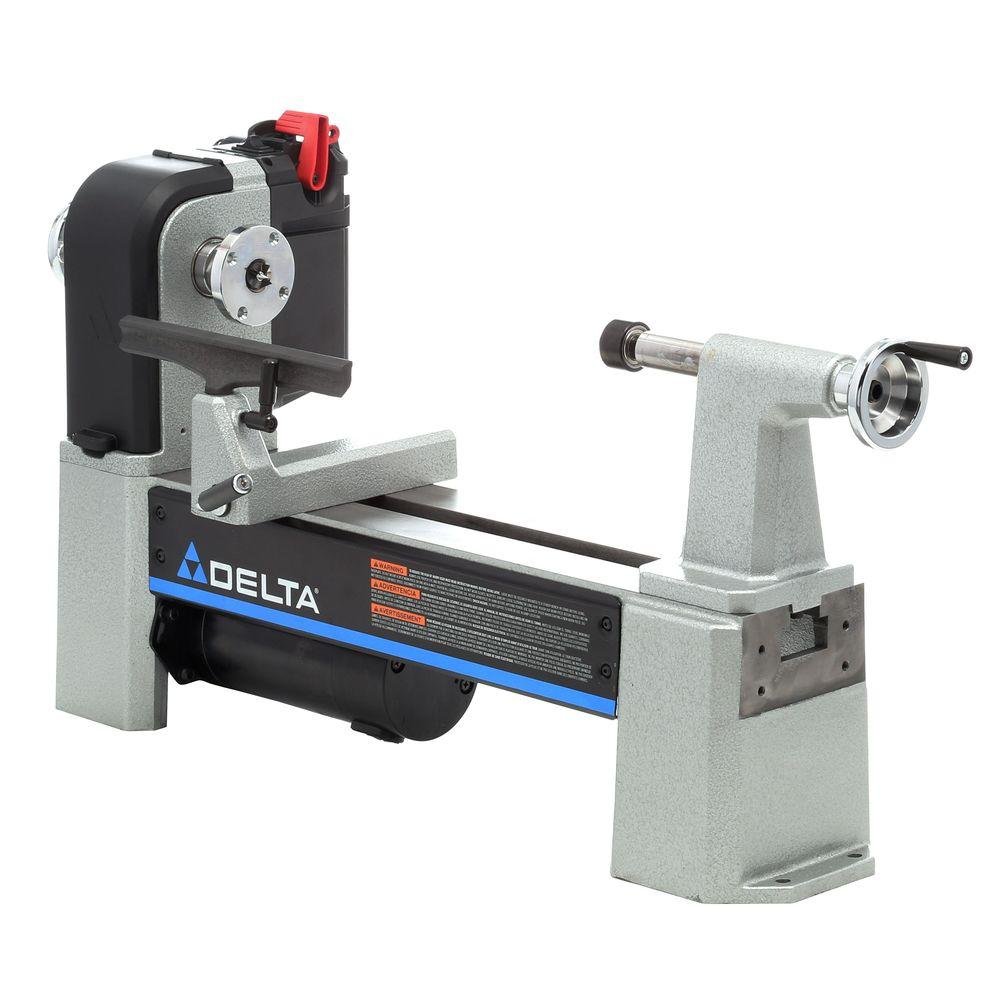
Delta 46-460

84 /100
Craft Score Excellent

Key details

Weight
Construction
Cast iron
Motor & Speed
1 HP, variable 3-range
Swing & Centers
12.5x16.5
View on Amazon

The Delta 46-460 delivers an uncommon combination: 1 HP variable speed in a 12.5-inch swing lathe that can extend to 42 inches between centers. The 3-range speed control and quiet operation make it pleasant for spindle work and small bowls. However, the variable speed drive can stop mid-turn, and some units may have wired the reverse switch incorrectly.

This lathe suits turners comfortable with diagnosing electronic hiccups — it rewards those who can sort out an intermittent cut-out or a reversed direction switch. For buyers who want plug-and-play reliability, the Jet JWL-1221VS is a safer bet.

💡 Reverse switch orientation may need verification upon setup — worth checking before first use.

Pros

  • Powerful 1 HP motor with smooth variable speed across three ranges
  • Quiet and stable with minimal vibration for clean cuts
  • Easy belt changes between speed ranges

Cons

  • Variable speed drive can stop unexpectedly during use
  • Rear cover and power switch durability may be an issue on some units
Our verdict

A well-specced midi lathe for hobbyists who value power over plug-and-play convenience — just budget time for occasional troubleshooting.

Check Latest Price
5

Best Professional Large Lathe

JET JWL-1640EVS

87 /100
Craft Score Excellent

Key details

Weight
377 lbs
Construction
Cast iron/steel
Motor & Speed
1.5 HP, EVS 40-3200
Swing & Centers
16x40
View on Amazon

The JET JWL-1640EVS delivers the power and capacity to turn large bowls and long spindles without vibration or stalling, with an electronic variable speed range from 40 to 3200 RPM. The 377-pound cast iron construction provides stability that lighter lathes cannot match, but newer models no longer include a rotating headstock for outboard turning. This lathe suits workshop professionals with a permanent space and help for moving it into place. Some units arrive with cosmetic or functional shipping damage, so inspect on delivery.

💡 Arrange two people and a dolly for setup — this lathe stays put permanently.

Pros

  • Cast iron build damps vibration during heavy cuts on large workpieces.
  • Variable speed down to 40 RPM enables fine finishing without changing belts.

Cons

  • Newer models lack a rotating headstock, which limits outboard turning for large bowls.
  • At 377 pounds, moving it requires two people and a permanent workshop location.
Our verdict

For turners who need the capacity and torque for large projects and have a dedicated shop, this lathe delivers. Those who rely on outboard turning should consider other models with a rotating headstock.

Check Latest Price
6

Best Value Variable Speed

Grizzly T25920

84 /100
Craft Score Excellent

Key details

Weight
80 lbs
Construction
Cast iron
Motor & Speed
3/4 HP, variable 300-3700
Swing & Centers
12x16.5
View on Amazon

The Grizzly T25920 brings variable speed (300–3700 RPM) and an 80-pound cast iron bed to a price point that undercuts many competitors. The 3/4 HP motor handles spindle work and softwoods without issue, but it will bog down on dense hardwoods or heavy bowls — a tradeoff that matches its intended use for beginners. The digital readout and electronics have shown occasional quirks, so running a full speed-range check after assembly is a good habit.

This lathe is a natural fit for turners who want variable speed and cast iron stability without spending for a 1 HP machine. If your projects stay in the softwood or small-spindle realm, the Grizzly delivers strong value. Those planning regular hardwood bowls should look to the JET JWL-1221VS for its extra power and broader track record.

💡 After assembly, run the lathe through the full speed range to confirm the digital readout and controls respond consistently.

Pros

  • Cast iron bed reduces vibration for smoother cuts at any speed
  • Easy to assemble and intuitive controls for new turners
  • Variable speed across a useful 300–3700 RPM range at a competitive price

Cons

  • Motor can bog down when working with dense hardwoods or large bowls
  • Digital readout and electronics may need early verification
Our verdict

Best for beginners who want variable speed and a stable bed for softwood spindle work without spending for a 1 HP lathe.

Check Latest Price
7

Pen Turning

WEN LA3421

83 /100
Craft Score Excellent

Key details

Weight
Construction
Motor & Speed
1/3 HP, variable 750-3200
Swing & Centers
8x13
View on Amazon

The WEN LA3421 delivers the most affordable way to start turning pens, ornaments, and other small spindle projects, with easy setup and a solid feel for its price. However, motor and speed control consistency is too limited to support regular use or larger work — best suited for risk-tolerant beginners on a tight budget.

Pros

  • Budget-friendly entry for pen turning and small crafts
  • Simple setup and controls for new woodturners

Cons

  • Motor and speed control can be inconsistent during extended turning sessions
Our verdict

Appropriate only for beginners who want the lowest possible cost to try pen turning and are willing to accept the risk of motor or speed control issues.

Check Latest Price
8

Light Spindle

Shop Fox W1704

85 /100
Craft Score Excellent

Key details

Weight
Construction
Cast iron base
Motor & Speed
1/3 HP, variable
Swing & Centers
8x13
View on Amazon

Variable speed at the lowest price point opens woodturning to budget-conscious beginners working on pens and small spindles. The underpowered 1/3 HP motor and durability concerns mean it cannot handle bowl turning or hardwoods. Best for those who accept its limits and stick to light projects.

Pros

  • Budget-friendly entry into variable-speed woodturning
  • Lightweight setup suits small spindle projects

Cons

  • Motor stalls under load on hardwoods or bowl turning
Our verdict

Ideal for pen turners and beginners on a tight budget who will stick to small spindles and softwoods.

Check Latest Price
9

Micro Crafts

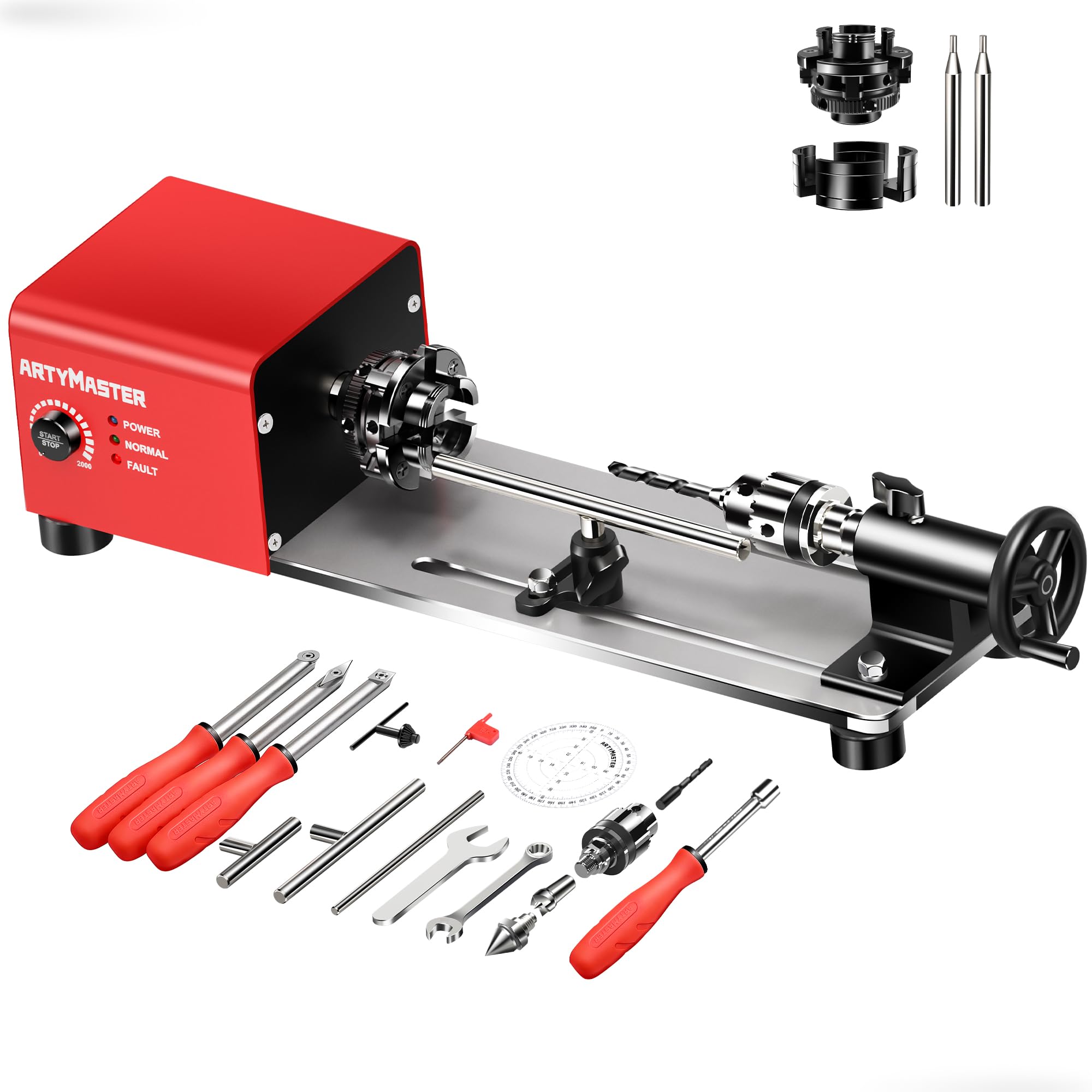
ArtyMaster WM101A

84 /100
Craft Score Excellent

Key details

Weight
Construction
Motor & Speed
0.13 HP, variable
Swing & Centers
3x8
View on Amazon

Build quality is solid for its size, and the included accessory kit adds value. Quiet operation at higher speeds suits indoor workshops. However, power is too limited for any woodturning beyond 3-inch diameter, making it a specialized tool for micro crafts only.

Pros

  • Solid build quality and good feel for its size
  • Works well for very small projects like pens, rings, and beads

Cons

  • Motor stalls under light pressure on material beyond 3-inch diameter
Our verdict

Best suited for hobbyists making rings, beads, or other miniature items where the power limitation is acceptable.

Check Latest Price
10

Experiment Only

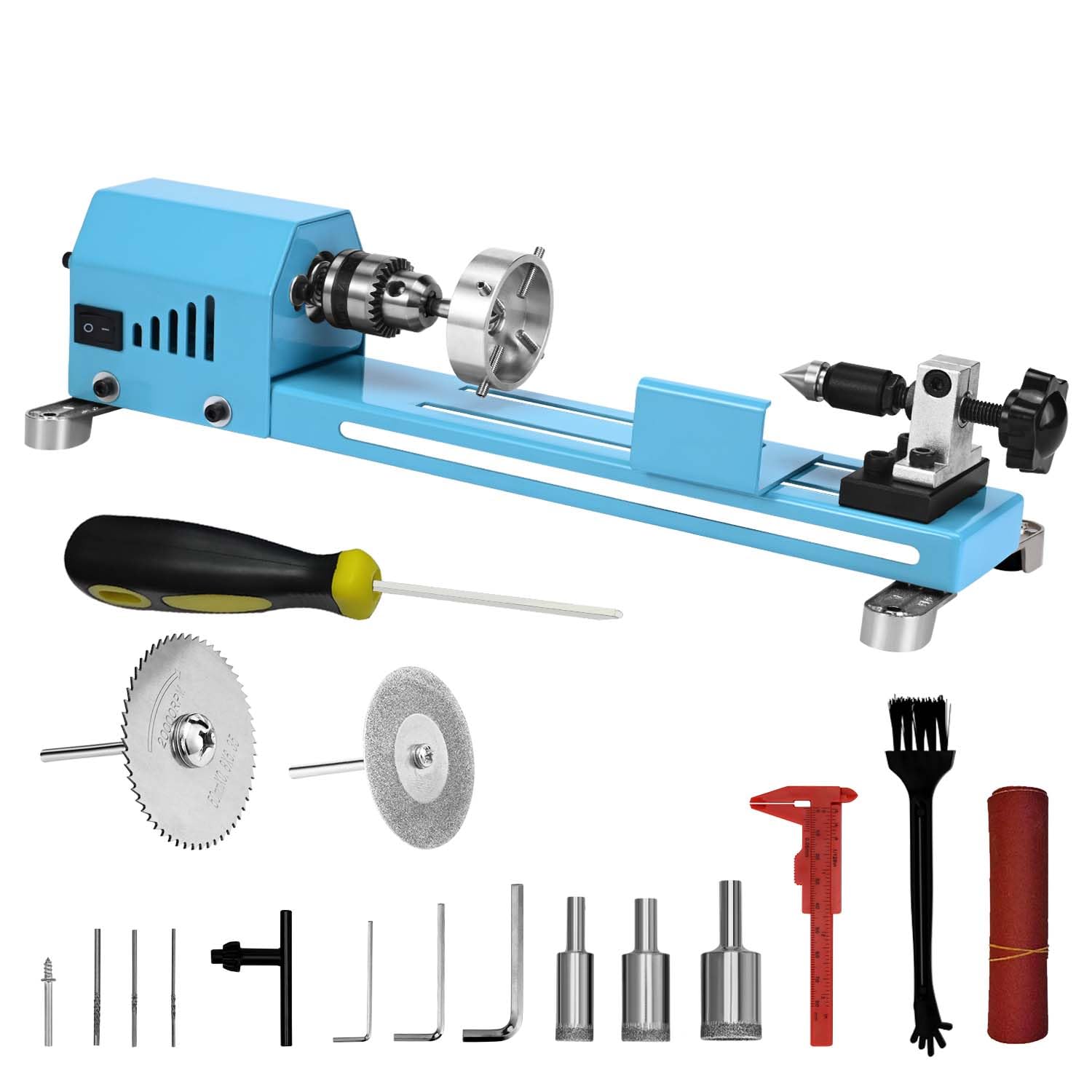
Winbomgo Mini

82 /100
Craft Score Excellent

Key details

Weight
Construction
Plastic & light metal
Motor & Speed
0.13 HP, 7-speed
Swing & Centers
View on Amazon

This entry-level mini lathe includes a generous accessory kit and costs less than most alternatives, making it tempting for curious beginners. However, the 100W motor can stop after limited use, and the plastic-heavy construction may shift under pressure. It handles tiny rings and beads but stalls on any real woodturning. Only consider this for supervised children's crafts or curiosity experiments where reliability is not expected.

Pros

  • Lowest cost entry point for lathe curiosity
  • Capable of turning tiny beads and rings

Cons

  • Motor may stop working after a few uses; plastic parts can loosen
Our verdict

Only choose this if you need a very cheap experiment for ultra-small crafts and accept the possibility of the motor not lasting.

Check Latest Price

How to Choose

Swing and Distance Between Centers

Swing determines the maximum bowl diameter you can turn; distance between centers limits spindle length. A lathe with 12-inch swing and 18-inch centers handles most hobbyist work, but larger bowls require a bigger swing.

Going beyond 12 inches adds significant weight and cost. For pens and small spindles, an 8x13 mini lathe is sufficient, but you will quickly outgrow it if you want to turn bowls.

Motor Power and Speed Control

Horsepower directly affects how well the lathe handles hardwoods without stalling. 1/2 HP is the minimum for bowl turning; 1/3 HP models stall easily on any wood wider than a few inches.

Variable speed electronics allow fine control without stopping, but they add $200-300 to the price. Belt-change speed systems are cheaper but interrupt your workflow and require manual adjustment for each range.

Construction Material

Cast iron absorbs vibration far better than steel or aluminum, producing smoother cuts and less fatigue. Lathes with heavy cast iron beds (80+ lbs) stay planted even with out-of-balance blanks.

Lighter materials transmit vibration to the tool rest and workpiece, leading to chatter and poor surface finish. Always prioritize cast iron over lower weight unless you only turn tiny pieces.

Weight and Stability

A heavier lathe resists walking and reduces vibration. Models over 100 lbs typically do not need to be bolted down for spindle work, while lightweight benchtop lathes require a sturdy stand or anchoring for bowl turning.

Weight also affects portability: a 70-lb mini lathe can be moved by one person, but a 377-lb full-size lathe needs two people and a dedicated spot.

Accessories and Spindle Taper

The spindle taper (MT1 vs MT2) determines which centers and chucks you can use. MT2 is the standard for most mid-size and larger lathes, offering better grip and more accessory options.

Some lathes come with a chuck, faceplate, and tool rest, but many budget models include only the bare essentials. Factor in the cost of a quality 4-jaw chuck ($50-100) when comparing prices.

Frequently Asked Questions