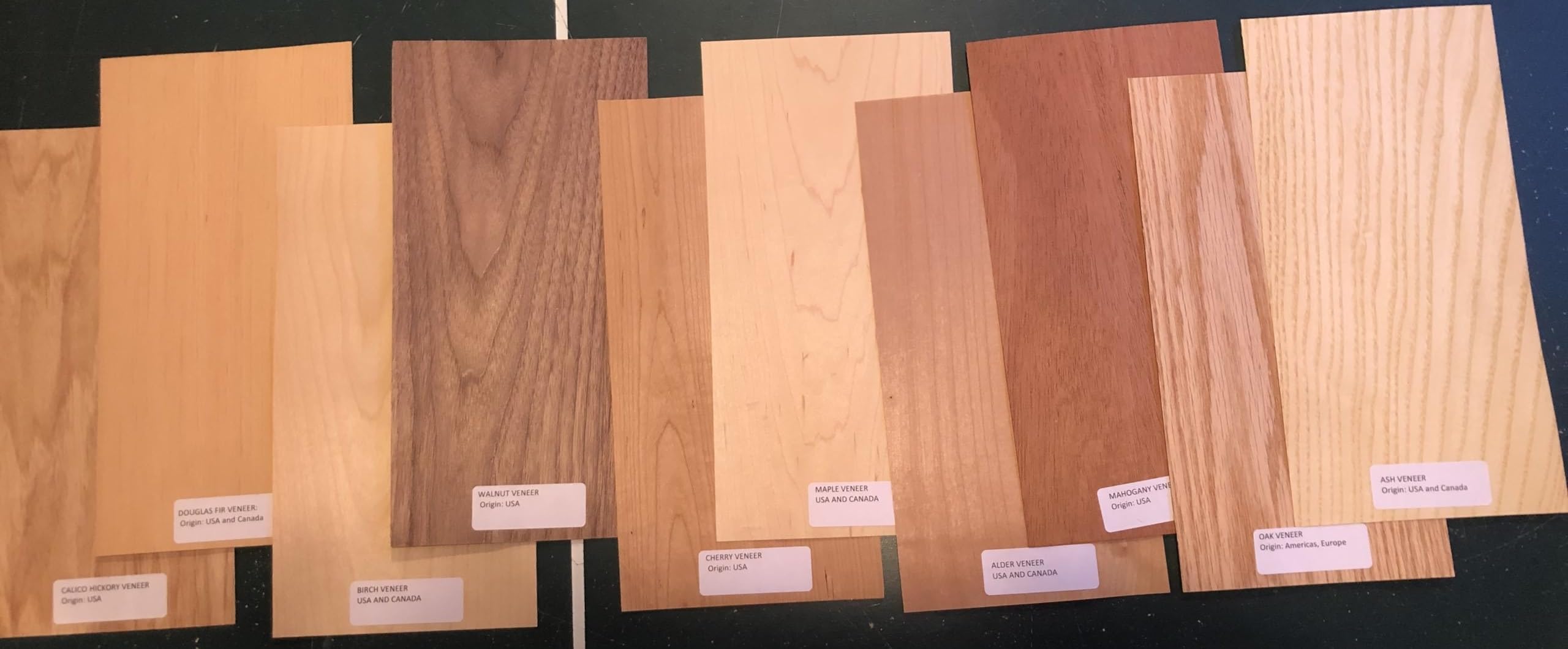
9 Best Wood Veneer Sheets of 2026: Paper-Backed Stability for Restorations

Which wood veneer sheets resist cracking and lay flat for furniture restoration and marquetry? The paper-backed winners that handle like a dream.

Wood veneer should make a project look better, not add warping and splitting headaches. Many listings claim 'A Grade' and 'premium,' but the real difference comes down to how the sheet is backed — or not backed at all.

Unbacked veneers crack under pressure and often arrive wavy, forcing you to flatten each piece before you can even start. Peel-and-stick (PSA) options promise convenience but frequently fail on curved surfaces or develop edge lifts over time.

For routine furniture refinishing, marquetry, or DIY work, a paper-backed sheet gives you the stability to cut, handle, and finish without the drama. That choice alone eliminates most of the frustration that turns a weekend project into a headache.

1

Best Overall

Wood-All Red Oak 24x96

87 /100
Craft Score Excellent

Key details

Backing
10 mil paper
Adhesive
Contact cement
Thickness
0.024 in
Species & Grade
Red Oak, A
View on Amazon

The 24x96 inch sheet covers 16 square feet in one piece, reducing seams on large surfaces like cabinet doors or tabletops. The A-grade grain is consistent within each sheet, and the 10 mil paper backing keeps the veneer flat during cutting and handling. It cuts cleanly with a utility knife or scissors and accepts stain evenly, producing the warm, open-grain appearance expected from red oak.

This sheet suits cabinet refacing, furniture restoration, and DIY makeovers where natural grain variation between sheets is acceptable. Because red oak is a natural product, color and grain pattern can differ from one sheet to the next – a consideration when matching multiple pieces for a seamless finish. Additionally, applying the veneer with contact cement requires even pressure across the entire surface; without a J-roller or careful attention, edges may lift. For projects demanding perfect uniformity or quick peel-and-stick application, other options may be more suitable.

💡 Use a J-roller to apply firm, even pressure when bonding with contact cement – this helps prevent edge lifting.

Pros

  • Large 24x96 sheet minimizes seams on big surfaces like cabinets or tabletops.
  • Cuts cleanly with standard tools and takes stain evenly.
  • Finished appearance on furniture is attractive, with natural red oak grain.

Cons

  • Grain and color can vary between sheets due to natural wood characteristics.
  • Adhesion with contact cement requires firm, even pressure to prevent edge lifting.
Our verdict

A solid choice for large red oak veneer projects when you can work with natural grain variation and are comfortable with contact cement application.

Check Latest Price
2

Best for Walnut Restoration

Edge Supply Walnut 24x48

89 /100
Craft Score Excellent

Key details

Backing
10 mil paper
Adhesive
Contact cement
Thickness
0.024 in
Species & Grade
Walnut, A
View on Amazon

The flat-cut walnut grain is visually striking, and the 10 mil paper back allows for clean cuts and smooth finishing. Unlike the top pick's red oak, this is a dedicated walnut option for projects where grain and species matter. Best for DIYers experienced with contact cement who want a premium walnut surface on large panels or cabinet doors. The paper backing helps stability, but the sheet can crack during unrolling — careful handling is required. This is not a peel-and-stick option.

💡 Warm the sheet slightly before unrolling to reduce cracking risk.

Pros

  • Flat-cut walnut grain with rich color and figure for furniture-grade results
  • Cuts cleanly with sharp blades and accepts stain or finish evenly
  • Paper backing adds stability and supports a smooth final surface

Cons

  • Susceptible to cracking when unrolling
  • Requires contact cement (not self-adhesive)
Our verdict

A premium walnut veneer that demands careful handling and contact cement, but delivers the grain and finish quality that justifies the technique for furniture refinishing.

Check Latest Price
3

Premium White Oak Pick

Wood-All White Oak 24x96

87 /100
Craft Score Excellent

Key details

Backing
10 mil paper
Adhesive
Contact cement
Thickness
0.024 in
Species & Grade
White Oak, A
View on Amazon

Rift-cut white oak veneer with a straight, modern grain that takes stain evenly and without blotchiness — ideal for high-end furniture restoration where the clean white oak look is essential. The 10 mil paper back provides enough stability for large surfaces, flattening well during application. This sheet is best for restorers who need premium white oak grain and are willing to pay for it; those on a tighter budget will find the red oak sibling more cost-effective. The paper back does require contact cement, but the veneer holds finish beautifully once installed.

Pros

  • Beautiful rift-cut grain with a clean, modern appearance
  • Takes stain and finish evenly with minimal blotching

Cons

  • Premium price per square foot compared to other paper-backed oak veneers
Our verdict

For restorers who need a white oak veneer with consistent rift-cut grain, this sheet delivers — but only if the budget allows for the premium.

Check Latest Price
4

Best Variety Pack for Crafting

Sauers Variety Pack 20sqft

87 /100
Craft Score Excellent

Key details

Backing
Unbacked
Adhesive
Contact cement
Thickness
~1/32 in
Species & Grade
Mixed exotic/domestic
View on Amazon

With 20 square feet of mixed exotic and domestic wood species, this pack offers an affordable way to sample different veneers without committing to a single type. The unbacked sheets are thinner and more flexible than paper-backed alternatives, making them suited for marquetry, parquetry, and small craft projects where small pieces are fine. However, the lack of backing means sheets can split during handling and may arrive warped; flattening is needed before use — a manageable step for careful crafters but a drawback for anyone expecting flat, ready-to-use veneer.

💡 Flatten warped sheets under weight for a day before use; cut with a sharp blade to minimize splitting.

Pros

  • Wide range of exotic and domestic wood species for experimenting with different grains and colors.
  • Thin, flexible sheets that cut cleanly for detailed inlay and marquetry work.
  • Good value for the amount of material, especially for beginners or small projects.

Cons

  • Unbacked veneers can split when cut or bent, requiring gentle handling.
  • Sheets may arrive with waves or warping, needing flattening before use.
Our verdict

This pack suits beginners and marquetry artists who need small, diverse pieces and are comfortable flattening warped sheets and handling fragile veneers.

Check Latest Price
5

Best for Marquetry & Inlay

Veneer Specialties 40pk

88 /100
Craft Score Excellent

Key details

Backing
Unbacked
Adhesive
Contact cement
Thickness
1/42 in (0.024)
Species & Grade
Mixed domestic/exotic
View on Amazon

These 40 labeled veneer pieces cover a broad range of exotic and domestic species, with each arriving flat and clearly marked. The 6x12-inch size works for marquetry, inlay, and sampling, but the unbacked format and small dimensions limit use to smaller-scale projects — not for covering furniture surfaces.

This pack suits marquetry artists, woodworking classrooms, and hobbyists who want to learn species differences without committing to large sheets.

Pros

  • Labeled species make identification easy for learning and project planning.
  • Pieces arrive flat with minimal warping, ready for cutting.
  • Broad variety of exotic and domestic woods in one pack.

Cons

  • Pieces measure only 6x12 inches, too small for large-surface applications like furniture veneering.
Our verdict

Choose this for educational or artistic inlay work where species variety matters more than sheet size.

Check Latest Price
6

Budget Mahogany Pack

WoodPress Mahogany 6pk

84 /100
Craft Score Excellent

Key details

Backing
Unbacked
Adhesive
Contact cement
Thickness
~1/32 in (0.031)
Species & Grade
Mahogany
View on Amazon

The WoodPress pack provides six letter-size mahogany sheets at a price that suits classrooms and hobbyists. For practice pieces, model building, or non-critical crafts where appearance is secondary, these sheets offer an accessible way to work with real wood veneer without a large investment. The mahogany grain is decent for the price, though individual sheets may vary in figure and color.

Pros

  • Letter-size sheets fit standard craft cutting mats and school project dimensions.
  • Six sheets for a budget-friendly price reduces per-project cost.

Cons

  • The thin veneer may split during cutting or bending, making it unsuitable for furniture repairs or precision marquetry.
Our verdict

A cost-effective option for beginners, but not a material for visible refinishing work.

Check Latest Price
7

Best for Cricut Users

Cricut Veneer Bundle 12x12

86 /100
Craft Score Excellent

Key details

Backing
Unbacked
Adhesive
Contact cement
Thickness
0.11 in (pkg)
Species & Grade
Maple & Walnut
View on Amazon

This bundle delivers two species of real wood veneer in a 12x12 format that feeds cleanly through Cricut cutting machines, producing sharp edges without tearing or splintering. The sheets are thin and flexible enough for detailed cutouts, making them a convenient match for precision craft projects like laser-like inlays or model parts. Unlike paper-backed options, these unbacked sheets require careful handling to avoid cracking during cutting — less of a concern when using a machine that keeps the material flat.

The tradeoff is coverage and cost: four sheets (two maple, two walnut) come in at a mid-range price that, per square foot, far exceeds typical paper-backed veneers. That makes sense for Cricut owners who need small, ready-to-cut pieces in specific wood tones, but not for anyone trying to cover tabletops or restore furniture. For marquetry artists working by hand, the top pick's larger paper-backed sheets offer better value per inch.

Pros

  • Cuts precisely in Cricut machines with minimal chipping or tearing.
  • Real maple and walnut surfaces for an authentic wood finish on small projects.

Cons

  • Only four sheets at a price that works out high per square foot compared to standard veneer packs.
Our verdict

A tailored solution for Cricut crafters who need precision-ready maple and walnut pieces — skip it if you're covering anything larger than a trinket box.

Check Latest Price
8

Beginners, Learning

Veneer Specialties 10pk

84 /100
Craft Score Excellent

Key details

Backing
Unbacked
Adhesive
Contact cement
Thickness
1/42 in (0.024)
Species & Grade
Domestic labeled
View on Amazon

This pack provides 10 pieces of domestic veneer (cherry, maple, walnut, oak, etc.) in 6x12 inch sheets, each labeled for species identification. The pieces arrive flat and in good condition, making them easy to work with for cutting practice or simple projects. However, the small total surface area limits its use to small crafts and education — not suitable for large furniture restoration or intricate marquetry.

Pros

  • Each piece is clearly labeled with the species name, aiding identification.
  • Sheets arrive flat and in good condition, with no warping or damage.

Cons

  • Total coverage is only about 5 square feet, insufficient for larger projects or full surface applications.
Our verdict

A practical introduction to domestic wood species for beginners and hobbyists who need small, labeled samples for learning or small gifts.

Check Latest Price
9

Maple Refinishing

Wood-All Maple 24x96

85 /100
Craft Score Excellent

Key details

Backing
10 mil paper
Adhesive
Contact cement
Thickness
0.024 in
Species & Grade
Maple, A
View on Amazon

This paper-backed maple veneer offers clean grain and accepts stain consistently, making it a practical choice for refinishing furniture or matching existing maple. It lacks a clear advantage over the brand's red oak sheet, which delivers similar quality and broader field feedback for most restoration projects.

Pros

  • Good quality maple with clean grain
  • Easy to work with and finishes well

Cons

  • No distinct edge over the brand's more popular red oak version for typical restoration work
Our verdict

Best when a light, clean-grain maple is specifically needed—especially for matching existing veneer. For general projects, the red oak version is a more widely validated option.

Check Latest Price

How to Choose

Sheet Dimensions & Total Area

Veneer is sold by total square footage, but the actual sheet size matters for layout. A 24x96-inch sheet covers a full cabinet door in one piece, eliminating seam alignment. Smaller pieces like 6x12-inch are better for marquetry or sampling, but require more joins on large surfaces.

Larger sheets reduce waste and match grain across a single panel, but they can be harder to handle during adhesive application. Measure your project first and buy a sheet that covers it in as few pieces as possible.

Backing Type

Paper-backed veneers have a thin paper layer glued to the wood. This prevents the wood from splitting along the grain during cutting and rolling, and it helps the sheet lie flat after glue is applied. Unbacked veneers are just raw wood — cheaper but fragile, requiring careful handling and flattening before use.

PSA (peel-and-stick) adds a pressure-sensitive adhesive to the back. It simplifies installation but demands a perfectly smooth, clean substrate. On textured surfaces or curves, PSA often lifts over time. Contact cement with paper-backed veneer gives you more working time and a stronger, permanent bond.

Thickness

Most veneers range from 0.02 to 0.03 inches. Thicker sheets (above 0.025 inches) hide minor imperfections in the substrate better and feel more substantial when sanding. Thinner sheets (under 0.02 inches) can telegraph bumps and dents underneath, and they sand through faster.

Thickness consistency within a single sheet also matters. A sheet that varies by more than 0.005 inches will produce uneven stain absorption and visible sand-through on edges.

Wood Species & Grade

Species determines grain pattern, color, and how the veneer takes stain. Red oak is open-grained and stains predictably. Maple is closed-grained and can blotch if not properly sealed. Walnut offers rich brown tones with minimal grain variation. Grade ratings like 'A' indicate fewer knots, mineral streaks, or color defects.

A single 'A Grade' sheet will have a consistent appearance across its surface. Lower grades (B, C) may contain natural character marks that some users appreciate for a rustic look. For furniture restoration, grade is often more important than species because you need to match existing grain clarity.

Adhesive Method

Contact cement is the standard for paper-backed and unbacked veneers. It requires applying adhesive to both the substrate and the veneer, letting it dry, then bonding the two surfaces. This method allows repositioning for a few minutes and creates a permanent, heat-resistant bond.

PSA veneers skip the glue step but have no repositioning window. Once the sheet touches the substrate, it sticks immediately — any misalignment means peeling it off, which can stretch or tear the wood. PSA also fails faster on surfaces that see temperature swings or moisture.

Frequently Asked Questions