11 Best Wooden Raised Garden Bed (2026): Lasting Beyond Two Seasons

Find wooden raised garden beds that last more than two seasons – from budget-friendly to premium cedar. This guide reveals which models avoid early splitting and collapsing.

A wooden raised garden bed can transform a patio into a vegetable patch, but the difference between a two-season investment and a one-season disappointment often comes down to two things: wood type and leg thickness. Most budget models use untreated fir that swells, splits, and buckles under wet soil within the first year.

That doesn't mean all fir beds are a bad deal – they just need annual sealing and realistic expectations. Cedar, on the other hand, resists rot naturally and holds up for years with minimal maintenance. The challenge is finding a cedar bed that doesn't cost a fortune or suffer from thin panels.

The sweet spot is a 48-inch elevated cedar bed with thick legs – a design that avoids the common failure points seen in larger or cheaper builds. That combination delivers the longest reliable service without requiring constant repairs.

1

Best Overall

SoliWood Cedar 48"

92 /100
Craft Score Outstanding

Key details

Depth
Height
30 in
Wood Type
Cedar
View on Amazon

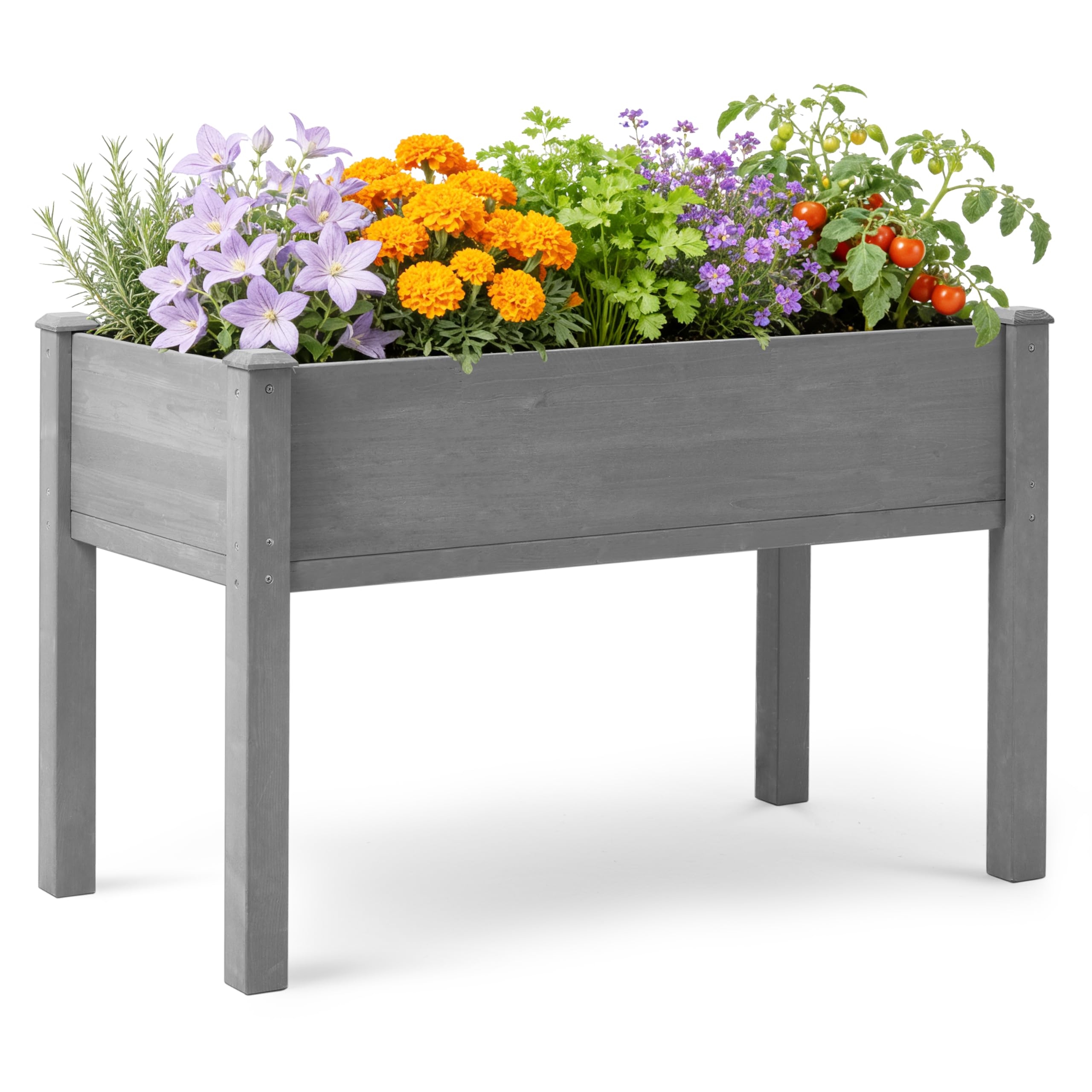
The SoliWood raised bed uses cedar panels and 2.4-inch-thick legs that handle heavy soil loads without swaying. Pre-drilled holes align well, and assembly takes roughly 30 minutes with clear instructions.

The grey water-based finish gives a natural cedar look that weathers evenly. The included liner helps contain soil while allowing drainage, reducing mess on patios or decks.

This bed suits gardeners who want a long-lasting elevated planter without paying a premium for cedar. The 6-cubic-foot capacity fits most patio or backyard vegetable gardens. For those planning a large growing area, a bigger kit may be necessary.

Pros

  • Thick 2.4-inch legs and solid cedar panels hold up to heavy soil without bowing.
  • Assembly is straightforward with well-drilled holes and clear instructions.
  • Attractive grey cedar finish that weathers naturally and blends with outdoor spaces.
  • Priced below most cedar elevated beds while maintaining solid build quality.

Cons

  • For large gardens, the 6-cubic-foot capacity may require multiple beds.
Our verdict

A cedar elevated bed that delivers solid build and long-term durability for standard home gardens.
Check Latest Price
2

Deepest Soil for Root Vegetables

Best Choice 72" Deep

91 /100
Craft Score Outstanding

Key details

Depth
16 in
Height
30 in
Wood Type
Fir
View on Amazon

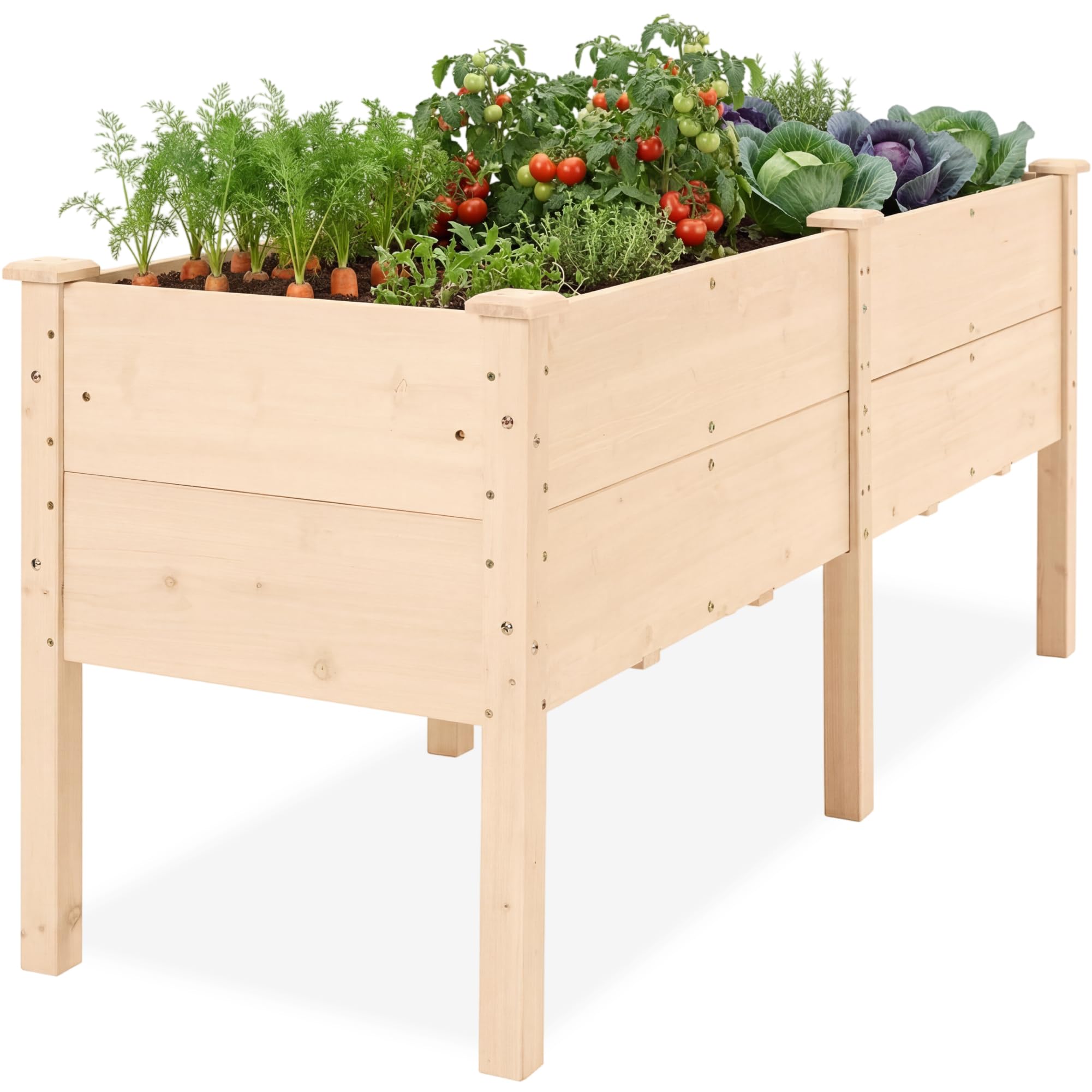
The 16-inch soil depth on this raised bed is unmatched in this roundup, giving carrots, potatoes, and other deep-rooted crops the space they need. The 72x24-inch footprint offers generous planting area, and the elevated design at 30 inches reduces bending. Assembly is straightforward with parts that align cleanly, and the reinforced corners add stiffness to the large frame.

This bed is best suited for gardeners with ample patio or backyard space who prioritize maximum soil depth over long-term durability from the fir wood. The deep capacity comes with a tradeoff in wood consistency and longevity, so it fits those who value immediate growing volume and are comfortable with a shorter product lifespan.

💡 Applying a weather-resistant sealer to the wood before assembly can help extend its lifespan.

Pros

  • Very easy to assemble with well-aligned parts.
  • Spacious 72x24-inch planting area with 16-inch depth for root vegetables.
  • Sturdy build with reinforced corners and thick panels.

Cons

  • Wood panels may split during assembly or after weather exposure.
  • Long-term structural integrity can decline; some units experience warping or leg issues after a season.
Our verdict

If deep soil for root vegetables is your priority and you have space for a 6-foot bed, this design delivers on depth — just be aware that the fir wood may need sealing or replacement sooner than cedar alternatives.

Check Latest Price
3

Best Value Features Kit

VEVOR 48" Kit

87 /100
Craft Score Excellent

Key details

Depth
Height
30 in
Wood Type
Fir
View on Amazon

This kit stands out by bundling everything a first-time planter needs: the bed itself, a liner, a small planting tool set, plant labels, a hook, and even a screwdriver. Assembly takes about an hour with clear illustrated steps, and once built, the fir wood frame feels solid on its legs. The natural wood finish fits neatly into a patio or backyard setting without looking like a temporary structure.

New gardeners who want a single-box solution will appreciate having all the extras included. The tradeoff is that this model has been on the market for less time than more established wooden beds, so long-term durability data is less extensive. For someone starting a first vegetable or herb garden and planning to use it for a few seasons, the included accessories and straightforward build make it a practical entry point.

Pros

  • Includes a full accessory kit (tools, labels, hook) for added value.
  • Easy to assemble with clear instructions; sturdy once built.
  • Attractive natural wood appearance.

Cons

No notable drawbacks to flag.

Our verdict

Best for new gardeners who want a ready-to-plant kit without hunting down extras — the tradeoff is less long-term track record compared to top picks.

Check Latest Price
4

Best Tiered Planter

Yaheetech 3-Tier

91 /100
Craft Score Outstanding

Key details

Depth
Height
22 in
Wood Type
Fir
View on Amazon

Where the top pick spreads out wide, this planter stacks up. Three distinct levels let you grow herbs, flowers, and shallow-rooted vegetables in a compact footprint that fits on a balcony or small patio. The tiered shape also adds visual structure to an outdoor space without taking up much floor area.

This bed suits beginners or casual gardeners who want an affordable starter setup. The shallow tiers (22 inches total height) accommodate leafy greens, strawberries, and annuals but limit root vegetables like carrots or potatoes. The fir wood is thin and will benefit from a coat of sealant to extend its life beyond a couple of seasons. For small-space gardeners focused on decorative or light vegetable growing, it delivers a neat vertical arrangement without a large investment.

💡 Sealing the wood at the start helps the bed last beyond the first couple of seasons.

Pros

  • Assembly takes under 30 minutes with clearly labeled parts.
  • Attractive tiered design adds tidy vertical interest on decks or patios.
  • Good value for the size and price

Cons

  • Under heavy soil weight, boards may crack
Our verdict

A space-efficient, budget entry for patio gardeners who prioritize vertical layout over root depth and long-term durability.

Check Latest Price
5

Best Large Budget Bed

Yaheetech 8x4 Low

90 /100
Craft Score Outstanding

Key details

Depth
10 in
Height
10 in
Wood Type
Fir
View on Amazon

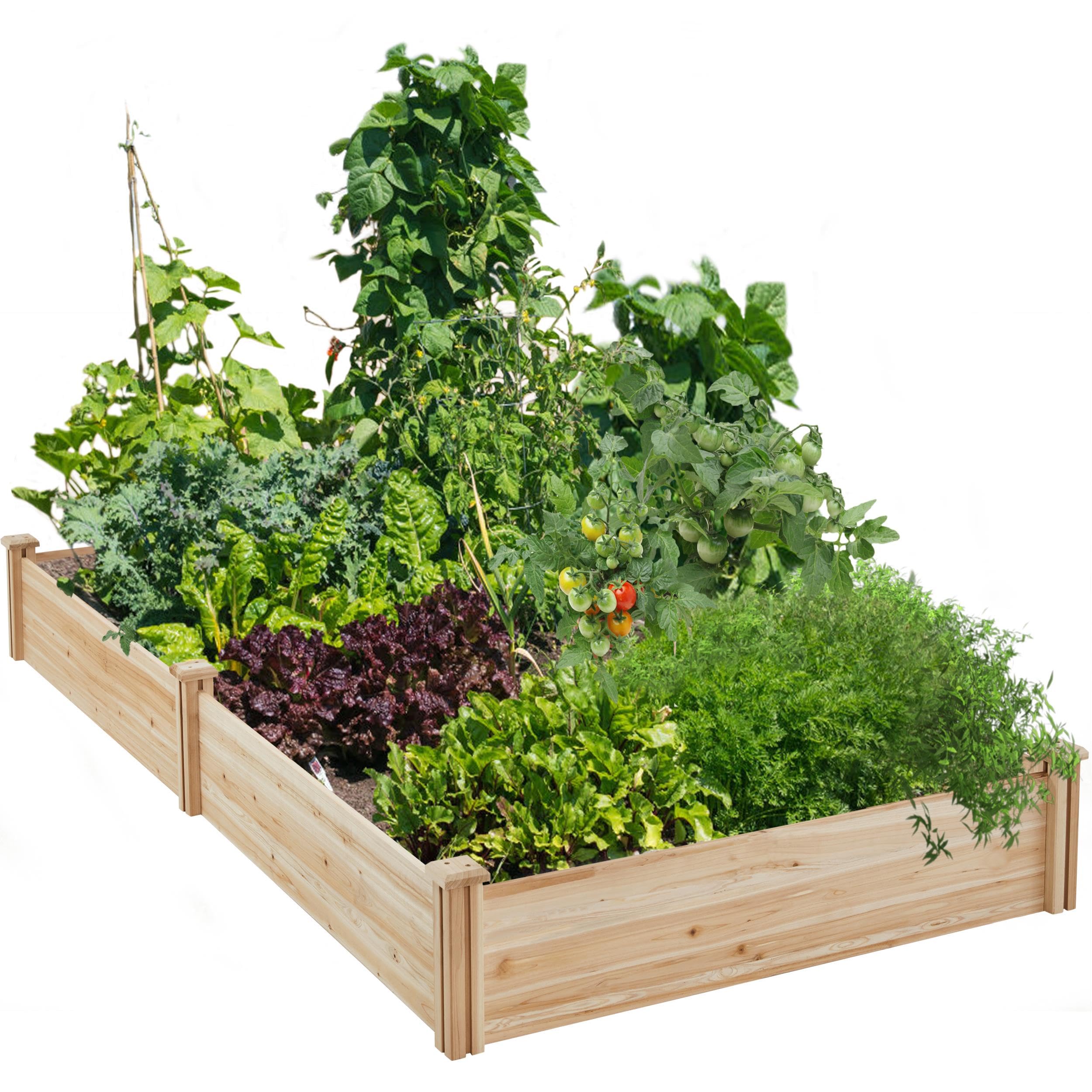
At a budget-friendly price, the Yaheetech 8x4 delivers the largest growing area per dollar in this roundup. Its dovetail joint assembly requires no tools, and the natural fir finish blends into any yard. While deeper cedar beds cost more, this one covers the most ground for the lowest upfront investment.

The shallow 10-inch depth and thin fir construction mean this bed suits leafy greens, herbs, and flowers rather than deep-root vegetables like carrots or tomatoes. The wood can split during assembly if over-tightened, and the sides may bow under heavy, wet soil. It is a cost-effective entry point for new gardeners who want a large plot without a big financial commitment, but expect limited longevity — plan for replacement after two to three seasons.

💡 Reinforcing the long sides with straps or brackets can reduce bowing in later seasons.

Pros

  • Tool-free assembly with interlocking dovetail joints
  • Budget-friendly price for a 32-square-foot growing area
  • Attractive natural wood finish that blends into garden settings

Cons

  • Thin fir wood may split during assembly if screws are over-tightened
  • Sides can bow and joints may separate under the pressure of moist soil
Our verdict

If your garden plans involve shallow-root crops and you are watching your budget, this bed delivers maximum coverage at minimal cost — just be prepared for a shorter lifespan.

Check Latest Price
6

Cedar Alternative

Maple99 Cedar 48"

89 /100
Craft Score Excellent

Key details

Depth
Height
30 in
Wood Type
Cedar & Fir
View on Amazon

Solid cedar panels and easy assembly make this a good value elevated bed. The cedar offers natural rot resistance and a clean look, and parts fit together well. Some units have had the bottom separate from the frame after a few months, so long-term durability is uncertain. This bed suits gardeners who want affordable cedar and are comfortable with proactive reinforcement. It is a solid option for those who accept a bit of risk for the price.

Pros

  • Easy to assemble with well-fitting parts.
  • Sturdy cedar construction with a clean, attractive look.

Cons

  • Bottom may detach from the frame in some units over time.
Our verdict

Best for budget-conscious gardeners who prioritize easy assembly and cedar material, and are comfortable with a bit of DIY reinforcement.

Check Latest Price
7

Mobile Garden Bed

Best Choice Mobile 48"

91 /100
Craft Score Outstanding

Key details

Depth
Height
32 in
Wood Type
Fir
View on Amazon

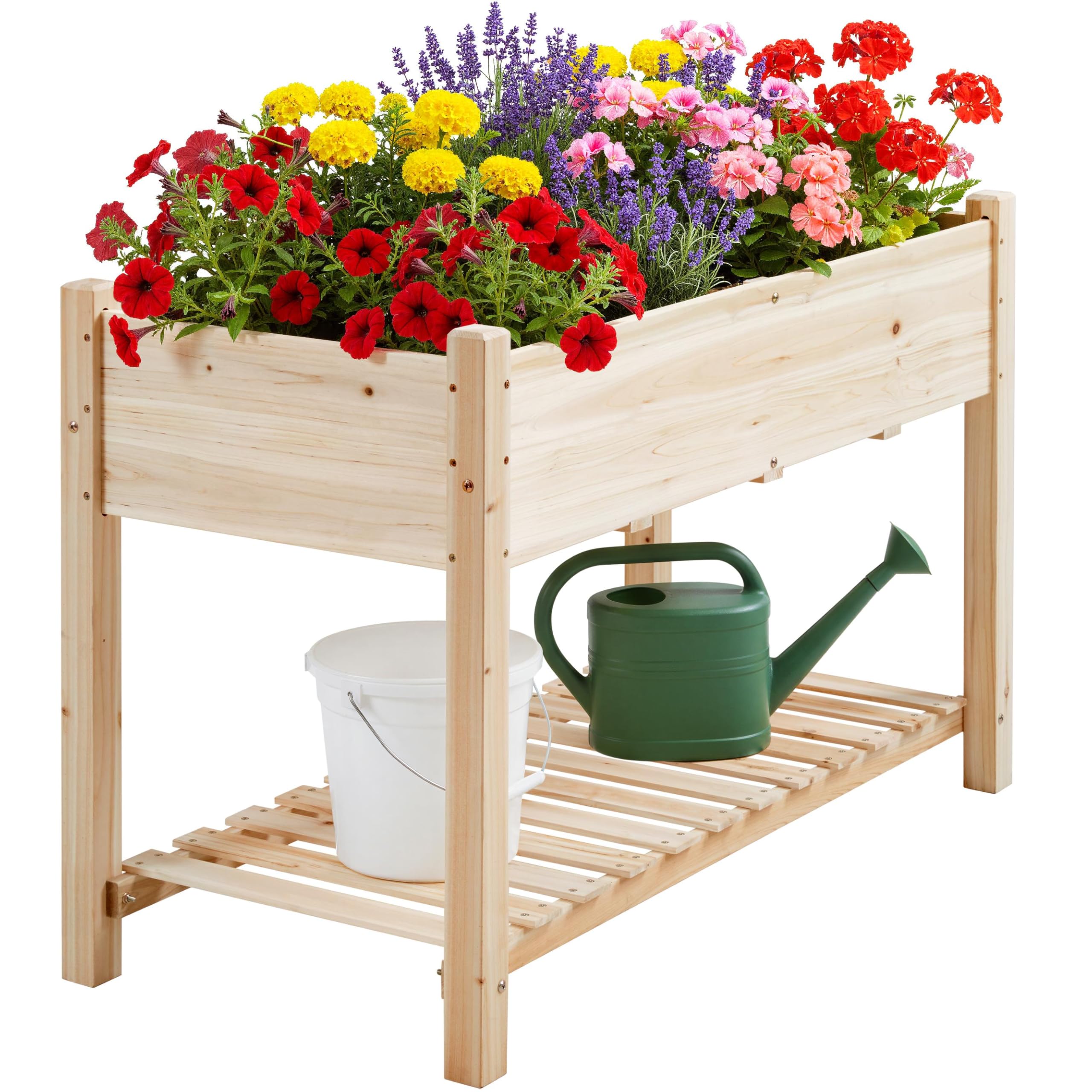
This raised bed rolls easily on lockable wheels and includes a handy storage shelf for tools or soil bags, making it a natural fit for patios where sunlight shifts. The 32-inch height reduces bending for gardeners with back concerns. However, the fir wood used in its construction can split under the weight of damp soil, and the wheels may loosen over time — issues that make it less durable than the cedar top pick. For seasonal use with lightweight potting mix and occasional moving, it offers solid value; for a permanent garden bed, expect to replace components sooner.

Pros

  • Easy to move with lockable wheels; ideal for following the sun or shade.
  • Attractive design that fits neatly on patios and small balconies.

Cons

  • With heavy, damp soil left stationary, the wood can split and the wheels may loosen.
Our verdict

Best for renters or patio gardeners who want to reposition their bed during the day and are comfortable with a planter that may need repairs after a couple of seasons.

Check Latest Price
8

Storage Shelf Bed

Yaheetech Shelf 47"

89 /100
Craft Score Excellent

Key details

Depth
Height
32 in
Wood Type
Fir
View on Amazon

Fir wood construction and a handy storage shelf make this elevated bed a practical choice for small-space gardening. With 4.18 cubic feet of soil capacity, it suits herbs and shallow-rooted vegetables rather than large vegetable gardens. The shelf adds convenience but also increases the overall cost compared to simpler models, and the limited volume keeps it from being a top pick for serious gardeners.

Pros

  • Integrated storage shelf keeps gardening tools and supplies within reach.
  • Assembly instructions are clear and easy to follow.

Cons

  • Soil capacity under 5 cubic feet may not suit gardeners with larger planting ambitions.
Our verdict

Best suited for small patios or deck gardens where a compact planter with tool storage is more useful than raw growing volume.

Check Latest Price
9

Patio Flowers

Yaheetech 46" Low

89 /100
Craft Score Excellent

Key details

Depth
16 in
Height
16 in
Wood Type
Fir, painted
View on Amazon

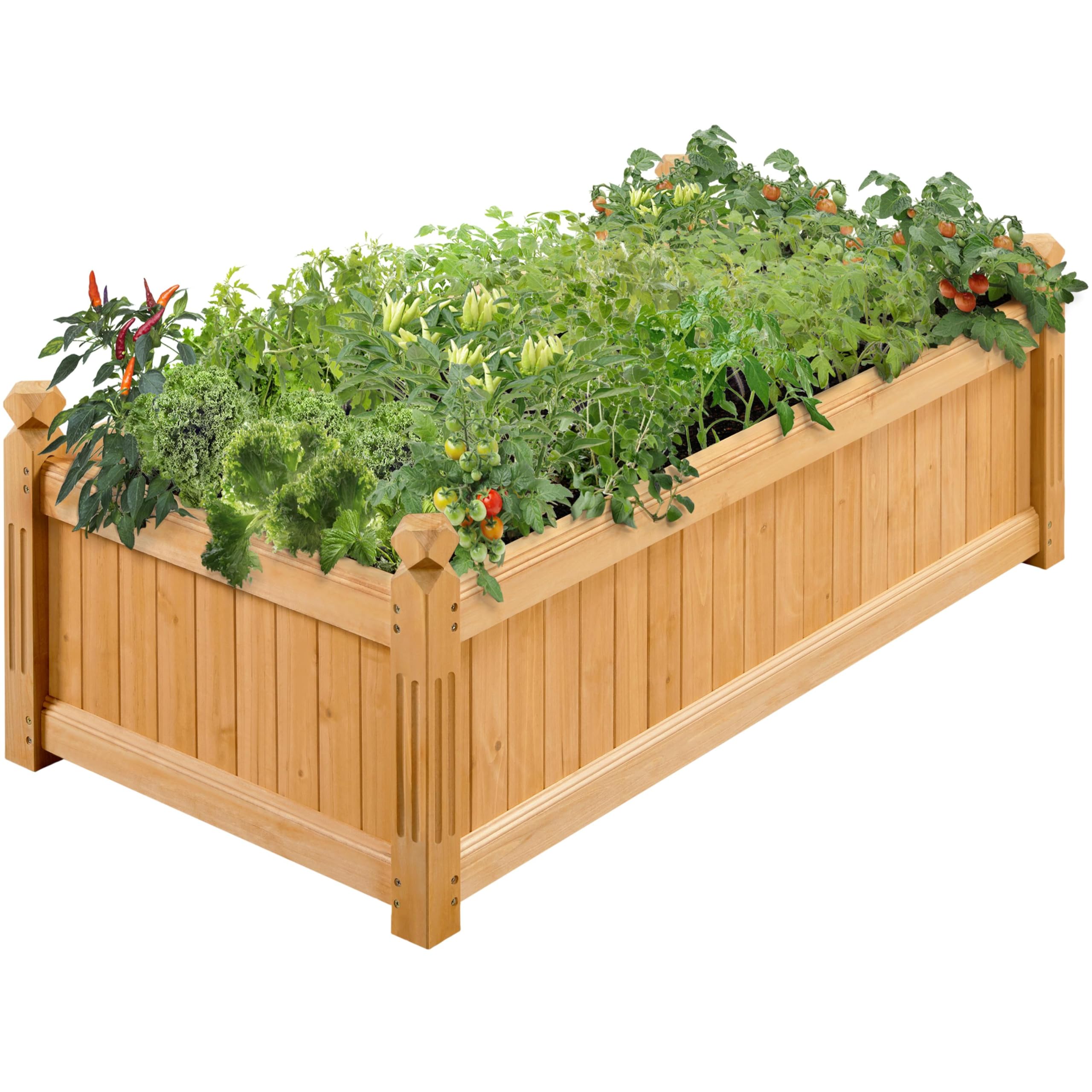
This 46-inch planter box assembles in minutes thanks to pre-drilled holes and a painted fir finish that looks tidy on patios. At 16 inches tall, the soil depth suits flowers and herbs but limits root vegetables like tomatoes or peppers. While the price is budget-friendly, long-term durability is a question: some panels may warp or separate, particularly if filled with heavy, wet soil.

💡 Apply a wood sealant before filling to slow moisture damage and extend the bed's life.

Pros

  • Pre-drilled holes make assembly possible in under 15 minutes.
  • Attractive light brown painted finish blends well on patios.

Cons

  • Panels may cup or separate over time with heavy soil loads.
Our verdict

This bed works for patio gardeners focused on quick setup and shallow-rooted plants, but not for those expecting multi-season durability with heavy soil.

Check Latest Price
10

Vertical Gardening

Toolsempire Trellis

84 /100
Craft Score Excellent

Key details

Depth
Height
53 in
Wood Type
Fir
View on Amazon

This elevated planter combines a built-in trellis with two planting tiers, offering a compact solution for growing peas, beans, or cucumbers vertically. The fir wood looks attractive and the assembly instructions are clear, though the wood's moisture resistance is limited. Boards may warp within weeks if left unsealed, and the unit benefits from sealing for long-term use. For gardeners focused on vertical crops in a small footprint, this design works well, but those wanting a bed that holds up for multiple seasons without extra maintenance may prefer cedar alternatives.

Pros

  • Two-tier layout with built-in trellis for climbing plants
  • Clear assembly instructions

Cons

  • Wood boards may warp within weeks of assembly, especially if left unsealed
  • Wood quality may not hold up to heavy soil and weather without sealing
Our verdict

Best suited for gardeners who want a dedicated trellis bed for climbing plants and are comfortable sealing the wood themselves.

Check Latest Price
11

Kids Gardening

Best Choice Kids 34"

89 /100
Craft Score Excellent

Key details

Depth
Height
30 in
Wood Type
Chinese fir
View on Amazon

This 34-inch raised bed is sized for small patios and children, with easy assembly and an attractive acorn brown finish. It holds a few herbs or flowers at a comfortable height. However, the fir wood can show deterioration within a year even if sealed, and the 2.6 cubic foot capacity limits it to light use. It's a charming entry-level option for teaching kids gardening, not a long-term investment for serious vegetable growing.

Pros

  • Easy to assemble, especially for a small bed.
  • Perfect size for kids, small patios, or indoor use.

Cons

  • Wood can split and weather after a year, even with sealing.
Our verdict

Best for a child's first garden or a balcony herb setup where longevity isn't the priority. For anything larger or longer-term, consider a cedar bed.

Check Latest Price

How to Choose

Wood Type

Cedar contains natural oils that repel moisture and insects, making it resistant to rot without treatment. Fir and pine are cheaper but absorb water, leading to swelling and cracking within one or two seasons if left unsealed.

Annual sealing with a food-safe wood preservative can extend a fir bed's life to three or four seasons, but skipping it often results in warped boards and failed joints by the second year.

Soil Depth

Root vegetables like carrots, potatoes, and beets need at least 12 inches of loose soil. Beds with 10-inch depth are fine for lettuce, herbs, and flowers, but planting deep-rooted crops in shallow beds stunts growth and stresses the bottom boards.

Deeper beds (16 inches) hold more soil volume, which increases weight on the bottom panels. Many budget beds with thin plywood bottoms fail under this load unless reinforced.

Elevation Height

Elevated beds at 30 inches reduce back strain but require legs thick enough to handle the weight of wet soil – saturated soil weighs about 60 pounds per cubic foot. Legs under 2 inches in diameter can wobble or crack.

Ground-level beds (10-16 inches tall) are more stable because the weight is distributed directly on the ground, but they force you to bend or kneel. Choose based on your mobility and comfort.

Weight Capacity and Leg Thickness

A bed's weight rating tells you how much soil and water it can hold without structural failure. Models rated for 300+ pounds typically have thicker legs (2 inches or more) and reinforced corners, while cheaper options often use thin legs that lean or split.

If you plan to use heavy, wet soil or add trellises, look for leg thickness of at least 2 inches and a weight capacity that exceeds your expected load by 20%.

Assembly Method

Dovetail joints and pre-drilled panels reduce assembly time and ensure parts align correctly. Tool-free assemblies are quick but rely on friction fits that can loosen as the wood expands and contracts with moisture.

Screw-based kits are more secure but risk stripping the threads in soft fir wood. If the wood feels soft, pre-drilling pilot holes and using a hand screwdriver can prevent damage.

Frequently Asked Questions