3 Best Anti Fatigue Mats for Workshop 2026: Find the Right Size and Support

Which workshop mats actually cushion concrete floors without sliding or smelling? Find the right thickness, size, and material for your woodworking or garage setup.

It's easy to grab a mat labeled 'industrial' only to find it's too thin, too small, or leaves a chemical smell that lingers for weeks. Many listings claim extra thickness but actual specs vary wildly, leaving you with less cushion than expected.

We've sorted through the options to find mats that meet the core requirements: at least 3/4 inch thick, slip-resistant, and sized for real workshop use. The real choice comes down to coverage versus longevity. A wide mat lets you move between stations, while a dense, compact mat can last a decade.

Measure your work area and decide how much you value long-term durability over floor coverage before you buy.

1

Best Overall for Workshop Comfort

FEATOL 0.9" Mat 20x39

92 /100
Craft Score Outstanding

Key details

Edge
Beveled, yellow safety border
Material
PU foam, PU leather top
Thickness
0.9 inches
Dimensions
20" x 39"
View on Amazon

The FEATOL mat uses a 0.9-inch thick polyurethane foam core that absorbs pressure from standing on concrete or garage floors, with a PU leather top that resists oil and water. Build quality is evident in the dense foam that maintains its shape over months of daily use.

Users consistently report reduced leg and back fatigue during hours of standing at a workbench or tool station. The beveled edges with a yellow safety border lessens tripping risk, and the non-slip bottom keeps the mat in place on smooth surfaces. Cushioning is firm enough to avoid bottoming out under heavy shop boots.

This mat suits woodworkers, DIYers, and anyone who stands at a single, fixed workstation for most of the day. The 20 x 39 inch footprint works well for a workbench or assembly table but may feel restrictive if you need to step side to side across a larger area — consider the two-pack or a wider mat for multi-station setups.

Given the thickness and material quality, the FEATOL delivers strong value at a mid-range price. It competes with mats costing significantly more while offering the same 0.9-inch thickness and durable construction.

💡 If your work requires stepping side to side, consider the two-pack or a wider mat for full coverage.

Pros

  • Reduces strain on feet, legs, and back during long standing sessions.
  • Holds up well in workshop environments with daily use over months or years.
  • High-quality PU foam and leather top resist oil, water, and wear.
  • 0.9-inch thickness provides effective cushioning without feeling unstable.
  • Cost-effective compared to other mats with similar thickness and durability.

Cons

  • 20 x 39 inch size may limit movement for those who need to step side to side while working.
Our verdict

The FEATOL mat is a sound investment for anyone standing at a single workbench or tool station who wants thick, durable cushioning without overspending.

Check Latest Price
2

Best for Larger Work Areas (2-Pack)

Vergo 2-Pack 2x3'

91 /100
Craft Score Outstanding

Key details

Edge
Beveled, yellow safety border
Material
Vinyl (PVC-free)
Thickness
15/16 inches
Dimensions
2' x 3' each
View on Amazon

The two-pack delivers 12 square feet of coverage, enough to span a saw bench, assembly table, and workbench without buying separate mats. The beveled yellow safety border reduces tripping risk, and the diamond-plate texture keeps footing secure even on oily concrete. At 15/16 inch thick, the mat provides firm support that reduces leg fatigue during long standing sessions.

This package suits commercial shops and garage workstations where floor coverage is the priority over individual mat size. The cushioning is noticeably firmer than ultra-soft competitors — a deliberate tradeoff for stability and durability. In some cases, the surface coating may chip after several weeks of heavy use, a limitation to weigh if you need pristine appearance in a high-traffic area.

Pros

  • Generous 2x3 foot per mat provides 12 sq ft total coverage for multiple workstations.
  • Beveled yellow safety border reduces tripping and marks the mat's edge clearly.
  • Diamond-plate texture offers solid grip underfoot, even with oil or dust present.

Cons

  • Cushioning is firmer than ultra-soft alternatives, which may disappoint those wanting deep plushness.
  • Surface coating can chip or flake after a few weeks in some cases, affecting appearance.
Our verdict

This two-pack is a cost-effective solution for workshop owners who need broad coverage and don't mind firmer support — just be aware the surface may wear over time.

Check Latest Price
3

Best for Long-Term Durability & Safety

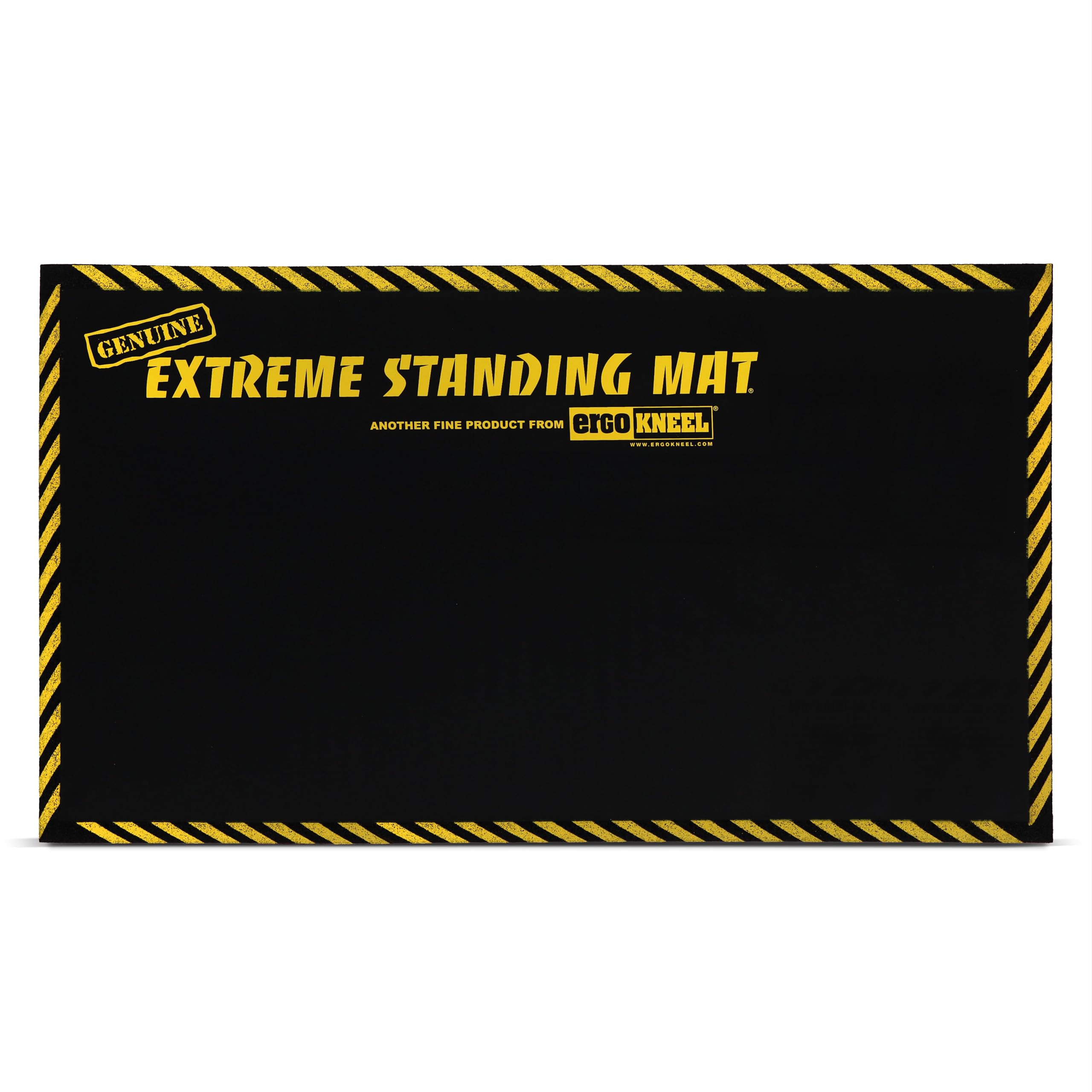
Extreme 1" Mat 16x28

93 /100
Craft Score Outstanding

Key details

Edge
Beveled, yellow safety stripes
Material
Rubber (dielectric tested)
Thickness
1 inch
Dimensions
16" x 28"
View on Amazon

The 1-inch thick rubber construction, dielectrically tested to 56kV, delivers a standing surface that holds up to daily abuse for over a decade. Unlike the top pick, which offers a larger 20x39 inch working area, the Extreme mat sacrifices size for longevity and safety certification.

Users describe the cushioning as akin to standing on pillows, even on concrete floors. The beveled edges with safety yellow stripes reduce trip hazards, while the rubber surface resists oil and moisture common in workshop environments.

This mat fits best at a lathe, welding table, or assembly bench where you stand in one place for hours. The compact 16x28 inch footprint does not allow much stepping around, so it is less suitable for tasks requiring lateral movement or larger coverage areas.

Pros

  • Thick 1-inch rubber cushion reduces fatigue on hard floors.
  • Dimensions exactly fit a single workbench or desk station.
  • Build quality supports daily use for over ten years.

Cons

  • Small 16x28 size can restrict movement if you need to shift positions frequently.
  • Premium price per square foot may not appeal to buyers seeking large coverage for the money.
Our verdict

If your work keeps you planted in one spot and you want a mat that outlasts everything else, the Extreme has no equal in durability and electrical safety.

Check Latest Price

How to Choose

Thickness

Aim for at least 3/4 inch (0.75") if you plan to stand all day on concrete. Thinner mats compress to the point of providing little relief within weeks.

But thickness alone is misleading: a 1-inch mat made of soft low-density foam can bottom out faster than a 0.9-inch high-density mat. Check reviews for comments on flattening over time.

Size and Dimensions

The most common regret is buying a mat too small to allow natural movement. A 16x28 inch mat locks you into one spot; a 20x39 inch mat lets you shift weight and reach tools without stepping off.

If you work at multiple stations (saw, bench, assembly), a 2-pack or a single large mat (3x5 feet) is better. Measure your standing area before you buy.

Surface Material and Slip Resistance

PU foam tops (like FEATOL) offer good grip and are easy to wipe clean. Rubber surfaces provide maximum traction but often come with a strong odor that can take weeks to fade.

Vinyl mats (like Vergo) are PVC-free and resist oil and water, but some users report surface chipping over time. A textured diamond plate pattern improves grip when boots are dusty.

Edge Beveling

A beveled edge reduces tripping hazard and helps the mat lie flat. Mats without beveling can curl at the corners, causing a trip risk or catching a tool cart wheel.

Look for a yellow safety border - it increases visibility in dim workshops where you might not notice a dark mat at your feet.

Foam Density and Resilience

Density matters more than thickness for long-term support. High-density foam (often labeled 'industrial' or 'commercial grade') retains its shape for years. Low-density memory foam feels soft initially but loses bounce in months.

Rubber mats (like the Extreme Standing Mat) have the highest density and can last over a decade, but they are firm and heavy. Foam mats are lighter and softer but wear faster under heavy use.

Frequently Asked Questions