13 Best Belt Sander of 2026: Stay on Track and Cut the Dust

Which belt sanders actually keep the belt on the rollers and capture dust without burning out after a few projects.

Many budget belt sanders advertise high amp ratings but skimp on the belt tracking mechanism leading to frustrating belt slippage mid-project. A reliable tool keeps the belt centered and captures dust effectively which is often what separates a usable sander from a frustrating one.

This guide focuses on models that balance power with these real-world usability factors. The key trade-off is between entry-level price and the long-term durability of critical components like the tracking adjustment and dust port. Spending a bit more on a proven design often saves time and money over replacing a cheap sander that fails after a few hours of use.

1

Best Overall

Makita 9403 4x24 Belt Sander

94 /100
Craft Score Outstanding

Key details

Weight
13 lbs
Belt Size
4 x 24 in.
Motor (Amps)
11 A
Speed Control
Fixed
View on Amazon

The 11A motor powers through dense hardwoods without stalling, and the 1640 ft/min belt speed provides fast cutting action. Labyrinth construction seals out dust from internal components, keeping the sander running consistently. Effective dust collection with the included bag reduces airborne debris, and the 84 dB noise level is quieter than many competitors. Belt tracking stays stable even under load, minimizing adjustments during use.

This sander suits woodworkers and professionals who need a daily driver for heavy stock removal on large flat surfaces. The 13-pound weight can be tiring for overhead or vertical sanding, so it's best reserved for bench-level work or horizontal surfaces. Budget-conscious buyers and occasional DIY users should look elsewhere — the premium price and heft don't suit light use. The plastic dust port and vent are vulnerable to impact damage, but for bench use the risk is low.

💡 Use a two-handed grip and rest the sander on the work surface when not in use to reduce arm fatigue.

Pros

  • 11A motor removes material aggressively without bogging down on hardwoods
  • Build quality holds up to daily professional use over years
  • Quieter operation and effective dust collection reduce cleanup time

Cons

  • Plastic dust port and vent can snap if the sander is knocked or dropped
  • 13-pound weight may cause fatigue during overhead or vertical sanding sessions
Our verdict

For professionals who need consistent power and build that handles daily abuse, the Makita 9403 is the sander to own — no compromises on the work that matters.

Check Latest Price
2

Best for Variable Speed Control

Makita 9903 3x21 Belt Sander

90 /100
Craft Score Outstanding

Key details

Weight
9.5 lbs
Belt Size
3 x 21 in.
Motor (Amps)
8.8 A
Speed Control
Variable
View on Amazon

The Makita 9903 delivers a wide variable speed range (690–1440 ft/min) and an auto-tracking system that keeps the belt centered without manual tweaks. This makes it a strong alternative to the top pick for jobs requiring controlled removal across different materials. The 9.5 lb weight is a tradeoff — fine for bench work but noticeable in overhead use — and the premium pricing targets serious woodworkers rather than occasional DIYers.

Best for pros and dedicated hobbyists who value variable speed precision and expect a sander that holds up over years of regular use. The price and weight are acceptable tradeoffs for those with frequent sanding tasks; infrequent users should look at more budget-friendly options.

💡 For overhead or vertical sanding, support the sander with your off-hand to reduce fatigue from the 9.5 lb weight.

Pros

  • Exceptional build quality that holds up for years with proper care
  • Variable speed allows precise control for fine sanding and different materials
  • Auto-tracking belt system keeps the belt centered without user adjustment

Cons

  • Heavier than some 3x21 models at 9.5 lbs
  • Premium price
Our verdict

A premium variable-speed belt sander that earns its price tag for woodworkers who need precise control and long-term durability, but the weight and cost limit its appeal to regular users.

Check Latest Price
3

Best Value Pick

SKIL 7510 3x18 Belt Sander

91 /100
Craft Score Outstanding

Key details

Weight
5.5 lbs
Belt Size
3 x 18 in.
Motor (Amps)
6 A
Speed Control
Fixed
View on Amazon

The SKIL 7510 introduces pressure control and auto-track at a budget price – capabilities usually reserved for sanders costing two to three times more. These features help beginners avoid gouging and keep the belt aligned without manual adjustments.

First-time belt sander buyers and DIYers tackling light to medium projects will appreciate the lightweight 5.5 lb design for one-handed handling. The 6-amp motor handles moderate stock removal well, but motor longevity can vary between units, making this a better fit for occasional sessions than heavy daily use.

💡 Connect a shop vac to the dust port for significantly better dust control.

Pros

  • Pressure control indicator and auto-track at a budget-friendly price.
  • Lightweight 5.5 lb design for one-handed operation.
  • Adequate power for medium-sized sanding tasks.

Cons

  • Dust bag captures only a fraction of debris, making a shop vac nearly essential.
Our verdict

Affordable entry with useful features, but plan on connecting a shop vac for dust control.

Check Latest Price
4

Best Benchtop Combo

WEN 6502T Benchtop 4x36 & 6" Disc

93 /100
Craft Score Outstanding

Key details

Weight
Belt Size
4 x 36 in.
Motor (Amps)
4.3 A
Speed Control
Fixed
View on Amazon

The 6502T pairs a 4x36 belt with a 6-inch disc on a cast iron base for a price that keeps hobbyists from buying separate machines. Assembly and belt changes are straightforward, and the combination handles light sanding, shaping, and knife sharpening without fuss.

Best for occasional sanding and small woodworking projects where a stationary sander is more convenient than a handheld. The cast iron base and switch can be fragile in some cases, and the motor may overheat if pushed continuously for heavy material removal — but for light, intermittent use it remains a functional workhorse.

💡 Let the sander cool between long passes — intermittent use extends its life.

Pros

  • Belt and disc combo on a sturdy base costs less than two separate machines.
  • Quick to assemble and swap belts
  • Suits a range of hobby tasks from sanding to sharpening without switching tools.

Cons

  • Cast iron base and on/off switch can fracture or fail in some units.
  • Underpowered for heavy material removal
Our verdict

A low-cost benchtop combo that suits weekend woodworkers — just keep tasks light to avoid overheating.

Check Latest Price
5

Best Cordless

DEWALT DCW220B Cordless Belt Sander

91 /100
Craft Score Outstanding

Key details

Weight
Belt Size
3 x 18 in.
Motor (Amps)
Brushless
Speed Control
Variable
View on Amazon

This cordless belt sander delivers brushless power and variable speed control in a package that frees you from extension cords – ideal for job sites without power or quick touch-ups. Battery runtime is the main limit: a 6Ah battery lasts about 10 minutes under load, and it lacks the sustained power of corded models for heavy material removal. Best suited for professionals already in the DEWALT 20V system who need a portable sander for light shaping, edge work, and sanding where outlets are scarce.

💡 Keep spare 6Ah batteries charged; runtime suits short bursts rather than continuous heavy sanding.

Pros

  • Cordless design eliminates cord drag, ideal for job sites and quick tasks.
  • Solid build and strong performance for a cordless model in its class.
  • Variable speed dial provides fine control over material removal.

Cons

  • Battery life is short – a 6Ah battery may only provide 10–20 minutes of sanding under load.
  • Less powerful than corded models; better suited for light sanding than aggressive material removal.
Our verdict

For DEWALT 20V users who prioritize mobility over maximum power, this sander fills a specific niche – just budget for extra batteries to keep working.

Check Latest Price
6

Best Direct-Drive Benchtop

Bucktool BD4801 4x36 & 8" Disc

91 /100
Craft Score Outstanding

Key details

Weight
Belt Size
4 x 36 in.
Motor (Amps)
5 A
Speed Control
Fixed
View on Amazon

The Bucktool BD4801 stands apart from typical benchtop combos by using a direct-drive motor that does away with belts and pulleys, so you get steady power without periodic tension adjustments. The 8-inch disc adds useful surface area for curves and contours that a 4x36 belt alone can't handle. This is a good fit for woodworking hobbyists who want a durable, maintenance-light sander for a small shop, though the dust port placement can restrict access to the full belt length and swapping belts takes a few extra steps versus some competitors.

💡 A flexible dust adapter or right-angle hose fitting can keep the port clear of the belt work area.

Pros

  • Direct-drive motor removes belt-tension fuss and delivers consistent torque.
  • Runs quietly and stays planted on the bench with minimal vibration.
  • Packs a 4x36 belt and 8-inch disc at a cost that undercuts many comparable combos.

Cons

  • Dust port sits where it can block full-length belt access on the platen.
  • Belt replacement requires loosening more fasteners than simpler designs.
Our verdict

For the home woodworker who values steady power and a larger disc over quick belt changes, this direct-drive combo delivers more consistent performance than most budget options.

Check Latest Price
7

Ultra-Budget DIY

WEN 6321 3x21 Belt Sander

89 /100
Craft Score Excellent

Key details

Weight
6.2 lbs
Belt Size
3 x 21 in.
Motor (Amps)
7 A
Speed Control
Fixed
View on Amazon

The WEN 6321 delivers real value at a budget price, with a 7A motor that handles light sanding and a lightweight build that's easy to control. However, its dust collection is essentially absent - the bag is ineffective and the port won't fit standard hoses - and some units may stop working after a handful of projects, making it a gamble best suited for occasional tasks where durability isn't critical.

Pros

  • Incredible value for a belt sander that handles small to medium jobs.
  • Lightweight and easy to control with simple belt changes.

Cons

  • Dust collection is nearly nonexistent; the bag does little and the port is incompatible with standard vacuum hoses.
Our verdict

A reasonable pick for the occasional DIYer on a tight budget who doesn't mind tinkering with dust collection and can accept a gamble on longevity.

Check Latest Price
8

Portable Benchtop

Bucktool BD4603A 4x36 & 6" Disc

90 /100
Craft Score Outstanding

Key details

Weight
35.5 lbs
Belt Size
4 x 36 in.
Motor (Amps)
5 A
Speed Control
Fixed
View on Amazon

The Bucktool BD4603A delivers maintenance-free direct drive and a lightweight aluminum base at a mid-range price. It has enough power to shape metal and wood without slowing down. Compared to the larger BD4801, the 6-inch disc is smaller and the base feels less sturdy. The noise level is noticeable in a home shop, and the fence and some plastic parts come across as cheap.

Pros

  • Direct-drive design eliminates belt adjustments
  • Strong power for its size; handles shaping metal and wood without bogging.

Cons

  • In a home workshop, the noise level can be intrusive.
Our verdict

A good choice for hobbyists who want a no-fuss belt sander combo and don't mind a bit of noise, as long as you don't need the larger disc or rock-solid base of the step-up model.

Check Latest Price
9

Budget Variable Speed

Jellas 3x21 Variable Speed

87 /100
Craft Score Excellent

Key details

Weight
9.7 lbs
Belt Size
3 x 21 in.
Motor (Amps)
7 A
Speed Control
Variable
View on Amazon

The Jellas belt sander includes variable speed control, ten sanding belts, and two C-clamps for bench use — an impressive feature set for the price. The dust bag can detach during operation, reducing collection effectiveness, so it suits first-time buyers and small projects where occasional cleanup is acceptable.

Pros

  • Variable speed control with included sanding belts and bench clamps for versatile use.
  • Handles deck sanding and general DIY tasks effectively.

Cons

  • Durability has been inconsistent across units.
Our verdict

This sander fits first-time buyers and small projects where occasional dust cleanup and uncertain longevity are acceptable tradeoffs for the low price.

Check Latest Price
10

Occasional Homeowner

CRAFTSMAN CMEW213 3x21

88 /100
Craft Score Excellent

Key details

Weight
6.6 lbs
Belt Size
3 x 21 in.
Motor (Amps)
7 A
Speed Control
Fixed
View on Amazon

The 6.6 lb weight and adjustable handle reduce fatigue during short sessions, but belt tracking may need frequent correction and motor life can be limited after several hours of use. This suits occasional homeowner sanding rather than regular projects.

Pros

  • Lightweight 6.6 lb design with adjustable handle for comfort.
  • Good value for a name-brand belt sander for occasional projects.

Cons

  • Belt tracking can slip off during use, requiring frequent adjustments.
Our verdict

A reasonable option for a homeowner's occasional light sanding tasks if you are prepared to manage belt tracking and accept limited motor lifespan.

Check Latest Price
11

Budget Benchtop Hobby

Woodskil 4x36 & 6" Disc

90 /100
Craft Score Outstanding

Key details

Weight
Belt Size
4 x 36 in.
Motor (Amps)
4.3 A
Speed Control
Fixed
View on Amazon

The Woodskil combo delivers enough power for small home projects at a low price, with dual dust ports to keep the workspace cleaner than most budget models. The disc platform can flex under pressure and belt adjustment is finicky, limiting its use to tasks where minor wobble won't matter. Best for entry-level hobby work.

Pros

  • Priced under $120 for a belt/disc combo that handles everyday hobby sanding tasks.
  • Delivers enough power for small woodworking projects like shaping edges or smoothing boards.

Cons

  • Disc platform may flex under heavy pressure, and the belt can wobble when not perfectly aligned
Our verdict

This sander makes sense if you're on a tight budget and only need it for occasional light sanding where minor alignment imperfections won't ruin the workpiece.

Check Latest Price
12

Knife Making

Bucktool BG2600 2x42 & 6" Grinder

89 /100
Craft Score Excellent

Key details

Weight
Belt Size
2 x 42 in.
Motor (Amps)
3.5 A
Speed Control
Fixed
View on Amazon

This benchtop combo pairs a 2x42 belt with a 6-inch grinding wheel, making it a focused tool for knife makers and metalworkers who need to shape, profile, and sharpen. The 3.5A motor handles moderate pressure without bogging, and belt changes are straightforward. However, the narrow belt limits it to blade work rather than general woodworking, and the belt tension system uses plastic splines that can strip under repeated adjustment. Motor longevity has also been inconsistent in some units.

Pros

  • Solid build and stable platform for knife making and metal shaping
  • Sufficient power for moderate metal removal without stalling

Cons

  • Plastic splines in belt tension mechanism can strip over time
Our verdict

Best suited for knife makers and hobbyists who need a dedicated benchtop sharpener and grinder — not for anyone looking for a general-purpose woodworking sander.

Check Latest Price
13

Pro Variable Speed

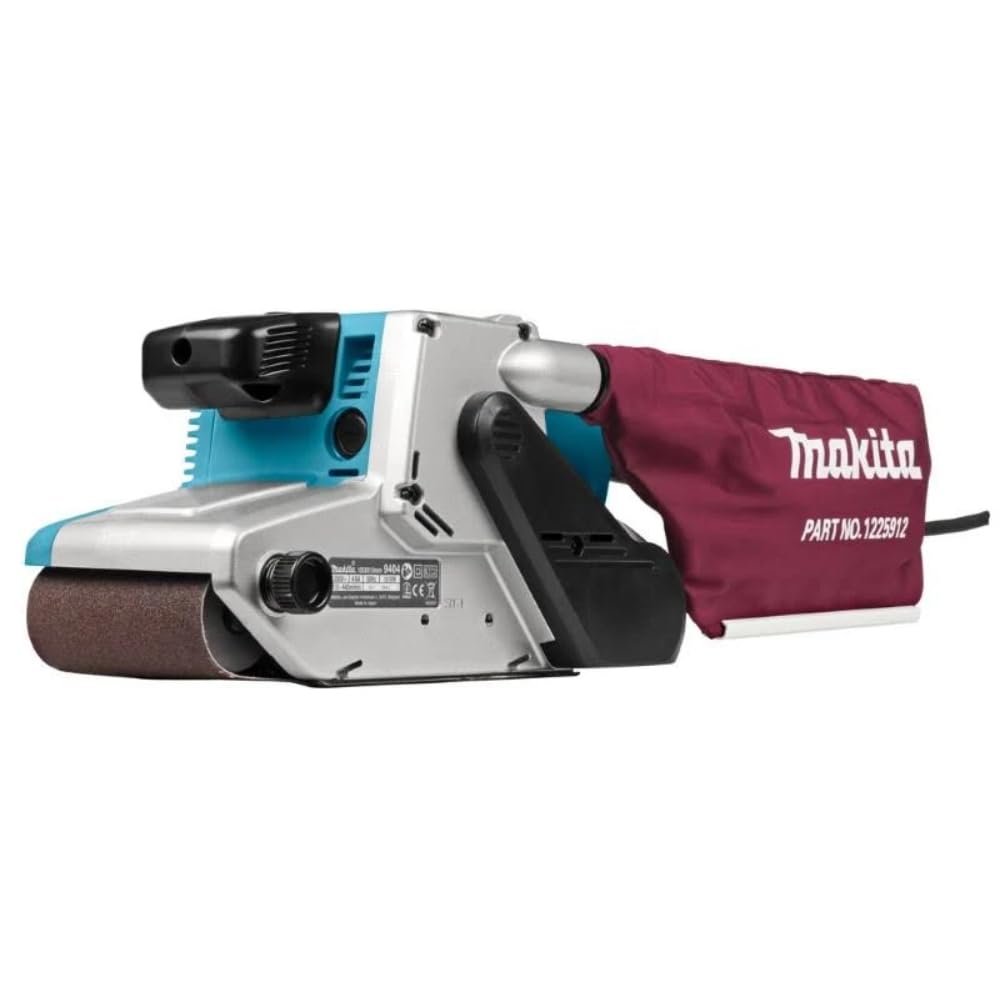
Makita 9404 4x24 Variable Speed

90 /100
Craft Score Outstanding

Key details

Weight
10.3 lbs
Belt Size
4 x 24 in.
Motor (Amps)
8.8 A
Speed Control
Variable
View on Amazon

This Makita brings variable speed control to a solid 4x24 platform, useful for blending finishes or working across wood and metal without swapping tools. The build is robust and dust collection is effective for a handheld sander, though the dust port can clog with finer debris and requires periodic cleaning. For most users, the fixed-speed 9403 delivers the same durability at a lower cost, making the 9404 a niche pick for those who genuinely need speed adjustment.

Pros

  • Variable speed dial allows fine control across different materials and grain directions
  • Powerful 8.8A motor with good dust collection for a handheld belt sander

Cons

  • Dust port can clog with fine dust; internal ducting may need clearing during long sessions
Our verdict

Best for professional woodworkers who require variable speed for finishing work and are comfortable with occasional dust port maintenance.

Check Latest Price

How to Choose

Belt Size

Belt width and length determine how fast you can remove material and how stable the sander feels. A 3x21 belt is fine for most DIY tasks and is lighter, while a 4x24 belt covers more area per pass but adds weight and fatigue. For occasional sanding, 3x21 is sufficient; for frequent large surfaces like doors or tabletops, 4x24 halves the time.

Motor Amps

Amps indicate sustained power under load, not peak. A 6-7A motor handles light to medium sanding without bogging, but if you push it into heavy stock removal, the motor may overheat and slow down. Pro-grade 8-11A motors maintain speed even when bearing down on hardwood or removing thick paint layers.

The trade-off: higher amps mean more weight and cost. For weekend projects, 7A is adequate; for all-day use, invest in 8A or above.

Weight

A belt sander applies its own weight to the work, so heavier models (10+ lbs) need less downward pressure from you but become tiring for overhead or vertical sanding. Lighter models (under 7 lbs) are easier to maneuver but require more force to keep the belt engaged. Consider your typical sanding posture: benchtop use favors lighter, handheld overhead work favors lighter; flat horizontal sanding benefits from modest heft.

Dust Collection

The included dust bag on nearly every budget sander captures only coarse particles; fine dust escapes into the air and settles on every surface. A shop-vac adapter or a high-quality third-party bag makes a dramatic difference in keeping your work area clean. Some models have non-standard dust port shapes that make aftermarket hoses hard to attach. Check port compatibility before buying.

Speed Control

Fixed-speed sanders run at full belt speed all the time, which works for rough material removal but can burnish or scorch wood if you linger. Variable speed lets you dial down for finishing passes, plastic or metal work, and soft woods. If you mostly do stock removal, fixed speed saves money; if you switch between aggressive and fine work, variable speed pays off.

Frequently Asked Questions