15 Best Random Orbital Sander of 2026: Where Dust Collection Actually Works

Find the best random orbital sander for your workshop – balancing power, dust control, and budget for woodworking and finishing tasks.

A random orbital sander is a workshop staple, but the fine dust it stirs up can quickly turn a project into a cleanup chore. Many affordable models promise decent dust control, yet their onboard bags capture very little, leaving you coughing and reaching for a shop vac.

The sanders in this guide were chosen because they actually balance power, dust collection, and durability – whether you're a weekend DIYer or a pro. Variable speed control and a genuinely effective dust system are the features that separate useful tools from frustrating ones.

If you sand often, a corded sander with a microfilter canister or a cyclonic box will save you time and lung irritation. Cordless models offer convenience but demand larger batteries and realistic expectations about runtime.

1

Best Overall

DEWALT DWE6423K

96 /100
Craft Score Outstanding

Key details

Motor
3.0 amp
Weight
4 lbs
Power Source
Corded 120V
Speed Control
Variable 8-12k OPM
View on Amazon

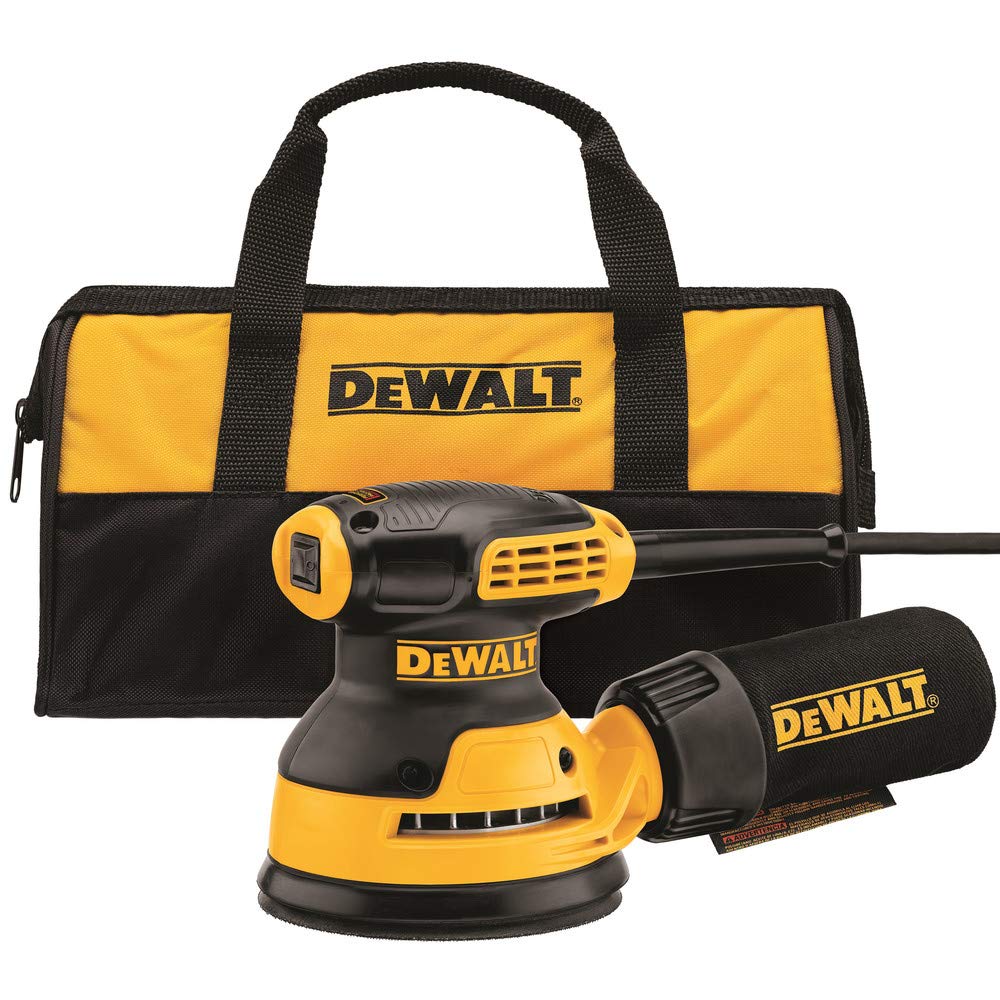
The DWE6423K delivers variable speed from 8,000 to 12,000 OPM, letting you dial in the right aggressiveness for finish sanding without overshooting. The dust collection system routes debris effectively to the onboard bag or a standard shop vac port, keeping the work surface clear and reducing airborne dust.

This sander suits woodworking enthusiasts who want a durable corded tool for finish sanding and furniture projects. The tradeoff: the 4-pound weight is fine for extended use, but the dust bag fills quickly on large jobs, so if you strip multiple tables, a vac connection saves time. Corded operation means no battery swaps, but it needs a wall outlet nearby.

💡 For large sanding jobs, connect a shop vac to avoid frequent bag changes.

Pros

  • Variable speed dial for precise control across different grits and materials
  • Dust collection works with bag or vac, keeping the workspace cleaner
  • Low vibration and comfortable grip reduce fatigue during longer sessions

Cons

  • Dust bag fills quickly on large sanding jobs, making a vac connection preferable for extended work
Our verdict

The DWE6423K is the go-to corded sander for woodworkers who prioritize control and dust management over portability.
Check Latest Price
2

Best Dust Collection

BOSCH ROS20VSC

93 /100
Craft Score Outstanding

Key details

Motor
2.5 amp
Weight
3.5 lbs
Power Source
Corded 120V
Speed Control
Variable 7.5-12k
View on Amazon

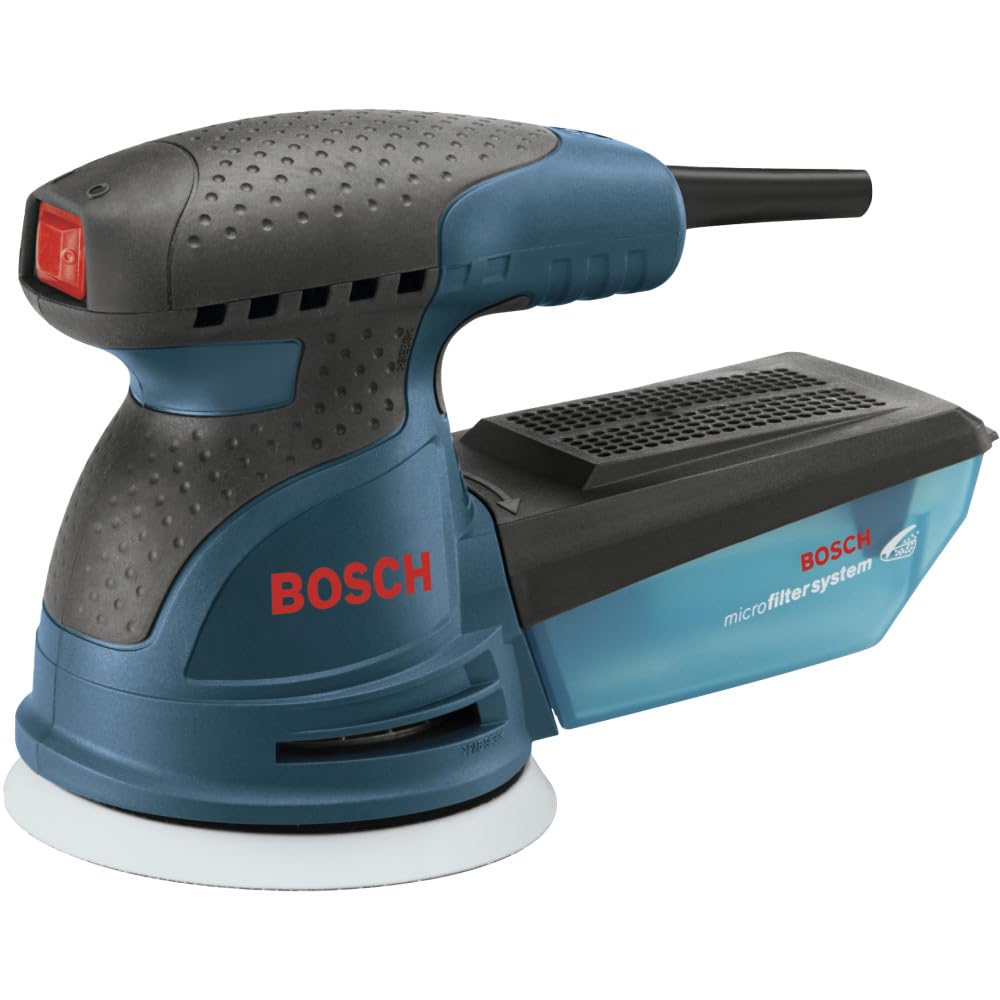
The Bosch ROS20VSC stands out for its microfilter dust canister that captures fine particles effectively, plus a notably low noise level for a random orbital sander. Variable speed control and comfortable handling make it well-suited for finish sanding and refinishing projects where cleanliness matters. However, durability reports are mixed — some units may experience motor or switch issues after months of use, though many others perform reliably for years. This makes the Bosch a strong choice for users who prioritize dust control and quiet operation over heavy daily professional use.

Pros

  • Microfilter canister captures very fine dust particles, keeping the workspace cleaner.
  • Quieter than most random orbit sanders, suitable for indoor or shared workspaces.
  • Smooth variable speed dial offers good control for different sanding tasks.

Cons

  • In high-use scenarios, some units may experience motor or switch failure after months of use.
Our verdict

If dust control and a quiet workspace matter more than long-term heavy-duty durability, this Bosch delivers where it counts.

Check Latest Price
3

Professional's Choice

Makita BO5041

93 /100
Craft Score Outstanding

Key details

Motor
3.0 amp
Weight
3.1 lbs
Power Source
Corded 120V
Speed Control
Variable 4-12k OPM
View on Amazon

The BO5041 delivers a 4,000–12,000 OPM range that few sanders match, giving you precise control for veneer and fine finishes. The adjustable front handle and low-vibration operation make extended sessions less fatiguing.

This sander suits professional woodworkers who need low-speed control and prefer a two-hand grip. The switch lock button can be finicky when using one hand — worth checking if that's your typical working style. While dust collection is adequate, a shop-vac adapter improves it for large jobs.

💡 If you plan to use the sander one-handed, test the switch lock button before committing.

Pros

  • Wide variable speed range (4,000–12,000 OPM) for precision on delicate surfaces.
  • Adjustable front handle and low vibration reduce hand fatigue during long sessions.
  • Solid build quality with a comfortable two-hand grip for stable control.

Cons

  • Switch lock button can be tricky to engage, especially when working one-handed.
Our verdict

Best for professionals who prioritize low-speed control and comfort; the switch quirk is a minor adjustment for the control you gain.

Check Latest Price
4

Best Cordless

DEWALT DCW210B

96 /100
Craft Score Outstanding

Key details

Motor
Brushless
Weight
2.5 lbs
Power Source
Cordless 20V
Speed Control
Variable 8-12k OPM
View on Amazon

The brushless motor delivers consistent power across the 8,000–12,000 OPM range, keeping pace with corded models on small to medium projects. Where the top pick excels in dust collection, this sander trades that for cordless freedom — though the included dust bag can detach and collects little, the vacuum port works well.

Best for DeWalt 20V battery owners who need portability for finishing and light sanding. Battery longevity depends on capacity — a 5Ah pack handles a couple of hours, while 2Ah packs drain quickly. Plan to connect a shop vac for effective dust control.

💡 Plan to use a shop vac connection for effective dust control; the included bag is unreliable.

Pros

  • Brushless motor provides consistent power and smooth operation across the speed range.
  • Cordless freedom for small to medium projects with sufficient runtime from larger batteries.
  • Variable speed trigger and ergonomic grip give precise control, even for beginners.

Cons

  • Dust collection bag can detach during use and collects very little dust.
  • Battery life varies significantly
Our verdict

This sander is a logical choice for DeWalt system users who value cordless mobility over dust collection performance. Pair it with a shop vac and a 5Ah battery for best results.

Check Latest Price
5

Best Value Corded

CRAFTSMAN CMEW231

93 /100
Craft Score Outstanding

Key details

Motor
3.0 amp
Weight
3.4 lbs
Power Source
Corded 120V
Speed Control
Fixed 12k OPM
View on Amazon

The Craftsman CMEW231 delivers fast material removal with its 3-amp motor and captures most debris effectively via the included dust bag or vac port. Its fixed 12,000 OPM speed suits hogging and general sanding but lacks the slow-speed control needed for fine finishing — a tradeoff acceptable for users on a budget who prioritize power and dust collection over variable speed.

💡 Let the sander reach full speed before touching the workpiece to avoid gouging.

Pros

  • 3-amp motor moves through stock quickly, even on rough surfaces.
  • Dust bag and vac port keep the work area noticeably cleaner than budget alternatives.
  • Comfortable grip and smooth operation at a mid-range price point.

Cons

  • Fixed 12,000 OPM speed limits use on delicate finishing or thin veneers.
  • Starts at full speed, which can cause gouging on initial contact if not careful.
Our verdict

Best suited for users who want a no-frills, powerful sander with solid dust control at a fair price — not for precision sanding or variable-speed needs.

Check Latest Price
6

Budget Variable Speed

SKIL SR211601

93 /100
Craft Score Outstanding

Key details

Motor
2.8 amp
Weight
3.4 lbs
Power Source
Corded 120V
Speed Control
Variable up to 13k OPM
View on Amazon

The SKIL SR211601 brings variable speed control and a cyclonic dust box to a budget price point. Its 2.8-amp motor delivers enough power for typical DIY sanding tasks. The dust box works well in some setups but not others, so a shop vac may be needed for consistent dust management. This sander suits DIYers who want adjustable speed without a big investment and are willing to supplement dust collection.

Durability can vary; some units may develop noise or reduced performance over time. For light to moderate home use with a vac, it offers good value.

💡 Using a shop vac with the dust port improves dust pickup consistency.

Pros

  • Variable speed control at a budget-friendly price
  • Sufficient power for most DIY tasks

Cons

  • Durability can vary; some units may develop noise or reduced performance over time
Our verdict

The SKIL SR211601 delivers variable speed on a budget, but the dust collection inconsistency and hit-or-miss durability make it a pick for cautious DIYers who can adapt with a shop vac.

Check Latest Price
7

Light DIY

BLACK+DECKER BDERO100

93 /100
Craft Score Outstanding

Key details

Motor
2.0 amp
Weight
3.2 lbs
Power Source
Corded 120V
Speed Control
Fixed 12k OPM
View on Amazon

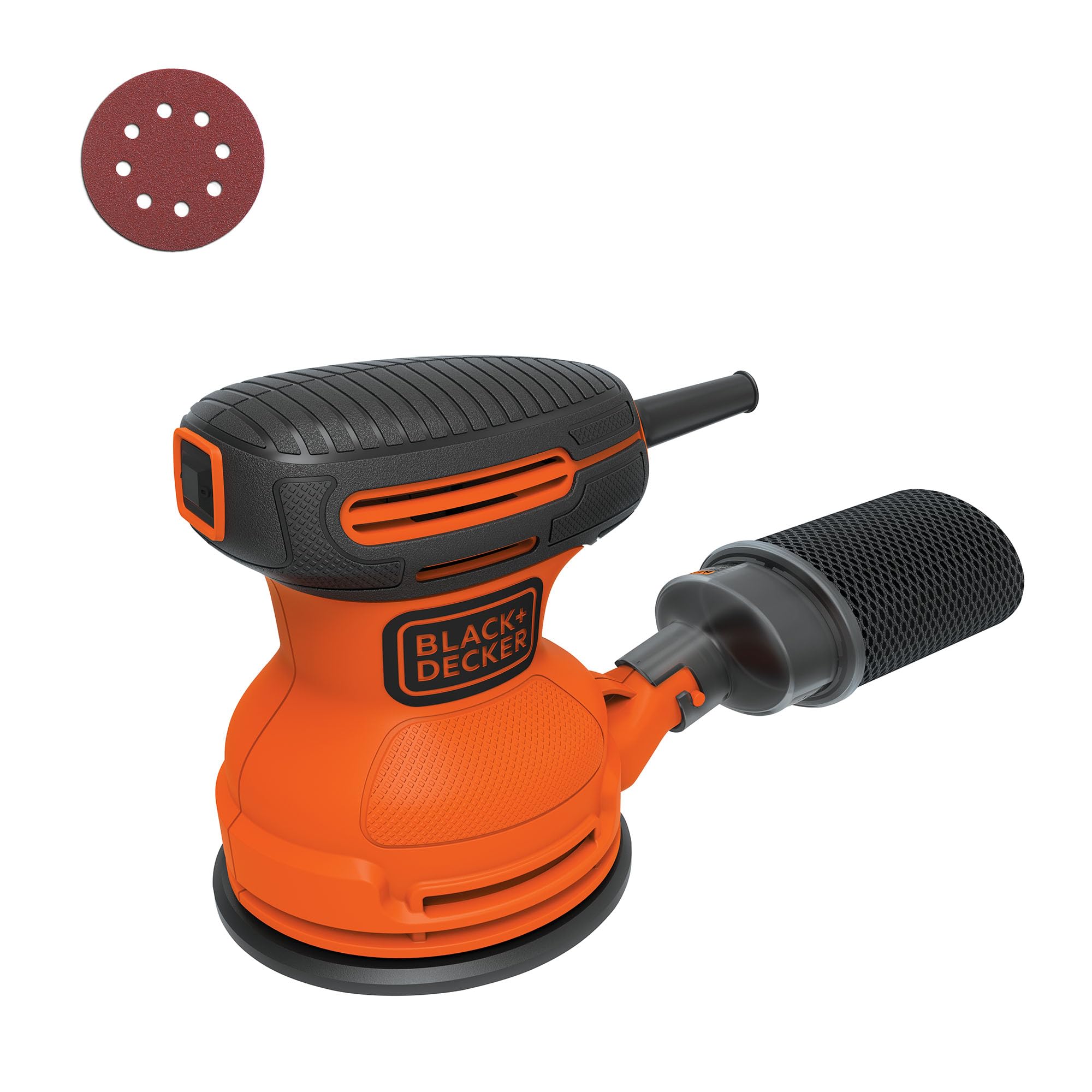
At under $40, this sander handles light sanding and furniture refinishing without stalling. However, the dust bag lets fine particles escape into the air, and some units may not last through extended use. This suits occasional users who prioritize cost over dust control and long-term durability.

Pros

  • Great value for the price
  • Lightweight and easy to handle for small projects

Cons

  • Dust bag does not capture fine particles effectively, so dust may escape into the air
Our verdict

Best for the occasional DIYer who needs the cheapest sander and doesn't mind dusting up the workspace.

Check Latest Price
8

General Sanding

DEWALT DWE6421K

95 /100
Craft Score Outstanding

Key details

Motor
3.0 amp
Weight
3.5 lbs
Power Source
Corded 120V
Speed Control
Fixed 12k OPM
View on Amazon

The DWE6421K is a fixed-speed corded workhorse with smooth orbital action and good dust control. Its fixed 12,000 OPM speed suits most sanding tasks but limits finesse, and the hook-and-loop pad may eventually lose adhesion — considerations that steer some buyers toward the variable-speed DWE6423K.

Pros

  • Effective dust collection via bag or vacuum hookup.
  • Comfortable grip for extended use.

Cons

  • Hook-and-loop pad can lose grip, causing discs to slip during use.
Our verdict

A solid choice for fixed-speed users who value dust collection and comfort, but be prepared for possible pad adhesion wear over time.

Check Latest Price
9

Simple Sanding

Makita BO5030K

96 /100
Craft Score Outstanding

Key details

Motor
3.0 amp
Weight
2.9 lbs
Power Source
Corded 120V
Speed Control
Fixed 12k OPM
View on Amazon

This Makita sander arrives in a sturdy carrying case and delivers smooth, vibration-free sanding thanks to its solid build. Dust collection through the pad is adequate, but fine dust may escape the bag. The fixed 12,000 OPM speed works for general tasks but lacks the control needed for delicate finishing work.

Pros

  • Solid build quality with smooth sanding action
  • Includes a durable plastic carrying case

Cons

  • Fixed 12,000 OPM speed limits control on delicate surfaces
Our verdict

A straightforward choice for general sanding tasks where fixed speed is acceptable and the included case is a priority.

Check Latest Price
10

Makita System Users

Makita XOB01Z

96 /100
Craft Score Outstanding

Key details

Motor
Brushed
Weight
3.5 lbs (incl. battery)
Power Source
Cordless 18V
Speed Control
Three speeds 7-11k
View on Amazon

The Makita XOB01Z offers three speed settings and the convenience of cordless operation within the Makita 18V system. It handles light to medium sanding tasks well, but dust collection is weak even with a shop vac attached, and runtime on a 4Ah battery is roughly 20 minutes. These shortfalls keep it from competing with corded models for extended work.

Pros

  • Three adjustable speed settings for different sanding needs
  • Cordless freedom with Makita 18V battery compatibility

Cons

  • Dust collection remains poor even with a shop vac connected; battery runtime is short on standard packs
Our verdict

A practical option if you already own Makita batteries and need portability for light-duty sanding — but corded alternatives offer better dust control and longer run time.

Check Latest Price
11

Milwaukee System

Milwaukee 2648-20

94 /100
Craft Score Outstanding

Key details

Motor
Brushed
Weight
3.5 lbs (incl. battery)
Power Source
Cordless M18
Speed Control
Variable (not detailed)
View on Amazon

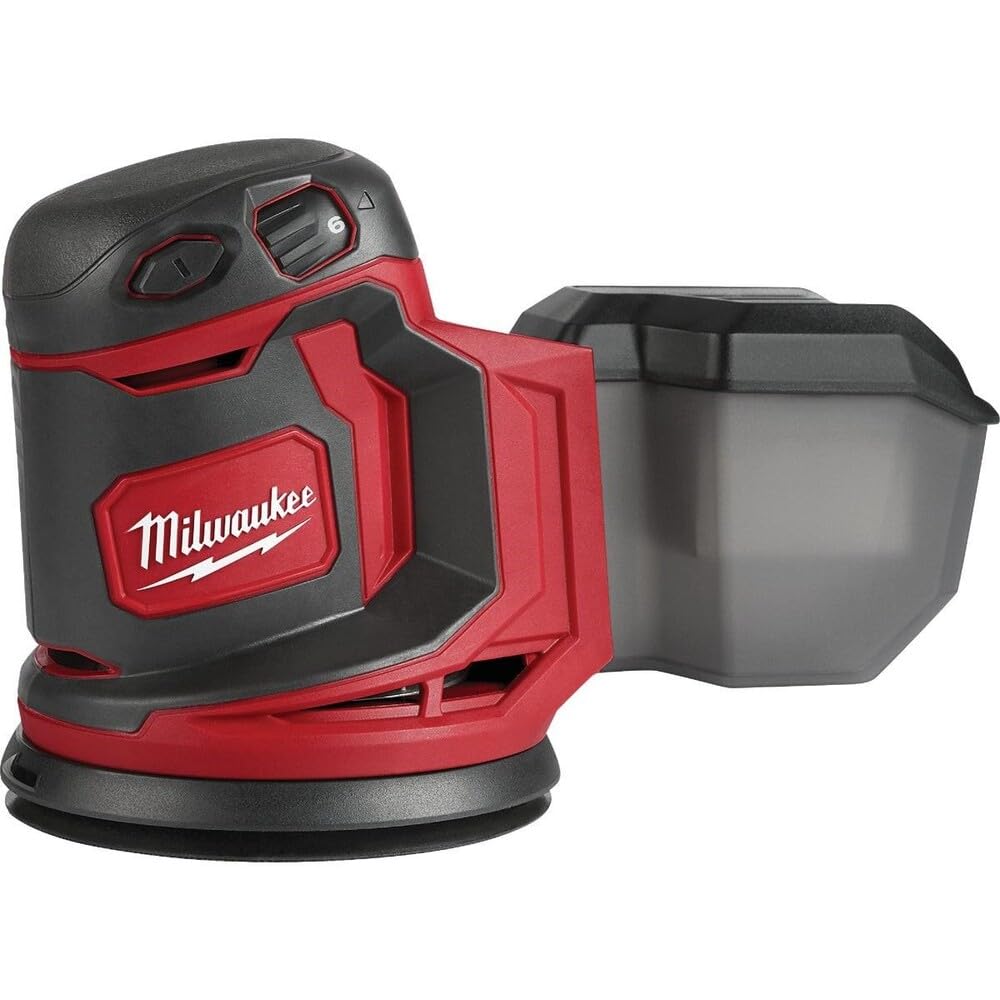
Milwaukee’s M18 sander brings the brand’s known build quality and variable speed to light-duty tasks. But the premium price tags on a tool with short battery runtime and limited dust collection make sense only if you already own M18 batteries and need occasional drywall or small project sanding without a cord.

Pros

  • Solid construction and comfortable grip reduce hand fatigue on quick jobs
  • Variable speed control handles lighter sanding and drywall work effectively

Cons

  • Battery life can be brief even with 5.0Ah packs - requires spare batteries for anything beyond quick touch-ups
Our verdict

This sander fits best for Milwaukee cordless system owners who need a compact tool for occasional light sanding and don't mind swapping batteries frequently.

Check Latest Price
12

Craftsman System

CRAFTSMAN CMCW220B

93 /100
Craft Score Outstanding

Key details

Motor
Brushed
Weight
2.6 lbs (tool only)
Power Source
Cordless V20
Speed Control
Fixed 12k OPM
View on Amazon

An entry-level cordless sander that pairs with existing Craftsman V20 batteries at a low price. The bare tool is lightweight and easy to maneuver, but battery life can be brief even with larger packs, and the added battery weight makes the tool feel unbalanced during extended use. This limits it to small, occasional sanding jobs rather than prolonged sessions.

Pros

  • Affordable entry into the Craftsman V20 cordless system
  • Lightweight bare tool reduces fatigue for quick tasks

Cons

  • Battery life can be short even with larger batteries
Our verdict

A reasonable choice only for Craftsman V20 owners who need a very occasional sander for small touch-ups and already have batteries on hand.

Check Latest Price
13

Ultra Budget

HYCHIKA FL117

90 /100
Craft Score Outstanding

Key details

Motor
2.5 amp
Weight
2.5 lbs
Power Source
Corded 120V
Speed Control
Variable up to 13k
View on Amazon

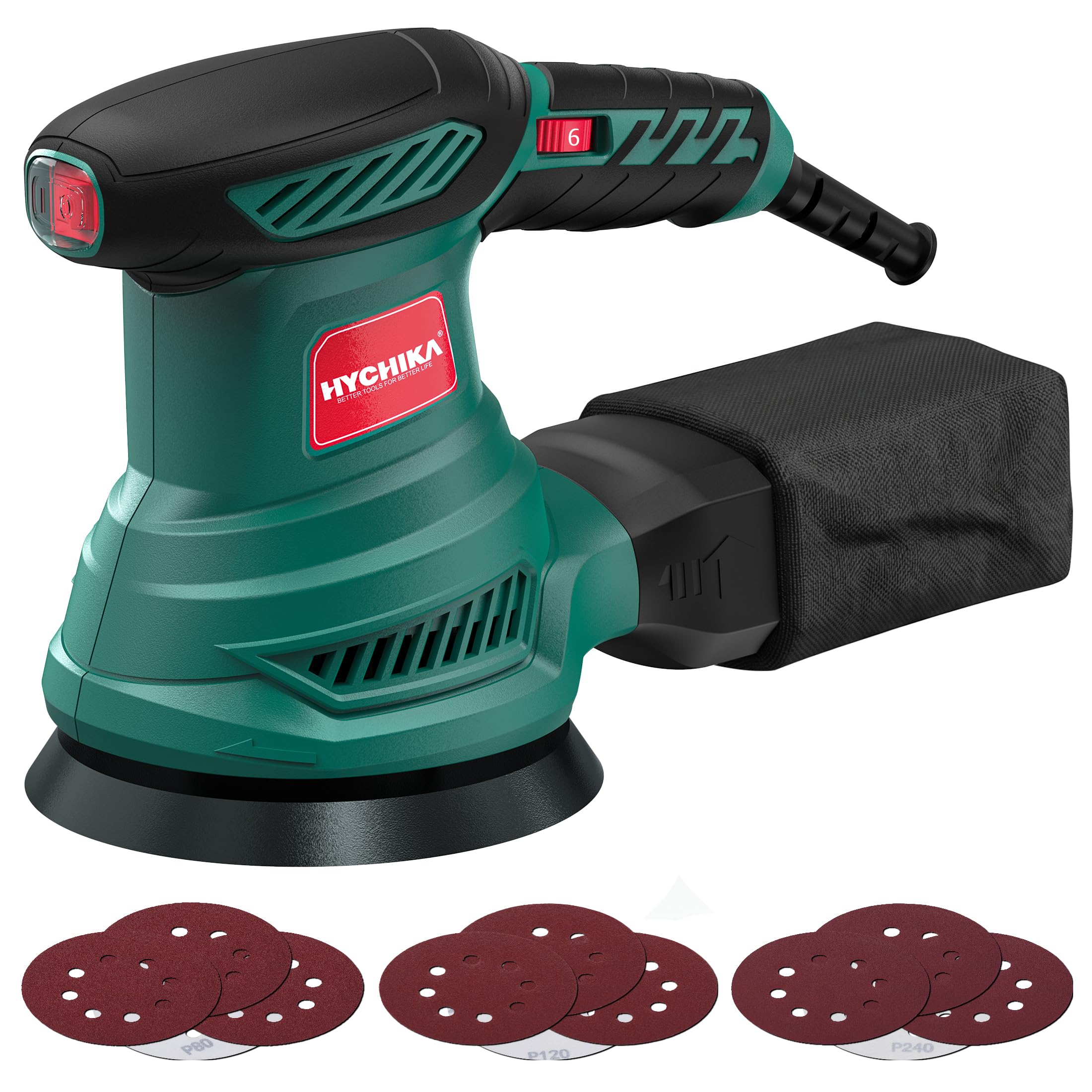
This sander delivers variable speed and a lightweight build at a rock-bottom price, with sanding discs included. Dust collection is ineffective, making it less suitable for indoor finishing without a shop vac.

Pros

  • Budget-friendly price with six variable speeds and a pack of sandpaper discs included.
  • Lightweight construction that reduces fatigue during small projects.

Cons

  • Durability can be a concern for anything beyond occasional light use.
Our verdict

Only worth considering if you need a sander for a single weekend project and have low expectations for dust control and long-term use.

Check Latest Price
14

Cheapest Option

DEKOPRO DKOS30

88 /100
Craft Score Excellent

Key details

Motor
2.5 amp
Weight
3.6 lbs
Power Source
Corded 120V
Speed Control
Variable up to 14k RPM
View on Amazon

This DEKOPRO sander hits a rock-bottom price and includes 16 sanding discs, making it a low-commitment option for one-off light sanding. Speed adjustment is simple and the 2.5-amp motor handles small tasks. However, the dust box can detach during use, and the hook-and-loop backing may wear down after limited use — fine for a quick refinishing job, not for repeated projects.

Pros

  • Extremely low price includes 16 sanding discs
  • Easy speed control with six variable settings

Cons

  • Dust box may detach during sanding, spilling debris
Our verdict

Worth considering only for a one-time small project where cost is the priority and dust collection is secondary.

Check Latest Price
15

Ryobi System

RYOBI PCL406B

90 /100
Craft Score Outstanding

Key details

Motor
Brushed
Weight
2.7 lbs (tool only)
Power Source
Cordless 18V
Speed Control
Fixed 10k OPM
View on Amazon

Compatible with the Ryobi ONE+ battery system at a fair price, this sander suits light-duty tasks like touch-ups and small projects. However, battery drain is quick (5-10 minutes per charge) and the dust bag tends to come loose during use, making extended sessions frustrating. Best for Ryobi owners needing occasional portability, not for heavy material removal or all-day sanding.

Pros

  • Good value for Ryobi ONE+ system users
  • Works well for small projects and portability

Cons

  • On a full charge, runtime may be limited to around 5-10 minutes
Our verdict

A practical option for Ryobi ONE+ owners who need a cordless sander for quick, light-duty sanding and already have spare batteries on hand.

Check Latest Price

How to Choose

Motor Power

Motor power, measured in amps or brushless design, directly affects material removal speed and torque. A 3-amp corded motor can strip paint quickly, while a 2-amp motor may bog down on harder woods.

Brushless motors in cordless sanders run cooler and last longer, but they trade raw power for efficiency. For heavy stock removal, a corded 3-amp sander is still faster than any cordless model.

Dust Collection

The onboard dust bag included with most sanders captures only coarse particles; fine dust escapes and hangs in the air. This is where the shop vac connection matters most.

Mid-range models like the Bosch ROS20VSC use a microfilter canister that traps particles down to 1/2-micron, dramatically improving air quality. Cyclonic boxes (SKIL) can work well if attached to a vac, but standalone performance is inconsistent.

Speed Control

Variable speed lets you dial down for delicate finishes (e.g., 4,000 OPM on veneer) or crank up for aggressive sanding. Fixed-speed sanders run at a single pace, usually 12,000 OPM, which is fine for general work but can leave swirl marks on softer materials.

If you sand multiple materials or do finish work, variable speed justifies its higher price. For one-note sanding like stripping old paint, a fixed-speed model is perfectly adequate.

Weight and Ergonomics

Weight determines fatigue over long sessions. A sander under 3.5 pounds is easier to handle overhead or for detailed work, but heavier models (4+ pounds) can feel more stable on flat surfaces.

Ergonomics like an adjustable front handle (Makita BO5041) or a soft-grip body reduce hand strain. Cordless sanders add battery weight, shifting the balance — try holding one before buying if possible.

Corded vs Cordless

Corded sanders offer unlimited runtime and consistent power, making them ideal for large projects or professional use. Cordless models provide mobility but drain batteries fast — a 5Ah battery lasts roughly 20–30 minutes of continuous sanding.

If you're already invested in a battery system (DeWalt, Makita, Milwaukee), a cordless sander is a convenient addition for small jobs. For anything beyond quick touch-ups, a corded sander is more practical.

Frequently Asked Questions