5 Best Dust Collector for Small Shop 2026: Real Chip Control Without Overspending

Find the dust collector for small shop that delivers real suction for planers and table saws without blowing your budget.

Many small shop dust collectors promise big performance but fall short when you hook up a planer or jointer. The culprit is often a motor under 1 HP that struggles to move chips through any duct run. This guide focuses on units with adequate airflow to keep your shop clean.

The trade-off you'll face is between finer filtration and budget. A 2-micron filter captures more fine dust but costs more than a 5-micron bag. Most small shops will find a 5-micron bag acceptable for chip control, but if air quality is a priority, the extra investment pays off in less dust haze.

We've selected models that deliver reliable chip pickup for common tools like table saws, miter saws, and planers. Each recommendation targets a specific use case, so you can match the collector to your shop's needs without overpaying.

1

Best Overall

WEN DC1300

87 /100
Craft Score Excellent

Key details

CFM
1,300
Motor
14 Amp (1.5-2 HP)
Filtration
5-micron bag
View on Amazon

The WEN DC1300 delivers 1,300 CFM through dual 4-inch ports, enabling simultaneous connection to a planer and a table saw without switching hoses. The motor handles chip collection from jointers and planers without clogging, and the 50-gallon bag reduces emptying frequency. It runs quieter than a typical shop vac, making it more pleasant for extended use in a garage or basement. The included mobile base lets you roll it between workstations. Dual ports save setup time by keeping both tools connected.

This dust collector targets small-shop woodworkers who need strong airflow without the cost of premium brands. The startup current can trip a 15-amp circuit if shared with other high-draw tools — a dedicated 20-amp circuit is recommended. The 5-micron filter captures the majority of chips and dust, but some fine particles may escape; this is less of a concern for tool chip collection than for air quality in a closed space. At a mid-range price, it undercuts competitors while matching their airflow. The collection bag is easy to remove and replace.

💡 Use a dedicated 20-amp circuit or ensure the shared circuit has no other high-draw tools running at startup.

Pros

  • Captures fine woodworking dust effectively, keeping the shop clean.
  • Good value compared to premium dust collectors with similar CFM.
  • Quieter than most shop vacs, suitable for indoor use without earplugs.

Cons

  • Startup current may trip a 15-amp circuit if other tools are on the same line.
  • 5-micron filter bag allows some fine dust to escape, reducing air quality.
Our verdict

The DC1300 delivers enough airflow for multiple tools at a mid-range price — a sensible choice for small shops that don't need HEPA-level filtration.
Check Latest Price
2

Premium Filtration

JET DC-1100VX-CK

88 /100
Craft Score Excellent

Key details

CFM
~1,100
Motor
1.5 HP
Filtration
2-micron canister
View on Amazon

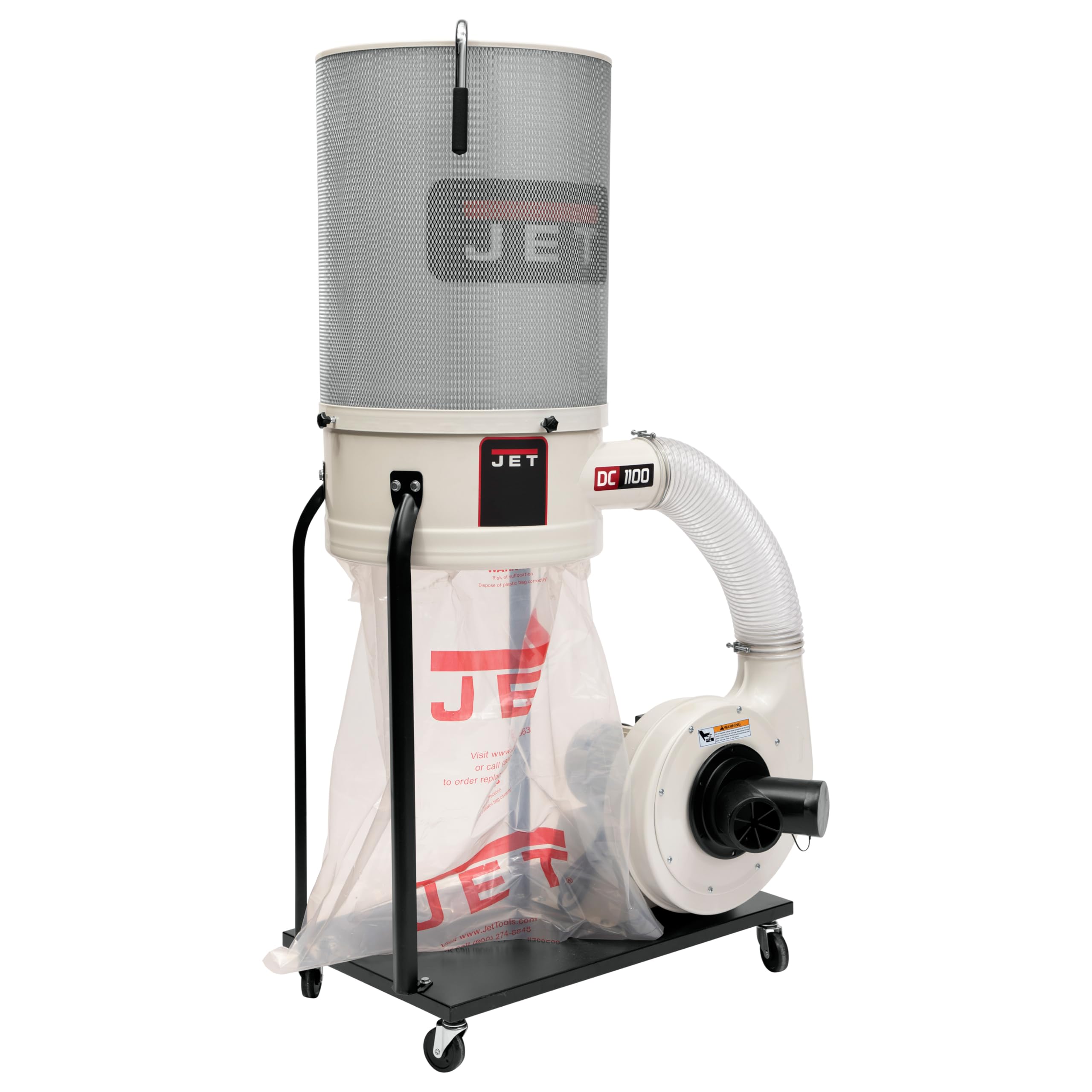
The JET DC-1100VX-CK sets itself apart with a 2-micron canister filter that traps fine dust particles standard 5-micron bags let through, while running at a conversational 80 dB. Where the top pick delivers high CFM at a lower price, this unit excels at keeping shop air noticeably cleaner during heavy sanding or planing sessions.

This dust collector fits serious hobbyists or small professional shops who value long-term air quality and are willing to pay a premium for it. The higher price is a boundary for casual users, and occasional reports of casters or support legs loosening during assembly mean a careful setup check is wise.

💡 Tighten all caster bolts fully during setup to prevent wobble.

Pros

  • 2-micron canister captures fine dust that standard bags miss, noticeably improving air quality
  • Quiet enough to hold a conversation nearby, unlike typical shop vacs
  • Build quality and motor feel professional, suited for regular use

Cons

  • Premium price may be steep for occasional hobbyists who only need basic chip collection
  • Caster or support leg stability can vary
Our verdict

Choose the JET when fine dust control and low noise justify the investment; for occasional use, the top pick offers better value.

Check Latest Price
3

Best Wall-Mount

Shop Fox W1826

84 /100
Craft Score Excellent

Key details

CFM
537
Motor
1 HP
Filtration
2.5-micron cloth
View on Amazon

The Shop Fox W1826 mounts directly to a wall, reclaiming precious floor space - a distinct advantage for cramped workshops. Its 2.5-micron cloth bag catches finer dust than typical 5-micron units. This setup suits small shops that work with one tool at a time and want a fixed dust collection station. However, suction is limited for planers or long duct runs, and some units arrive with minor shipping damage or a finicky bag clamp.

💡 Inspect the unit for shipping damage upon delivery and allow extra time to get the bag clamp seated correctly.

Pros

  • Wall-mount design frees floor space for small shops
  • 2.5-micron filtration catches finer dust than most budget bags
  • Handles chips and sawdust from table saws and jointers well

Cons

  • Suction can be insufficient for planers or setups with long duct runs
  • Some units arrive with shipping dents or a bag clamp that is difficult to secure
Our verdict

A solid choice for small shops that prioritize floor space and decent filtration over raw CFM and mobility.

Check Latest Price
4

Light Occasional Use

WEN DC3474

83 /100
Craft Score Excellent

Key details

CFM
600
Motor
7.4 Amp (0.75-1 HP)
Filtration
5-micron bag
View on Amazon

The WEN DC3474 is the most affordable option here, offering quiet operation that suits occasional miter saw use. However, its 7.4-amp motor stays below the 1 HP threshold, making it underpowered for planers or jointers. Some units have also experienced switch or zipper failures, adding risk for buyers seeking long-term reliability.

Pros

  • Quieter operation than standard shop vacuums.
  • Works adequately for a single miter saw in a small shop.

Cons

  • Suction may be inadequate for planers and jointers.
Our verdict

A budget-friendly choice for casual woodworkers who only need dust collection from a single miter saw and can accept lower power and possible durability issues.

Check Latest Price
5

Carving and Sanding

PSI DC725

86 /100
Craft Score Excellent

Key details

CFM
725 (max)
Motor
1.29A (<0.2 HP)
Filtration
Washable filter
View on Amazon

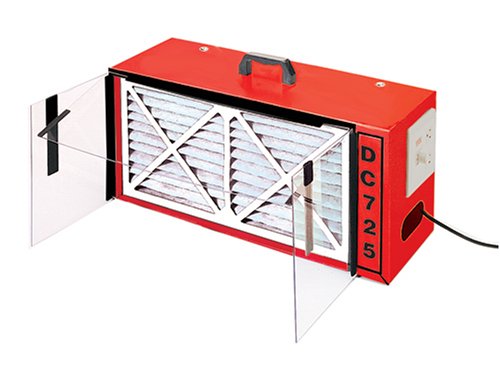
The PSI DC725 captures fine dust from power carving and detail sanding with variable speed control and built-in tool outlets. However, its three small fans produce under 0.2 HP, making it unsuitable for planers or jointers — the filter clogs quickly with large shavings.

Pros

  • Variable speed and outlets let you power carving tools while collecting dust.
  • Much quieter than a shop vac, easy to move around a workbench.

Cons

  • Underpowered for planer shavings or any heavy chip volume; filter clogs quickly.
Our verdict

Best as a dedicated carving station where small chip volume is the norm.

Check Latest Price

How to Choose

Motor Power (HP/Amp)

A 14-amp motor draws significant startup current that can trip a 15-amp circuit breaker. For small shops, a 1 HP motor (around 10-12 amps) is the realistic minimum for moving chips through a 4-inch hose. Motors under 1 HP struggle with planers and jointers.

Airflow (CFM)

CFM drops with duct length and bends; a unit rated 1,300 CFM at the inlet loses up to half through a 10-foot hose. For a single tool, 500 CFM is often enough; for multiple tools, 800+ CFM is safer.

Filtration Micron Rating

A 5-micron bag catches larger chips but lets fine dust through. A 2-micron canister captures more respirable particles, making a noticeable difference in air quality. The trade-off is filter cleaning frequency.

Collection Capacity

A 50-gallon bag reduces emptying frequency but takes up space. Smaller 15-gallon bags fill quickly with planer shavings, requiring more frequent stops. Consider your chip volume before choosing.

Port Size and Inlets

Dual 4-inch ports allow connecting two tools with blast gates, but each gate reduces airflow. A single 4-inch port is fine for one tool at a time. Match port size to your hose diameter.

Frequently Asked Questions