10 Best Mallet for Woodworking 2026: Find One That Lasts and Fits Your Work

Not sure whether to pick wood, rubber, or urethane? We cut through the cheap failures to help you choose the right mallet for chisels, joinery, or flooring.

A woodworking mallet seems simple, but the cheap ones often fail within days — rubber heads detach, handles snap. That waste of money is frustrating.

The real challenge is matching the mallet to your work. A light rubber mallet works for assembly, but chisel work needs wooden or urethane for control and tool protection. This guide focuses on mallets that actually last and fit specific tasks.

That's why understanding head weight, material, and construction quality matters more than price.

1

Best Overall

Estwing 12 oz Rubber Mallet

96 /100
Craft Score Outstanding

Key details

Face Design
Double-faced
Head Weight
12 oz
Head Material
Rubber
Handle Material
Hickory wood
View on Amazon

The Estwing uses a triple-wedge system to secure the rubber head, so there's no head separation over time — a weak point in many cheaper mallets. The hickory handle has a palm swell that fits medium-to-large hands comfortably, and the 12 oz weight gives enough heft for driving chisels or tapping flooring planks without being tiring.

In practice, the rubber faces are on the harder side: they strike firmly without bouncing excessively, but they can mark very soft woods or delicate trim. For tasks like assembling joinery, tapping laminate, or working with chisels, this mallet performs consistently. The main tradeoff is handle circumference — those with small hands may find the grip too thick for a secure hold.

This mallet suits professional carpenters and serious DIYers who need a general-duty striking tool for woodworking and flooring. If your work involves ultra-delicate surfaces (like fine veneers or finished panels), a softer dead-blow or urethane mallet would be a better fit. Buyers with smaller hands should handle it first to check comfort.

💡 If you have smaller hands, try gripping the handle in person before buying.

Pros

  • Triple-wedge construction keeps the head firmly attached through years of use.
  • Suitable for chisel work, flooring, and general striking without damaging surfaces.
  • Hickory handle with palm swell provides a comfortable grip for most hand sizes.

Cons

  • Handle circumference may be too large for users with small hands to grip comfortably.
  • Rubber faces are on the harder side and can mar very delicate surfaces.
Our verdict

A straightforward, durable mallet for woodworking and flooring — just check the handle size if you have smaller hands.

Check Latest Price
2

Best for Carving

Schaaf 15 oz Carving Mallet

92 /100
Craft Score Outstanding

Key details

Face Design
Round
Head Weight
15 oz
Head Material
Polyurethane
Handle Material
Beech wood
View on Amazon

The urethane head absorbs shock and won't mar gouges or chisels, making this a quieter option for precision carving. The 15 oz weight and beech handle deliver balanced swings for detailed joinery and dovetail work. That same handle arrives with a rough, unfinished surface – carvers who want a smooth grip out of the box should budget a few minutes for sanding or applying oil.

💡 A quick sanding or a coat of linseed oil transforms the grip for extended carving sessions.

Pros

  • Urethane head protects tool edges and reduces striking noise.
  • Ergonomic balance and handle shape reduce fatigue during extended carving sessions.

Cons

  • Handle finish feels coarse out of the box
Our verdict

Best for dedicated wood carvers who value tool preservation and are willing to spend a minute smoothing the handle.

Check Latest Price
3

Best Non-Marking for Flooring

Goldblatt 16 oz Low Recoil

94 /100
Craft Score Outstanding

Key details

Face Design
Double-faced
Head Weight
16 oz
Head Material
White oil-resistant rubber
Handle Material
Metal with soft-grip
View on Amazon

The Goldblatt 16 oz Low Recoil stands apart from the top pick by prioritizing sustained comfort and surface protection over general woodworking versatility. Its white rubber face leaves no scuffs on laminate or LVP, and the handle’s soft grip and reduced bounce keep hand fatigue in check during full-day flooring jobs. The balance feels solid, and the metal core gives it a professional weight without excessive recoil.

This mallet suits woodworkers who spend hours tapping floorboards or assembling cabinets and need a strike that doesn’t wander or mark the workpiece. It’s less ideal for chisel carving—urethane or wood heads offer better tool control—or for heavy demolition where a dead blow hammer would be more efficient. A small number of units have shown rubber splitting under extreme, sustained heavy use, but that’s an edge case for most buyers.

Pros

  • Non-marking white rubber won’t scuff finished floors or delicate surfaces.
  • Low bounce and soft-grip handle reduce hand fatigue during all-day use.
  • Solid, balanced build feels durable and professional in hand.

Cons

  • White rubber may show dirt and scuff marks over time, though face remains functional.
  • Under very heavy, sustained striking the rubber head can split in isolated cases.
Our verdict

Pick the Goldblatt if your work centers on flooring installation or non-marring striking—its comfort advantage over the top pick is real, even if general woodworking versatility is narrower.

Check Latest Price
4

Best Traditional Wooden Mallet

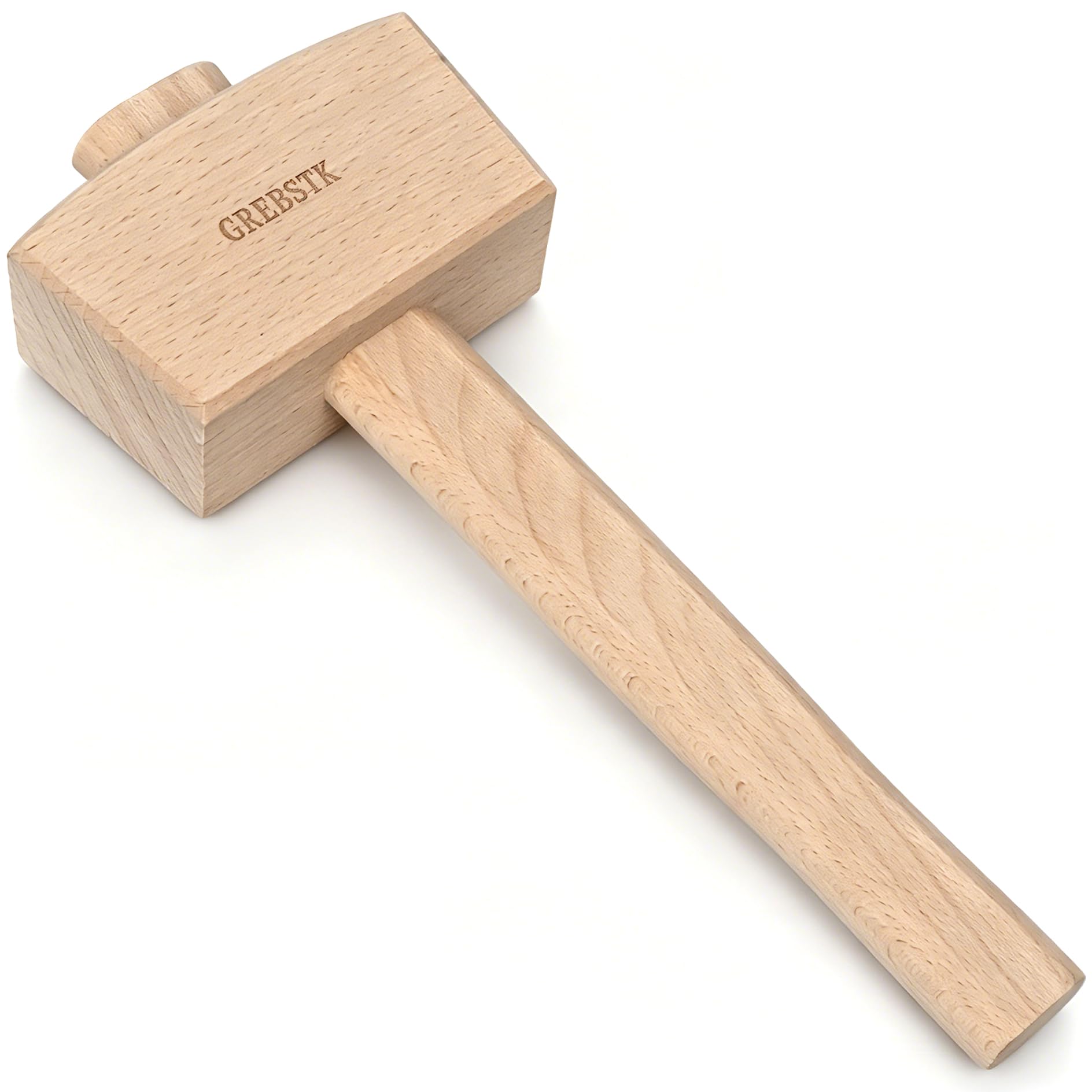
GREBSTK Beech Wood Mallet

92 /100
Craft Score Outstanding

Key details

Face Design
Cylindrical
Head Weight
13.3 oz
Head Material
Beech wood
Handle Material
Beech wood
View on Amazon

The unfinished beech wood handle provides a sweat-absorbing, tactile grip for precise chisel strikes, setting it apart from urethane mallets designed for carving. Best suited for woodworking joinery and bartending ice crushing, though the wood head can dent softwood surfaces and the handle may need occasional oiling to prevent splitting.

💡 Applying mineral oil to the handle periodically can help prevent splitting.

Pros

  • Solid beech construction with a natural, traditional feel.
  • Balanced weight delivers controlled strikes for chisel work and joinery.

Cons

  • On softwood surfaces, the head can leave visible dents.
Our verdict

A traditional mallet for those who prioritize grip and precision in joinery and bartending, accepting wood's tendency to mark soft surfaces.

Check Latest Price
5

Best for Heavy-Duty & Dead Blow

Estwing 18 oz Deadhead

92 /100
Craft Score Outstanding

Key details

Face Design
Double-faced dead blow
Head Weight
18 oz
Head Material
Rubber with dead blow shot
Handle Material
Hickory wood
View on Amazon

The Estwing 18 oz Deadhead uses a shot-filled rubber head to reduce bounce-back, making it a solid match for sheet metal, flooring, and automotive work where precision striking matters. This is not the mallet to grab for general woodworking chisel work — the 12 oz version handles that better — and some units may show rubber head loosening over time, with country-of-origin labels sometimes reading Taiwan rather than USA.

💡 Periodically check the head attachment — a dab of thread-locker on the handle can help keep it secure.

Pros

  • Dead blow action minimizes rebound for controlled strikes on metal and flooring.
  • Forged steel head and hickory handle hold up to repeated heavy use.

Cons

  • Rubber head may separate from the handle in some units; origin labeling can be inconsistent.
Our verdict

Best for jobs where rebound control is critical; for general woodworking, the 12 oz version is a better fit.

Check Latest Price
6

Best Value Set

WOTAHI 2-Piece Set

93 /100
Craft Score Outstanding

Key details

Face Design
Double & dual
Head Weight
16 oz & 35 mm
Head Material
Rubber & PVC
Handle Material
Fiberglass
View on Amazon

The WOTAHI set pairs two useful sizes in one budget-friendly package. Both mallets feature fiberglass handles with soft non-slip grips and solid heads that feel comfortable in use. For light to medium woodworking and assembly, these mallets perform well, but the heads are lighter than some alternatives, making them less suited for heavy chisel work. Long-term durability under sustained heavy use is not yet established. This set is best for home DIYers who need both a rubber mallet and a soft-faced hammer for occasional tasks, and for hobbyists looking for a practical gift.

💡 For moderate striking these mallets suffice; reserve heavy chisel work for a heavier mallet.

Pros

  • Two sizes cover common DIY needs at a budget-friendly price.
  • Fiberglass handles with soft grips provide comfortable, secure control.

Cons

  • For heavy striking tasks, the lighter heads may limit effectiveness, and durability under sustained heavy use is unproven.
Our verdict

A smart buy for DIYers who need both sizes and accept the weight and durability limitations for light-to-medium work.

Check Latest Price
7

Light Woodworking

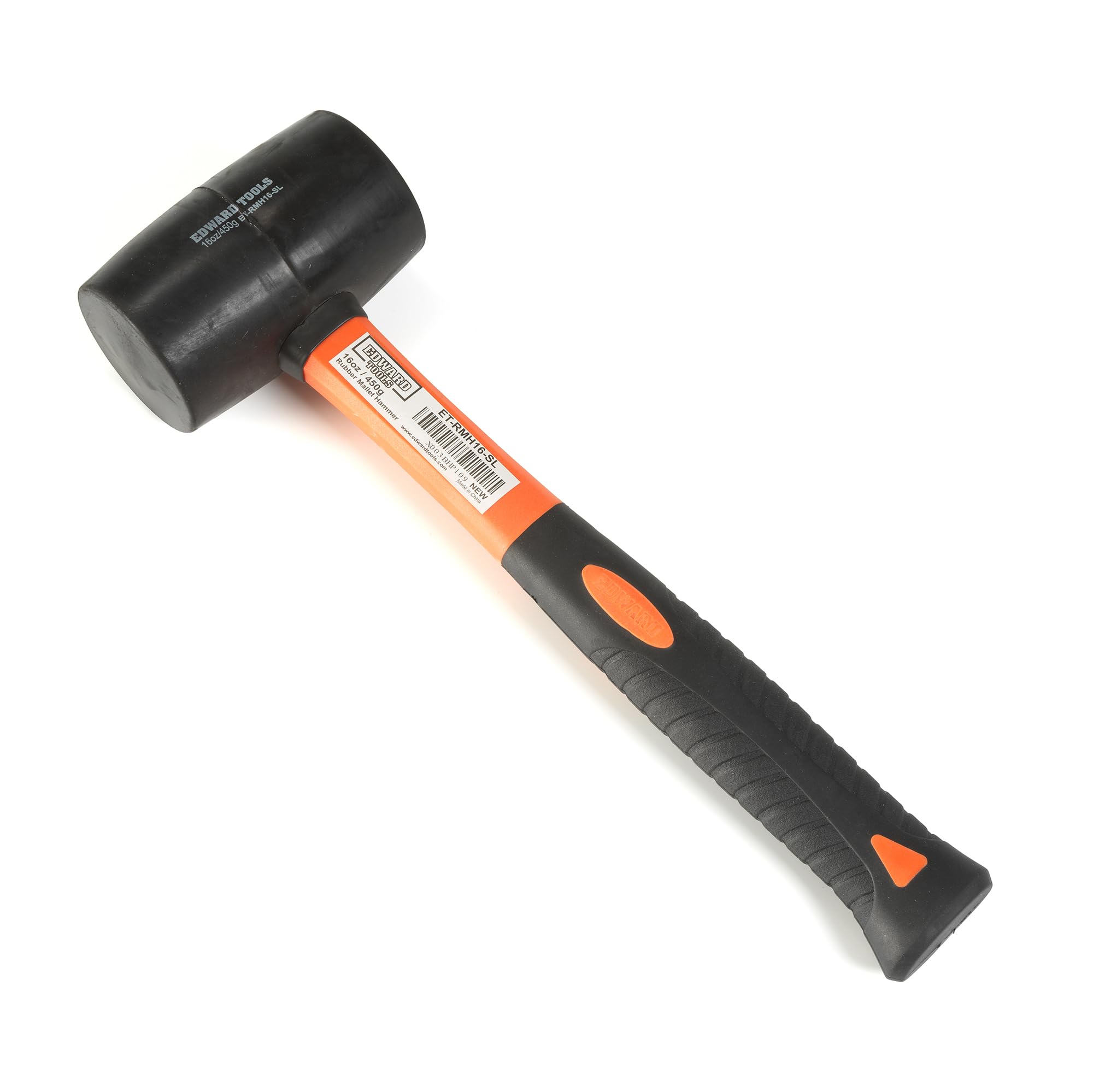
Edward Tools 16 oz Rubber Mallet

96 /100
Craft Score Outstanding

Key details

Face Design
Double-faced
Head Weight
16 oz
Head Material
Rubber
Handle Material
Fiberglass
View on Amazon

This budget-friendly mallet gives you a comfortable grip and well-balanced swing for light assembly or camping stakes. But the head can separate from the handle under heavier use – a risk worth checking before buying for regular woodworking, where a triple-wedge handle design holds up better.

Pros

  • Good value and sturdy build for the price
  • Comfortable ergonomic grip reduces hand fatigue

Cons

  • Head attachment can fail under heavier strikes
Our verdict

A fine choice for camping or light DIY where you strike softly and infrequently – not the mallet for daily woodworking chisels.

Check Latest Price
8

Ultra-Light Tasks

YIYITOOLS 8 oz Wood Handle

94 /100
Craft Score Outstanding

Key details

Face Design
Double-faced
Head Weight
8 oz
Head Material
Rubber
Handle Material
Solid wood
View on Amazon

This budget-friendly mallet is light enough for fatigue-free tapping of shelves and tent stakes. However, at 8 ounces it lacks the mass for woodworking chisel work, and the rubber head's longevity under heavier use is uncertain. It is a functional option for rare, gentle tasks only.

Pros

  • Very affordable for light tasks like camping and shelving.
  • Lightweight design reduces fatigue during extended use.

Cons

  • Rubber head can separate from the handle after moderate striking.
Our verdict

Best for the occasional camper or shelving project where a cheap, light mallet is all that is needed – not for woodworking.

Check Latest Price
9

Auto & Craft

YIYITOOLS 35 mm Dual-Face

93 /100
Craft Score Outstanding

Key details

Face Design
Dual-face
Head Weight
16.4 oz
Head Material
PVC
Handle Material
Steel pipe with TPR
View on Amazon

This dual-face mallet offers a red PVC face for softer taps and a black face for firmer strikes, suiting light auto body repair and craft tasks. However, the steel handle adds weight that feels disproportionate to the small head, and some units may separate from the handle under moderate use – it fits best for occasional jobs where control is less critical.

Pros

  • Two hardness levels for varied impact needs.
  • Budget-friendly price for a dual-face design.

Cons

  • Heavier than expected for its head size
Our verdict

Best reserved for occasional automotive bodywork or light crafting where the weight and head attachment risk are acceptable tradeoffs.

Check Latest Price
10

Light Assembly

ValueMax 8 oz Fiberglass

91 /100
Craft Score Outstanding

Key details

Face Design
Double-faced
Head Weight
8 oz
Head Material
Oil-resistant rubber
Handle Material
Fiberglass with TPR
View on Amazon

The ValueMax 8 oz uses a fiberglass handle and oil-resistant rubber head that stays attached under normal light use. Unlike some budget alternatives that experience head separation, this one holds together — but the 8 oz head limits it to tasks like tapping tent stakes, flooring, or crafts. Not for chisel work or any heavy striking.

Pros

  • Comfortable fiberglass handle with TPR grip reduces fatigue during light striking.
  • 8 oz weight suits small tasks like tent stakes, tile tapping, and craft assembly.

Cons

  • 8 oz head limits impact force; not suitable for chisel work or any heavy striking.
Our verdict

For occasional light-duty jobs where a full-size mallet is overkill, this offers a durable option with no head separation reports.

Check Latest Price

How to Choose

Head Weight

Most woodworking tasks fall in the 12 to 18 oz range. Lighter mallets (8 oz) are fine for tapping joints or setting tacks, but lack the mass for chisel work. Heavier options (45 oz) are overkill for joinery and cause fatigue.

The physical trade-off: more weight delivers more force per swing, but requires stronger arms and reduces control. A 15 oz carving mallet offers a good balance for detailed work, while 16-18 oz works for general assembly and flooring.

Head Material

Rubber is the most common — it strikes without marring most surfaces, but the hardness varies. White rubber leaves no scuffs on finished floors; black rubber can mark. Polyurethane (urethane) is softer, quieter, and protects chisel handles from damage. Wooden heads give the best feedback for carving but can dent softwoods.

The hidden trade-off: hard rubber faces can chip or become brittle over time, especially in cold conditions. Urethane absorbs shock better but is more expensive. Wood heads require maintenance to prevent splitting.

Handle Material

Hickory and beech wood handles absorb vibration and feel natural in the hand, but they can crack if exposed to moisture or heavy abuse. Fiberglass handles are stronger and won't rot, but transmit more shock. Steel handles are rare in woodworking mallets because they add weight and reduce feedback.

The key is the grip: cushioned rubber grips reduce fatigue during repetitive striking, while bare wood offers better control for precision work. Unfinished wood handles can be rough and may need sanding.

Face Design

Standard double-faced mallets have two identical striking surfaces. Dead blow mallets contain internal shot that absorbs rebound, reducing bounce-back — useful for controlled strikes on metal or flooring. Carving mallets often have a round head that distributes force evenly across gouges.

The practical consequence: a dead blow mallet is heavier and more expensive, but worth it if you need precise, non-bouncing hits. For most woodworking, a standard rubber or wooden face is sufficient and lighter.

Build Quality

The most common failure point is where the head meets the handle. Cheap mallets use glue only, which loosens after a few strikes. Better designs use a mechanical lock: a wedge driven into the handle (triple-wedge), a metal pin, or a one-piece molded construction.

The rule of thumb: if you can twist the head on the handle with moderate force, it will separate during use. Look for mallets with visible wedging or through-pins. This is the single biggest predictor of long-term reliability.

Frequently Asked Questions