12 Best Paintable Wood Filler of 2026: Smooth Finish Without Sanding Surprises

Find paintable wood fillers that sand smoothly, accept paint, and won't crumble - for trim, furniture, and repair projects.

Finding a wood filler that actually paints smoothly - without cracking, shrinking, or turning into a gritty mess - is harder than it should be. Many products promise paintability but deliver a rough surface that shows through your finish.

The key distinction isn't between cheap and expensive. It's between fillers designed for cosmetic touch-ups and those meant for structural repairs. Fast-drying formulations trade open working time for speed, while epoxy-based options trade ease of use for strength.

This guide focuses on fillers that excel when painting is the goal. We've identified the ones that sand to a smooth, paint-ready surface without requiring extra steps - and the ones that work best for each specific job, from nail holes to large gaps.

1

Best Overall

Elmer's E855 Wood Filler

93 /100
Craft Score Outstanding

Key details

Drying time
Fast
Sandability
Good
Paintability
Yes
Ease of application
Easy
View on Amazon

Elmer's E855 dries quickly and resists shrinking, so a single application usually leaves a smooth surface ready for sanding. The white color blends well under paint, which is why it is a common choice for trim repairs. Sanding is easy once dry, and cleanup requires only water.

The filler goes on smoothly, but the tube can require significant force to squeeze — this becomes noticeable during longer sessions. Durability under heavy load is inconsistent: while most repairs stay intact, some may crumble if the surface gets bumped or stressed. For light cosmetic fixes like nail holes and hairline cracks, that variability rarely matters.

This product suits DIYers touching up painted interior trim, where color match and sandability are priorities. It is not intended for structural repairs or outdoor use, and the small 3.25-ounce tube limits how much area you can cover in one go. Anyone working on larger projects should look at tub-style fillers instead.

💡 If the tube feels stiff, applying steady pressure with both hands or using a small caulking gun can make extrusion easier.

Pros

  • Fills nail holes and small cracks cleanly.
  • Sands easily and dries quickly with minimal shrinkage.
  • White color matches painted trim well.
  • Overall quality is high for the price point.

Cons

  • Tube can be hard to squeeze, requiring noticeable hand strength.
  • Durability may vary; some repairs can crumble under load.
Our verdict

For small interior repairs on painted surfaces, this filler works as expected — just be prepared to put some muscle into squeezing the tube.

Check Latest Price
2

Best for Painting Projects

FamoWood Latex Wood Filler

92 /100
Craft Score Outstanding

Key details

Drying time
15 min
Sandability
Easy
Paintability
Yes
Ease of application
Easy
View on Amazon

This water-based filler dries to a sandable hardness in 15 minutes — fast enough to complete a repair in a single session. Unlike smaller tube fillers meant for nail holes, the pint tub provides enough material for larger cracks and gouges. While Elmer's E855 is cheaper per ounce, it's aimed at small touch-ups; FamoWood suits projects where speed and volume are priorities.

This is a good fit for paint-focused DIYers who need a filler that sets quickly and sands smoothly. The natural color has a pinkish cast, so if you're painting over it, plan for an extra coat. Stain absorption can be inconsistent — stick with paint for predictable results.

💡 The filler's natural tint is slightly pink — a second coat of paint ensures full coverage.

Pros

  • Dries hard in 15 minutes, allowing sanding and painting the same day.
  • Sands easily without clogging paper, leaving a smooth surface for paint.
  • Fills cracks and holes effectively, with enough volume for larger repairs.

Cons

  • Stain absorption can be uneven if you later decide to finish with stain instead of paint.
  • In deep fills, the filler may crack as it dries, requiring a second application.
Our verdict

For paint-ready repairs that need fast drying and a smooth sanded finish, this tub filler delivers reliable results at a reasonable cost.

Check Latest Price
3

Best for Structural Repairs

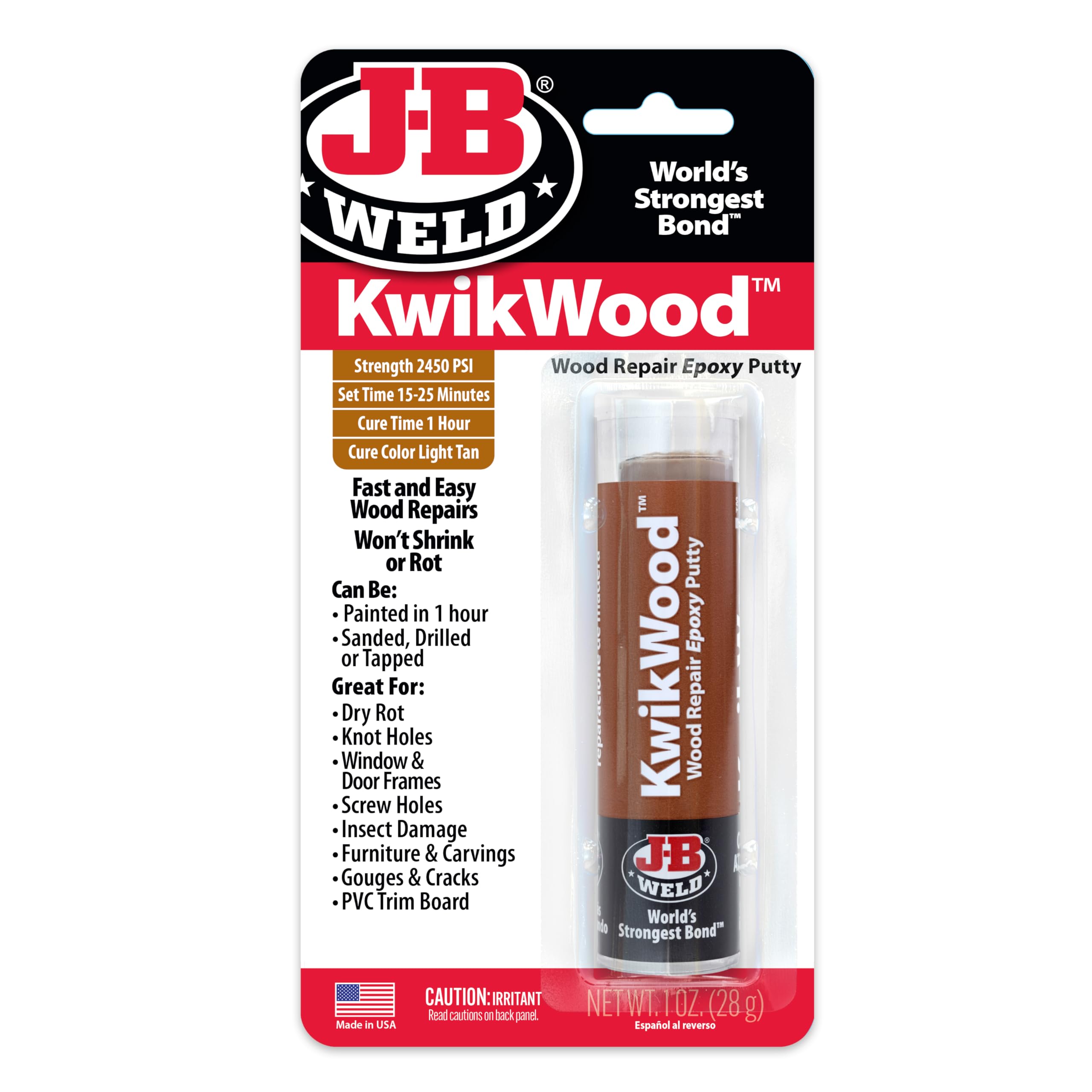
J-B Weld KwikWood Epoxy

91 /100
Craft Score Outstanding

Key details

Drying time
15-25 min
Sandability
Smooth
Paintability
Yes
Ease of application
Easy
View on Amazon

KwikWood cures to 900 PSI lap shear strength — strong enough to rebuild a broken chair leg or fill deep gouges that latex fillers would just crumble out of. The two-part putty kneads in your hand like modeling clay and adheres firmly to clean wood surfaces. After the 15-25 minute set time, it sands smooth and accepts paint without issue, making it a practical option for repairs that need both strength and a finished look.

This epoxy works best for DIYers who are comfortable working fast and don't need precision alignment after mixing. The quick cure means you have to shape and position the repair in one go — no adjusting later. Some sticks can arrive dry from age, so it's worth checking the consistency before starting a critical job. For cosmetic nail holes or slow-paced projects, a one-part wood filler is easier to manage.

💡 Knead the stick thoroughly before applying, and have the repair area prepped and positioned so you can press the putty into place as soon as it softens.

Pros

  • Rebuilds broken wood with true structural strength
  • Kneads easily and applies with minimal mess
  • Sands to a smooth surface that accepts paint well

Cons

  • Sets in 15-25 minutes, leaving little margin for repositioning
  • Some sticks may arrive dry and crumbly due to shelf age, requiring a return or replacement
Our verdict

Grab KwikWood when you need to fix a load-bearing wood part and can work at a brisk pace. It offers excellent strength per dollar, but isn't the right choice for slow, cosmetic filling.

Check Latest Price
4

Best for Quick Touch-Ups

DAP Plastic Wood-X 5.5oz

91 /100
Craft Score Outstanding

Key details

Drying time
3-6 hrs
Sandability
Smooth
Paintability
Yes
Ease of application
Easy
View on Amazon

DAP's DryDex indicator shifts from pink to natural as the filler dries, giving a clear visual cue that it's ready to sand. This removes the guesswork common with standard fillers. The formula handles moderate repairs well and sands to a smooth finish without tearing. It applies easily and dries to a paintable surface that takes paint evenly.

Best matched to beginners performing small touch-ups on painted trim or furniture. The 5.5 oz tub limits it to minor repairs – not suitable for large projects or deep cavities where volume and drying time become factors. For occasional nail holes or small cracks, this filler provides a straightforward process: apply, wait for the color change, sand, and paint.

💡 For fills deeper than 1/8 inch, allow extra drying time – the color change may appear complete while the core remains soft. Check by scratching with a toothpick before sanding.

Pros

  • Color change indicator shows exactly when the filler is dry
  • Sands to a smooth finish without tearing or leaving pinholes.
  • Good quality formula that is easy to apply and performs well on moderate repairs.

Cons

  • The 5.5 oz container runs out quickly on anything beyond small cosmetic touch-ups.
Our verdict

A thoughtful choice for anyone who values visual feedback during small repairs – but reach for a larger tub when the project demands more volume.

Check Latest Price
5

Best Epoxy Filler

PC-Woody Epoxy Paste

92 /100
Craft Score Outstanding

Key details

Drying time
24 hrs
Sandability
Good
Paintability
Yes
Ease of application
Moderate
View on Amazon

This two-part epoxy paste cures to a density that exceeds the surrounding wood, making it a practical choice for rebuilding rotted door frames, window sills, and structural beams. Unlike water-based fillers that shrink or crack under load, PC-Woody holds up where strength matters.

It sands and paints well after full cure, suiting professional woodworkers who need a paintable surface for structural repairs. The trade-off is a sticky, peanut-butter consistency that demands quick, deliberate application and gloves. The premium pricing also means this is not a budget option for filling nail holes or minor surface cracks.

💡 Mix only what you can use in 5 minutes; the epoxy sets quickly and gloves are essential.

Pros

  • Bonds and rebuilds rotted or damaged wood for structural repairs
  • Cured strength exceeds the original wood, resisting cracking and shrinkage
  • Easy to mix and sands to a smooth finish ready for painting

Cons

  • Sticky, thick consistency makes application messy and requires fast work
  • Premium cost per ounce - uneconomical for small or frequent projects
Our verdict

Best left to professionals tackling rotted structural wood where strength is non-negotiable - not a replacement for everyday paintable wood filler.

Check Latest Price
6

Best for Outdoor Use

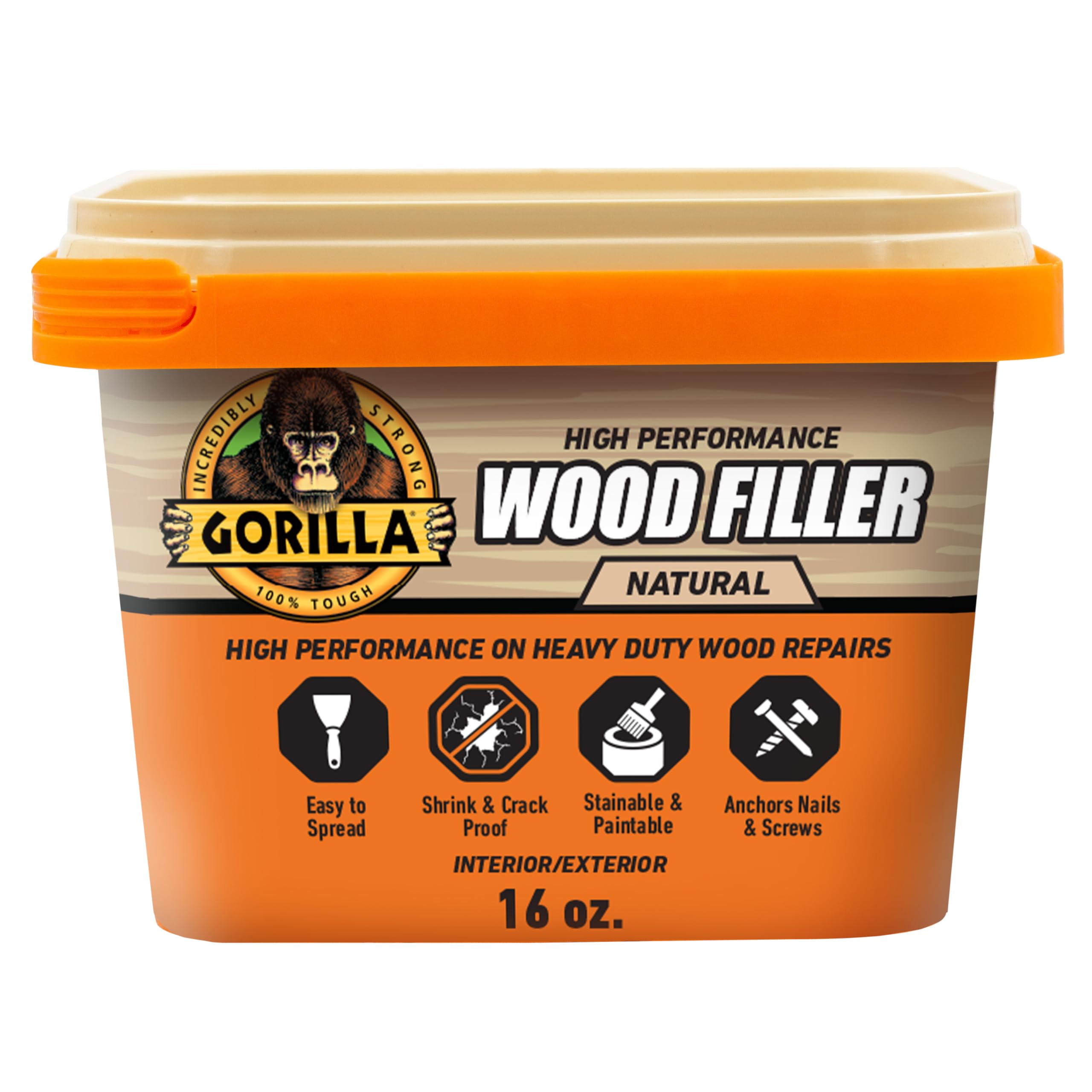
Gorilla Wood Filler 16oz

89 /100
Craft Score Excellent

Key details

Drying time
Fast
Sandability
Excellent
Paintability
Yes
Ease of application
Easy
View on Amazon

The Gorilla All Purpose Wood Filler comes in a 16-ounce tub that sands to a smooth finish and handles moisture better than interior-grade fillers. Spread and sand effort is low, and the natural finish accepts paint and stain without issue. Where many fast-drying tub fillers (like Elmer's E887) are optimized for indoor touch-ups, this one provides the volume and water resistance needed for outdoor trim, deck holes, and larger restoration jobs.

That said, the filler can arrive dry and crumbly from the tub, which means you may need to add a few drops of water and stir to get a workable paste. Durability also varies between batches—some tubs hold up well long-term, others may crack or crumble after drying. This makes it a better fit for projects where you have flexibility to test a small area first or where a single tub will be used up quickly rather than stored for occasional touch-ups.

💡 If the filler arrives dry, add a few drops of water and mix thoroughly to restore a spreadable consistency.

Pros

  • Works well for restoration and large repairs
  • Easy to spread and sand
  • Sands beautifully

Cons

  • Can arrive dry and crumbly, requiring water to rehydrate
  • Durability can be inconsistent; some batches may crumble after drying
Our verdict

For large outdoor repairs where you can handle a little prep and batch variance, the Gorilla filler delivers good sandability and water resistance at a reasonable cost per ounce.

Check Latest Price
7

Indoor Repairs

Boncart Wood Filler 9.87oz

90 /100
Craft Score Outstanding

Key details

Drying time
Fast
Sandability
Good
Paintability
Yes
Ease of application
Easy
View on Amazon

This Boncart wood filler kit includes scrapers and sandpaper, saving a trip to the hardware store for small indoor fixes. It applies easily and sands down to a smooth, paintable finish. However, durability is average — it may crack under some conditions — and it is not water-resistant, limiting it to indoor projects. For larger jobs or outdoor use, a different filler would be better suited.

Pros

  • Easy to apply and fills cracks effectively
  • Sands smoothly for a paintable finish

Cons

  • May crack in some applications over time
  • Not water-resistant; intended for indoor use only
Our verdict

A handy kit for quick indoor touch-ups where tool convenience matters, but avoid for exterior or load-bearing repairs.

Check Latest Price
8

Minor Repairs

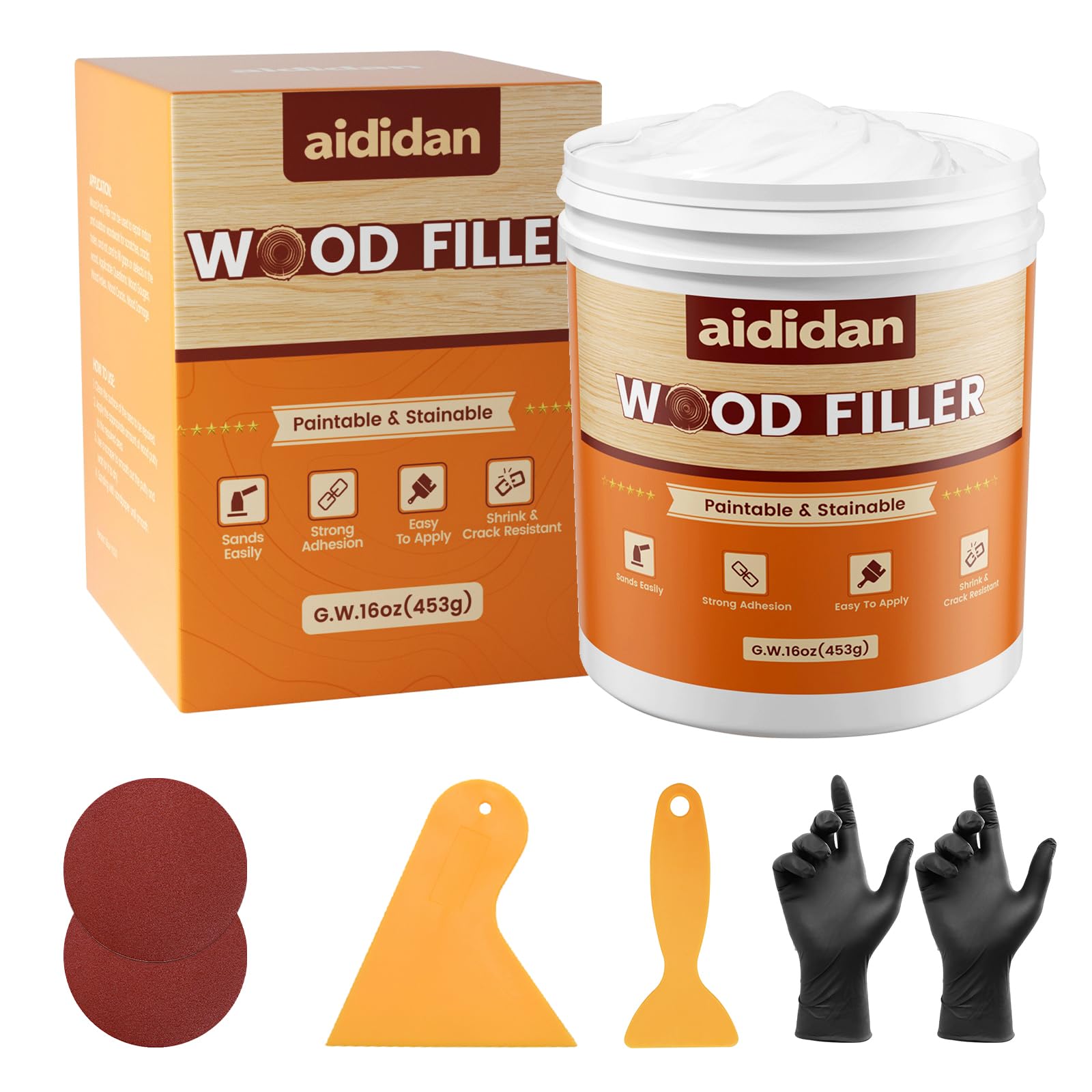
aididan Wood Filler 16oz

87 /100
Craft Score Excellent

Key details

Drying time
Slow
Sandability
Paintability
Yes
Ease of application
Easy
View on Amazon

The aididan wood filler kit includes scrapers, sandpaper, and gloves for immediate use. It fills small cracks and holes well for indoor projects. The slow drying time means you wait longer between coats, and in some cases the filler stays soft. Durability is average; thicker fills may crack over time. This suits casual DIY but not repairs needing long-term hold.

Pros

  • Complete kit with scrapers, sandpaper, and gloves for convenience
  • Good consistency for filling small cracks and holes

Cons

  • Drying time can be slow and filler may remain soft in thicker applications
  • May crack over time under stress or in larger gaps
Our verdict

This kit works best for quick indoor touch-ups where drying time isn't critical and the repair won't bear weight or movement.

Check Latest Price
9

Color-Matched Touch-Ups

Minwax Color-Matched 6oz

89 /100
Craft Score Excellent

Key details

Drying time
Sandability
No sand needed
Paintability
Yes
Ease of application
Easy
View on Amazon

This Minwax filler applies easily and dries to a paintable surface without sanding. It works well for small nail holes and cracks on finished furniture. However, the pre-mixed Golden Oak shade is not consistently accurate from tube to tube. If your repair is in a visible spot, the color difference may be noticeable. The 6 oz tube is also limited to minor repairs. For projects where color match is critical, a stainable filler may be a better choice.

Pros

  • Applies without sanding and dries ready for painting or staining.
  • Good quality filler for small touch-ups on finished wood surfaces.

Cons

  • Color match can vary between batches, so the shade may not perfectly match your project.
Our verdict

Useful if you need a quick Golden Oak touch-up and can accept some color variance, but not a reliable match for visible repairs.

Check Latest Price
10

Eco-Friendly Filler

Goodfilla Wood Filler 8oz

85 /100
Craft Score Excellent

Key details

Drying time
Sandability
Sandable
Paintability
Yes
Ease of application
View on Amazon

Goodfilla's water-based polymer filler eliminates VOCs and can be brought back to life with water if it dries out — a practical advantage for occasional users. It sands and paints well according to available feedback. However, with a smaller user base compared to established alternatives, long-term performance in demanding repairs is less documented. This filler suits DIYers who value non-toxic materials and want a product that won't spoil in storage, rather than those needing a widely-verified workhorse.

Pros

  • Zero VOCs mean no strong odors during indoor application without special ventilation.
  • Dried filler can be revived with water, extending shelf life indefinitely and reducing material waste.

Cons

  • Performance in demanding repairs or on unusual wood surfaces has not been extensively documented.
Our verdict

Goodfilla is a smart choice for DIYers who prioritize environmental safety and product longevity over a deeply proven track record — particularly suitable for indoor touch-ups and small repairs where non-toxic materials matter.

Check Latest Price
11

Small Holes

DAP Plastic Wood 6oz

91 /100
Craft Score Outstanding

Key details

Drying time
Sandability
Easy
Paintability
Yes
Ease of application
Hard
View on Amazon

This DAP filler effectively patches small holes and sands to a smooth finish. The latex formula dries quickly and cleans up with water, making it a practical choice for minor repairs on painted surfaces. However, the tube is stiff enough to require significant hand strength, and the filler comes out as a light gray paste despite being labeled white. Durability can vary — some fills hold well, others may crumble under stress.

Pros

  • Fills holes and cracks effectively
  • Sands easily for a smooth finish

Cons

  • Color is light gray, not the white stated on the label
  • Tube is very hard to squeeze due to thick consistency
Our verdict

Fine for small, paint-over indoor repairs if you can tolerate a stiff tube and off-white color.

Check Latest Price
12

Rotted Wood Repair

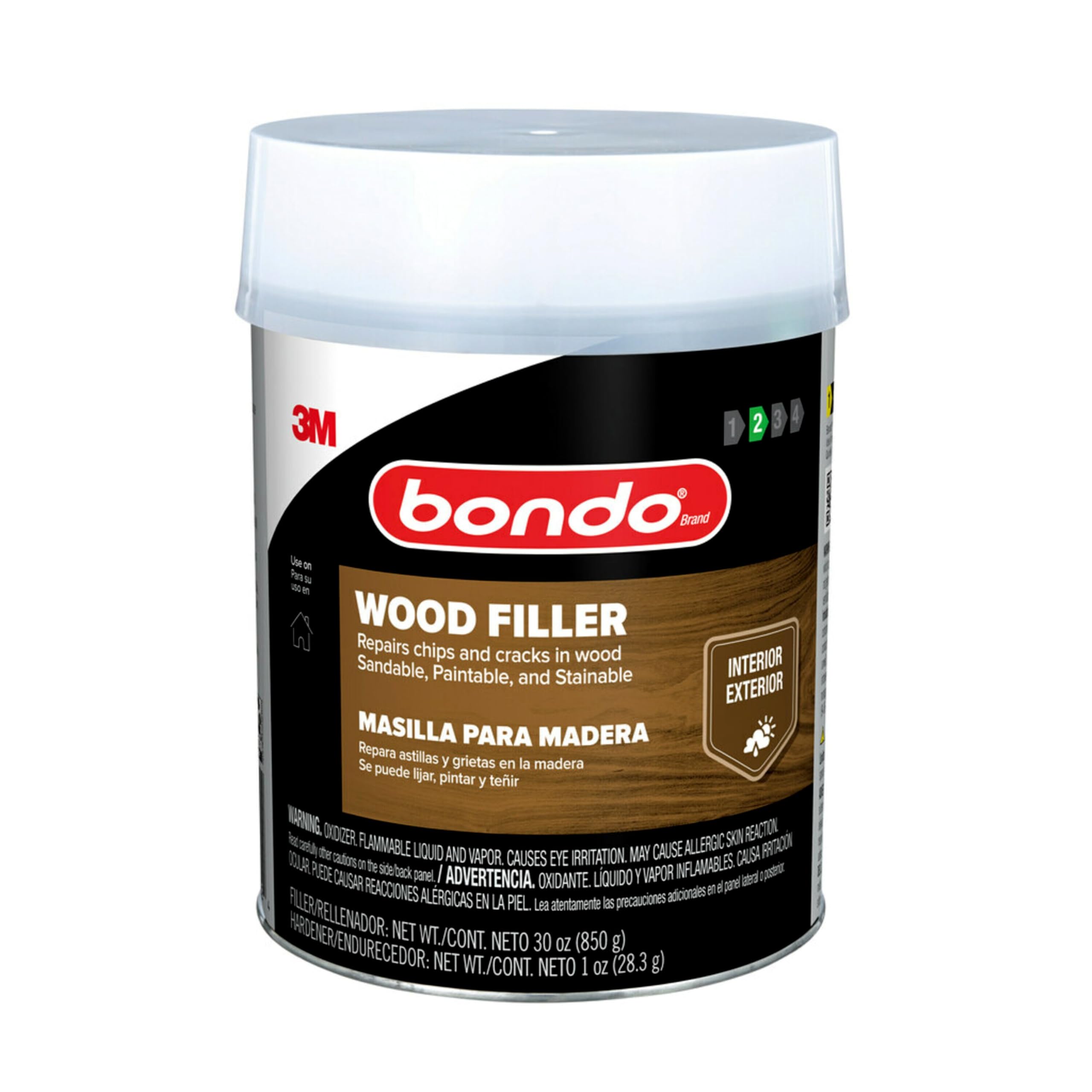
3M Bondo Wood Filler

92 /100
Craft Score Outstanding

Key details

Drying time
15 min
Sandability
Easy
Paintability
Yes
Ease of application
Moderate
View on Amazon

This two-part polyester filler bonds permanently to rotted wood and fills deep damage with a strong, sandable finish. It cures in about 15 minutes, so you have to mix only what you can apply quickly. The fast set time is a benefit when speed matters, but leaves no room for adjustment. The strong chemical odor demands open windows or a respirator, and stain absorption is inconsistent — paint is the reliable finish here. For seasoned carpenters repairing window sills or structural gaps and planning to paint, this filler delivers strength and speed.

Pros

  • Fills large rotted areas and structural gaps with a permanent bond.
  • Sands smooth in minutes, ready for paint.

Cons

  • Sets in 15 minutes, so you have to work fast without pause.
  • Stain absorption can be uneven despite the label claiming it is stainable.
Our verdict

Best for large structural repairs that will be painted — not for stain projects — and requires quick work with good ventilation.

Check Latest Price

How to Choose

Drying Time

Faster-drying fillers (under 30 minutes) let you sand and paint the same day, but they require quick application and often have shorter working time. Slow-drying formulas (hours) give you more time to shape and remove excess, ideal for larger repairs. Choose based on whether you need speed or precision.

Sandability

A filler that sands smooth without gumming up sandpaper saves time and frustration. Latex-based fillers generally sand easier than epoxy, which can be harder but also more durable.

For painted surfaces, fine dust from sanding should blend into the primer without leaving visible edges. A filler that leaves a waxy residue can cause paint adhesion problems.

Paintability

Paintability depends on the filler's porosity and surface finish. Some fillers absorb paint differently than the surrounding wood, requiring a primer coat to even out the sheen. Others create a plastic-like surface that paint beads on.

A quick test: apply a dab and let dry, then sand and paint to see if the finish matches the bare wood. Most water-based fillers take paint well, but two-part epoxies may need a primer.

Shrinkage

Fillers that shrink create depressions that need multiple coats. Water-based fillers shrink more as water evaporates, while epoxy fillers have minimal shrinkage. For deep holes, apply in thin layers to reduce shrinkage.

Some fillers include fibers to resist cracking as they dry. If you're filling a large void, choose a product labeled 'low shrink' or use an epoxy.

Ease of Application

Tube fillers are convenient for small jobs but can be hard to squeeze, especially when cold. Tub fillers allow you to scoop out the desired amount but can dry out if left open. Epoxy putties require mixing and can be sticky.

Choose a format that matches your grip strength and job size. For beginners, a soft tub filler with a long open time is more forgiving than a fast-curing epoxy stick.

Frequently Asked Questions