8 Best Wood Floor Finish of 2026: Pick the Durable Finish That Won't Yellow

Which wood floor finish truly protects high-traffic areas without yellowing? A guide to selecting the right finish based on durability, cure time, and sheen.

Every wood floor finish promises a beautiful, long-lasting coat. But the reality is that many ‘crystal clear’ water-based polyurethanes start yellowing on light floors within months, while oil-based polyurethanes – though tough – amber everything they touch. Natural oils cure so slowly that you might wait weeks between coats, and waxes need frequent reapplication to keep up with foot traffic.

The confusion comes from manufacturers labeling a single finish as ‘for floors’ when it actually works best on furniture or trim. The key is matching finish type to your floor’s traffic level, wood color, and your tolerance for downtime. This guide cuts through the marketing claims to help you pick the finish that fits your specific project – without the surprise yellowing or chipping.

1

Best Overall

Rubio Monocoat Oil Plus 2C

95 /100
Craft Score Outstanding

Key details

Method
Wipe-on
Safety
Zero VOCs
Durability
High, repairable
Drying Time
1 coat, no wait
View on Amazon

Rubio Monocoat Oil Plus 2C delivers a protective finish with zero VOCs, making it a safe choice for interior floors, kitchens, and children's play areas. The single-coat application cures in hours, not days, and covers 105-175 square feet per 350 ml bottle — enough for a medium-sized room.

The hard wax oil penetrates wood fibers to create a durable matte surface that resists water and scratches. Unlike film-forming polyurethanes, it does not amber over time, preserving the wood's natural color. The premium cost per square foot is significant, so this finish suits smaller projects where low-VOC qualities and repairability outweigh budget considerations.

💡 A 350 ml bottle covers 105-175 sq ft — measure your floor area precisely to avoid underestimating how much you need.

Pros

  • Zero VOCs and certified safe for food contact and children's toys.
  • One-coat application cuts finishing time compared to multi-coat polyurethanes.
  • Damaged areas can be spot-repaired without sanding the entire floor.

Cons

  • For large floor refinishing, the per-square-foot cost is substantially higher than conventional polyurethanes.
  • Produces a matte, non-film finish
Our verdict

Ideal for eco-conscious homeowners who prioritize indoor air quality, quick turnaround, and the ability to refresh individual floorboards without a full refinish.

Check Latest Price
2

Best Traditional Polyurethane for Floors

Minwax Fast Dry Poly

92 /100
Craft Score Outstanding

Key details

Method
Brush, spray
Safety
Strong odor, VOCs
Durability
High (scratch resistant)
Drying Time
4–6 hr recoat
View on Amazon

Minwax Fast-Drying Polyurethane delivers a durable, scratch-resistant satin finish for high-traffic wood floors at a budget-friendly price. The warm amber tone suits traditional wood colors, but the strong solvent odor requires good ventilation during application, and the finish may yellow light or white woods over time. This is the go-to choice for budget-conscious refinishers who prioritize low cost and proven durability over a fume-free process and color neutrality.

💡 Ensure good ventilation and consider testing on a hidden area to see how much ambering occurs on your wood color.

Pros

  • Affordable oil-based polyurethane with a warm satin finish that holds up well on floors.
  • Smooth brush application and good value for the coverage area.

Cons

  • Strong fumes during application; may amber over light-colored wood over time.
Our verdict

If you need a floor finish that won't break your budget and you can tolerate strong odors and some yellowing, this is a reliable workhorse.

Check Latest Price
3

Best Wax for Quick Floor Maintenance

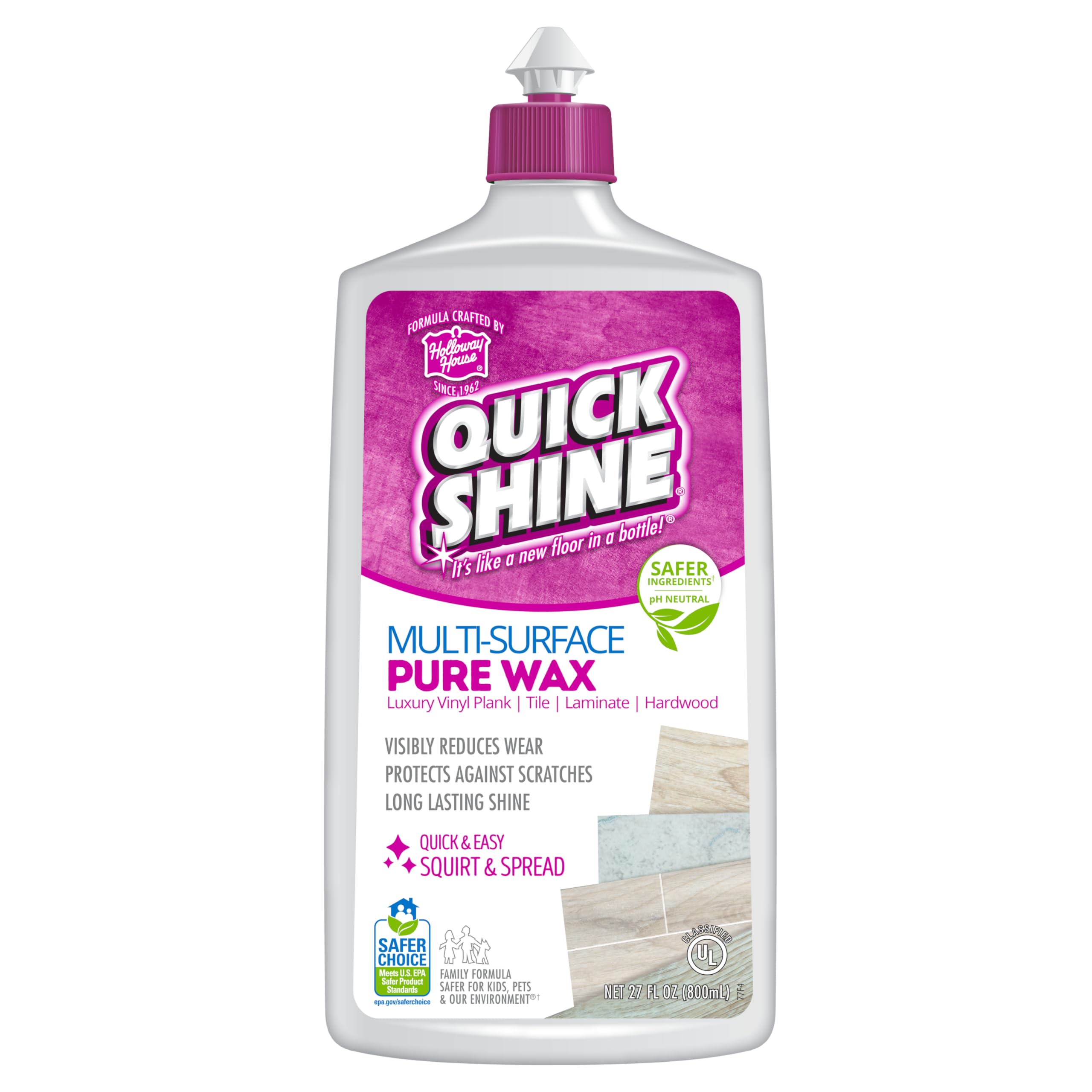
Quick Shine Floor Wax

92 /100
Craft Score Outstanding

Key details

Method
Mop-on
Safety
Non-toxic
Durability
Low, needs reapply
Drying Time
Minutes
View on Amazon

Mop-on convenience and a quick-drying formula make this liquid wax a go-to for reviving the look of already-finished floors without stripping previous coats. Unlike paste waxes that need buffing, this spreads evenly in minutes. The tradeoff is that the shine fades within a few weeks even in low-traffic areas, so it suits renters or decor-minded homeowners who want a temporary gloss between deeper refinishes rather than a permanent protective topcoat.

💡 Use only on sealed, finished floors; bare wood will absorb the liquid unevenly.

Pros

  • Applies quickly with a mop and dries in minutes, no buffing required.
  • Produces a bright, glossy shine that makes finished floors look freshly waxed.
  • Non-slip finish with minimal yellowing on light-colored floors.

Cons

  • Shine diminishes within a few weeks, so reapplication is needed even on low-traffic floors.
Our verdict

Ideal for renters or anyone chasing a quick, temporary gloss without stripping old wax – not a substitute for a durable floor finish.

Check Latest Price
4

Best Carnauba Wax for Restoring Floors

Trewax Carnauba Wax

90 /100
Craft Score Outstanding

Key details

Method
Cloth, buff
Safety
Non-toxic
Durability
Medium (wax)
Drying Time
10–15 min to haze
View on Amazon

Trewax Carnauba Wax delivers the deep, warm shine typical of traditional carnauba wax, making it a good choice for reviving the finish on older waxed hardwood floors. It works best on floors that have previously been waxed, not on bare wood or as a sealer. The wax can harden in the can over time, and drying time may be inconsistent, so expect a more hands-on application than a quick liquid wax. For those who want a mop-on shine that dries in minutes, a liquid wax like the temporary option in this set is more convenient.

💡 Storing the can upside down helps keep the wax soft between uses.

Pros

  • Good shine on hardwood floors with decent coverage for the price.
  • Carnauba wax formulation holds up well on floors.

Cons

  • Wax can harden in the can over time, and drying time may vary, making application more labor-intensive.
Our verdict

A traditional carnauba paste wax for restoring shine on vintage floors, but with more effort than a wipe-on alternative.

Check Latest Price
5

Best Natural Penetrating Oil for Floors

Hope's Pure Tung Oil

94 /100
Craft Score Outstanding

Key details

Method
Wipe-on
Safety
Food safe
Durability
Medium (penetrating)
Drying Time
Weeks per coat
View on Amazon

Hope's 100% Pure Tung Oil penetrates into wood fibers, enhancing grain and creating a waterproof barrier that’s safe for cutting boards and butcher blocks. The wipe-on application is straightforward and produces a natural hand-rubbed look.

This finish is best for low-traffic surfaces like kitchen tools and furniture where you can wait weeks between coats. The strong odor during application demands good ventilation, and the slow cure makes it impractical for floors needing a fast turnaround.

💡 Allow weeks between coats and apply only in a well-ventilated space.

Pros

  • High-quality pure tung oil with excellent grain enhancement
  • Easy wipe-on application with beautiful natural finish

Cons

  • Curing takes weeks between coats
  • Strong odor during application requires good ventilation
Our verdict

A reliable natural finish for food-contact items if you can accommodate its slow cure and strong fumes.

Check Latest Price
6

Best Non-Toxic Oil-Wax Finish

Tried & True Oil & Wax

93 /100
Craft Score Outstanding

Key details

Method
Cloth, buff
Safety
Zero VOCs, food safe
Durability
Medium
Drying Time
24 hrs recoat
View on Amazon

The zero-VOC, food-safe formulation makes this linseed oil and beeswax blend a standout for kitchens, cutting boards, and children’s toys — anywhere chemicals are a concern. The hand-rubbed matte finish brings out wood grain naturally. However, applying it requires careful buffing between coats to avoid a sticky surface, and each coat needs a full 24 hours to dry. This is not a weekend floor refinishing product; it fits best when safety and a non-toxic interior are the priority and the extra time is acceptable.

💡 Buff each coat thoroughly with a clean cloth while it’s still wet to prevent any sticky residue from forming.

Pros

  • Enhances wood grain with a natural, hand-rubbed matte appearance
  • Non-toxic and food safe for cutting boards, butcher blocks, and toys

Cons

  • Without thorough buffing between coats, the finish can feel tacky
  • Each coat requires 24 hours of drying time, which slows down multi-coat projects
Our verdict

This finish suits those who prioritize non-toxic safety and a natural matte look over application speed and convenience.

Check Latest Price
7

Furniture Trim

Varathane Crystal-Clear Poly

93 /100
Craft Score Outstanding

Key details

Method
Brush, spray
Safety
Low odor
Durability
Medium (scratches easily)
Drying Time
30 min touch, 2 hr recoat
View on Amazon

This water-based polyurethane dries to touch in 30 minutes with low odor and leaves a smooth, clear gloss on dark wood furniture and trim. However, it scratches more easily than oil-based poly and can yellow on light wood — it is not formulated for the wear of wood floors.

Pros

  • Fast drying and easy cleanup with soap and water
  • Smooth flow and leveling for a clear gloss finish

Cons

  • May yellow on light wood and scratches more easily than oil-based poly
Our verdict

A budget-friendly pick for dark wood furniture and trim where fast turnaround is a priority, but avoid it for light wood or any floor with heavy foot traffic.

Check Latest Price
8

Furniture Matte

Minwax Polycrylic Matte

93 /100
Craft Score Outstanding

Key details

Method
Brush
Safety
Low odor
Durability
Low (lower than poly)
Drying Time
2 hr recoat
View on Amazon

This water-based polycrylic offers low odor, fast drying, and soap-and-water cleanup, making it convenient for indoor furniture and craft projects. However, the finish skews closer to semi-gloss than true matte, and durability falls short of oil-based options — it is not suitable for wood floors.

Pros

  • Easy to apply with fast drying and water cleanup
  • Good quality for indoor furniture and craft projects

Cons

  • Marketed as matte but finishes closer to semi-gloss; may yellow over time on light surfaces
Our verdict

Works well for furniture and crafts where low odor and easy cleanup matter more than a true matte sheen or floor-grade toughness.

Check Latest Price

How to Choose

Finish Type

The three main categories are polyurethane (oil- or water-based), penetrating oils (tung, linseed), and waxes. Polyurethane forms a hard film on top of the wood, offering superior scratch and moisture resistance for high-traffic areas. Oils soak into the fibers, creating a flexible, matte finish that is easier to repair but less abrasion-resistant. Waxes sit on the surface and provide a warm sheen, but offer minimal protection against liquids or scratches.

Application Method

Brush-on polyurethane gives the thickest coat and most durable finish but requires good technique to avoid brush marks. Wipe-on oils and waxes are forgiving for DIYers — any unevenness can be buffed out. Spray finishes are convenient for small touch-ups but produce a thinner layer that chips more easily. If you are tackling a full floor, a brush or lambswool applicator is the most reliable choice.

Drying Time

Water-based polyurethane can be recoated in two hours and walked on within a day, making it ideal for quick turnarounds. Oil-based poly takes four to six hours between coats and needs 24 hours before light foot traffic. Penetrating oils are the slowest — tung oil requires weeks between coats, and linseed oil blends need at least 24 hours. Waxes dry in minutes but must be buffed before use. If you have a tight schedule, factor in 3-5 days for polyurethane versus weeks for natural oils.

Durability and Scratch Resistance

Oil-based polyurethane forms the hardest, most scratch-resistant film, making it the go-to for hallways and living rooms. Water-based poly is softer and shows wear faster, especially under furniture legs. Hard wax oils like Rubio Monocoat can be spot-repaired without stripping, but the film is thinner and may need renewal in high-traffic zones every few years. Waxes require frequent reapplication — every month in a busy household — and offer no real scratch protection.

Safety and VOCs

Oil-based polyurethane emits strong fumes (VOCs) that require ventilation and a mask during application; the odor lingers for days. Water-based finishes have lower VOCs and are safer for indoor use, though some still contain solvents. Penetrating oils labeled '100% pure' (like tung oil) and waxes are often food-safe and zero-VOC once cured. If you are finishing floors in a nursery or kitchen, choose a product with explicit food-contact certification.

Frequently Asked Questions