11 Best Wood Filler for Large Holes 2026: Epoxy That Won't Shrink

Stop guessing which wood filler for large holes works. This guide picks epoxy formulas that cure strong, resist shrinkage, and sand smoothly for painted furniture and trim.

Most wood fillers shrink when applied thick. That sinking feeling when a deep hole reappears after drying is a familiar frustration for anyone repairing furniture or trim. Water-based formulas often crack or pull away from the sides, leaving more work instead of a fix.

The solution lies in epoxy formulas that bond chemically and cure with minimal volume change. They fill gaps up to an inch deep without shrinking, and many cure hard enough to sand and paint within minutes. The trade-off is working time: fast-curing epoxies demand quick application, while slower ones give you more shaping time but require a full day to set.

Choosing between speed and flexibility depends on your repair. For a single deep hole in a door frame, a fast epoxy saves time. For rebuilding rotted wood sections where you need to sculpt the shape, a longer working formula pays off. This guide covers both approaches so you match the filler to the job.

1

Best Overall

3M Bondo Wood Filler

92 /100
Craft Score Outstanding

Key details

Cure Time
15 min
Formula Type
2-Part Epoxy
Ease of Sanding
Easy
View on Amazon

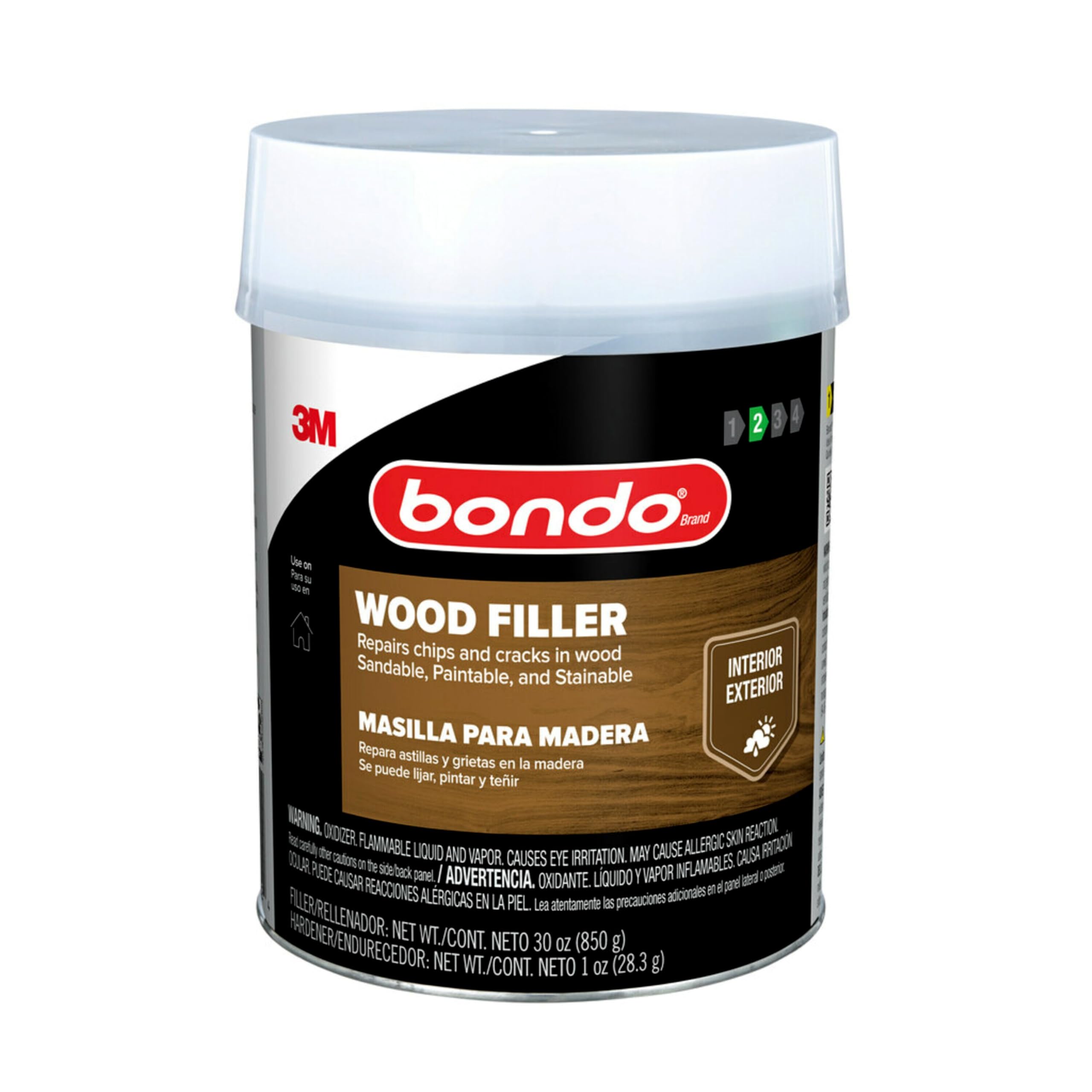
The two-part epoxy formula cures in 15 minutes, making it one of the quickest wood fillers for holes over half an inch. It bonds aggressively to bare wood and dried wood, and sands down without clogging paper. The 30-ounce container handles multiple repairs without needing a second trip to the store.

Working time is tight — about 5 to 10 minutes before the mixture firms up — so prepare your workspace before mixing. This filler does not accept stain evenly, which makes it best for painted finishes or exterior projects where the repair will be covered. For rotted wood sections or deep gouges, it holds shape and resists water well after curing.

💡 Mix small batches and apply immediately — the 15-minute clock starts as soon as you combine the filler and hardener.

Pros

  • Fills large holes and rotted wood with minimal shrinkage
  • Cures in 15 minutes and sands to a smooth finish
  • Strong bond to wood for durable repairs

Cons

  • Does not accept stain well; best for painted finishes
  • Sets very fast; limited working time of about 5-10 minutes
Our verdict

For anyone repairing large holes or rotted wood with a painted finish, this is the most efficient epoxy filler available at this price.

Check Latest Price
2

Best for Structural Repairs

Abatron WoodEpox 2 Pint

90 /100
Craft Score Outstanding

Key details

Cure Time
20-30 min
Formula Type
2-Part Epoxy
Ease of Sanding
Good
View on Amazon

Abatron WoodEpox delivers 2500 psi tensile strength and a 20-minute working time, making it a premium choice for rebuilding rotted window sills and door frames. Unlike fast-curing alternatives, this epoxy gives you time to shape and adjust the repair. It's best for long-term exterior repairs where strength matters more than speed, but the higher cost and need for surface prep on pressure-treated wood are important considerations.

💡 Keep the container sealed after use to avoid the epoxy hardening in storage.

Pros

  • Structural repairs with high tensile strength and minimal shrinkage.
  • Applies easily during the 20-minute working window and sands smoothly.
  • Accepts paint and stain for a natural finish.

Cons

  • Premium-priced compared to standard wood fillers; best reserved for critical repairs.
Our verdict

For structural repairs that need to last, this epoxy delivers — at a higher cost and with proper prep required.

Check Latest Price
3

Best Value Epoxy

PC-Woody Epoxy Paste

92 /100
Craft Score Outstanding

Key details

Cure Time
24 hr
Formula Type
2-Part Epoxy Paste
Ease of Sanding
Good
View on Amazon

The PC-Woody Epoxy Paste offers a long working time that lets you shape deep fills precisely, unlike faster-curing alternatives. Its 24-hour cure and 850 psi tensile strength provide a strong, sandable repair that holds up outdoors.

This epoxy is for users who value control over speed and have some experience with sticky materials. Expect a very messy application — gloves and a protected workspace are non-negotiable. The payoff is a durable, gap-filling result with minimal shrinkage.

💡 Wear disposable gloves and work on a protected surface; the paste adheres aggressively to skin and tools.

Pros

  • Fills structural gaps and large holes with minimal shrinkage.
  • Long working time allows careful shaping before the cure begins.
  • Cured epoxy sands and finishes well for a smooth surface.

Cons

  • Paste can be extremely sticky, requiring gloves and careful handling to avoid mess.
  • Consistency may be too thick for precise application; thinning can help.
Our verdict

A capable large-hole filler when working time matters more than speed — just be ready for a sticky application process.

Check Latest Price
4

Best for Portability

J-B Weld KwikWood Putty

91 /100
Craft Score Outstanding

Key details

Cure Time
60 min
Formula Type
Epoxy Putty
Ease of Sanding
Easy
View on Amazon

This putty stick requires no mixing — knead it and press into place. It cures in 60 minutes to a sandable, strong bond. However, the 2 oz stick is enough for only one or two small-to-medium repairs. For large holes, the top pick's 30 oz container and 15-minute cure is more practical. This works best for quick fixes on furniture cracks or minor damage where convenience outweighs volume.

💡 Knead only as much as you can apply within a minute or two — once it hardens, it cannot be reworked.

Pros

  • Highly effective for small to medium wood repairs
  • Easy to knead and mold by hand
  • Sands smoothly for a flush finish

Cons

  • Small 2 oz stick limits use to one or two repairs
  • Working time is short; putty sets quickly after mixing
Our verdict

Buy this for quick, no-mess repairs on small holes or cracks where you don't want to mix epoxy. For large holes, the top pick's larger volume and faster cure is a better fit.

Check Latest Price
5

Classic Rockhard Filler

Durham's Rockhard Putty

90 /100
Craft Score Outstanding

Key details

Cure Time
15 min
Formula Type
Gypsum Powder
Ease of Sanding
Difficult
View on Amazon

Durham's Rockhard Putty fills deep holes without shrinking, starting as a dry powder you mix with water. The cured result is exceptionally hard and durable. However, the working time is short — about 15 minutes once mixed — and once set, the material is tough to sand smooth. It does not accept stain, so plan for a painted finish. This filler suits budget-conscious DIYers who need a strong, no-shrink repair in wood, plaster, or stone and don't mind fast-paced application.

💡 Mix only as much as you can apply in a few minutes to avoid wasting the fast-setting putty.

Pros

  • Fills deep holes with no shrinkage
  • Cures to a very hard, durable surface
  • Easy to mix to desired consistency

Cons

  • Sets quickly once mixed; you have limited working time
  • Difficult to sand when fully cured due to extreme hardness
Our verdict

If you need a rock-solid, no-shrink fill for a large hole and plan to paint, this is the most cost-effective option. Just be prepared to work fast and sand with extra effort.

Check Latest Price
6

Light Indoor Repairs

Gorilla Wood Filler 16oz

89 /100
Craft Score Excellent

Key details

Cure Time
Formula Type
Water-based Acrylic
Ease of Sanding
Very Easy
View on Amazon

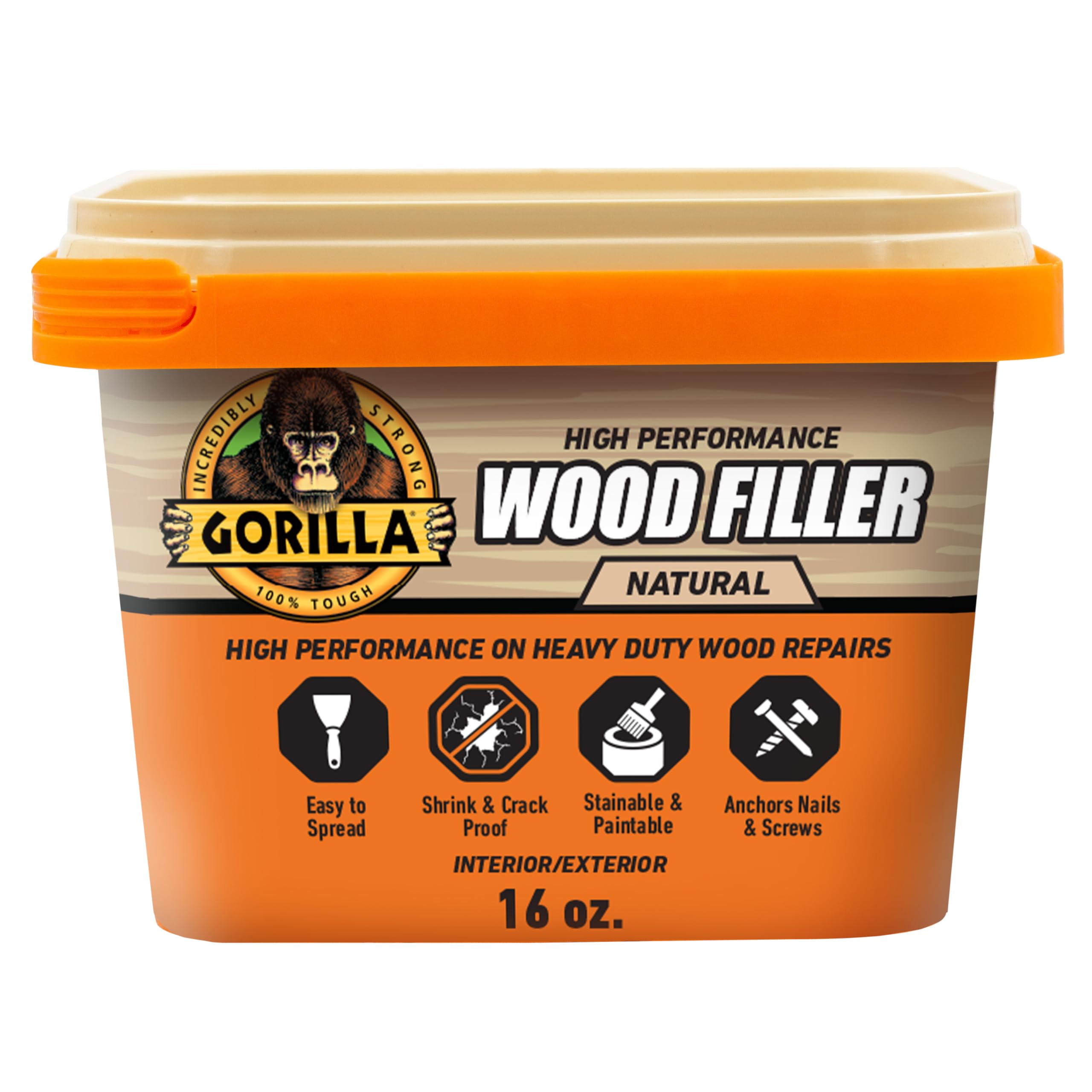
This water-based filler sands smoothly and spreads easily, making it ideal for small nail holes and hairline cracks on painted interior trim. However, the filler lacks the strength to fill holes larger than 1/2 inch without cracking. It is a low-cost option for minor repairs where durability is not critical.

Pros

  • Sands very easily
  • Easy to apply and spread

Cons

  • Some tubs may arrive dry and crumbly, requiring water to be added before use
Our verdict

A practical choice for quick indoor touch-ups on painted surfaces, but check the tub's moisture before you begin.

Check Latest Price
7

Small Cracks

FamoWood Latex Filler

92 /100
Craft Score Outstanding

Key details

Cure Time
15 min
Formula Type
Latex
Ease of Sanding
Easy
View on Amazon

This latex filler dries in 15 minutes, sands easily, and has low odor — ideal for small indoor cracks and nail holes. But it is not designed for deep fills; thick layers may crack. It suits painted finishes where quick drying is valued.

Pros

  • Dries quickly and sands smoothly
  • Easy to apply and low odor

Cons

  • May crack when applied thick
Our verdict

Best used for small touch-ups on indoor painted wood where strength is not required.

Check Latest Price
8

Small Finish Holes

Minwax Stainable Filler

89 /100
Craft Score Excellent

Key details

Cure Time
Formula Type
Latex
Ease of Sanding
View on Amazon

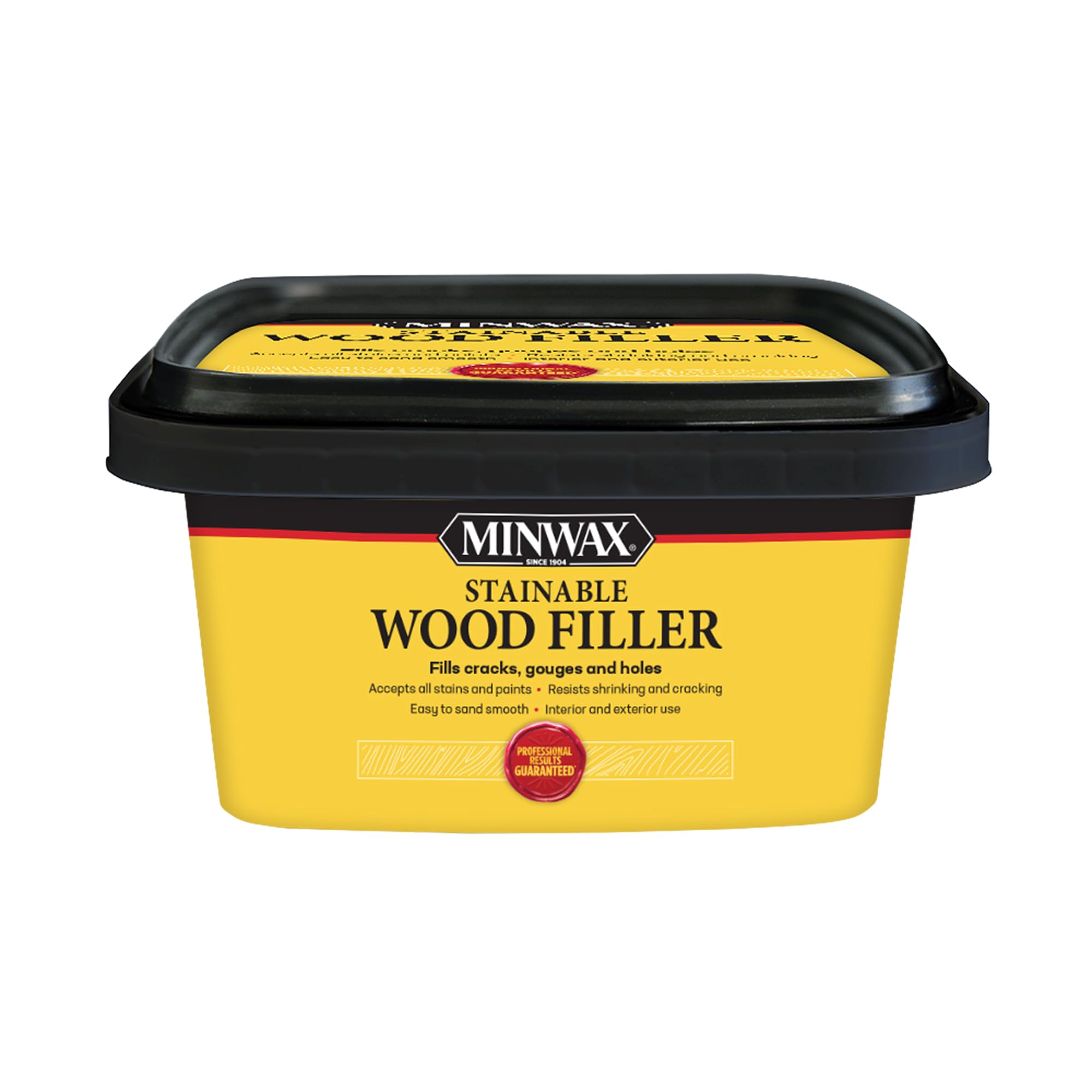
This latex filler handles tiny nail holes and hairline cracks in indoor trim or furniture where a stainable finish matters. But it can shrink when applied deeper than 1/4 inch, and stain absorption may vary across wood types.

Pros

  • Stainable formula accepts stain for color-matched repairs
  • Easy to sand for a smooth, flush surface on small gaps

Cons

  • For holes deeper than a quarter inch, the filler can shrink and crack
Our verdict

Pick this for finishing nail holes and small cracks in stain-grade trim where appearance matters more than depth.

Check Latest Price
9

Small Interior Dents

Elmer's Carpenter's Filler

92 /100
Craft Score Outstanding

Key details

Cure Time
12-24 hr
Formula Type
Water-based
Ease of Sanding
Easy
View on Amazon

Elmer's Carpenter's Wood Filler handles small dents and scratches on interior painted wood with easy application and sanding. However, it is not suitable for large holes over 0.5 inches — the water-based formula can shrink and crack in deep fills. Some containers also arrive partially filled or dried out, so check before use.

Pros

  • Easy to apply and sand
  • Works well for small repairs

Cons

  • May shrink and crack when applied to deep holes, limiting use to shallow repairs
Our verdict

Best for quick touch-ups on interior trim and furniture where the hole is no deeper than 1/8 inch.

Check Latest Price
10

Small Cracks

Boncart Wood Putty 32oz

90 /100
Craft Score Outstanding

Key details

Cure Time
Formula Type
Water-based Putty
Ease of Sanding
Good
View on Amazon

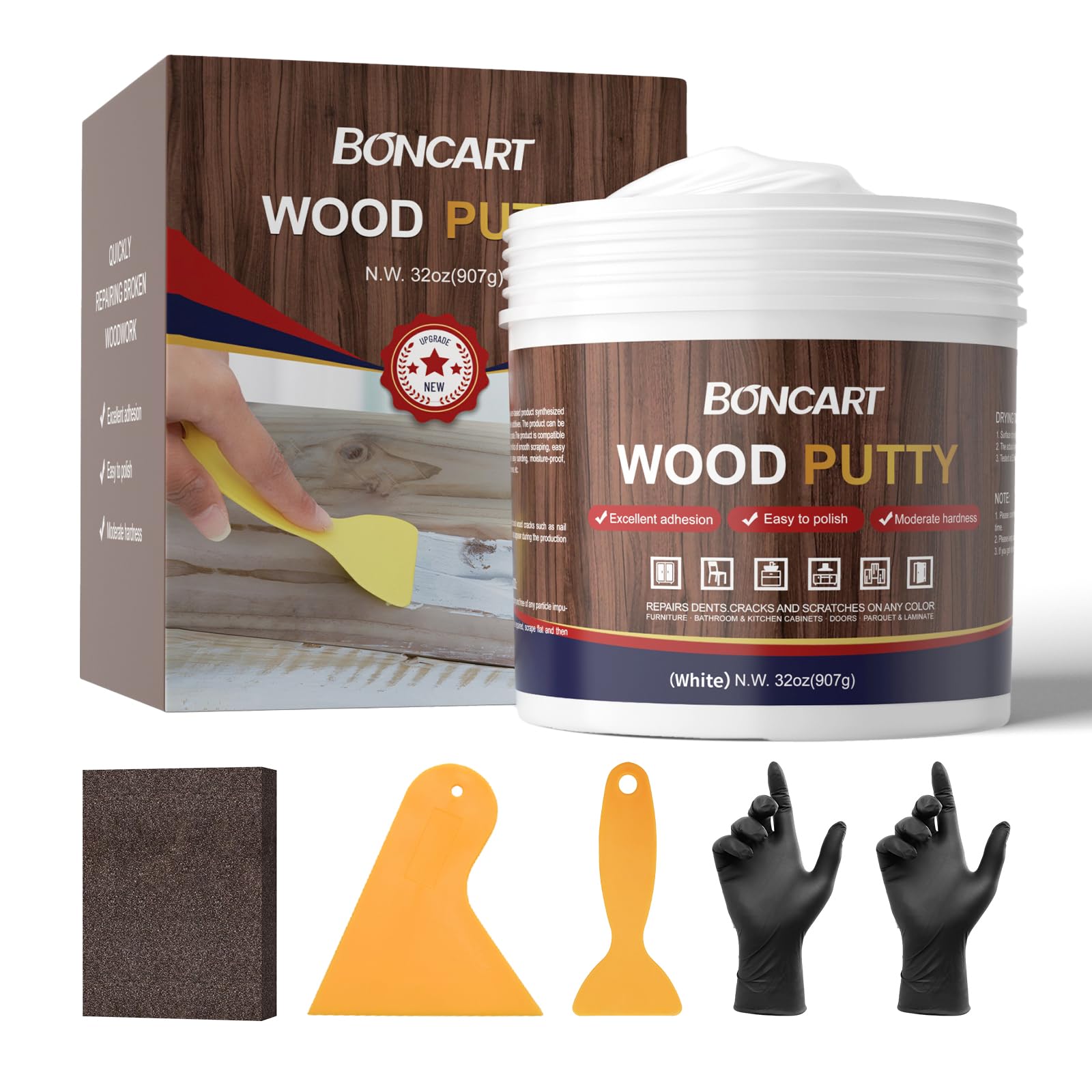
This Boncart wood filler kit includes a spreader and sandpaper, making it easy for beginners to patch hairline cracks and small holes in furniture. The water-based formula dries quickly and sands to a smooth finish, but thick applications in deeper holes may crack — it is not meant for structural or large-gap repairs.

Pros

  • Spreads smoothly and dries quickly for easy sanding.
  • Effective for filling hairline cracks and small holes.

Cons

  • Thick applications for deep holes may develop cracks.
Our verdict

Suits quick touch-ups on painted interior wood where small holes or cracks need a fast, easy fix — not for structural repairs or large gaps.

Check Latest Price
11

Large Structural

SculpWood Epoxy Putty

92 /100
Craft Score Outstanding

Key details

Cure Time
24 hr
Formula Type
2-Part Epoxy Putty
Ease of Sanding
Good
View on Amazon

This two-part epoxy putty provides a waterproof bond that holds up in marine environments and sands smoothly for a finished look. Its 1:1 mix ratio is simple to gauge, and the putty can be shaped for detailed repairs. However, the premium price and 24-hour cure time make it overkill for simple hole fixes; it is best suited for professional restoration projects where structural integrity and water resistance are critical.

Pros

  • Provides a waterproof, strong bond that withstands outdoor exposure.
  • Easy to mix and mold into precise shapes.

Cons

  • Full cure takes 24 hours, delaying project completion for time-sensitive jobs.
Our verdict

Best for professional restorers on marine or outdoor projects who need waterproof durability and can accept the longer cure and higher cost.

Check Latest Price

How to Choose

Formula Type: Epoxy vs Water-Based

Epoxy formulas use a two-part chemical reaction that cures into a hard, waterproof material. They bond to wood fibers and shrink only a tiny amount as they cure. Water-based fillers (latex, acrylic) dry by evaporation, which causes them to shrink in thick applications - often pulling away from the hole walls.

Working Time: Speed vs Flexibility

Fast-curing epoxies like Bondo set in 5-15 minutes, which forces you to work quickly. This is fine for one or two small holes but stressful for multiple repairs. Slower epoxies (20-30 min pot life) give you time to shape the filler exactly, but they require a full day to reach full hardness.

The right choice depends on your pace. If you want to fill, sand, and paint the same day, pick a fast epoxy. If you need to sculpt a rotted window sill, a slower formula buys you the time to get the shape right.

Tensile Strength: Load-Bearing Capacity

Tensile strength measures how much pull the filler can withstand before breaking. For loose screw holes or corners that get bumped, a strength of 1000 psi or more is enough. For load-bearing repairs like reattaching a door hinge, look for 2500 psi or higher.

Most water-based fillers don't list tensile strength because they aren't designed for structural loads. Epoxies routinely report 800-2500 psi, making them the only option when the repair needs to hold hardware.

Shrinkage Resistance: The Real Reason Fillers Fail

Shrinkage is the top complaint among buyers using water-based fillers for deep holes. As water evaporates, the filler volume decreases and cracks appear. Epoxy fillers cure through chemical cross-linking, so they retain nearly all their volume. Durham's Rockhard, a gypsum powder, also boasts zero shrinkage because it sets through a chemical reaction rather than evaporation.

If you see a filler labeled 'no shrink' but it's water-based, test it in a shallow hole first. For deep repairs, stick with epoxy or powder-based products.

Ease of Sanding: Saving Time on Finish Work

Epoxy fillers typically sand to a smooth finish but require some effort. Water-based fillers are generally easier to sand - sometimes too soft, creating dust. Durham's becomes rock-hard and is difficult to sand, which is a trade-off: you get a durable fill but spend more time on finishing.

For painted surfaces, any filler that sands smooth will work. For stain, avoid epoxy and opt for water-based fillers labeled as stainable, but expect imperfect color matching. Plan to paint over large repairs regardless of the filler.

Frequently Asked Questions