12 Best Stainable Wood Filler of 2026: Find the Ones That Absorb Stain

Which stainable wood fillers actually take stain as advertised? This guide helps DIYers and woodworkers pick fillers that match stained finishes, not just painted ones.

You’ve probably grabbed a wood filler labeled 'stainable' only to find the repair turns into a plastic-looking blob under your stain. The marketing claims are everywhere, but real performance varies drastically from one formula to the next.

Some fillers are engineered to absorb stain deeply and blend into the surrounding wood, while others are better suited for paint. Knowing which is which saves you from re-sanding and starting over.

The trade-off often comes down to convenience versus quantity: a small tube with proven stain absorption for quick touch-ups, or a larger tub that needs careful application and may require paint to hide imperfections. Your project size and finish type determine the right pick.

1

Best Overall

Elmer's Wood Filler 3.25oz

93 /100
Craft Score Outstanding

Key details

Drying Time
~1 hour thin fills
Sanding Ease
Sands smooth 200+ grit
Stainability
Accepts stain well
Container vs Scale
3.25 oz tube
View on Amazon

Elmer's Carpenter's Wood Filler absorbs stain consistently, making nail holes and small dents disappear into the surrounding wood without visible edges. It sands smoothly with 200+ grit paper, dries in about an hour for thin fills, and cleans up easily with water.

For repairing small imperfections in indoor furniture or trim, this filler holds up well to sanding and staining. Larger gouges or exterior use require a different approach—this tube is best kept for precision touch-ups.

This filler is designed for DIY beginners or anyone needing quick touch-ups on unfinished wood projects—filling nail holes, covering small cracks, or blending minor dings. The 3.25 oz tube suits small repairs, not large gaps or outdoor applications without a paint topcoat. The tube can be difficult to squeeze, and the product may harden if the cap isn't sealed tightly, so careful storage is important.

💡 Squeeze the tube from the bottom and seal the cap tightly after each use to maintain consistency.

Pros

  • Fills small nail holes and imperfections with minimal shrinkage.
  • Sands to a smooth finish that blends with surrounding wood.
  • Accepts stain and paint without visible edges.
  • Water-based formula allows easy cleanup with soap and water.

Cons

  • In some cases, the filler can crumble or fall out after drying.
Our verdict

For small stainable repairs on indoor wood, this tube filler delivers consistent results at a budget-friendly price.

Check Latest Price
2

Best Value for Larger Jobs

FamoWood Wood Filler 24oz

92 /100
Craft Score Outstanding

Key details

Drying Time
15 minutes
Sanding Ease
Sands to smooth finish
Stainability
Stain absorption varies
Container vs Scale
24 oz tub
View on Amazon

This 24-ounce tub dries hard and sands smooth, offering a cost-effective volume for medium to large repairs. Unlike the top pick's verified stainability, the FamoWood filler is better suited for painted projects where color matching is handled by the topcoat.

It fits budget-conscious woodworkers tackling door frames, baseboards, or furniture that will be painted. Stain absorption varies, and the natural color may dry with a pinkish tint — both are non-issues under paint but disqualify it for stained finishes.

Pros

  • Dries rock hard and sands to a porcelain-smooth finish
  • Easy to apply and feathers out well, even for beginners
  • Excellent value per ounce among top performers

Cons

  • Deep fills may shrink or crack if applied too thickly
Our verdict

If you're painting over your repairs, this filler offers great volume for the price. For stainable repairs, the top pick is a better match.

Check Latest Price
3

Best for Precision Repairs

DAP DryDex Wood Filler

91 /100
Craft Score Outstanding

Key details

Drying Time
Varies by depth
Sanding Ease
Sands smoothly
Stainability
Accepts stain well
Container vs Scale
5.5 oz tub
View on Amazon

DAP DryDex sets itself apart with a color-change indicator that shifts from pink to natural when the filler is dry and ready to sand. This takes the guesswork out of drying time, which is especially helpful for beginners or anyone working on a tight schedule. It sands smoothly and accepts stain well, matching the performance of the top pick for small repairs.

This filler is for the DIYer who needs a foolproof solution for nail holes, small cracks, and fine dents. The 5.5 oz tub covers a handful of minor repairs. For any job larger than that, the container runs out quickly and the cost per ounce becomes hard to justify. Stick with the top pick if you plan to fill multiple projects or deeper gouges.

💡 Keep applications shallow (under 1/8 inch) to avoid extended drying waits — multiple thin layers work better than one thick fill.

Pros

  • Color-change indicator confirms when the filler is dry for sanding.
  • Sands to a smooth finish and accepts stain or paint without issue.
  • Easy to apply directly from the tub for small precision repairs.

Cons

  • Tiny 5.5 oz tub; not economical for anything beyond a handful of small repairs.
  • Drying time stretches past 6 hours for fills deeper than 1/8 inch.
Our verdict

Buy this if you want the convenience of a drying confirmation indicator and only need to fill a few small blemishes.

Check Latest Price
4

Best Heavy-Duty Professional Choice

Elmer's ProBond 32oz

85 /100
Craft Score Excellent

Key details

Drying Time
24 hours full cure
Sanding Ease
Sands smooth (needs care)
Stainability
Accepts stain well
Container vs Scale
32 oz tub
View on Amazon

Ceramic microspheres give this filler three times the strength of wood while staying heat-resistant for power sanding. Unlike the top pick's quick-cure tube, this 32-ounce tub is built for large jobs where structural integrity matters. But that strength comes with a 24-hour drying window and a gritty texture that demands thorough sanding.

This filler suits professionals tackling exterior repairs or heavy-duty fills where stainability is still needed — it accepts stain and paint well thanks to real wood fibers. However, the 24-hour cure and gritty feel mean it's not a grab-and-go fix; plan for overnight drying and a sanding session.

💡 Use a layer of plastic wrap under the tub lid to keep the filler from drying out between uses.

Pros

  • Strong, durable repairs suitable for heavy-duty exterior trim.
  • Accepts stain and paint well with real wood fibers.
  • Large 32-ounce tub provides enough filler for multiple large projects.

Cons

  • Long drying time: full cure takes 24 hours, requiring overnight planning.
  • Gritty texture may feel coarse and requires extra sanding for a smooth finish.
Our verdict

Best for large exterior repairs where strength is paramount and you can accommodate a full-day schedule — choose the top pick for quick indoor touch-ups.

Check Latest Price
5

Best for Mahogany Grain Filling

Timbermate Mahogany 8oz

89 /100
Craft Score Excellent

Key details

Drying Time
Fast drying
Sanding Ease
Sands silky smooth
Stainability
Stainable, color shift risk
Container vs Scale
8 oz jar
View on Amazon

Timbermate's Mahogany filler is designed specifically for open-pore hardwoods like mahogany, filling grain in a single pass and drying fast for sanding sealer-ready surfaces. Unlike general-purpose stainable fillers that often require multiple coats, this water-based formula eliminates the need for repeated applications on fine woodworking projects.

This jar suits mahogany furniture restorers and instrument makers who prioritize pore filling over color matching. The 8-ounce container and premium pricing mean it's best for small repairs. Be aware that the dried color may shift pinkish – under a stained top coat or opaque finish, that won't matter, but for a natural look, test on scrap first.

💡 Test on a hidden area before full application – the dried tint can be pinkish, but a tinted top coat or stain can correct the mismatch.

Pros

  • Fills open mahogany pores in a single pass, saving time on fine woodworking.
  • Dries quickly and sands to a smooth finish with fine grit paper.
  • Easy water cleanup and simple application for precise repairs.

Cons

  • Designed only for interior use; the 8-ounce jar is small for larger projects.
  • Color dries to a pinkish shade rather than matching true mahogany.
Our verdict

For mahogany grain filling where color can be masked by a stain or top coat, this is a precise tool – not a color-matched filler.

Check Latest Price
6

Best Budget Bulk Option

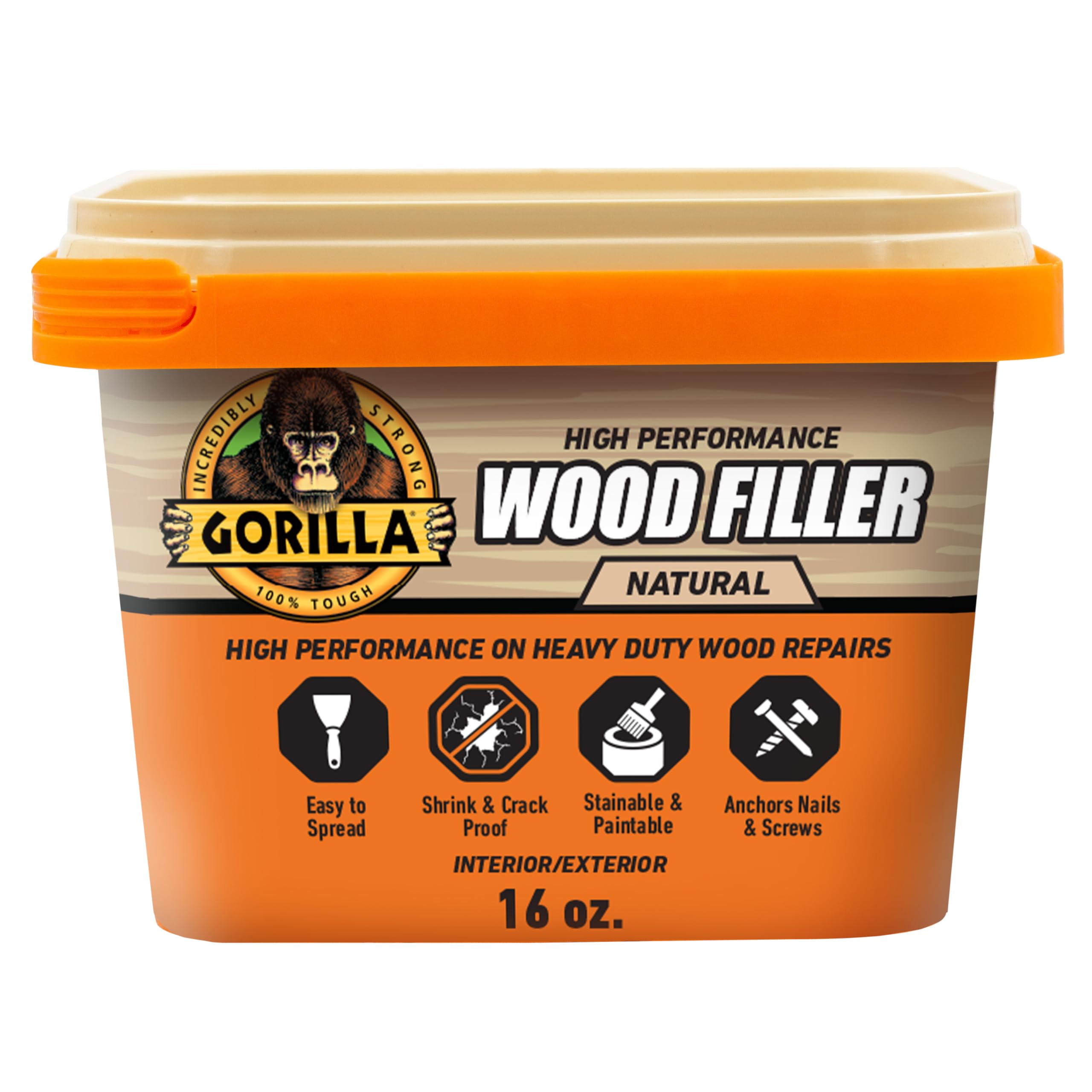
Gorilla Wood Filler 16oz

89 /100
Craft Score Excellent

Key details

Drying Time
Moderate drying
Sanding Ease
Sands easily
Stainability
Stainable, variable absorption
Container vs Scale
16 oz tub
View on Amazon

This 16-ounce tub offers the lowest price per ounce among top-rated wood fillers, making it a cost-effective choice for large siding or trim repairs. It sands easily and accepts primer well, saving time on finish work. While it can be stained, the natural finish and variable moisture mean painted finishes deliver more predictable results.

This filler is best for DIYers tackling big outdoor projects who don't mind mixing a bit of water to get the right consistency. If you need a ready-to-use product for precision stain-matching repairs, a smaller tube with consistent moisture is a better fit.

💡 Add a small amount of water and stir thoroughly to restore moisture before use.

Pros

  • Budget-friendly choice for bulk repairs
  • Sands smoothly and takes paint without effort.
  • More filler per dollar than most competitors.

Cons

  • Adhesion can be poor on some surfaces, with crumbling after application.
Our verdict

This is the filler to grab when you have a large repair and a tight budget – just be prepared to add water and accept that stainability may require extra care.

Check Latest Price
7

Also Great

This wood filler from Minwax is designed to accept all Minwax stains, making it a natural choice for brand loyalists tackling small repairs on unfinished wood. The 6 oz tube suits nail holes and minor dents. However, its stain absorption performance is not broadly attested by owners — users should test on a scrap piece before committing to visible areas. The brand trust alone doesn't guarantee consistent results, which keeps it from ranking higher among stainable fillers.

Pros

  • Formulated to work with every Minwax stain for color-matched repairs.
  • Water-resistant finish helps protect repaired areas.

Cons

  • Stain acceptance has not been consistently reported by owners, introducing uncertainty for stain-matching projects.
Our verdict

This filler is a reasonable option if you already use Minwax stains and need a small batch for minor repairs, but only if you're willing to test stain absorption before applying to finished work.

Check Latest Price
8

Walnut Wood Projects

RISETEX Wood Filler 9.87oz

88 /100
Craft Score Excellent

Key details

Drying Time
Long cure
Sanding Ease
Stainability
Stainable, color limit
Container vs Scale
9.87 oz jar
View on Amazon

This RISETEX kit includes scrapers and sandpaper, making entry-level wood repairs straightforward. The water-based formula works well on nail holes and small gouges in walnut or darker woods. However, the walnut color can appear too dark on lighter wood species, and the thin consistency prevents reliable use on vertical surfaces where gravity pulls the filler out. These traits make it a solid match for horizontal walnut projects but a poor fit for varied staining needs.

Pros

  • Complete kit with scrapers and sandpaper simplifies first-time repairs.
  • Works well on small gouges in walnut-colored wood projects.

Cons

  • Walnut color may overpower lighter wood grains and stain absorption is limited.
  • Thin consistency tends to sag on vertical surfaces, limiting repair locations.
Our verdict

Best suited for horizontal repairs on walnut-colored projects where the included tools add convenience.

Check Latest Price
9

Grain Filling

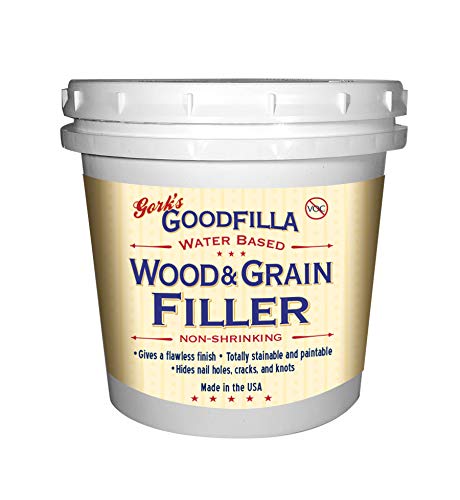
Goodfilla Grain Filler 1qt

84 /100
Craft Score Excellent

Key details

Drying Time
Sanding Ease
Sands easily
Stainability
Stainable, may not match
Container vs Scale
32 oz tub
View on Amazon

Goodfilla delivers a zero-VOC, trowel-ready grain filler that reconstitutes if dried out, ideal for open-pore maple, birch, or pine. Its non-toxic profile suits eco-conscious woodworkers. However, the strong antimicrobial odor may persist, and thick layers can crack — limitations that push it toward ventilated workshop use rather than stain-critical furniture repairs where color streaks could be visible.

Pros

  • Fills open wood pores and bonds firmly to the surface.
  • Spreads buttery smooth and sands to a flat, uniform finish.

Cons

  • Pigment streaks can appear, making color match unpredictable under stain.
Our verdict

Best for eco-conscious hobbyists in ventilated shops who need a grain filler for open-pore woods and can accept potential odor and color variability.

Check Latest Price
10

General Small Repairs

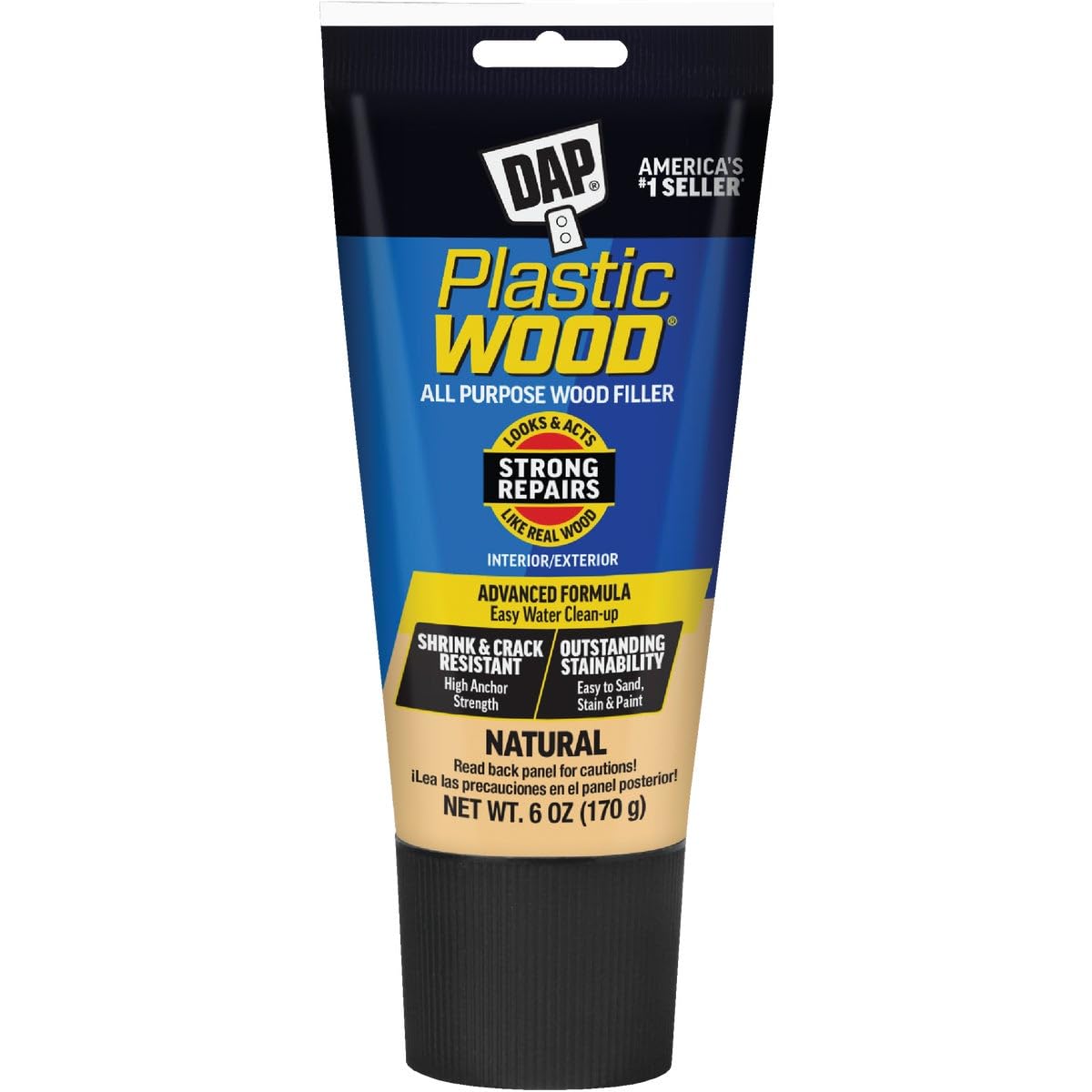
DAP Plastic Wood 6oz

91 /100
Craft Score Outstanding

Key details

Drying Time
Quick drying
Sanding Ease
Sands easily
Stainability
Accepts stain well
Container vs Scale
6 oz tube
View on Amazon

The DAP Plastic Wood Filler is a solid option for small nail holes and cracks where stainability matters — it sands smoothly and cleans up with water. The claim of being 3X stronger than wood holds up for most indoor touch-ups. However, getting the product out of the tube demands significant hand strength, especially near empty, and some units may dry out or crumble after curing. For those who prioritize ease of use, the top pick's tube is easier to manage.

Pros

  • Fills small holes and stripped screw holes with good adhesion.
  • Dries quickly and sands to a smooth finish that accepts stain.

Cons

  • Tube can be very hard to squeeze, particularly when nearly empty.
  • Some units may dry out or crumble after curing.
Our verdict

For small indoor repairs where stain matching is needed and you don't mind a firm squeeze, this filler delivers dependable results at a low cost.

Check Latest Price
11

Structural Repairs

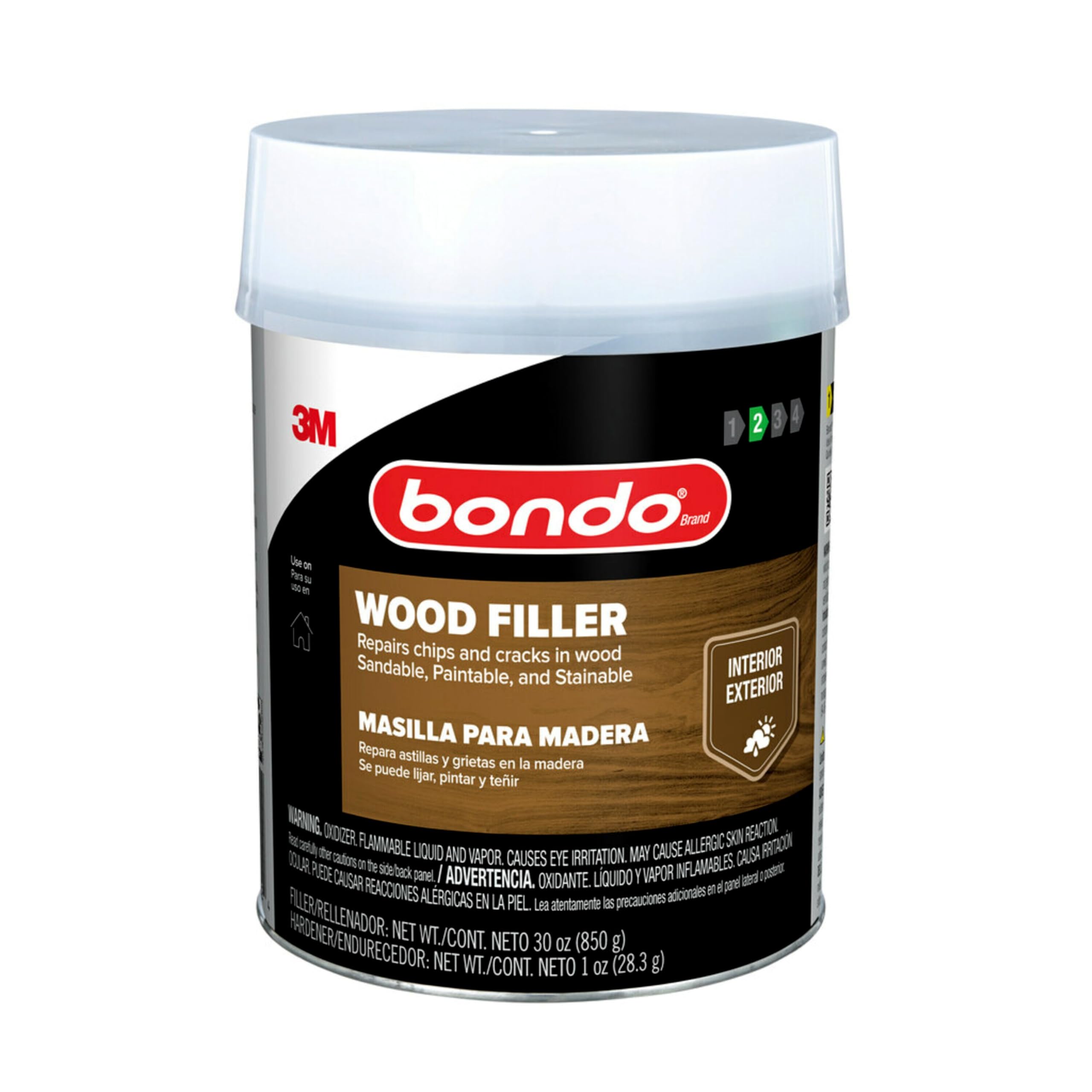
Bondo Wood Filler 30oz

92 /100
Craft Score Outstanding

Key details

Drying Time
Sandable 15 min
Sanding Ease
Sands like auto Bondo
Stainability
Does not absorb stain
Container vs Scale
30 oz + hardener
View on Amazon

This two-part epoxy delivers extreme strength for rotted wood and exterior repairs, bonding chemically and sanding quickly to a smooth finish. However, the product does not absorb stain — it is strictly for painted or opaque finishes. The fast curing time (sandable in 15 minutes) limits the working window, especially in warm weather. Best for large structural repairs on painted surfaces.

Pros

  • Bonds chemically with wood for repairs that hold permanently, even on rotted areas.
  • Sands quickly and leaves a smooth surface ready for paint.

Cons

  • Does not absorb stain despite marketing claims; only suitable for painted finishes.
  • Fast curing time shortens the working window, especially in warm weather.
Our verdict

This is a strong choice for structural repairs on painted woodwork or exterior trim where a stained finish is not required.

Check Latest Price
12

Painted Wood Repairs

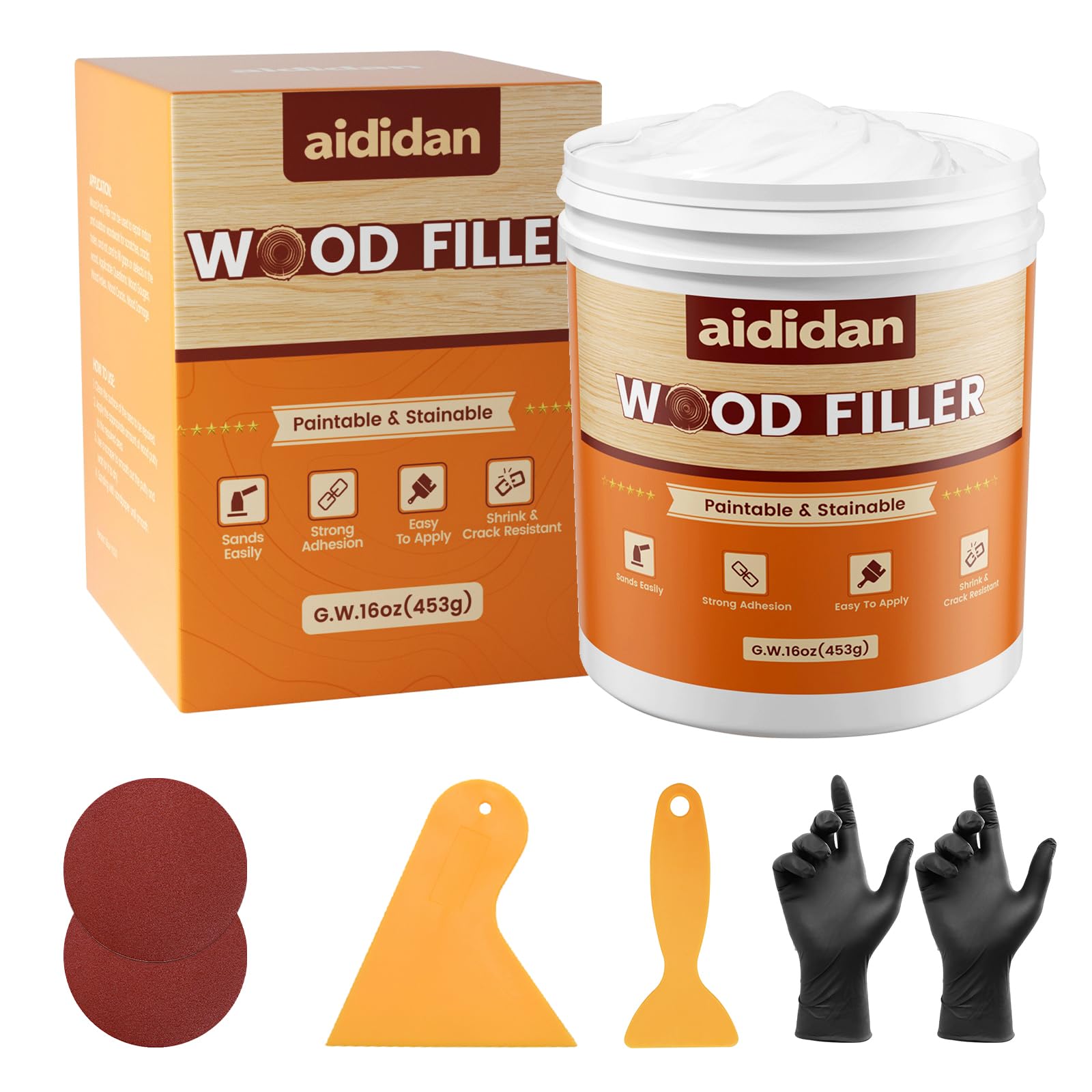
aididan Wood Filler 16oz

87 /100
Craft Score Excellent

Key details

Drying Time
Sanding Ease
Sands easily
Stainability
Poor stain absorption
Container vs Scale
16 oz jar
View on Amazon

This aididan kit bundles a 16oz white wood filler with scrapers, sandpaper, and gloves – convenient for small painted repairs. The filler sands smoothly and paints over nicely. However, the stainable claim does not hold: stain sits on the surface without absorbing. This filler works only for paint. If you need stain-matching, look for a tube filler that absorbs stain, such as the Elmer's Carpenter's Wood Filler.

Pros

  • Complete kit includes scrapers, sandpaper, and gloves for a one-stop repair solution.
  • Sands easily and accepts paint evenly for a smooth white finish.

Cons

  • Durability can be inconsistent; some cracking after drying may occur in thicker applications.
  • Stain does not absorb; filler remains white even after staining
Our verdict

This kit works well for white painted repairs where stain-matching is not needed – skip it if you plan to stain the wood.

Check Latest Price

How to Choose

Stainability

Stainability is the core feature, but it varies widely. Water-based fillers with fine particles absorb stain better than dense, epoxy-like formulas. Even among water-based options, some use binders that seal the surface, preventing dye penetration.

To test, apply filler on a scrap piece of the same wood, sand smooth, and apply your stain. If the filler looks lighter or has a plastic sheen, it is only suitable for paint. This simple step saves hours of rework.

Container vs Project Scale

Small tubes (3–6 oz) are convenient for a handful of nail holes but become expensive per ounce if you have a large area to fill. Tubs (16–32 oz) offer much better value for multiple repairs or full trim jobs.

The hidden trade-off: larger containers dry out faster once opened. If you only fill holes occasionally, a tube stays fresh longer. For a big project, a tub with a tight-sealing lid is necessary.

Drying Time

Drying time ranges from 15 minutes to 24 hours. Fast-drying formulas let you sand and stain the same day but require working quickly and in thin layers. Slow-curing fillers shrink less and are more forgiving for deep fills.

For deep gouges, apply multiple thin layers rather than one thick blob. Each layer needs to dry before the next. If you wait only a few hours for a thick fill, it will crack or sink.

Sanding Ease

A filler that sands easily saves effort and delivers a smooth surface. Most water-based fillers sand well with 200-grit paper, but two-part epoxies can be rock-hard and require power sanding.

The mistake: sanding too early or too hard can gouge the surrounding wood. Wait for the filler to fully cure, then sand in stages—start with 180 grit, finish with 220 or higher.

Shrink and Crack Resistance

Fillers shrink as water evaporates. Those with wood fibers or ceramic microspheres shrink less. Epoxy fillers are virtually non-shrinking but lack stainability.

Cracking happens when a fill is too thick or the filler dries too fast. Always feather the edges and avoid filling deeper than 1/4 inch in one pass. If a crack appears, it is easier to sand and refill than to patch over.

Frequently Asked Questions