6 Best Benchtop Planer of 2026: Flawless Finish Without Snipe

Find the benchtop planer that delivers glass-smooth surfaces without budget-breaking. For hobbyists and pros who demand snipe-free results.

Every woodworker knows the frustration: you feed a board through a planer and the ends come out with a ridge — snipe. It is the most universal complaint across benchtop planers, no matter what the box says. The difference between a frustrating experience and a smooth workflow comes down to the planer's design and how it handles that final inch of cut.

There is a clear trade-off in this category: budget models often use two-knife cutterheads and lack chip ejection, which means more sanding and more cleanup. Premium models add a second feed speed, a chip blower, and automatic carriage locks that minimize snipe. The question is not which planer is best on paper, but which one matches your shop's volume, material, and tolerance for noise.

This guide focuses on the practical differences that actually matter when you are dimensioning lumber for furniture or cabinetry. Whether you are a weekend DIYer or a full-time professional, the right planer keeps your boards flat and your time productive.

1

Best Overall

DW735X Planer

95 /100
Craft Score Outstanding

Key details

Cutting Width
13 in
Knives & Speed
3-knife, dual-speed
View on Amazon

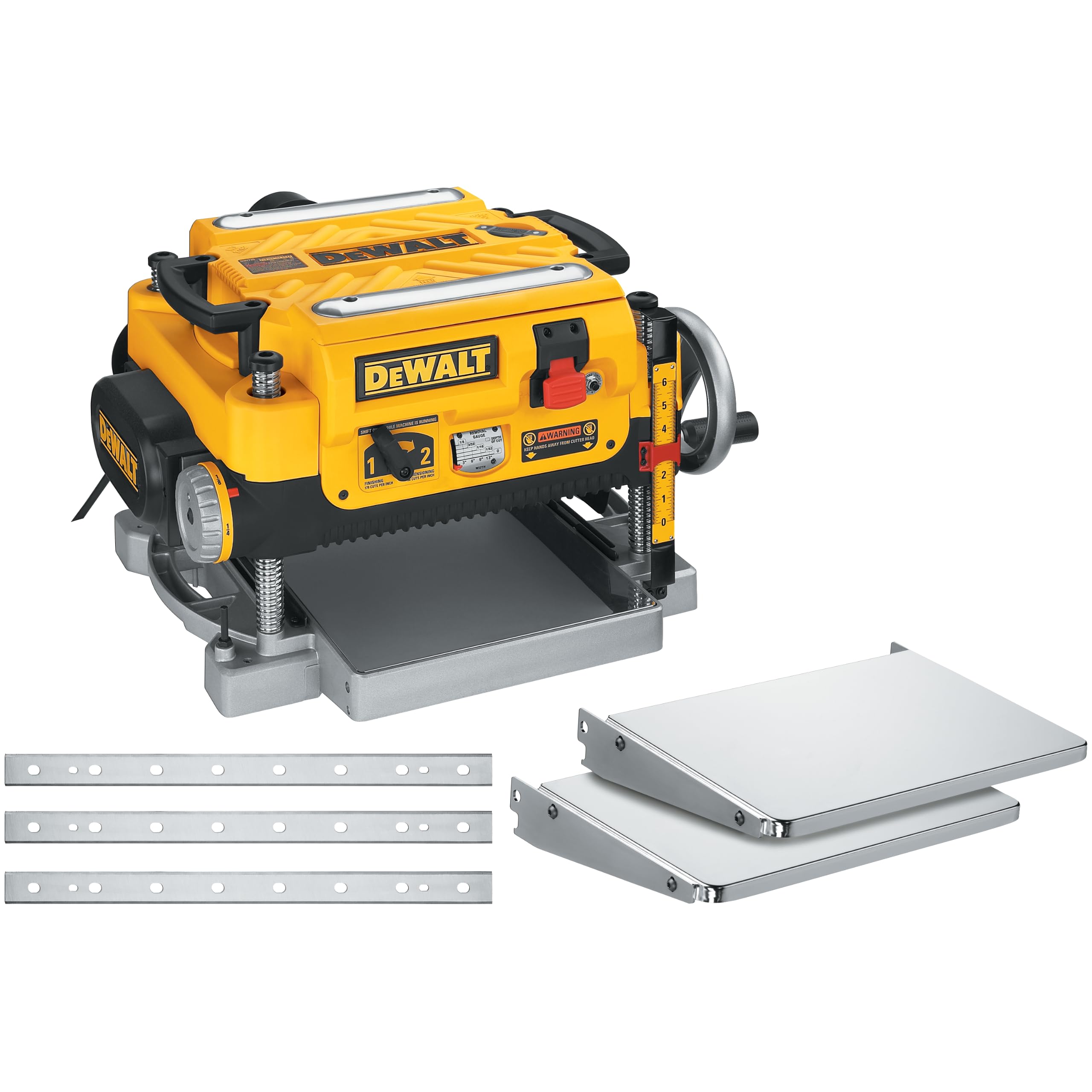
The 3-knife cutterhead with two feed speeds (96 and 179 cuts per inch) produces smooth, glass-like surfaces on hardwoods and softwoods alike, reducing sanding time. The built-in chip blower clears dust efficiently, allowing continuous operation without clogging.

Serious hobbyists and professionals who run large quantities of dense lumber will appreciate the 15-amp motor that powers through without bogging down. The automatic carriage lock keeps snipe minimal when infeed and outfeed tables are properly set. That performance comes with tradeoffs: noise levels exceed 100 dB, requiring mandatory hearing protection, and some users have noted base cracking and blade chipping under heavy use. This planer suits woodworkers who prioritize surface quality and production speed over a quiet workspace.

💡 Running the planer on a sturdy stand with properly aligned infeed/outfeed tables reduces snipe and extends blade life.

Pros

  • Three-knife cutterhead produces consistently smooth finishes on hard and soft lumber.
  • Dual feed speeds let users balance surface quality with material removal rate.
  • Effective chip blower keeps the workspace clear during long planning sessions.

Cons

  • Noise levels above 100 dB require hearing protection and may disturb adjacent spaces.
  • Cast aluminum base may crack under heavy use; blade chipping has been noted.
Our verdict

For woodworkers who demand a premium finish and high throughput, the DW735X delivers — just budget for hearing protection and consider extended support for the base.
Check Latest Price
2

Best Value

DW734 Planer

92 /100
Craft Score Outstanding

Key details

Cutting Width
12.5 in
Knives & Speed
3-knife, single speed
View on Amazon

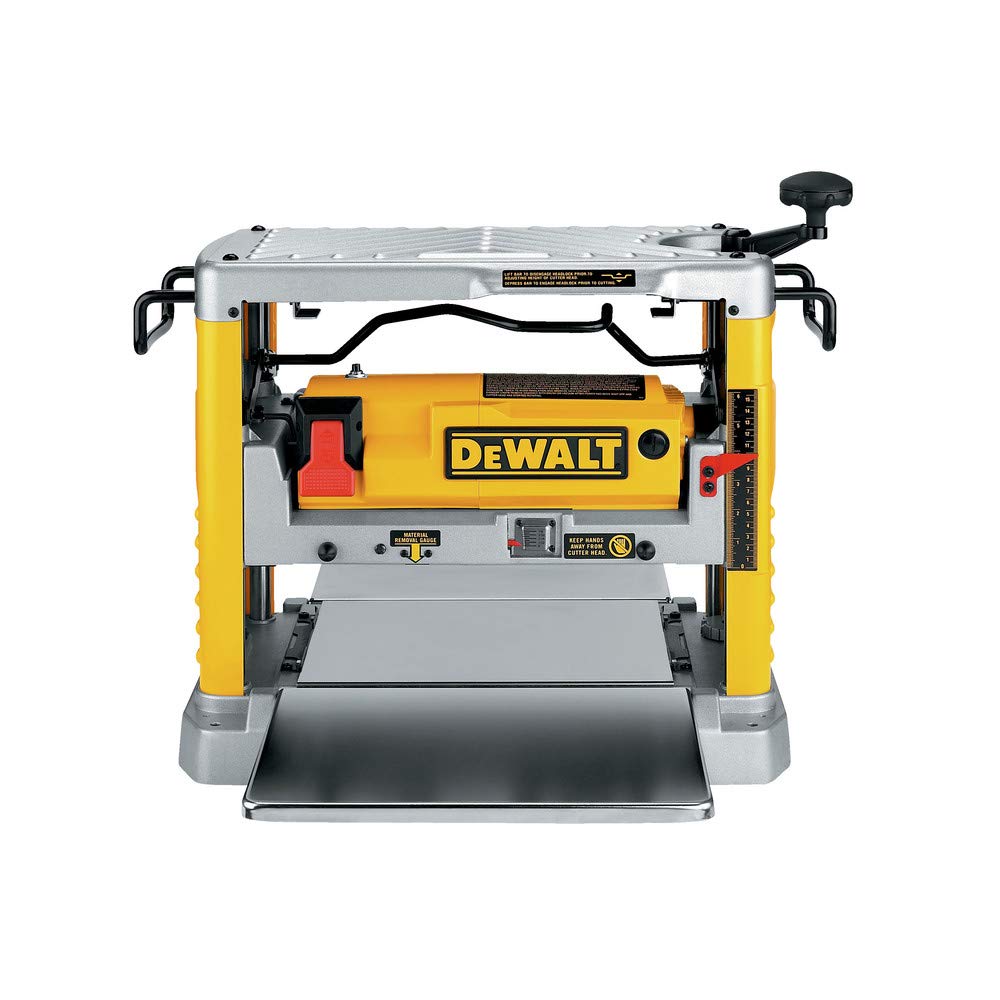
The DW734 uses the same 15A motor and 3-knife cutterhead as the higher-priced 735X, producing smooth finishes on hardwoods and softwoods at a single feed speed.

It suits home woodworkers who prioritize build quality and cost over production speed, though the dust chute clogs easily and snipe may appear without infeed/outfeed support tables.

💡 Connecting a dedicated dust collector with a 4-inch hose improves chip evacuation significantly.

Pros

  • Heavy-duty frame stands up to repeated use without flex or vibration.
  • Handles hardwoods like oak and maple without bogging down.
  • Quick setup and straightforward controls get you cutting in minutes.

Cons

  • Dust collection chute clogs even with a shop vac, requiring manual clearing during longer sessions.
Our verdict

For hobbyists who want pro-level cutterhead performance without the dual-speed premium, the DW734 is a cost-effective choice that trades some dust management convenience for a lower price.

Check Latest Price
3

Quietest Operation

2012NB Planer

88 /100
Craft Score Excellent

Key details

Cutting Width
12 in
Knives & Speed
2-knife, reversible
View on Amazon

Unlike the top pick’s dual-speed power, the Makita 2012NB trades raw throughput for remarkably quiet operation — a rare trait in benchtop planers. Its 83 dB noise level and reduced vibration make it a sensible choice for home shops near living spaces or shared walls. The Japanese engineering delivers smooth, snipe-minimal cuts right out of the box, but the premium price reflects that focus on low noise rather than maximum capacity; the dust hood is also sold separately.

This planer suits woodworkers who prioritize a peaceful workspace over production speed and don’t need more than 12 inches of cutting width. If you regularly work with highly figured grain, occasional tearout may appear — straight-grained lumber handles cleanly.

💡 Budget for the optional dust hood — it is not included in the box.

Pros

  • Quietest operation in its class at 83 dB
  • Minimal snipe when stock is properly supported; many users get clean results immediately.
  • Ready to use with no setup adjustments required; blade changes are simple.

Cons

  • In a market where 13-inch planers cost less, the premium for quiet operation is steep.
  • On highly figured wood, tearout can occur
Our verdict

If low noise is your top priority and you don’t need a wider cut or dual-speed output, the 2012NB delivers precision without disturbing the house.

Check Latest Price
4

Best Budget Entry

CMEW320 Planer

91 /100
Craft Score Outstanding

Key details

Cutting Width
12.25 in
Knives & Speed
2-knife, 8,000 RPM
View on Amazon

The CMEW320 is easy to set up and operate, providing solid basic performance for small projects. Its 15 Amp motor and 2-knife cutterhead handle softwoods adequately, but the lower 8,000 RPM speed produces a rougher finish than pricier models, and snipe at board ends is more noticeable. This planer suits budget-conscious hobbyists who work with softwoods and prioritize affordability over glass-smooth surfaces, and don't need heavy-duty durability for frequent use.

💡 Using sacrificial boards at the start and end of each pass can reduce the impact of snipe.

Pros

  • Budget-friendly price for entry-level planing
  • Handles small to medium hobbyist projects without issue
  • Minimal assembly and easy-to-use controls

Cons

  • Snipe at board ends is noticeable and may require extra support
  • Inconsistent durability with occasional mechanical issues reported
Our verdict

This planer delivers solid basic performance for small softwood projects at a low price, with the tradeoff of noticeable snipe and a rougher finish.

Check Latest Price
5

Budget Alternative with 12.5" Capacity

PL1252 Planer

90 /100
Craft Score Outstanding

Key details

Cutting Width
12.5 in
Knives & Speed
2-blade, 20,000 RPM
View on Amazon

The PL1252's 12.5-inch width and cast iron construction provide a stable platform for light planing tasks, a step up in capacity from sub-$400 planers. Snipe can be an issue on longer boards, and occasional belt or blade durability concerns suggest this planer is best suited for DIY hobbyists working with softwoods and small boards on a tight budget.

💡 Feeding boards with consistent infeed and outfeed support can reduce the appearance of snipe.

Pros

  • Budget-friendly price for a 12.5-inch planer with cast iron base
  • Handles typical DIY projects on softwoods with ease
  • Simple assembly and intuitive controls

Cons

  • Snipe may require additional sanding or trimming on longer boards
  • Belt breakage and blade chipping have been noted in some instances
Our verdict

For DIYers on a strict budget who work mostly with softwoods and small stock, the PL1252 offers worthwhile capacity at a low entry price — just be prepared to manage snipe.

Check Latest Price
6

Budget-Conscious Buyers

VEVOR 13" Planer

85 /100
Craft Score Excellent

Key details

Cutting Width
13 in
Knives & Speed
2-knife, 23,500 RPM
View on Amazon

The VEVOR 13-inch planer offers the widest cutting capacity at a budget-friendly price, making it a unique option for occasional use on smaller projects. However, limited user feedback and some quality variances mean it is best for buyers who prioritize width over long-term durability or a fine finish.

Pros

  • 13-inch cutting width at the lowest price in its class
  • Simple setup gets you planing quickly, ideal for infrequent use.

Cons

  • Finish quality can be inconsistent, particularly on hardwoods; hobbyists seeking glass-smooth surfaces may need additional sanding.
Our verdict

Best for budget-conscious shoppers who need the widest capacity for occasional projects and can accept some finish variability.

Check Latest Price

How to Choose

Cutting Width

Cutting width determines the widest board you can plane in a single pass. A 12-inch planer handles most common lumber, but if you work with reclaimed or large panels, a 13-inch capacity saves you from flipping boards or running them through sideways.

The trade-off: wider planers are heavier and often more expensive. For a shop that mostly uses 2x4s and 1x6s, 12.5 inches is plenty. Only step up to 13 inches if you regularly plane furniture parts wider than 12 inches.

Number of Knives and Speed

A three-knife cutterhead produces a finer surface finish than a two-knife design at the same feed rate because each knife takes a smaller chip. The result is less sanding and fewer tear-out issues on figured grain.

Cutterhead speed also matters — higher RPM (20,000+) combined with more knives reduces scalloping. But speed alone does not guarantee a smooth finish if the knives are dull or the feed rate is too aggressive. Look for a balance of knife count and speed that matches the material you plane most.

Feed Speed Options

Single-speed planers feed at a fixed rate (typically around 96 cuts per inch). Dual-speed models offer a slower rate (179 CPI) for a finer finish on hardwoods and a faster rate for softwoods or rough stock removal.

The hidden trade-off: dual-speed adds weight and cost. If you primarily plane construction lumber, single-speed is adequate. If you often switch between oak and pine, the ability to dial in feed speed saves time and reduces tear-out.

Snipe Reduction

Snipe occurs when the board exits the cutterhead and the pressure drops. Solutions include automatic carriage locks (like DEWALT's) that hold the bed steady, or built-in infeed/outfeed support that keeps the board level.

Even the best snipe reduction system fails if the planer is not on a flat surface or if you let the board drop at the end. Adding roller stands or sacrificial boards at both ends is the cheapest way to eliminate snipe entirely.

Chip Ejection

Chip ejection systems range from a simple vacuum port to an integrated blower that actively throws chips into a collection bag. Without a blower, the dust port can clog with wet or stringy shavings, especially from hardwoods.

If your shop already has a dust collector, a vacuum port is fine. If you work in a garage without dedicated dust collection, a planer with a chip blower keeps the cutterhead clear and the floor cleaner.

Frequently Asked Questions