7 Best Thickness Planer 2026: Achieve Smooth, Snipe-Free Boards

Choosing the best thickness planer means balancing finish, snipe, and dust control. This guide helps woodworkers pick the right model for their shop.

Snipe at both ends of every board is the most common complaint about benchtop thickness planers. It's nearly universal, but some models reduce it significantly through automatic carriage locks or four-column systems. Chip ejection is another pain point - shavings clog ports and escape from the infeed side, turning a quick planing session into a cleanup project.

The cutterhead design defines the planer's personality. Straight-knife three-knife heads deliver a proven, high-quality finish and easy blade replacement. Spiral cutterheads with multiple inserts cut more quietly, handle figured wood better, and last longer between rotations, but they come at a higher initial cost and with pricier replacement inserts.

Dust collection is often an afterthought, but it's the biggest source of post-purchase frustration. A dedicated dust collector with a 4-inch port makes a world of difference. This guide walks through the key trade-offs so you can match the planer to your shop and your projects.

1

Best Overall

DEWALT DW735X

95 /100
Craft Score Outstanding

Key details

Motor
15 A
Cutterhead
Three-knife straight
Cutting Width
13 in
Dust Collection
Fan-assisted ejection
View on Amazon

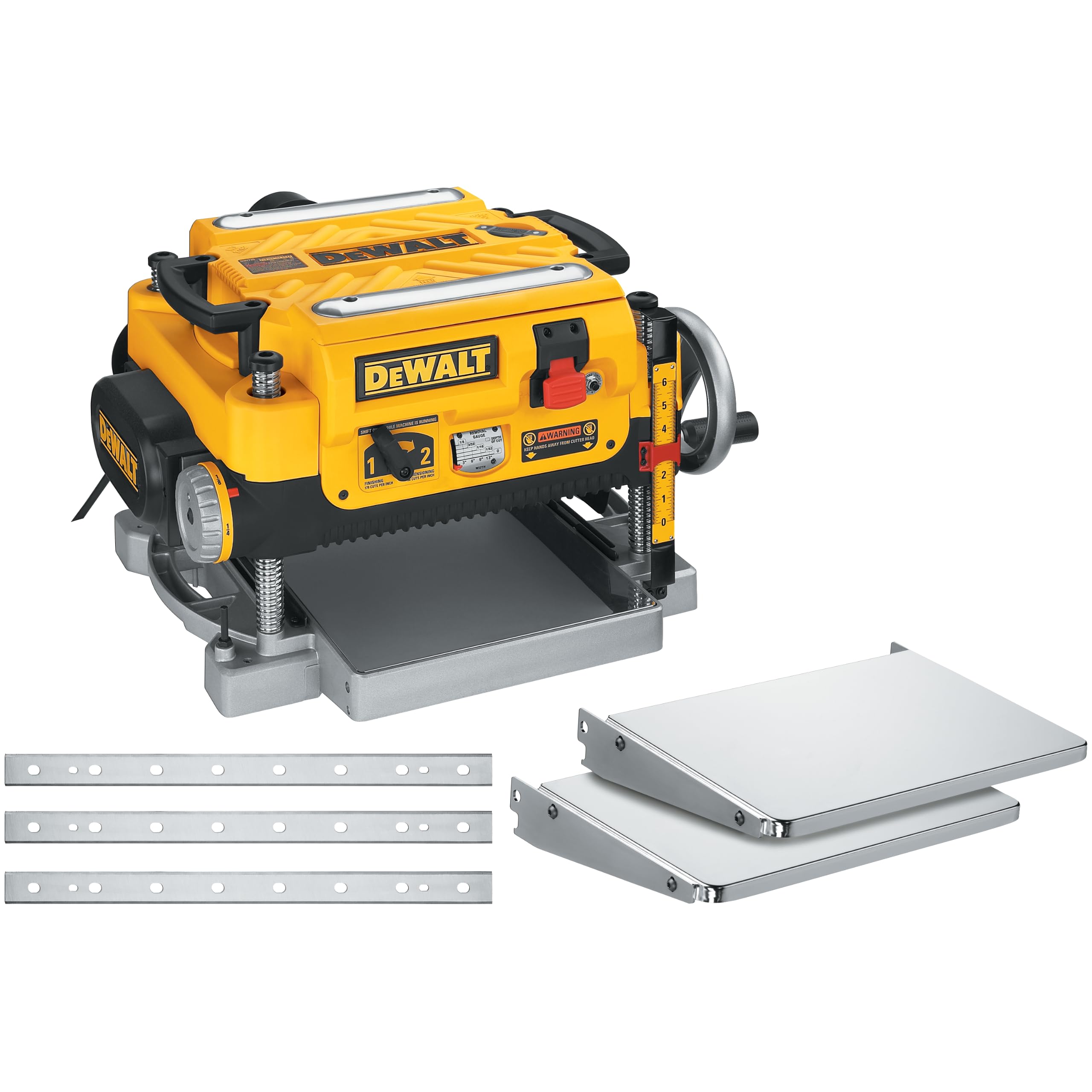
The DW735X's three-knife cutterhead and two-speed gearbox produce a surface finish that aligns with stationary planers, while the integrated fan system blows chips directly into a dust collector with minimal clogging. The 15-amp motor handles deep cuts in hardwoods without bogging, and switching between 96 and 179 cuts per inch lets you optimize for throughput or final surface.

With proper infeed and outfeed support, snipe is nearly eliminated by the automatic carriage lock. The dual-speed also helps match material type: slower speed for heavy removal, faster speed for a fine finish. The tradeoff is noise — the fan and cutterhead generate enough sound that ear protection is mandatory in any setting. Some units have shown hairline cracks in the cast aluminum base under heavy use; while not universal, it is worth checking if you run the planer daily for commercial work.

This planer fits serious hobbyists and professionals who prioritize surface quality and throughput over portability or quiet operation. If you plane large volumes of hardwood and want to minimize sanding, the dual-speed gives you flexibility. The loud operation and occasional base crack reports mean it is less suited to shared or mobile job sites where weight and noise are primary concerns.

💡 Keep hearing protection handy; the fan and cutterhead are loud even at the slower speed.

Pros

  • Produces a smooth, glass-like finish straight off the cutterhead.
  • Handles hardwoods and deep cuts without bogging down.
  • Simple assembly and intuitive controls get you planing fast.

Cons

  • Noise level requires hearing protection even at the slower speed
  • Under heavy continuous use, some units have developed cracks in the cast aluminum base; inspect periodically if you run the planer for commercial workloads.
Our verdict

For woodworkers who value finish quality and dual-speed flexibility above all else, the DW735X is the benchtop planer to beat — just factor in ear protection and occasional base checks.

Check Latest Price
2

Best Spiral Cutterhead Value

WEN PL1326

92 /100
Craft Score Outstanding

Key details

Motor
15 A
Cutterhead
Spiral (26 HSS)
Cutting Width
13 in
Dust Collection
Adjustable 2" port
View on Amazon

The WEN PL1326 brings spiral cutterhead technology to a price point that typically buys straight-knife designs. Its 26 high-speed steel inserts produce a clean, nearly tear-out-free finish on hardwoods and softwoods alike, with noticeably less noise than a conventional planer. That alone makes it a strong alternative to the louder, more expensive dual-speed machines in this class.

This planer suits the hobbyist or small-shop woodworker who values finish quality over production speed. The single-speed 26 FPM feed rate is fine for most projects, and setup is simple enough for a beginner. The tradeoff comes with dust collection: chips escape from the infeed side and the 2-inch port struggles without a high-volume vacuum. Snipe can also appear despite careful adjustment, though many owners find it manageable.

💡 Pair it with a dedicated dust collector or a shop vac with a cyclone separator to keep chips from spilling onto the infeed table.

Pros

  • Spiral cutterhead delivers a smooth, quiet cut on hardwoods
  • Cost-effective entry to helical technology without paying $700+
  • Build quality and setup are straightforward right out of the box

Cons

  • Chips escape from the infeed side and the chain drive can clog, requiring a strong vacuum or modifications
  • Snipe may persist after adjustment, though many users report minimal issues
Our verdict

If you want spiral-head finish without the premium price and are willing to dial in dust extraction, the WEN PL1326 is a smart buy for hobbyist workshops.

Check Latest Price
3

Best Mid-Range All-Rounder

DEWALT DW734

92 /100
Craft Score Outstanding

Key details

Motor
15 A
Cutterhead
Three-knife straight
Cutting Width
12.5 in
Dust Collection
View on Amazon

The DW734 shares the same robust construction and smooth cut quality as the top-pick DW735X, but at a lower price point. Its three-knife cutterhead and four-column carriage lock produce a furniture-ready finish with minimal snipe. It lacks the dual-speed gearbox and fan-assisted chip ejection of the 735X, features that matter more for high-volume users.

This planer suits hobbyists and semi-pros who value finish quality and brand reliability over premium dust management. Dust collection can clog the exhaust port, often requiring a dedicated dust collector or cyclone to keep the workspace clean. Some users have noted drive chain wear after moderate use, so this model fits lighter workloads best.

💡 Pair with a dedicated dust collector or cyclone to reduce clogging at the exhaust port.

Pros

  • Solid build quality and consistent performance for hobby projects
  • Smooth, furniture-ready finish with minimal snipe
  • Easy setup and intuitive controls

Cons

  • Dust collection can clog the exhaust port, creating a mess in the shop
  • Drive chain and blade wear have been noted after moderate use, limiting its suitability for heavy daily workloads
Our verdict

The DW734 is a cost-effective pick for woodworking hobbyists who want Dewalt’s build quality and a clean finish, and are willing to manage dust collection or keep use moderate.

Check Latest Price
4

Best Budget for Occasional Use

CRAFTSMAN CMEW320

91 /100
Craft Score Outstanding

Key details

Motor
15 A
Cutterhead
Two-knife straight
Cutting Width
12.25 in
Dust Collection
Vacuum port
View on Amazon

The CRAFTSMAN CMEW320 is the most affordable planer from a well-known brand, delivering decent performance for smaller projects like shelves or cutting boards. Its 15-amp motor and two-knife cutterhead handle medium boards reliably, though the straight-knife design means finish quality trails pricier competitors.

This planer suits DIYers and hobbyists who work occasionally and want a low-cost entry point. The snipe at both ends of boards will be noticeable — technique helps but doesn't eliminate it. Durability is a mixed bag; some units hold up for years, while others may show roller wear or chain issues sooner. If you need a daily workhorse for fine furniture, look to the top pick instead.

💡 Place sacrificial boards at each end of the workpiece to reduce snipe depth.

Pros

  • Operates reliably on medium and smaller boards for typical projects.
  • Solid build quality that meets expectations for its budget price.
  • Exceptional value for money

Cons

  • Snipe at both ends of boards can be noticeable; user technique can reduce but not eliminate it.
  • Long-term durability can be inconsistent: some units develop roller wear or chain issues while others last for years.
Our verdict

For budget-conscious woodworkers who can manage snipe and accept some durability variance, the CMEW320 delivers the basics without breaking the bank.

Check Latest Price
5

Quietest & Most Portable

Makita 2012NB

88 /100
Craft Score Excellent

Key details

Motor
15 A
Cutterhead
Two-knife straight
Cutting Width
12 in
Dust Collection
Separate hood needed
View on Amazon

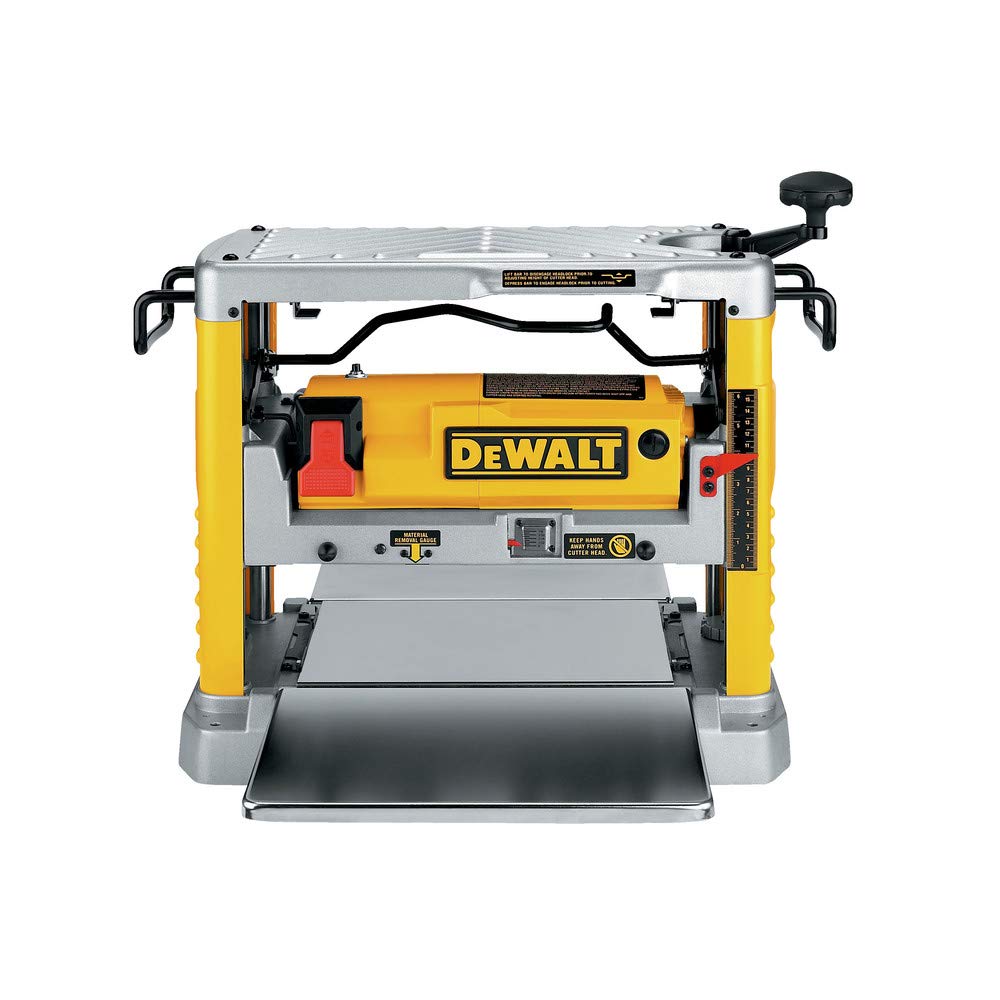
At 83 dB, the Makita 2012NB is noticeably quieter than any other benchtop planer we've tested, including the dual-speed Dewalt top pick. Its compact build with integrated carry handles makes it the easiest to move around a workshop or load into a truck. That noise advantage comes with a tradeoff: it lacks a dual-speed gearbox and the fan-assisted chip ejection that the Dewalt offers, so throughput and dust management take a backseat to quiet operation.

This planer suits woodworkers who value low noise and easy job-site mobility over raw throughput. The dust hood is not included and costs extra, and the price is high for a 12-inch model — especially given the straight-knife cutterhead. For mobile users who already own Makita tools and want consistent, smooth cuts without loud machinery, the 2012NB is a strong fit.

💡 To save on dust hood cost, a universal 4-inch adapter can be fitted to the 3-inch port with minimal modification.

Pros

  • Makita build quality stands up to job-site abuse
  • Handles hardwoods and long boards with clean, chatter-free surfaces
  • At 83 dB, it's the quietest benchtop planer available

Cons

  • Dust hood must be purchased separately; the 3-inch port may need an adapter for standard shop vacs
  • Blade life can be shorter on dense hardwoods, leading to occasional tearout
Our verdict

For quiet job-site use and easy portability, the Makita 2012NB is unmatched — just budget for the separate dust hood and accept the higher entry cost.

Check Latest Price
6

Budget DIYers

VEVOR 13" Planer

85 /100
Craft Score Excellent

Key details

Motor
15 A
Cutterhead
Two-knife steel
Cutting Width
13 in
Dust Collection
Vacuum port
View on Amazon

This planer handles basic thickness planing tasks without fuss, making it suitable for occasional light use where cost is the primary concern. However, blade replacement can be difficult as compatible blades are hard to source, reducing long-term value. The broader user experience is not well-documented, so the unit is best considered a gamble for any project beyond the occasional weekend job.

Pros

  • Cost-effective entry point for budget-conscious woodworkers.
  • Straightforward setup and operation for beginners.

Cons

  • Blade replacement can be difficult due to limited availability of replacement blades, reducing long-term value.
Our verdict

Best suited for beginner woodworkers on a tight budget who only need occasional light planing and are willing to accept potential blade sourcing challenges.

Check Latest Price
7

JET Loyalists

JET JWP-13BT

81 /100
Craft Score Excellent

Key details

Motor
15 A
Cutterhead
Helical (26 HSS)
Cutting Width
13 in
Dust Collection
View on Amazon

The JET JWP-13BT delivers the quieter cut and smoother finish that a helical cutterhead provides — a clear advantage over straight-knife planers. However, ongoing blade replacement costs and occasional reliability hiccups mean this premium-priced planer is best suited for brand loyalists who know what they are getting into and accept the tradeoffs. It does not make sense for buyers who want a hassle-free workhorse out of the box.

💡 Test the planer on a dedicated 15A circuit to reduce the chance of breaker trips.

Pros

  • Smooth cutting results when the unit arrives in good working order.
  • Intuitive controls simplify setup and operation.

Cons

  • Some units may trip breakers or blow fuses under heavy load
  • Feed roller grip can diminish over time, leading to inconsistent feeding.
Our verdict

Best for JET loyalists who want a helical cutterhead and are prepared to manage higher blade costs and possible electrical quirks.

Check Latest Price

How to Choose

Cutting Width

Most benchtop planers offer 12 to 13 inches of cutting width. A 13-inch width handles the widest common lumber (like 1x12 board) without multiple passes. A 12-inch model saves weight and cost but limits you to narrower stock. If you work with rough-sawn lumber wider than 12 inches, a floor-standing planer may be needed.

Motor Power

Nearly all benchtop planers use a 15-amp motor, which provides enough torque for hardwoods at moderate depths. The key difference is how the motor delivers power: some have a direct drive, others a belt drive. Belt drives absorb shock and reduce vibration, while direct drives are simpler and more efficient. For hobbyists, any 15-amp motor is adequate; for professionals planing large volumes, motor durability matters more.

Cutterhead Type

Straight-knife cutterheads are the traditional choice, using two or three blades that produce a clean surface. They're inexpensive to replace but can cause tearout on figured wood and are noisy.

Spiral (helical) cutterheads use individually indexable inserts that rotate for fresh edges, cutting quieter and leaving a smoother finish on tricky grain. The trade-off is higher upfront cost and more expensive replacement inserts. For most woodworkers, a three-knife straight head offers the best balance of finish and cost.

Feed Speed

Some planers offer a two-speed gearbox, typically 96 and 179 cuts per inch. The slower speed produces a finer finish, while the faster speed clears stock quickly for dimensioning. Single-speed planers run at a fixed feed rate, usually around 26 feet per minute. If you plane large volumes or want to optimize finish on different woods, two-speed is a worthwhile upgrade. For occasional use, single-speed is sufficient.

Snipe Reduction

Snipe - a deeper cut at the start and end of a board - is caused by the board tilting as it enters or exits the cutterhead. Planers combat this with automatic carriage locks, four-column systems, or spring-loaded rollers that keep the board flat. No benchtop planer eliminates snipe entirely, but good designs reduce it to under 0.005 inches. Using sacrificial feed boards and leveling the planer with the outfeed table further minimizes it.

Dust Collection

Planers produce a massive volume of chips. Most have a 2-inch or 4-inch port. A shop vac with a 2-inch hose will clog quickly; a dedicated dust collector with a 4-inch port is far more effective. Some models, like those with fan-assisted ejection, actively push chips out, reducing clogs. If you plan to use a shop vac, look for a model with a large port and low-friction ducting, but expect frequent filter cleaning.

Frequently Asked Questions