8 Best Combination Belt Disc Sander of 2026: Match Your Shop's Workload and Budget

Find the benchtop combo sander that fits your projects: from budget hobbyist to power-hungry woodworker, with honest trade-offs.

Combination belt and disc sanders promise two-in-one convenience, but motor failures and belt tracking issues plague many models — even premium ones. The Rikon and JET units in this category have enough overheating reports to make a cautious buyer think twice, while budget picks often cut corners on table flatness and disc attachment methods.

Direct-drive designs are now common, eliminating belt-drive maintenance and offering smoother power delivery at a lower price than older belt-driven units. But direct drive doesn't automatically mean trouble-free: some direct-drive models still suffer from noisy bearings or work tables that arrive warped.

The key is matching the machine to the workload you actually do — not the one you wish you had. For hobbyists who sand mostly pine and plywood, a $110 model with thousands of consistent reviews is a safer bet than a $230 unit with a variable-speed knob and a hot motor.

1

Best Overall

WEN 6502T 4x36 Belt/6 Disc

93 /100
Craft Score Outstanding

Key details

Belt Size
4 x 36 in.
Disc Diameter
6 in.
Motor & Drive
4.3A, belt-drive
Table Material
Cast iron
View on Amazon

A cast iron base is unusual at this price point, and the WEN 6502T uses it to support a 4x36 inch belt and 6 inch disc. The 4.3A motor spins at 3600 RPM, offering enough power for shaping and smoothing small to medium wood projects. Setup takes minutes, and belt changes require no tools.

In everyday use, the sander handles contour sanding, edge rounding, and deburring metal parts without complaint. The belt tilts from 0 to 90 degrees for bevel work. Some units have shown cracks in the cast iron base or switch failures under sustained heavy pressure on dense hardwoods. For lighter sanding tasks, the machine runs without issue.

This WEN fits the budget-conscious hobbyist who needs an affordable combination sander for weekend projects and occasional work. It is well suited for first-time buyers moving up from smaller tools. The durability limits mean it is not the right choice for daily professional sanding or heavy stock removal on thick hardwoods. If your workload stays light to medium, this machine offers a lot of capability for the price.

💡 A solid workbench helps minimize vibration; ear protection is recommended for extended sessions.

Pros

  • Excellent value for the price
  • Works well for small to medium projects
  • Easy to set up and use

Cons

  • Motor may stall when sanding dense hardwoods with heavy pressure
  • Vibration and bearing noise can become noticeable over time
Our verdict

For hobbyists who prioritize value and simplicity over raw power, the WEN 6502T is a capable companion for small projects and shaping work.

Check Latest Price
2

Best for Power and Direct-Drive

Bucktool BD4801 4x36/8 Disc

91 /100
Craft Score Outstanding

Key details

Belt Size
4 x 36 in.
Disc Diameter
8 in.
Motor & Drive
5A, direct-drive
Table Material
Cast aluminum
View on Amazon

The Bucktool BD4801 stands out with its 8-inch disc and 5A direct-drive motor, offering more surface area and sustained power than the top pick's 6-inch disc. The direct drive eliminates belt replacements and runs smoothly, even under heavy loads. It's a step up in capacity for woodworkers who regularly sand large panels or need consistent material removal.

This sander suits hobbyists and serious woodworkers who prioritize power and a larger disc over the budget-friendly approach of the WEN 6502T. The tradeoff: some units leave the factory with aluminum work tables that aren't dead flat, so those requiring precision alignment may need to lap or shim the table. That minor QC variance makes it less ideal for setup-and-forget users, but for anyone comfortable with a bit of tune-up, the performance is worth it.

💡 Check the disc and belt tables for flatness when unboxing; minor deviations can be corrected with sandpaper or shims.

Pros

  • 8-inch disc offers generous sanding surface for larger workpieces
  • Sturdy cast-aluminum base with rubber feet keeps vibration low
  • Direct-drive motor runs quieter than belt-driven models

Cons

  • Dust port location can block full belt access on one side
  • Some units arrive with aluminum tables that aren't perfectly flat
Our verdict

If you need the larger disc and consistent power for serious sanding, the Bucktool BD4801 delivers — just plan to verify table flatness on arrival.

Check Latest Price
3

Best for Knife Making & Small Crafts

WEN 6515T 1x30 Belt/5 Disc

92 /100
Craft Score Outstanding

Key details

Belt Size
1 x 30 in.
Disc Diameter
5 in.
Motor & Drive
2.3A, belt-drive
Table Material
Plastic with metal base
View on Amazon

The WEN 6515T stands out for its 1x30 belt and quick-release belt changes, making it a precise tool for sharpening knives, chisels, and small metal parts. The 5-inch disc adds versatility for contour sanding on small workpieces. This combination is less about handling large panels and more about detailed, controlled sanding where accuracy matters more than power.

Where the larger WEN 6502T offers a 4x36 belt and cast iron base for general workshop use, the 6515T is built for a specific niche: hobbyist knife makers, model builders, and anyone who needs a dedicated small-parts sander. Its compact footprint fits easily on a bench, and assembly takes minutes. The tradeoff appears in the belt-side work table, which is made of thin aluminum that can flex under hard pressure, and some plastic components like the belt guard that may crack if mistreated.

💡 If you need consistent flatness for sharpening, consider replacing the belt table with a flat steel plate or clamping the workpiece directly.

Pros

  • Precision sharpening and small-part sanding with easy belt changes
  • Tool-free belt changes and quick assembly out of the box
  • Budget-friendly price for a dedicated small-parts sander

Cons

  • Belt-side work table is flimsy and flexes under pressure, reducing accuracy for flat work
  • Plastic components such as the belt guard may crack under repeated stress
Our verdict

A cost-effective, niche sander for knife sharpening and small crafts — but buyers needing a flat, stable work surface for general sanding should look at the larger WEN 6502T instead.

Check Latest Price
4

Best Mid-Range Direct-Drive Option

Bucktool BD4603 4x36/6 Disc

90 /100
Craft Score Outstanding

Key details

Belt Size
4 x 36 in.
Disc Diameter
6 in.
Motor & Drive
5A, direct-drive
Table Material
Cast aluminum
View on Amazon

The Bucktool BD4603 delivers a 5A direct-drive motor in a compact combo sander that undercuts the price of its 8-inch sibling while still handling steel and hardwood without bogging down. The cast-aluminum base gives it a stable feel on the benchtop, and belt changes take seconds with the tension-release lever.

This model suits budget-conscious buyers who need a capable belt/disc sander for woodworking and light metalwork but don't require the larger disc surface of the BD4801. The tradeoff is that the motor runs audibly louder than some users expect — a factor in shared or quiet spaces. A handful of units also show a plastic fence that doesn't align perfectly, though it doesn't affect basic sanding tasks.

💡 Wearing ear protection helps in shared garage spaces where the motor noise can carry.

Pros

  • Direct-drive motor delivers steady power for steel and hardwood without stalling
  • Stable cast-aluminum base with a solid, heavy feel during operation
  • Simple assembly and quick belt changes with a tension-release mechanism

Cons

  • Noise level can be high in quiet shops or shared garages
  • Plastic fence and occasional minor fit-and-finish inconsistencies
Our verdict

For general sanding on a budget, the BD4603 delivers good direct-drive performance; if you need a larger disc or quieter operation, the BD4801 or a belt-driven model may fit better.

Check Latest Price
5

Best Budget 8-Inch Disc Combo

VEVOR 4x36/8 Disc

85 /100
Craft Score Excellent

Key details

Belt Size
4 x 36 in.
Disc Diameter
8 in.
Motor & Drive
5A, induction belt-drive
Table Material
Cast aluminum
View on Amazon

The VEVOR 4x36/8 Disc offers the largest disc (8 inches) in its price range, paired with a 5A induction motor that handles both wood and metal without bogging down. However, some units ship with the belt tracking slightly off, requiring a simple adjustment to prevent the belt from rubbing the guard — a one-time setup step.

This sander fits hobbyists on a budget who are comfortable with minor tweaking out of the box. If you prefer a plug-and-play experience, the top pick (WEN 6502T) delivers a more refined setup, but the VEVOR gives you a larger disc for less money.

💡 Check the belt tracking before first use; adjust the knob if the belt rubs the guard.

Pros

  • 8-inch disc handles wider workpieces than typical 6-inch models
  • 5A induction motor provides steady power for wood and metal sanding
  • Steel plate base and cast aluminum table add stability during use

Cons

  • Belt tracking may need adjustment out of the box to prevent rubbing; a one-time fix
  • Disc table takes patience to set exactly square, though it stays put once adjusted
Our verdict

A sensible choice for budget-conscious hobbyists who don't mind a short setup — the VEVOR is the most affordable entry to an 8-inch disc sander.

Check Latest Price
6

Small Crafts

Bucktool 1x30/5 Disc

87 /100
Craft Score Excellent

Key details

Belt Size
1 x 30 in.
Disc Diameter
5 in.
Motor & Drive
2.3A, direct-drive
Table Material
View on Amazon

Built for knife makers and model builders, the Bucktool 1x30 combines a tool-free belt cover with a quiet 1/3 HP direct-drive motor. Belt swaps take seconds, and the unit runs smoothly for precision sharpening and small crafts. The tradeoff is capacity: the 1x30 belt restricts workpieces to under 3 inches, and the 5-inch disc is smaller than many alternatives. This makes it a niche tool compared to broader-use sanders like the WEN 6515T, which offers larger belt and disc at a similar price.

Pros

  • Tool-free belt cover makes changes fast and easy
  • Quiet direct-drive motor runs smoothly for small parts

Cons

  • 1x30 belt limits sanding length to pieces under 3 inches
Our verdict

For knife makers and model builders who need quick belt changes and quiet operation for small workpieces, the Bucktool 1x30 fits well despite its limited capacity.

Check Latest Price
7

Budget DIY

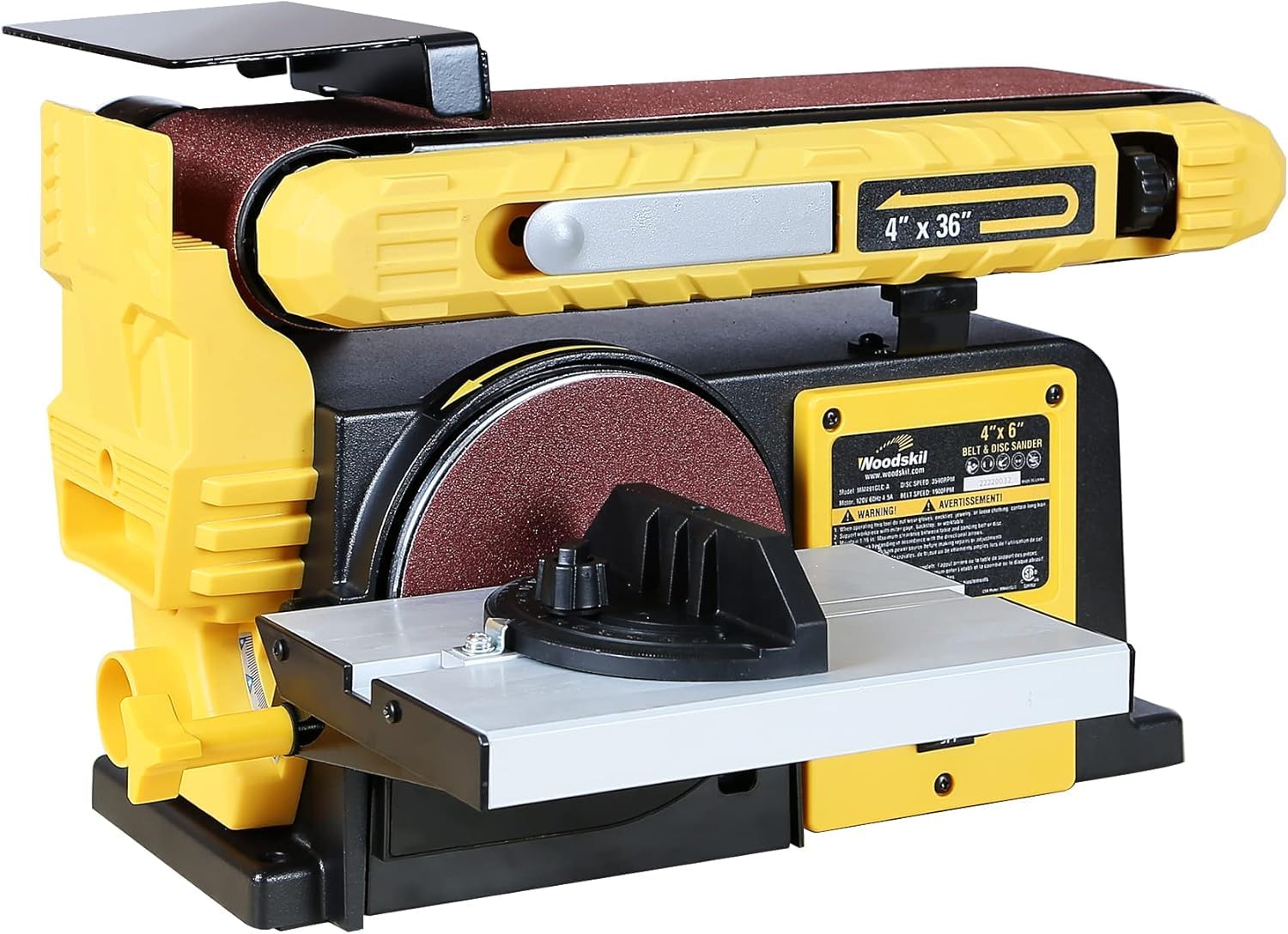
Woodskil 4x36/6 Disc

88 /100
Craft Score Excellent

Key details

Belt Size
4 x 36 in.
Disc Diameter
6 in.
Motor & Drive
4.5A, direct-drive
Table Material
Aluminum
View on Amazon

The Woodskil delivers decent power for light sanding tasks with its direct-drive motor, handling 4x36 belts and 6-inch discs. However, the disc relies on adhesive backing (no hook-and-loop), making changes messy, and the belt tension is non-adjustable, which can lead to occasional slippage. These compromises push it behind the smoother experience of similarly priced WEN and Bucktool models, making it best for occasional use where disc swaps are rare.

Pros

  • Direct-drive motor provides consistent power for light to medium sanding without bogging down.
  • Belt changes are quick and tracking adjusts easily.

Cons

  • Belt tension is fixed, which can cause slippage during heavy passes.
  • Disc uses adhesive backing only, making grit changes messy and inconvenient.
Our verdict

Suited for budget-conscious hobbyists who do occasional sanding and don't mind the adhesive disc routine.

Check Latest Price
8

Light DIY

SKIL BB9504-00 4.5A

90 /100
Craft Score Outstanding

Key details

Belt Size
Disc Diameter
6 in.
Motor & Drive
4.5A, induction belt-drive
Table Material
View on Amazon

The SKIL BB9504-00 gets you sanding quickly with intuitive controls and solid performance for light tasks like shaping small pieces or smoothing edges. However, the product page omits the belt dimensions (likely 4x36, but unconfirmed), which creates uncertainty for replacement belt orders. The miter gauge also feels light-duty and requires careful technique for accurate angle work. These gaps make this sander better suited for casual use rather than as a primary shop tool, especially compared to the more fully specified WEN 6502T at a similar price.

Pros

  • Works well for light to medium DIY sanding tasks right out of the box.
  • Quick assembly and intuitive controls make it easy to start using.

Cons

  • Miter gauge feels flimsy and takes practice to use for precise angle work.
  • Belt dimensions are not listed on the product page, causing confusion for replacement belt purchases.
Our verdict

Consider the SKIL if you need a simple, occasional-use sander and don't rely on the miter gauge for accuracy, but the WEN 6502T provides a clearer specification and sturdier build for nearly the same money.

Check Latest Price

How to Choose

Belt Size

Belt width and length determine the largest workpiece you can sand. A 4-inch-wide belt handles narrow boards and edge work, while a 1-inch belt is only practical for small parts like knife blades and model pieces. The 30-inch belt length on compact models restricts you to items under about 3 inches of clearance — fine for sharpening but frustrating for longer stock.

If you sand furniture parts or panels, stick with a 4x36 belt. For dedicated small-parts work, the 1x30 is lighter and cheaper but limits your future options.

Disc Diameter

A larger disc gives more surface area for flattening and shaping without stopping to reposition the workpiece. An 8-inch disc removes material faster and stays cooler than a 5- or 6-inch disc under the same load. The trade-off is that larger discs require more powerful motors to avoid bogging down, and they take up more bench space.

For general shop use, 6 inches is adequate for most tasks. Choose 8 inches if you frequently sand wider surfaces or want to save time on flat work.

Motor & Drive Type

Belt-drive motors use a separate belt to spin the drum, adding a wear item and noise. Direct-drive motors eliminate that belt, reducing maintenance and running quieter — but they can still overheat if undersized for the disc. A 4.5A direct-drive motor is fine for intermittent use on softwoods; heavy sanding on hardwoods or steel calls for at least 5A.

Check if the motor has thermal overload protection. Units that lack it (common on budget models) are more likely to burn out if you push them continuously.

Table Quality

Cast iron tables are flat, stable, and stay true over time. Cast aluminum is lighter but can warp slightly during casting, leading to uneven surfaces that require shimming. Plastic or thin sheet-metal tables flex under pressure, making accurate 90-degree cuts impossible.

For precision work like squaring stock or making miter cuts, a cast iron or properly ground aluminum table is non-negotiable. Budget models often skip this detail — check reviews for flatness complaints.

Dust Collection

All combo sanders produce fine dust that quickly clogs the shop. A 2.5-inch port matches standard shop-vac hoses, while smaller 1-inch ports restrict airflow and require constant cleaning. Some units include two ports — one for the belt, one for the disc — which is convenient but adds setup time.

If you work without a dust collector, look for a model with a wide port and easy-access dust tray. Models with poor dust management will coat your bench in fine powder within minutes.

Frequently Asked Questions