8 Best Exterior Wood Filler 2026: Epoxies That Outlast the Elements

Which exterior wood fillers actually withstand rain, sun, and rot—and why two-part epoxies are the only reliable choice for permanent outdoor repairs.

Water-based wood fillers are cheap and easy, so it's tempting to grab one for a rotting window sill. But a single season of rain and sun is often enough to shrink, crack, and fall out – leaving you with a bigger repair than before. The packaging says 'outdoor,' but the chemistry rarely backs it up.

Two-part epoxy fillers and putties, while messier to apply, form a permanent structural patch that moves with the wood through freeze-thaw cycles and won't absorb moisture. This guide focuses on the exterior epoxies that stand up to years of weather, and flags the pre-mixed tubs that dry out before they even bond. The right epoxy turns a crumbling jamb into a solid, paintable surface that lasts – but only if you match the product to the job.

1

Best Overall for Exterior Wood Repair

PC-Woody Epoxy Paste

92 /100
Craft Score Outstanding

Key details

Material
Epoxy paste
Sandability/Finish
Sands/stains well
Working Time & Cure
Extended work time
Mixing & Application
1:1 paste mix
View on Amazon

This two-part epoxy rebuilds rotted exterior wood with structural strength that outlasts the original. It fills deep cavities in window sills, door frames, and deck posts, curing to a dense, weather-resistant solid that stays intact through freeze-thaw cycles and seasonal expansion. Once cured, it sands evenly and accepts solid stain, blending with the surrounding grain.

The consistency is a deliberate tradeoff for that tenacious bond — the mixture is extremely tacky, clinging to tools and gloves. Smoothing the surface requires acetone or mineral spirits; water just spreads the mess. The payoff is a repair that stays put even on vertical or overhead surfaces.

This filler is for homeowners repairing rotted window sills, deck posts, and exterior door frames who prioritize permanent structural strength and are willing to work with a sticky paste. The epoxy is extraordinarily sticky — smoothing requires acetone — and it is not suited for small cosmetic patches where a simple putty stick would suffice, or for anyone seeking a mess-free experience.

💡 Keep acetone or mineral spirits nearby to smooth the surface before it cures; water alone won't tame the tack.

Pros

  • Outstanding structural strength for exterior wood rot repairs
  • Excellent weather and water resistance, stays solid through seasons
  • Sands and stains well once cured, blending with surrounding wood

Cons

  • Extremely tacky consistency makes tools and gloves a mess; smoothing requires acetone or mineral spirits
Our verdict

For exterior rot repairs that must survive seasons of weather, this epoxy paste delivers permanent strength — as long as you're prepared for a sticky application that demands solvent cleanup.

Check Latest Price
2

Best Low-VOC, Eco-Friendly Filler

Abatron WoodEpox, 12 oz

90 /100
Craft Score Outstanding

Key details

Material
Epoxy putty
Sandability/Finish
Sands/paints smoothly
Working Time & Cure
2 hr full cure
Mixing & Application
Hand-kneadable putty
View on Amazon

Where the top pick's sticky paste demands acetone cleanup, Abatron WoodEpox works like dough — you can hand-mold it to rebuild intricate rosettes or curved moldings without tools. Soap-and-water cleanup before curing and a near-zero VOC, low-odor formula make it the less toxic option for enclosed spaces and indoor use. The cured putty sands and accepts paint like original wood, so finished repairs blend in seamlessly.

It is the right choice for restoring painted exterior wood on older homes: window sills, door jambs, fascia, and decorative trim where air quality is a concern. The epoxy can struggle to bond to pressure-treated lumber or dense tropical woods without a primer coat, so skip it for PT decking or plan on thorough surface prep. For historic woodwork that demands sculptability and low toxicity, it is a cleaner fit.

Pros

  • Moldable consistency allows hand-shaping of detailed wood profiles without tools.
  • Sands and paints smoothly after curing for an invisible repair.
  • Low-odor, near-zero VOC formula safe for indoor and enclosed spaces.

Cons

No notable drawbacks to flag.

Our verdict

For historic exterior woodwork where hand-sculpting and low toxicity matter more than universal adhesion, this putty earns its place.

Check Latest Price
3

Best for Fast, Paintable Exterior Patches

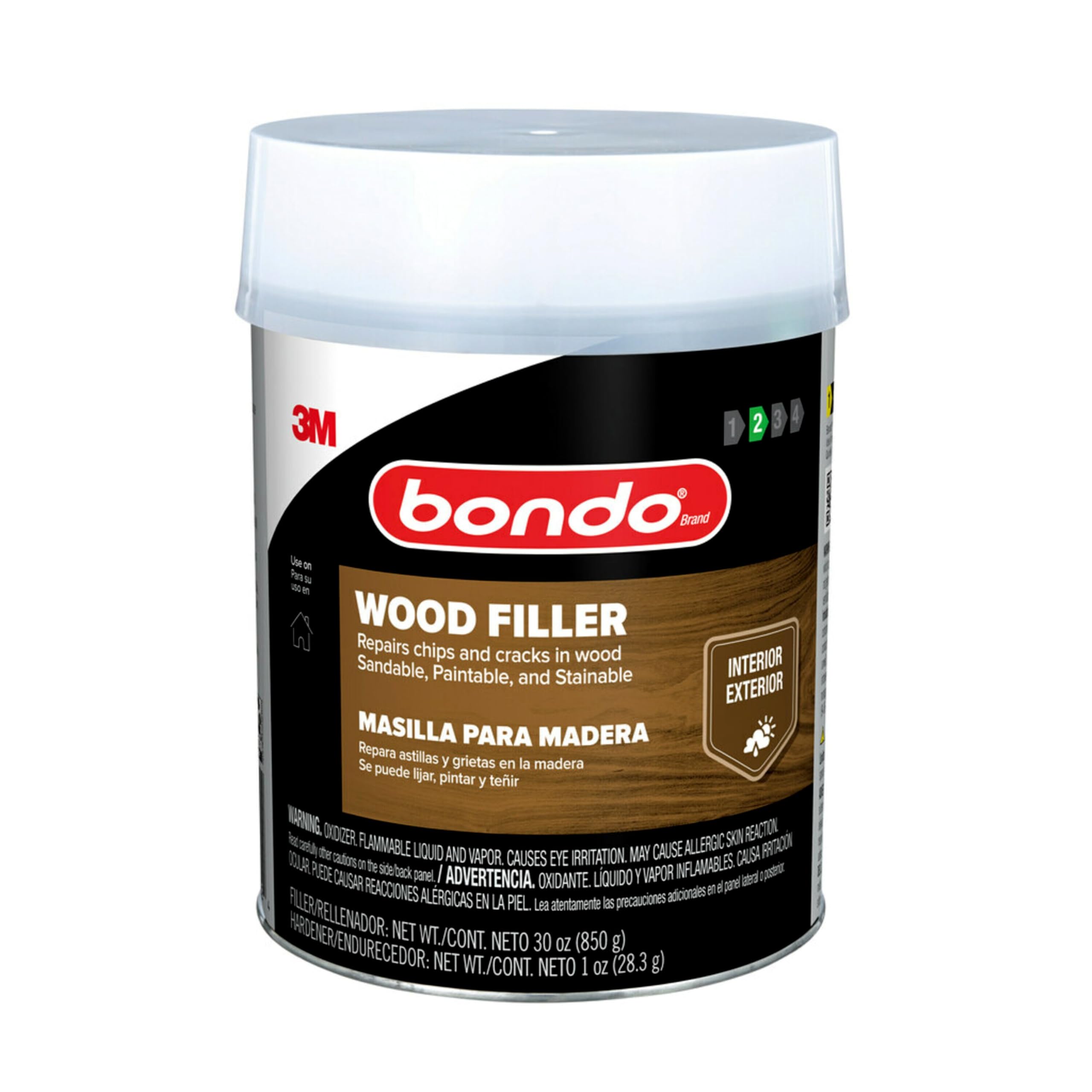
3M Bondo Wood Filler, 30 oz

92 /100
Craft Score Outstanding

Key details

Material
Polyester resin
Sandability/Finish
Feather-flat sanding
Working Time & Cure
Sands in 15 min
Mixing & Application
Two-part cream hardener
View on Amazon

Unlike two-part epoxy pastes that require lengthy curing, this polyester filler is sandable within 15 minutes, a huge benefit when you need to paint exterior trim the same day. The chemistry is identical to automotive Bondo, producing a hard, impervious patch that bonds tightly to wood and resists water. Once cured, it won't shrink or crack, ensuring paint adhesion through seasonal expansion and contraction.

The working window, however, is extremely short — you'll mix pea-sized amounts and must shape each patch within a minute or two, especially in warm weather. This makes filling a long rotted sill unrealistic, but suits localized chips and cracks on painted fascia, window sills, and door frames. Experienced DIYers who can work quickly and don't need stain-grade results will value the speed. If you're rebuilding large sections of rotted wood, opt for a slower-setting structural epoxy that gives you time to sculpt.

💡 Work in the shade and mix only what you can apply in under a minute — pea-sized amounts for nail holes, dime-sized for shallow dents.

Pros

  • Sands to a feather edge within 15 minutes, enabling same-day primer and paint.
  • Creates a hard, durable patch that bonds tightly to wood for exterior trim that resists moisture.
  • Cures to a non-shrinking surface that can be shaped and painted like automotive filler.

Cons

  • Filling a long crack means mixing several pea-sized batches, which slows progress.
Our verdict

For exterior trim that needs a quick, paintable patch before the next rain, this filler's 15-minute sandability is hard to beat. Skip it for large rot rebuilds where a longer open time gives you room to work.

Check Latest Price
4

Best Budget Pre-Mixed Filler (If You Get a Good Tub)

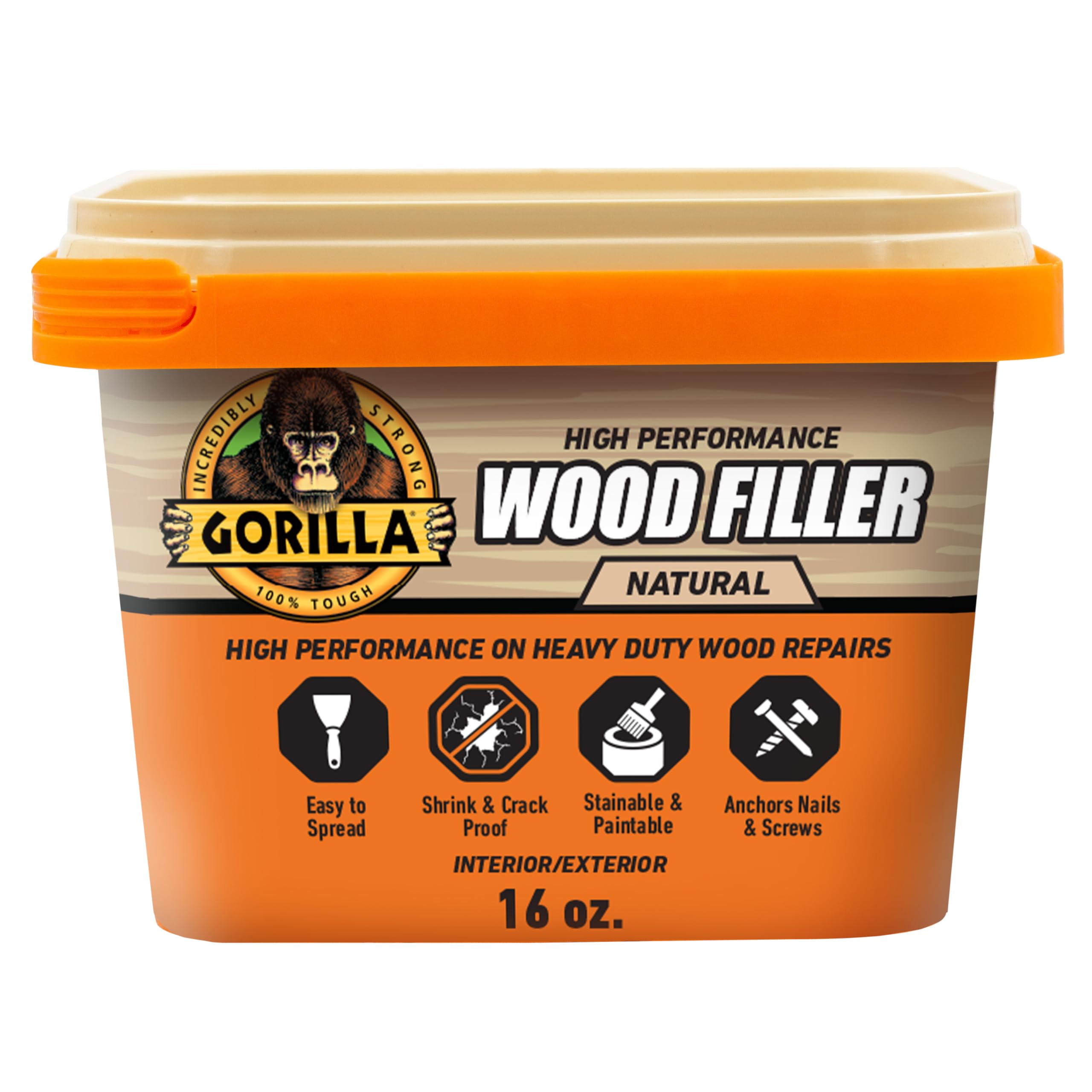
Gorilla Wood Filler, 16 oz

89 /100
Craft Score Excellent

Key details

Material
Acrylic
Sandability/Finish
Sands smoothly
Working Time & Cure
Open work time
Mixing & Application
Pre-mixed paste
View on Amazon

Unlike two-part epoxies that demand careful mixing, this pre-mixed acrylic filler spreads straight from the tub after a quick stir. It adheres well to bare wood and dries hard enough for sanding within an hour. The sanded surface takes paint and stain smoothly, helping blend patches into existing trim without obvious transitions. A water-resistant formulation adds a layer of protection for exterior surfaces that see occasional rain but aren't constantly soaked.

It's best suited for quick, non-structural exterior patches like nail holes, dents, and small cracks on fascias or window casings. Be prepared for the tub to arrive on the dry side — kneading in a splash of water typically restores its spreadable consistency. At a budget-friendly price, it's a practical pick for light maintenance jobs, but for structural rot repair or areas that stay wet for hours, a two-part epoxy holds up far better.

Pros

  • Spreads and shapes easily for filling nail holes and minor cracks
  • Sands to a smooth, paint-ready finish without gumming up
  • Water-resistant once dry, suitable for light outdoor exposure

Cons

No notable drawbacks to flag.

Our verdict

For small exterior touch-ups where sanding ease matters more than structural strength, this filler does the job at a fraction of epoxy costs — just expect to rehydrate it before use.

Check Latest Price
5

Best Pocket-Sized Putty Stick for Tiny Fixes

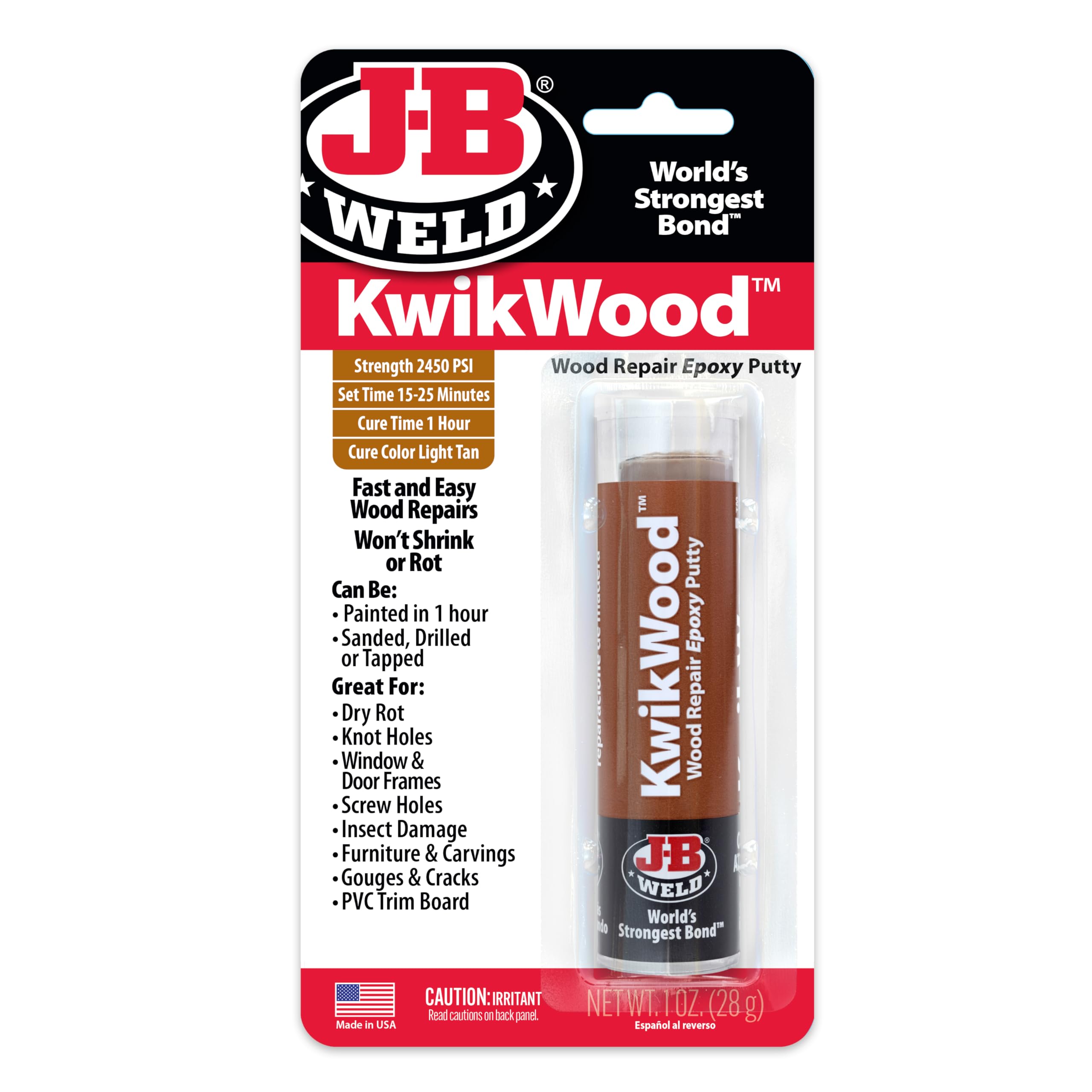
J-B Weld KwikWood Epoxy Putty

91 /100
Craft Score Outstanding

Key details

Material
Epoxy stick
Sandability/Finish
Sands/drills well
Working Time & Cure
15-25 min work
Mixing & Application
Hand-knead stick
View on Amazon

Unlike syringe-style epoxies that dispense liquid, this putty stick kneads by hand for instant shaping — no mixing board required. It fills nail holes, gouges, and small rot spots in exterior wood quickly, then cures to a tough, sandable solid in under an hour. The cured material holds screws and takes paint well, making it a practical pick for painted trim repairs.

The tradeoff is working time: the compound can set up in as little as 15 minutes, and in warm weather it may harden before you finish shaping. This makes it best for small, fast repairs rather than large rot reconstruction. If you need a filler that can be sculpted slowly, the top pick's longer open time is the better match.

💡 Work in small batches and cool the putty stick in the refrigerator for a few minutes before mixing to extend the working window in hot weather.

Pros

  • Strong, durable repairs for small exterior wood damage
  • Easy to mix and mold by hand, no tools required
  • Sands and drills well after curing

Cons

  • Working time can be short; it may set before shaping is complete, especially in warm weather
Our verdict

For painted exterior trim that needs a quick fill before the paintbrush moves on, this putty stick is a convenient, no-mess option. Accept the fast set as the price of speed, and keep the top pick epoxy on hand for jobs that demand more sculpting time.

Check Latest Price
6

Best Complete System for Severely Rotted Wood

Abatron Restoration Kit

89 /100
Craft Score Excellent

Key details

Material
Epoxy liquid+putty
Sandability/Finish
Sands/paints
Working Time & Cure
Liquid cures hours
Mixing & Application
Two-step: hardener+putty
View on Amazon

Unlike single-paste epoxy fillers that rebuild rotted areas from the surface, this kit treats the problem at its root. The liquid hardener soaks into degraded wood, solidifying friable fibers, while the WoodEpox filler sculpts the missing section into a waterproof, paintable repair.

This dual-step system is for exterior elements with deep rot — porch columns, window sills, and door frames that would otherwise need replacement. The cost is high, so it's a restoration investment rather than a casual patch. The hardener may remain tacky in humid conditions, making a longer wait time part of the process; plan for that and the full cure will deliver a durable, exterior-grade result.

💡 In humid weather, extend the liquid hardener's cure time before applying filler — wait until it's no longer tacky to the touch.

Pros

  • Liquid hardener penetrates and reinforces rotted wood, restoring structural integrity without replacement.
  • Mixed WoodEpox filler sands easily, creating a smooth, waterproof, and durable finish.
  • Low-VOC, GREENGUARD-certified formula, suitable for use around living spaces.

Cons

  • Premium price places it out of reach for minor repairs; cost-effective only when wood replacement is the alternative.
Our verdict

For severe exterior wood rot where preserving the original material is a priority, this kit provides the most complete repair system available. It's worth the investment if you can accommodate a possible delay from humidity and the higher cost.

Check Latest Price
7

Simple Painted Repairs

Durham's Rockhard Putty

90 /100
Craft Score Outstanding

Key details

Material
Gypsum powder
Sandability/Finish
Hard to sand
Working Time & Cure
Mixing & Application
Mix with water
View on Amazon

Durham's Rockhard Putty mixes instantly with water to a trowelable or pourable consistency, then cures to a durable, rock-hard fill that accepts paint well. The tradeoff: once set, it is extremely difficult to sand, so overfilling can be hard to correct. The gypsum-based formula is water resistant, but not waterproof — prolonged outdoor exposure to standing moisture or freeze-thaw cycles can degrade the fill over time.

💡 To avoid difficult sanding, fill slightly below the surface and build up in thin layers — this putty dries rock-hard and resists abrasion.

Pros

  • Mixes instantly with water to any desired consistency
  • Dries extremely hard and durable for a powder filler.

Cons

  • Gypsum base provides moderate water resistance and may not withstand prolonged outdoor moisture or freeze-thaw cycles.
Our verdict

If you need an inexpensive filler for occasional exterior patches where it will be painted and not exposed to standing water, this powder is a durable option — just plan your sanding carefully.

Check Latest Price
8

Micro-Crack Filling

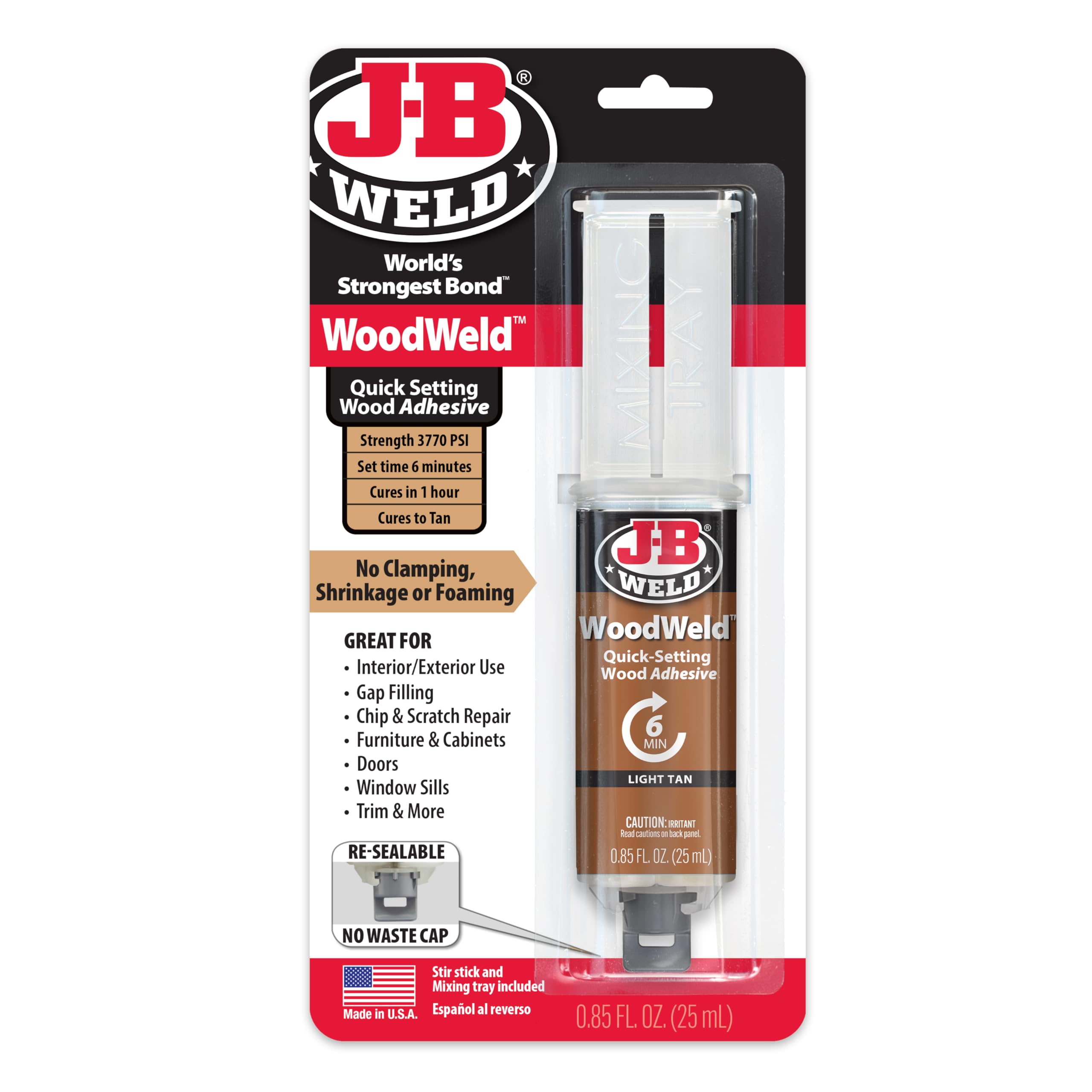
J-B WoodWeld Syringe

90 /100
Craft Score Outstanding

Key details

Material
Epoxy syringe
Sandability/Finish
Working Time & Cure
6 min set
Mixing & Application
Syringe dispenser
View on Amazon

The syringe format delivers epoxy right into hairline cracks with minimal waste, and the 6-minute set time lets you work quickly on multiple small spots. However, curing can be inconsistent between batches — some repairs remain soft or tacky rather than hardening fully. For outdoor fill jobs where a hard, sandable patch is required, that uncertainty makes this a secondary option behind more robust two-part epoxy pastes.

Pros

  • Syringe delivery gives pinpoint control for narrow cracks and small fill areas.
  • Fast 6-minute set time allows quick turnaround on minor repairs.

Cons

  • In some cases, epoxy cures soft or remains tacky, leaving a patch that can't be sanded or painted effectively.
Our verdict

Keep this syringe on hand for bonding minor interior wood splits or filling tiny exterior checks where a soft patch won't be a problem, but rely on a more dependable epoxy filler for anything structural or weather-exposed.

Check Latest Price

How to Choose

Material Chemistry

Two-part epoxies, whether paste or putty, chemically react to form a water-impermeable solid that bonds to wood fibers. Acrylics and gypsum fillers cure by evaporation, leaving microscopic pores that wick moisture and lead to expansion cracking.

For any repair that will face rain or freeze-thaw cycles, epoxy is the only material that won't fail within a year. Water-based fillers may work for indoor trim or light cosmetic patches, but outdoors they're a gamble even when labeled 'exterior.'

Working Time and Cure Speed

Fast-cure fillers like Bondo let you sand and paint in 15 minutes, but that same speed means you must mix and apply in small batches—often before the product hardens on the mixing board. Slower epoxies like PC-Woody give you an extended working window to shape complex profiles, then set up hard overnight.

If you're patching nail holes or hairline cracks, a short working time isn't a problem. But rebuilding a rotten section of a door jamb requires enough open time to mold and tool the repair. Choose based on the size and complexity of the job, not the label's convenience claim.

Sandability and Finish

Most epoxies sand to a smooth, paintable surface, but stain acceptance is inconsistent. The pigment and binder that make the filler waterproof often reject wood stain, leaving a blotchy patch even when the tub says 'stainable.'

If you want an invisible repair on natural wood, plan to paint rather than stain. Only a few high-end epoxies are known to take solid-body stains well, and even then, test on scrap first.

Ease of Mixing and Application

Hand-kneadable putty sticks like KwikWood require no tools and are ideal for quick fills, but they set rapidly and can't be troweled into large areas. Two-part pastes mixed on a board give you more control but are notoriously sticky—using a clear release like acetone and a dedicated metal spatula helps.

Pre-mixed tubs seem easiest, but many arrive dried out and need to be revived with water, which weakens the final bond. If you want consistent results, a two-part system is worth the extra step.

Water Resistance and Durability

Water resistance ratings vary; 'water resistant' means splashes won't harm the cured repair, but prolonged immersion can soften it. For ground-contact posts or deck ledger repairs, look for 'waterproof' or at least UV-resistant formulations.

Even the best epoxy will fail if applied over punky, unsound wood. The filler must bond to solid fibers, so remove all rot before filling.

Frequently Asked Questions