12 Best Miter Saw Blade of 2026: Find the Right Tooth Count for Clean Cuts

Which miter saw blade gives you the cleanest cuts without overspending? This guide helps you choose between 40, 60, 80 or 100 teeth for your woodworking projects.

Stock miter saw blades often leave rough edges or burn wood, forcing extra sanding or recuts. Many DIYers assume more teeth always mean smoother cuts, but higher tooth counts can burn hardwoods if feed speed isn’t matched.

The real trick is matching tooth count and kerf to your material and saw power. A 60-tooth blade with thin kerf handles most trim and crosscuts without bogging down, while ultra-fine 80- and 90-tooth blades excel on cabinet work but need careful feeding.

This guide cuts through the specs to find the blade that delivers glassy cuts without emptying your wallet, focusing on the trade-offs that matter most in the workshop.

1

Best Overall

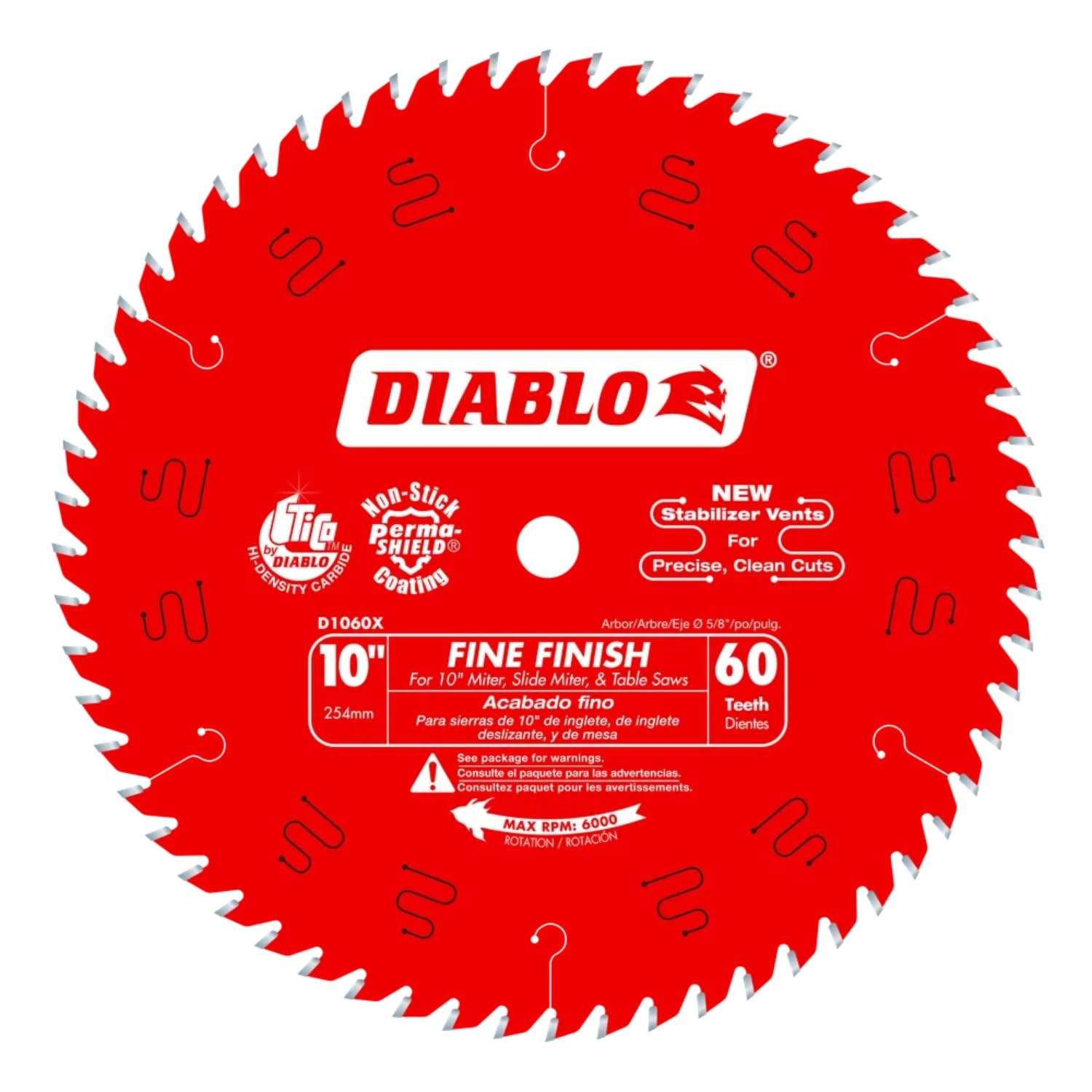
Diablo D1060X 10" 60T

96 /100
Craft Score Outstanding

Key details

Kerf
0.098"
Arbor
5/8"
Teeth
60
Diameter
10"
View on Amazon

The 60-tooth Hi-ATB grind on this Diablo blade produces clean crosscuts with minimal tear-out across a range of materials, from softwoods to dense hardwoods. The .098-inch kerf reduces motor strain, making it a solid upgrade for miter saws with limited power.

Edge life holds up through extended use, with the Perma-Shield non-stick coating reducing resin buildup during cuts. The carbide tips stay sharp through frequent cutting, and the balanced plate minimizes vibration at the miter saw.

This blade suits finish carpenters and DIYers upgrading from stock blades who need clean cuts on hardwood trim and plywood. The red Perma-Shield coating can transfer onto light-colored wood in some cases -- a cosmetic issue that does not affect cut quality and is less noticeable on darker stock. For ripping operations, a lower tooth count blade is more appropriate.

💡 Wiping the blade clean after each use prevents red coating transfer onto light-colored wood.

Pros

  • Exceptional cut quality with minimal tear-out on hardwoods and softwoods.
  • Long-lasting sharpness holds edge through extensive use on dense materials.
  • Thin kerf reduces motor drag and waste, suitable for lower-powered saws.

Cons

  • On light-colored wood, red coating transfer may appear -- a cosmetic issue only.
Our verdict

For woodworkers wanting a 10-inch finish blade that balances cut smoothness, edge life, and price, the D1060X is a sensible upgrade over stock blades for both pros and serious DIYers.

Check Latest Price
2

Best for Ultimate Smoothness

Makita A-93681 10" 80T

95 /100
Craft Score Outstanding

Key details

Kerf
0.07"
Arbor
5/8"
Teeth
80
Diameter
10"
View on Amazon

The Makita A-93681 uses a micro-polished ATAF grind that leaves hardwoods with a mirror-like surface – cuts that require little to no sanding. Where the top pick balances finish and versatility, this blade prioritizes pure cut quality at the expense of noise and price.

This blade suits finish carpenters and trim installers who need glass-smooth results on crosscuts and miter joints. The tradeoff is a higher-pitched whine during operation – more audible than Diablo alternatives in quiet workshop settings.

Pros

  • Produces burn-free cuts with a mirror finish on hardwoods.
  • Holds sharpness through extended use on dense materials.
  • Delivers clean, splinter-free cuts on trim and molding.

Cons

No notable drawbacks to flag.

Our verdict

For professionals who prioritize cut quality above all else, the Makita delivers the smoothest finish in this category – the noise is a minor compromise in a typical shop.

Check Latest Price
3

Best for 12-Inch Saw Owners

Diablo D1260X 12" 60T

94 /100
Craft Score Outstanding

Key details

Kerf
0.118"
Arbor
1"
Teeth
60
Diameter
12"
View on Amazon

Combination tooth geometry on this 12-inch blade delivers clean rips and crosscuts with a notably quieter operation than many competing blades. The 60-tooth count balances cutting speed and finish quality, while the Perma-Shield coating reduces gumming and helps maintain edge sharpness over extended use.

Best suited for carpenters with 12-inch miter saws who want a single do-it-all blade for job site work — the thicker 0.118-inch kerf creates more sawdust and requires more power, so it's less ideal for thin-kerf enthusiasts or users with underpowered saws.

💡 Expect more sawdust than with thin-kerf blades; a dust collection system helps keep the workspace clear.

Pros

  • Combination teeth deliver smooth cuts in both ripping and crosscutting operations.
  • Noticeably quieter operation than many competing blades during use.
  • Perma-Shield coating resists gumming and helps the blade stay sharp longer.

Cons

  • Thicker 0.118-inch kerf creates more waste and requires more saw power than ultra-thin blades.
Our verdict

For 12-inch miter saw owners who want a quiet, do-it-all blade without switching between specialized cutters, this Diablo handles the range well — just account for the extra sawdust and power draw.

Check Latest Price
4

Best Budget Buy

WEN BL1060 10" 60T

94 /100
Craft Score Outstanding

Key details

Kerf
0.1"
Arbor
5/8"
Teeth
60
Diameter
10"
View on Amazon

This WEN BL1060 delivers smooth, splinter-free cuts on trim and hardwoods right out of the box, rivaling premium 60-tooth blades in finish quality at a fraction of the price. While WEN's own 80-tooth blade can produce even finer results on laminates, this 60-tooth version balances speed and smoothness better for most miter saw tasks.

Edge retention is the main compromise: the blade dulls faster on hardwoods than premium options like Diablo or Makita, making it best suited for occasional use rather than daily professional work.

This blade fits budget-conscious DIYers who need a clean cut for trim, baseboards, or small projects. It also works well as a spare blade to keep on hand, given its low cost. Avoid it if you cut hardwoods regularly or demand pro-level longevity.

💡 If you notice vibration, check the arbor alignment and ensure the blade is seated flat — most units run smoothly after confirming proper installation.

Pros

  • Cuts trim and hardwoods with a smooth finish that rivals premium blades at a much lower price.
  • More affordable than sharpening an old blade
  • Sharp from the factory and performs well on both miter and table saws.

Cons

  • Balance may vary between units, causing occasional vibration on finish cuts.
Our verdict

For the DIYer who values cut quality over long-term durability, this blade offers an exceptional cost-to-performance ratio. Keep it for light trim work and treat hardwoods carefully.

Check Latest Price
5

Best for Cabinet Makers

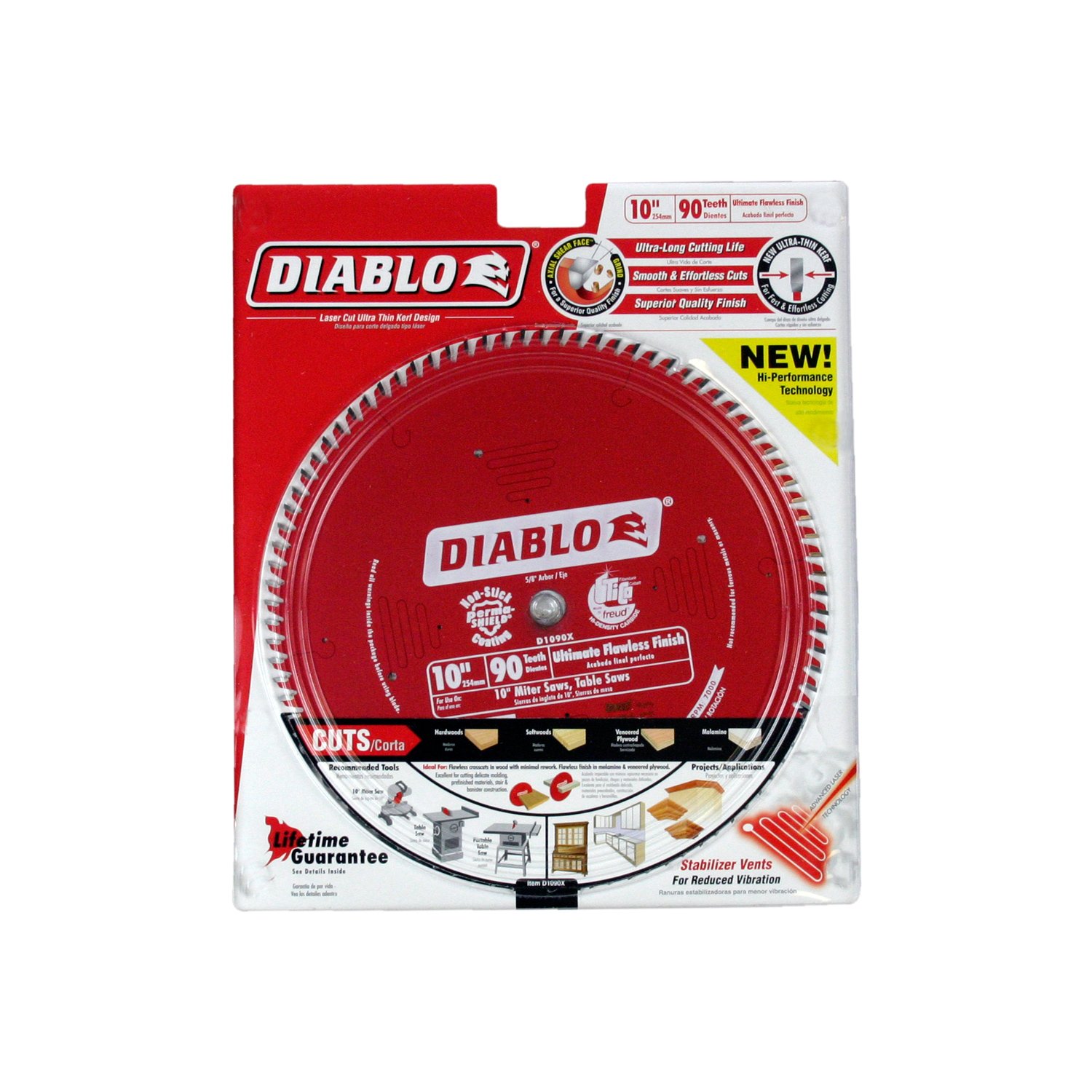
Diablo D1090X 10" 90T

95 /100
Craft Score Outstanding

Key details

Kerf
0.087"
Arbor
5/8"
Teeth
90
Diameter
10"
View on Amazon

The Diablo D1090X trades speed for finish, using 90 teeth to produce cuts that feel like 220-grit sandpaper. Where the 60-tooth D1060X balances versatility, this blade focuses entirely on polished crosscuts. The ultra-thin kerf and high tooth count require a patient feed rate — rushing can produce tear-out on softwoods.

This blade suits cabinet makers and furniture builders who want glue-ready joints without sanding. It demands a quality miter saw and careful technique — not for ripping or heavy framing.

💡 Feed the blade slowly through the cut, especially on softwoods — letting the teeth do the work prevents tear-out.

Pros

  • Cuts equivalent to 220-grit sandpaper, eliminating sanding on hardwoods.
  • TiCo carbide holds sharpness longer than many premium blades.
  • Glue-ready crosscuts on plywood and hardwoods with minimal splintering.

Cons

  • High tooth count requires slower feed rates; softwoods may tear out if rushed.
  • Anti-vibration slots appear decorative rather than functional on some units.
Our verdict

A specialized finish blade for woodworkers who demand sanding-free cuts — best paired with a high-quality miter saw and controlled feed technique.

Check Latest Price
6

Best 2-Blade Set

WEN BL1032-2 2-Pack

93 /100
Craft Score Outstanding

Key details

Kerf
0.1"
Arbor
5/8"
Teeth
32+60
Diameter
10"
View on Amazon

The WEN BL1032-2 two-pack pairs a 32T general-purpose blade with a 60T finish blade, covering rough rips and clean crosscuts on softwoods and plywood. Both blades cut cleanly with minimal tear-out and come sharp enough for immediate use. The 0.1-inch thin kerf reduces motor strain, and the 5/8-inch arbor fits most 10-inch miter saws.

Some units may arrive out of balance, causing vibration — a known QC variance that makes this set better suited for budget-minded hobbyists and as a spare job-site blade rather than daily heavy hardwood cutting. For occasional DIY projects and mixed material cuts, the value of two blades in one package outweighs the risk for most users.

Pros

  • Two-blade set covers both ripping and finish cuts at a price lower than many single premium blades.
  • Produces clean cuts on softwoods and plywood with no wobble on properly balanced units.
  • Sharp out of box and holds edge reasonably for occasional use.

Cons

  • The 60T blade may dull faster on hardwoods compared to premium finish blades.
Our verdict

A practical choice for DIYers who want both a ripping and finish blade without spending twice. The QC gamble on balance is real, but for light use the set delivers genuine value.

Check Latest Price
7

Everyday Carpentry

Diablo D1040X 10" 40T

94 /100
Craft Score Outstanding

Key details

Kerf
Super thin
Arbor
5/8"
Teeth
40
Diameter
10"
View on Amazon

This 40-tooth blade delivers clean cuts on both rip and crosscut applications with noticeably less noise than typical stock blades. The Perma-Shield coating and laser-cut kerf help maintain consistent performance over time. At its price point, it rivals blades costing significantly more. For fine finish work on hardwoods, a 60-tooth blade will produce a smoother surface, so this blade is best suited for everyday carpentry and remodeling where absolute smoothness is not required.

Pros

  • Quiet operation
  • Cost-effective alternative that performs as well as many pricier options.

Cons

  • On hardwoods, the 40-tooth configuration leaves a slightly rougher surface than a 60-tooth blade would for fine finish work.
Our verdict

Ideal for DIYers who want a quiet, cost-effective upgrade from a stock blade for general carpentry and remodeling.

Check Latest Price
8

DIYers Smooth Cuts

WEN BL1080 10" 80T

93 /100
Craft Score Outstanding

Key details

Kerf
0.1"
Arbor
5/8"
Teeth
80
Diameter
10"
View on Amazon

This 80-tooth blade delivers clean, tear-out-free cuts on plywood and trim, rivaling blades that cost several times more. However, it's built for occasional use rather than daily professional work — its limitations become apparent under sustained heavy cutting or demanding hardwoods. For the DIYer who needs a spare blade for trim and sheet goods, this is a smart pick; for pros needing consistent performance, a premium blade is worth the investment.

Pros

  • Delivers near-premium finish on plywood and trim at a budget-friendly price.
  • Great value for occasional fine woodworking projects.

Cons

  • Balance can vary between units, with some users experiencing vibration during cuts.
  • Edge life on hardwoods is shorter than premium blades, dulling faster under heavy use.
Our verdict

Best suited for DIYers and hobbyists who need a fine-finish blade for occasional trim and plywood cuts — a cost-effective spare, not a daily driver.

Check Latest Price
9

Pro Finish Carpenters

Diablo D1280X 12" 80T

95 /100
Craft Score Outstanding

Key details

Kerf
Arbor
1"
Teeth
80
Diameter
12"
View on Amazon

This 80-tooth blade from Diablo excels on 12-inch miter saws, producing consistently smooth cuts on hardwoods and laminates for professional trim work. Its TiCo carbide holds an edge well, making it a long-lasting choice for heavy use. However, some users note red paint from the blade can transfer onto the wood during cuts — a cosmetic annoyance. This is a premium-priced blade; for 10-inch saws, the top pick D1060X delivers comparable quality at a lower cost, making the D1280X best suited for those who specifically need a 12-inch fine-finish blade.

Pros

  • Very smooth cuts on hardwoods and laminates, often leaving a nearly sanded finish.
  • Long-lasting edge retention holds up well over extended use.

Cons

  • Red paint from the blade may transfer onto wood during cuts, a cosmetic issue.
Our verdict

For professionals working with 12-inch miter saws who prioritize cut quality and durability over minor cosmetic marks, this blade delivers consistent performance.

Check Latest Price
10

DIYers 12-Inch Saw

WEN BL1280 12" 80T

93 /100
Craft Score Outstanding

Key details

Kerf
0.1"
Arbor
1"
Teeth
80
Diameter
12"
View on Amazon

The WEN BL1280 delivers clean, splinter-free cuts on softwood trim and plywood, making it a budget-friendly choice for light finish work. Its thin kerf reduces waste, but the blade's edge life is shorter on hardwoods, and some units may exhibit vibration due to balance inconsistencies. For occasional softwood projects, it provides good value; for daily hardwood cutting, consider a higher-end option.

💡 Check the blade for wobble by spinning it on the arbor before cutting; a quick inspection can identify balance issues early.

Pros

  • Smooth, clean cuts on softwoods and plywood
  • Great value for a 12-inch fine-finish blade

Cons

  • Balance inconsistencies can cause vibration in some cases
  • Edge retention is moderate; dulls faster on hardwoods than premium blades
Our verdict

For occasional softwood trim and plywood cuts, the WEN BL1280 provides clean results at a budget price — just be mindful of unit variance and avoid heavy hardwood use.

Check Latest Price
11

Extreme Budget Buyers

Revvstark 10" 80T

93 /100
Craft Score Outstanding

Key details

Kerf
Arbor
5/8"
Teeth
80
Diameter
10"
View on Amazon

This 80-tooth blade delivers smooth cuts on softwoods and plywood, and it includes bushings for wide saw compatibility - all at a price that makes it disposable for one-off projects. Hardwood users may encounter tip loss or accelerated dulling, so it's best reserved for light DIY or rough work where longevity is not a priority.

Pros

  • Cuts softwoods and plywood with a clean, smooth finish.
  • Excellent value for a blade at this price, often bought in multi-packs.

Cons

  • Carbide tips can come loose or dull quickly when cutting hardwoods.
Our verdict

A solid pick for one-off projects on softwood trim or plywood where cut quality matters more than blade longevity.

Check Latest Price
12

Light Softwood Use

Luckyway 12" 2-Pack

92 /100
Craft Score Outstanding

Key details

Kerf
0.106"
Arbor
1"
Teeth
32+80
Diameter
12"
View on Amazon

The Luckyway 12-inch set pairs a 32T general blade with an 80T finish blade at a budget-friendly price. Both cut well on softwoods and plywood. However, balance issues can cause vibration in some units, and the 80T dulls quickly on hardwoods. This QC risk puts it behind more consistent two-packs like WEN, making it suitable only for those willing to inspect each blade before use.

Pros

  • Includes two blades (32T and 80T) at a cost lower than many single premium blades.
  • Cuts softwoods and plywood cleanly out of the box.

Cons

  • Some units may have balance issues causing vibration during cuts.
  • The 80T blade's edge wears faster when cutting hardwoods.
Our verdict

Best suited for occasional softwood cuts where you can inspect the blade for balance before use; not a reliable choice for hardwood or professional work.

Check Latest Price

How to Choose

Tooth Count

Fewer teeth (24-40) remove material faster but leave a rougher surface. More teeth (60-100) produce smoother cuts but require slower feed rates to avoid burning. The 60-tooth sweet spot works for most trim and crosscuts.

For hardwoods, a 60 or 80-tooth blade with a high ATB grind reduces tear-out. For softwoods and plywood, 40 teeth are often enough. Ultra-fine 90-tooth blades can burn softwoods if pushed too fast.

Diameter

10-inch blades fit most compound miter saws and offer a wider range of affordable options. 12-inch blades provide deeper cuts for larger trim but cost more and require more power. Your saw's arbor size must match the blade's bore.

Kerf Thickness

Thin kerf blades (0.07-0.1 inches) remove less material, reducing motor strain and producing less dust. However, they can deflect on warped wood or if the saw is misaligned, leading to wavy cuts.

Standard kerf blades (0.1 inches and up) are stiffer and cut straighter on heavy stock but require more power. For underpowered saws, thin kerf is a practical upgrade.

Carbide Quality & Coating

Premium carbide (TiCo, micro-grain) holds an edge much longer than generic tungsten carbide, making it cheaper per cut over time. Non-stick coatings like Perma-Shield reduce gumming from pitch but can occasionally transfer color to wood.

Coated blades are worth the extra cost if you cut resinous softwoods or painted materials. Uncoated blades are easier to sharpen but may gum up faster.

Arbor Size

Most 10-inch blades use a 5/8-inch arbor, while 12-inch blades often use a 1-inch arbor. Always check your saw's arbor before buying. Some blades include reducing washers for compatibility, but not all.

Frequently Asked Questions