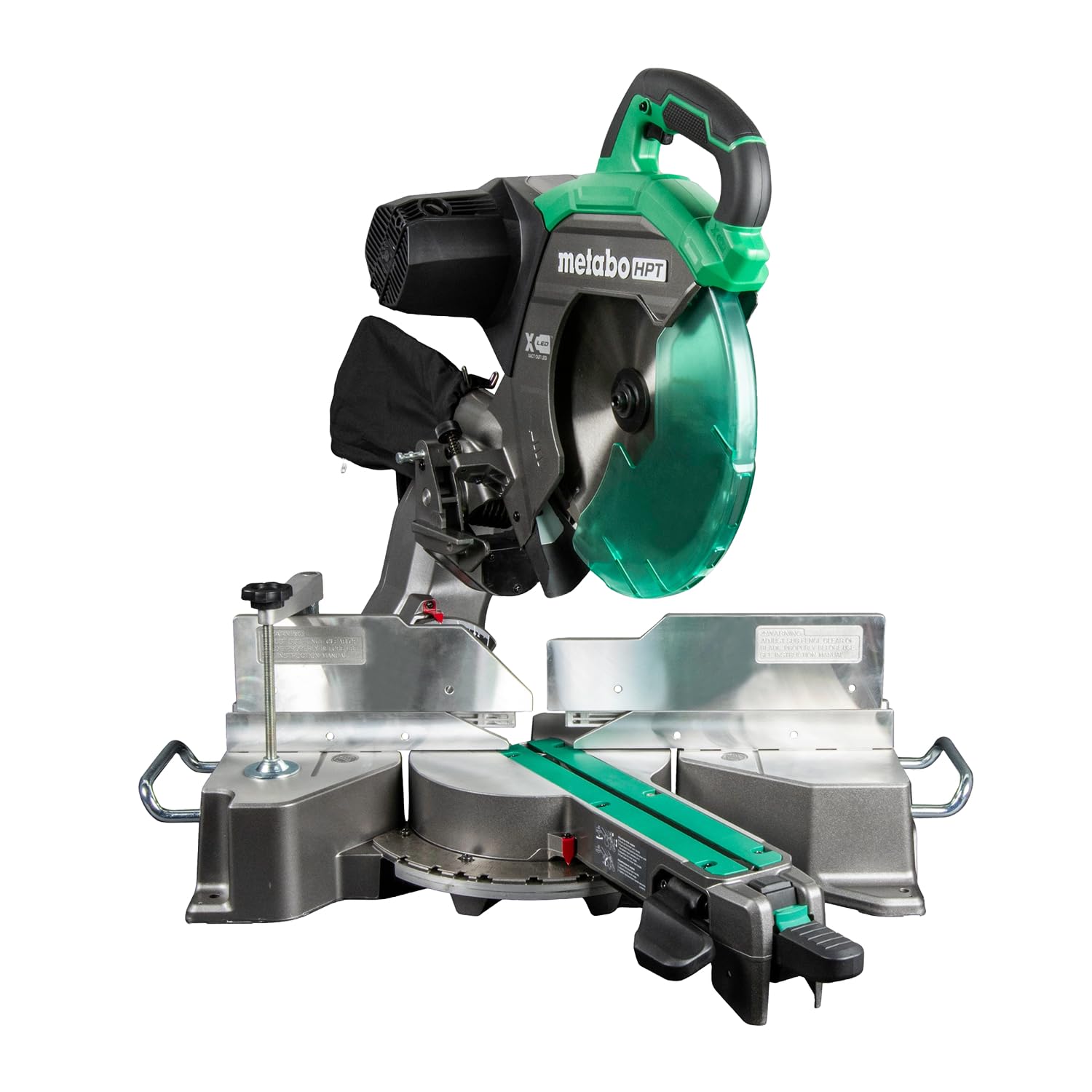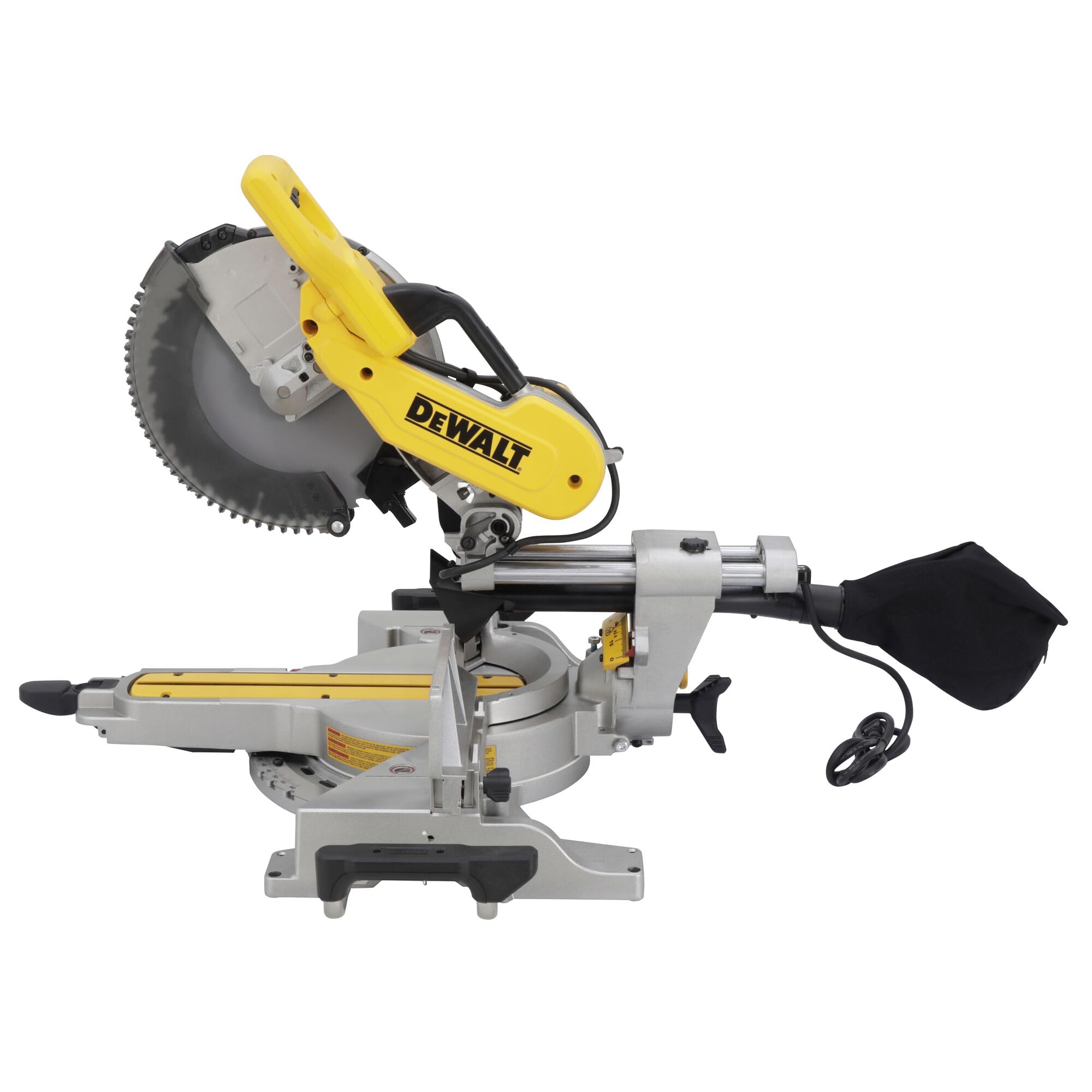
11 Best Sliding Compound Miter Saw 2026: Choose the Right Capacity

Find the best sliding compound miter saw for your woodworking projects. Learn which size, bevel type, and features matter most without overspending.

A sliding miter saw's specs can look similar on paper, but real-world performance hinges on details like rail design and dust collection. Many saws arrive with mediocre blades and require calibration before they cut true.

This guide cuts through the marketing noise to help you pick a saw that actually delivers accurate cuts out of the box—or tells you what to adjust. The right choice depends on your projects, not just the price tag.

For most DIYers, a 10-inch saw handles crown molding and trim without the weight penalty of a 12-inch. Budget for a quality blade from day one, and plan to spend 15 minutes checking squareness.

1

Best Overall

DEWALT DWS779 12"

96 /100
Craft Score Outstanding

Key details

Motor
15A 3800 RPM
Bevel Type
Dual 49°
Blade Size
12 inches
View on Amazon

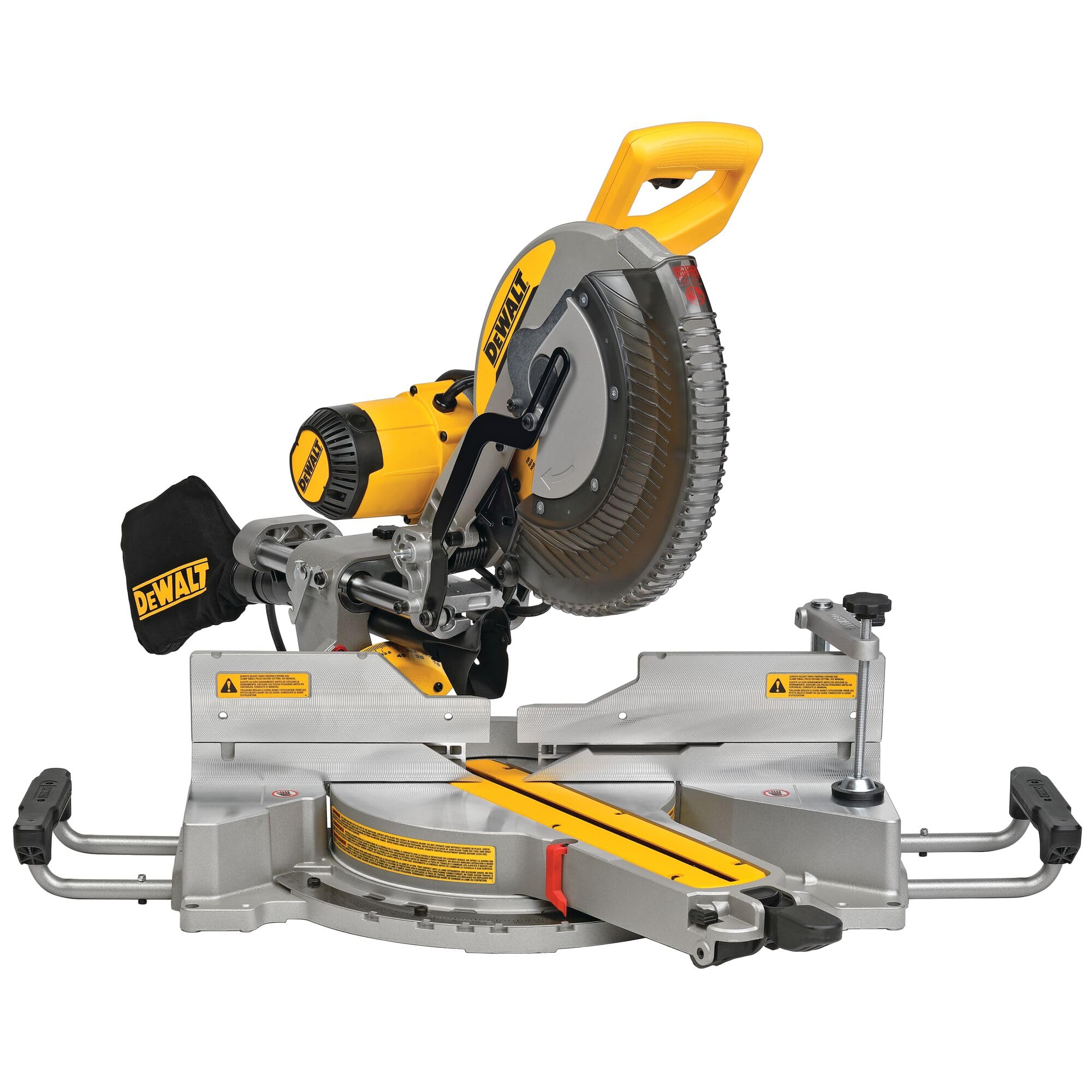
Cuts through 2x14 hardwood and dimensional lumber with ease, driven by a 15-amp motor that holds speed under load. Out-of-box accuracy is strong: 90-degree and miter stops need only light calibration to hit square cuts. The sliding rails are smooth, and the dual bevel mechanism locks securely at common angles.

This saw fits serious DIYers and professionals who keep their tools in a fixed workshop. At 67.7 pounds it demands a stand or rolling base — not a tool for daily job-site transport. The plastic rear blade guard can crack if bumped, a tradeoff common at this price tier that doesn't affect cutting performance.

💡 A metal replacement blade guard is available if the stock plastic one cracks — a simple upgrade for those who move the saw often.

Pros

  • Powerful 15-amp motor handles thick stock without bogging down.
  • Accurate miter and bevel stops out of the box with minimal adjustment.
  • Durable build holds up to regular use in a workshop setting.

Cons

  • Weighs 67.7 pounds
  • Plastic rear blade guard can crack under stress; inspect periodically.
Our verdict

For woodworkers who can keep it in one place, the DWS779 delivers professional results at a price that undercuts many 10-inch competitors.
Check Latest Price
2

Best for Precision Molding

DEWALT DWS780 12"

95 /100
Craft Score Outstanding

Key details

Motor
15A 3800 RPM
Bevel Type
Dual 49°
Blade Size
12 inches
View on Amazon

The DWS780's XPS shadow line delivers cutline visibility that stays aligned without recalibration — a genuine advantage for finish carpenters working with crown molding or detailed trim. It shares the same 15-amp motor and sliding mechanism as the top pick DWS779, so the 58-lb weight and plastic blade guard concerns carry over. This saw is best for professionals who need precise on-the-line alignment and are willing to pay the extra $100 for the XPS system. For general woodworking or DIY, the DWS779 offers the same cutting capacity at a lower price, making it the better value for most buyers.

💡 Periodically inspect the plastic blade guard for cracks — catching damage early prevents unexpected breakage during a cut.

Pros

  • Superior cutline visibility with XPS shadow line
  • Smooth, accurate cuts across all angles, especially for crown molding and precision work.

Cons

  • Heavier than compact 10-inch alternatives
  • Plastic blade guard can develop cracks under stress.
Our verdict

The DWS780 is the right choice when cutline accuracy is non-negotiable; otherwise, the DWS779 delivers the same performance for less.

Check Latest Price
3

Best Compact 10-Inch

Bosch CM10GD 10"

92 /100
Craft Score Outstanding

Key details

Motor
15A 4800 RPM
Bevel Type
Dual 45°
Blade Size
10 inches
View on Amazon

The Axial-Glide system eliminates protruding rails, freeing up about 10 inches of bench space while providing a buttery-smooth sliding action. Out-of-box accuracy is strong — minimal calibration needed for square cuts. However, dust collection relies on a shop vacuum; the included bag does little to contain debris. The laser guide also washes out in bright conditions. This saw is best for woodworkers with limited workspace who already own a shop vac and prioritize glide smoothness and build quality over integrated dust management.

Pros

  • Smooth glide system saves bench depth without sacrificing cut quality
  • Accurate right out of the box with minimal adjustment needed
  • Sturdy build with comfortable ambidextrous handle

Cons

  • Laser guide visibility drops in bright workshop conditions
  • Dust collection is ineffective without a shop vacuum
Our verdict

Ideal for woodworkers with limited bench space who already own a shop vac — the glide system and out-of-box accuracy justify the premium price.

Check Latest Price
4

Best 10-Inch for Crown Molding

Makita LS1019L 10"

90 /100
Craft Score Outstanding

Key details

Motor
1510W 3200 RPM
Bevel Type
Dual 0-45°
Blade Size
10 inches
View on Amazon

The Makita LS1019L packs the crown molding capacity of a 12-inch saw into a compact 10-inch body, letting finish carpenters handle large nested crown without the weight. Dust collection with a vacuum is notably cleaner than most competitors, and the dual-slide mechanism delivers smooth, accurate cuts with minimal play. Some units do require careful calibration out of the box — rail parallelism and stop adjustments can be finicky, so budget a few minutes for setup. This saw suits professionals who prioritize portability and dust control over absolute out-of-box convenience.

💡 Check rail parallelism and calibrate miter/bevel stops before first use — a few minutes of setup ensures accuracy.

Pros

  • Cuts 6-5/8 inch nested crown molding
  • Excellent dust collection when paired with a vacuum
  • Smooth, accurate slide mechanism with minimal play for dead-on cuts.

Cons

  • Some units require careful calibration for rail parallelism and stop adjustments out of the box.
  • Premium price compared to other 10-inch saws
Our verdict

For finish carpenters who cut a lot of crown molding and want a compact saw with strong dust collection, this Makita delivers — if you are willing to spend time on initial setup.

Check Latest Price
5

Best Budget 12-Inch Dual Bevel

DOVAMAN DMS03G 12"

85 /100
Craft Score Excellent

Key details

Motor
15A 3800 RPM
Bevel Type
Dual 0-45°
Blade Size
12 inches
View on Amazon

The DOVAMAN brings dual bevel and a 12-inch blade into budget territory, delivering smooth cuts on deck boards and large trim. While build quality isn't on par with pro-level saws, the tradeoff is clear: you get the same cutting range for hundreds less. This saw suits homeowners and weekend woodworkers who need big capacity for occasional projects, not daily job-site abuse. Some plastic parts and possible calibration issues mean it's not a professional workhorse, but for its price point, it meets the needs of serious DIYers.

💡 Plan to spend a few minutes squaring the laser and fence before first use — calibration is a one-time setup that ensures accuracy.

Pros

  • Dual bevel and laser guide at a budget-friendly price
  • Smooth, accurate cuts on common lumber sizes
  • Solid feel and decent build for the money

Cons

  • Plastic components may not hold up to daily professional use
  • Laser alignment and fence may require adjustment out of the box
Our verdict

A budget-friendly 12-inch dual bevel saw that delivers on features, but buyers should expect to recalibrate and treat it as a project tool, not a daily driver.

Check Latest Price
6

Portable Trim

CRAFTSMAN 7-1/4" Cordless

92 /100
Craft Score Outstanding

Key details

Motor
20V 3800 RPM
Bevel Type
Single 0-45°
Blade Size
7.25 inches
View on Amazon

This cordless miter saw is light enough to carry to any corner of the house and holds a charge for a full day of cutting trim and small stock. The 7-1/4 inch blade and single bevel, however, keep it from handling larger dimensional lumber or compound cuts without flipping the material. It is a dedicated tool for light-duty DIY and trim, not a replacement for a full-size saw.

Pros

  • Weighs only 21.8 lbs for easy portability and storage.
  • Battery life supports all-day cutting on a single charge.

Cons

  • Small 7-1/4 inch blade limits cut depth and width, making it unsuitable for large lumber.
Our verdict

Best for any DIYer who needs a portable saw for trim, crown, and light framing, especially if you already own Craftsman V20 batteries.

Check Latest Price
7

Multi-Material DIY

Evolution R185SMS+ 7-1/4"

91 /100
Craft Score Outstanding

Key details

Motor
1200W 3700 RPM
Bevel Type
Single 0-45°
Blade Size
7.25 inches
View on Amazon

This compact saw handles both wood and metal without blade swaps, making it a practical entry for hobbyists tackling mixed materials. The lightweight build suits small jobs and job-site portability. However, the 7-1/4-inch blade struggles with thicker boards and long-term durability under repeated use is a concern — better matched to light trim, metal cutting, and infrequent projects than heavy woodworking.

Pros

  • Switches between wood and metal without changing blades or generating sparks
  • Light enough to carry to different work areas for small jobs

Cons

  • When cutting thicker boards, tear-out and blade bog-down may occur
Our verdict

Works best for hobbyists who occasionally cut metal alongside wood and can accept the blade size limits and build compromises of a budget saw.

Check Latest Price
8

Multi-Material Value

Evolution R255SMS+ 10"

86 /100
Craft Score Excellent

Key details

Motor
1800W 2500 RPM
Bevel Type
Single 0-45°
Blade Size
10 inches
View on Amazon

This 10-inch sliding miter saw cuts metal and wood without blade changes, making it a practical choice for occasional mixed projects. Accuracy for fine woodworking is limited — cuts may need extra sanding, and the laser guide may not hold calibration. Durability concerns with clamps and blade wear make it less suitable for frequent heavy use.

Pros

  • Cuts metal and wood without changing blades
  • Good value for a 10-inch multi-material saw

Cons

  • Accuracy for finish woodworking is mediocre
Our verdict

This saw suits DIYers who need one tool for occasional metal and wood cutting on a budget, but it is not the choice for precise woodworking.

Check Latest Price
9

Multi-Material Hobby

DOVAMAN DMS01A 10"

85 /100
Craft Score Excellent

Key details

Motor
15A 5000/3200 RPM
Bevel Type
Single 0-45°
Blade Size
10 inches
View on Amazon

This budget-friendly saw includes three TCT blades and a dual-speed motor for cutting wood, PVC, and soft metal. However, it is a single-bevel design, and motor durability concerns have been noted in some units, making it better suited for light, occasional DIY tasks. Inconsistent quality control means you may need to calibrate for accuracy.

Pros

  • Three TCT blades and clamps included for immediate multi-material cutting.
  • Dual-speed motor adjusts between 3200 and 5000 RPM for different materials.

Cons

  • Motor durability has been noted as a concern in some units, limiting this saw to occasional use.
Our verdict

Ideal for the budget-conscious DIYer who needs multi-material capability for occasional projects and is comfortable with potential motor inconsistency.

Check Latest Price
10

Metal & Wood

Evolution R255SMS-DB+ 10"

83 /100
Craft Score Excellent

Key details

Motor
1800W 2600 RPM
Bevel Type
Dual 45°
Blade Size
10 inches
View on Amazon

The Evolution R255SMS-DB+ combines dual bevel capability with the ability to cut metal and wood without swapping blades, a rare feature at this price. However, its 2600 RPM motor lacks the speed for heavy hardwood cuts, and the included blade wears quickly on metal. This saw fits metal fabricators or DIYers who work with mixed materials occasionally, not those seeking a dedicated woodworking saw.

Pros

  • Dual bevel and multi-material cutting in one tool
  • Cuts metal cleanly with the included blade

Cons

  • Lower RPM (2600) limits capacity for heavy hardwood cuts
Our verdict

A capable multi-material saw for metal fabricators or occasional DIYers, but not the right choice for woodworking as a primary use.

Check Latest Price
11

Budget Dual Bevel

Metabo HPT C12RSH3 12"

82 /100
Craft Score Excellent

Key details

Motor
15A 4000 RPM
Bevel Type
Dual 45°
Blade Size
12 inches
View on Amazon

A dual bevel sliding miter saw with a shadow line guide and solid cutting accuracy for the price. The sliding action can be stiff out of the box and may require break-in, and some units arrive with minor cosmetic damage. That tradeoff is acceptable if you prioritize cost savings over premium fit and finish.

Pros

  • Smooth and accurate cuts with shadow line guide.
  • Good build quality for a mid-priced 12-inch saw.

Cons

  • Sliding mechanism can be stiff initially and may require break-in.
Our verdict

Best for budget-conscious woodworkers who can accept a break-in period and the possibility of cosmetic imperfections.

Check Latest Price

How to Choose

Blade Size

12-inch saws cut deeper and wider but weigh significantly more. A 10-inch model can handle most crown molding if you use nested cutting, and it is easier to transport.

For typical DIY projects like baseboards and shelves, a 10-inch saw is often sufficient. If you regularly cut 6x6 posts or thick hardwood beams, the 12-inch capacity justifies the weight penalty.

Bevel Type

Single bevel requires flipping the workpiece for opposing angled cuts, slowing down compound work. Dual bevel lets you tilt the blade left and right without repositioning the material.

If you cut crown molding frequently, dual bevel saves time and improves accuracy. For occasional angled cuts, a single bevel saw with a good technique works fine.

Motor Power

A 15-amp motor with 3800+ RPM delivers enough torque for hardwoods and thick stock. Lower RPM saws may bog down on dense material or when making deep cuts.

For light trim and softwoods, a 10-amp or 12-amp motor often suffices. Pay attention to RPM ratings—higher is generally better for clean cuts through hardwood.

Rail System

Traditional sliding rails extend behind the saw, requiring more bench space. Glide systems like Bosch's Axial-Glide take up less depth and feel smoother during operation.

The trade-off is that glide systems are more expensive and can have tighter tolerances. If space is a premium, a glide saw is worth the extra cost. Otherwise, standard rails are reliable and cheaper.

Frequently Asked Questions