9 Best Pull Saw of 2026: Precision Cuts Without Fragility

Which Japanese pull saws cut cleanly without blade bending – for joinery, furniture, and flush trimming.

Many woodworkers first encounter Japanese pull saws through the frustration of a bent blade. The thin, razor-sharp steel that makes these saws so precise also means they punish force and twisting. The solution isn't a tougher blade – it's choosing the right saw for the job and learning to let the teeth do the work.

This guide cuts through the confusion by sorting genuine pull saws by their intended use: from double-edged ryobas for general joinery to stiff-backed dozukis for dovetails and flexible flush-cut saws for trimming. The result is a clear match between tool and task, so you get clean cuts without the bending headaches.

1

Best Overall

Suizan Ryoba 9.5"

96 /100
Craft Score Outstanding

Key details

TPI
9, 15
Blade Type
Ryoba
Blade Length
9.5 in
Handle Material
Wood
View on Amazon

The Suizan Ryoba cuts through hardwoods and softwoods with clean edges straight from the box, and the dual tooth patterns handle both rip and crosscut tasks without swapping blades. The intuitive pull stroke makes it easy to start straight cuts even for those new to Japanese saws.

Woodworkers who value precision over raw power will appreciate the thin blade's sharpness, but it does require careful technique — forcing or twisting can bend the blade. This saw suits joinery, furniture making, and general woodworking rather than heavy demolition or rough cutting.

💡 Apply steady pull strokes without twisting — the thin blade responds best to gentle technique.

Pros

  • Cuts like butter with clean edges on both rip and crosscut teeth.
  • Stays sharp through many cuts without frequent resharpening.
  • Premum materials and wood handle give a solid, balanced feel.

Cons

  • In some cases, forcing the saw or twisting it can cause the thin blade to bend
Our verdict

For woodworking enthusiasts who prioritize sharpness and precision, this ryoba offers balanced performance at a premium but fair price. Just keep your technique honest and it will reward you with clean cuts.

Check Latest Price
2

Best for Dovetail Joinery

Suizan Dozuki 7"

95 /100
Craft Score Outstanding

Key details

TPI
17
Blade Type
Dozuki
Blade Length
7 in
Handle Material
Elastomer
View on Amazon

The Suizan Dozuki 7-inch delivers exceptional sharpness for dovetail and tenon cuts, with a high tooth count (17 TPI) and a stiff spine that keeps the blade tracking straight. The elastomer handle reduces hand fatigue during detailed work. This saw is built for fine joinery, not for crosscutting or ripping large boards — those tasks are better handled by a ryoba saw. Woodworkers focused on furniture making and precise joinery will find this a worthy addition to their kit.

Pros

  • Razor sharp for precise dovetails and tenons
  • Elastomer handle provides comfortable grip during extended use

Cons

  • Specialized for joinery; not suited for general crosscutting or ripping large boards
Our verdict

For woodworkers who prioritize dovetail and tenon precision above all else, this saw delivers — but if you need a single saw for varied tasks, a ryoba is more practical.

Check Latest Price
3

Best Value Ryoba

Gyokucho Razor Ryoba

93 /100
Craft Score Outstanding

Key details

TPI
Blade Type
Ryoba
Blade Length
9.5 in
Handle Material
Plastic
View on Amazon

The Gyokucho Razor Ryoba cuts every bit as well as saws twice its price, with a sharp blade that holds its edge through softwood projects. Both crosscut and rip sides perform cleanly for small joinery and trimming tasks.

It outperforms many western saws in cut quality, making it ideal for beginners on a budget. The blade is shorter than standard (closer to 8 inches), so larger cuts may feel cramped, but the replaceable blade reduces long-term cost.

💡 For larger boards, use a longer saw or make multiple passes — the blade length is best for small to medium projects.

Pros

  • Impressive value: delivers performance comparable to saws costing much more.
  • Sharp blade cuts quickly and cleanly with minimal effort.
  • Edge retention holds up well for softwood projects without frequent sharpening.

Cons

  • Blade is shorter than typical ryoba saws (approx 8 inches vs 9.5), making it less suited for large crosscuts or ripping thick stock.
Our verdict

If you are starting out and want a capable ryoba without spending much, this saw delivers. Just account for the shorter blade on bigger workpieces.

Check Latest Price
4

Best Premium Ryoba

Temple Ryoba 9.5"

93 /100
Craft Score Outstanding

Key details

TPI
Blade Type
Ryoba
Blade Length
9.5 in
Handle Material
Wingnut
View on Amazon

The Temple Tool Ryoba stands apart from typical ryoba saws with its handcrafted Japanese steel blade, walnut wingnut handle, and brass hardware. The design and craftsmanship are meticulous, and the saw slices through wood with minimal friction across both rip and crosscut edges.

This saw is best suited for woodworking enthusiasts who appreciate fine tools and are willing to pay a premium for look and feel. The blade may dull slightly faster than some competitors, making it less ideal for heavy daily use or rough construction work – but for careful joinery and furniture making, it rewards with clean cuts and a satisfying heft.

💡 Minimize cutting abrasive woods or applying lateral pressure to preserve blade sharpness.

Pros

  • Beautifully crafted with walnut wingnut handle and brass hardware
  • Slices through wood with minimal friction, leaving clean edges on both rip and crosscut.
  • Offers luxury look and feel at a price lower than many handmade saws.

Cons

  • Blade may lose its edge faster than some competitors, especially with regular use on hardwoods.
Our verdict

A beautiful, high-performing saw that justifies its premium price with craftsmanship and precision – but be mindful of edge longevity if you cut frequently.

Check Latest Price
5

Best Budget Set

GARTOL 2-Piece Set

89 /100
Craft Score Excellent

Key details

TPI
Blade Type
Ryoba & Flush Cut
Blade Length
6 in each
Handle Material
Wood
View on Amazon

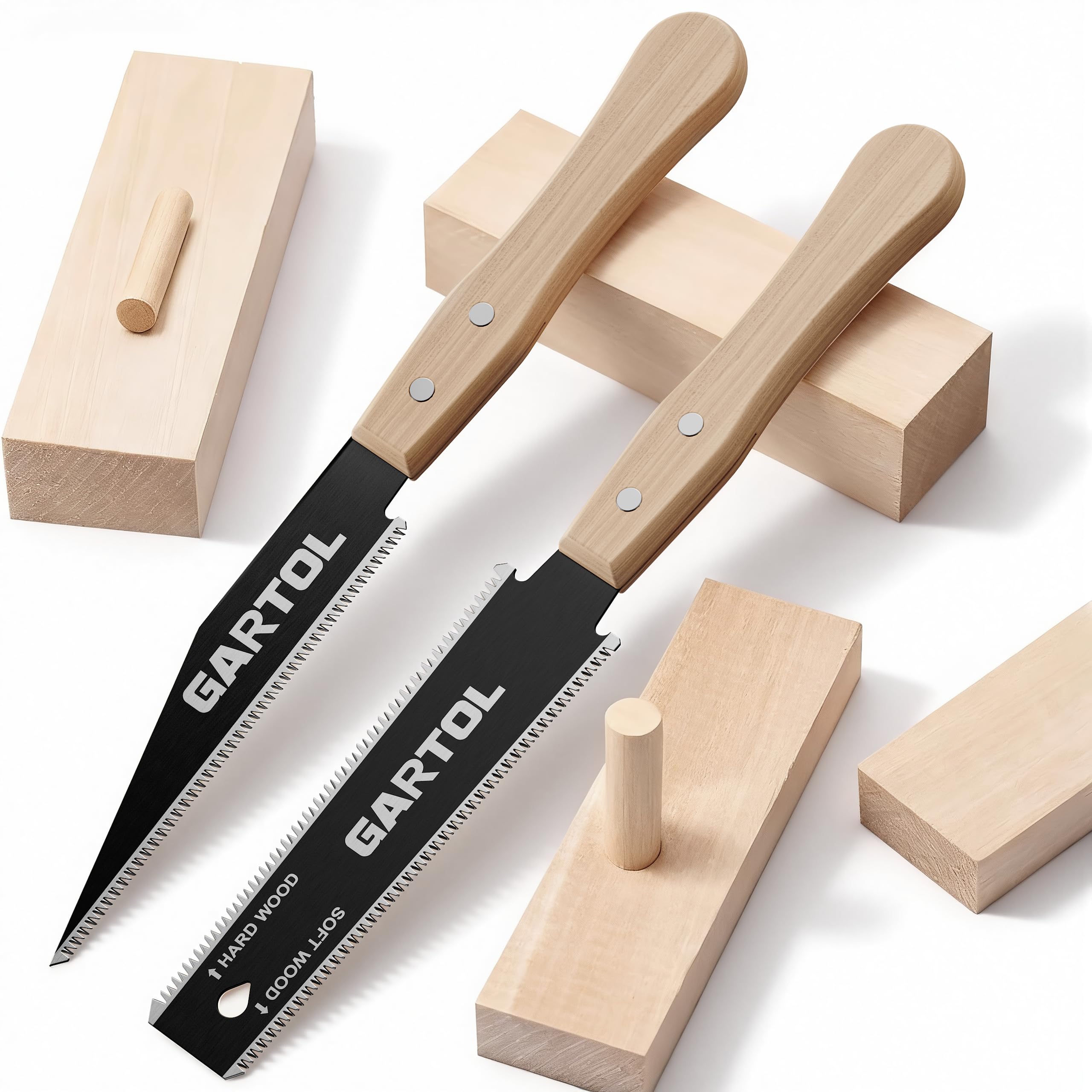
The GARTOL set bundles a 6-inch flush cut saw and a double-edged ryoba saw, giving beginners a ready pair for trim work and basic crosscuts or rips. Both blades arrive sharp and cut cleanly through softwood and hardwood stock, though the thin blades require a steady pull technique to avoid binding.

This set suits casual DIYers and budget-conscious makers who want two tools for the price of one. The catch: the screw holding each blade can work loose during use, so occasional tightening is needed, and blades are not replaceable once dull. Skip if you need professional-grade consistency or prefer a tool that stays assembled with no maintenance.

💡 Check the blade screw before each use and tighten finger-tight to prevent it from backing out mid-cut.

Pros

  • Two saws in one package for the price of a single budget saw
  • Sharp blades that produce clean cuts right out of the box
  • Covers both flush trimming and general cutting tasks

Cons

  • In a long session, the blade-retention screw can loosen and may need re-tightening
Our verdict

A practical starting set for weekend projects and small repairs — just keep a screwdriver nearby for the occasional tighten.

Check Latest Price
6

Best Compact Ryoba

Ruitool Ryoba 6"

93 /100
Craft Score Outstanding

Key details

TPI
14, 17
Blade Type
Ryoba
Blade Length
6 in
Handle Material
Beechwood
View on Amazon

The RUITOOL delivers solid cutting performance with its SK5 steel dual-edge blade at a budget price — a noticeable step down from the top pick's longer reach and replaceable blade. Its compact size makes it ideal for hobbyists working on small pieces, but anyone planning to cut across wider stock will find the 6-inch blade too short.

💡 Use the rip edge for grain cuts and the crosscut edge for trim; keep a longer saw handy for wider pieces.

Pros

  • Sharp, dual-edge blade that cuts accurately without excessive effort.
  • Great value for a double-edged saw at this price point.

Cons

  • 6-inch blade may be too small for cutting wide boards or thick stock
Our verdict

If your work fits within a 6-inch cut length, this saw offers impressive value. For larger cuts, consider the top pick with its longer blade.

Check Latest Price
7

Flush Trimming

Temple Flush Cut 6"

92 /100
Craft Score Outstanding

Key details

TPI
Blade Type
Flush Cut
Blade Length
6 in
Handle Material
Beechwood
View on Amazon

The Temple Flush Cut Saw pairs a beechwood handle and brass accents with a very sharp high-carbon steel blade that cuts dowels and tenons flush with the surface. Build quality is solid for the mid-range price, and the replaceable blade adds longevity. However, this is a niche tool — the thin, flexible blade is meant for light trim work, not general crosscutting or ripping. Anyone expecting a do-it-all saw will find it too limited; but for detail woodworking where clean flush cuts matter, it does its one job well.

Pros

  • Sharp edge leaves clean flush cuts on dowels and tenons.
  • Replaceable blade and brass components improve longevity.

Cons

  • The blade may feel too flexible for heavier trim or angled cuts.
Our verdict

Best for woodworkers who need a dedicated flush-cut saw for dowel trimming and won't push it beyond light detail work.

Check Latest Price
8

Tight Budget

Frocopo 6" Pull Saw

91 /100
Craft Score Outstanding

Key details

TPI
11, 17
Blade Type
Ryoba
Blade Length
6 in
Handle Material
Wood
View on Amazon

This saw delivers good cutting performance for its low price, with a sharp blade that leaves smooth cuts on small workpieces. However, some units arrive with a curved blade, making it a better fit as an inexpensive backup or for beginners rather than for precise joinery.

Pros

  • Sharp blade cuts cleanly on small wood pieces.
  • Budget-friendly price with solid cutting ability.

Cons

  • Blade can arrive curved, requiring return or replacement on some units.
Our verdict

For occasional light cuts or as a spare saw, this is a reasonable choice—but for precision work, consider a higher-tier option.

Check Latest Price
9

Ultra Budget

WFOEJEJ 6" Pull Saw

90 /100
Craft Score Outstanding

Key details

TPI
11, 17
Blade Type
Ryoba
Blade Length
6 in
Handle Material
Plastic
View on Amazon

This budget pull saw delivers clean cuts with its sharp SK5 blade, making it a practical choice for occasional DIY or a first introduction to Japanese pull saws. The plastic handle and overall build are less refined than higher-priced options, and the saw is not intended for heavy daily use — but at this price point, the tradeoff is entirely reasonable for light projects.

Pros

  • Sharp blade cuts cleanly with minimal effort.
  • Exceptional value for the cost

Cons

  • Plastic handle may feel less comfortable over extended use, and the saw is not built for heavy-duty durability.
Our verdict

A solid entry-level option for first-time pull saw users or one-off DIY tasks where budget matters more than a premium feel.

Check Latest Price

How to Choose

Blade Type: Ryoba vs. Dozuki vs. Flush Cut

Ryoba saws have a double-edged blade with rip teeth on one side and crosscut on the other, handling most joinery and general cuts. Dozuki saws have a stiff back and a single row of fine teeth, designed for dovetails and tenons where straight, clean cuts matter more than speed.

Flush cut saws use a flexible, thin blade that bends to cut a dowel or tenon flush with the surface without scratching adjacent wood. Choosing the wrong type means either fighting the blade or damaging your workpiece.

Blade Length

Longer blades (9-10 inches) cut faster through wide boards and make longer strokes, but they require more clearance and are harder to control in tight spaces. Shorter blades (5-6 inches) excel in confined areas like inside a drawer or for trimming, but they limit the depth of cut and can't handle thick stock.

For a first saw, a 9.5-inch ryoba offers the best compromise for furniture making. Only step down to 6 inches if you primarily work on small projects or need portability.

Teeth Per Inch (TPI)

TPI determines cut aggressiveness and finish. Lower TPI (6-10) removes material quickly but leaves a rougher edge – good for ripping or softwoods. Higher TPI (15-25) delivers a finer, smoother cut ideal for crosscuts, dovetails, and hardwoods.

A common trade-off: high-TPI blades cut slower and load with sawdust faster, while low-TPI blades can tear end grain in crosscuts. A double-sided ryoba solves this by offering two TPI options on one saw.

Replaceable Blade

Replaceable blades extend the saw's life – instead of discarding the whole tool when the teeth dull, you swap in a fresh blade. This is especially useful for saws used frequently or for cutting hardwoods that dull steel faster.

Non-replaceable blades are acceptable for light or occasional use, but once they lose sharpness, the saw is essentially disposable. If you plan to make dozens of cuts per week, invest in a model with replaceable blades.

Handle Material

Wood handles (beech, walnut) offer a classic feel and better grip with sweaty hands, but they can crack if exposed to moisture. Plastic or elastomer handles are more durable and often ergonomically shaped, though they may feel less premium.

The real difference is fit: a handle that matches your hand size reduces fatigue and improves control. Handles with a large tang (like the wingnut style) allow precise finger placement for delicate cuts.

Frequently Asked Questions