11 Best Band Saw of 2026: Match Your Cuts to the Right Machine

Which band saw cuts through the noise? From job-site metal cutting to benchtop woodworking, find the one that matches your material and budget without the blade frustration.

Many band saws arrive with blades that dull fast or wander off track, and marketing often overpromises how easy setup will be. The real divide isn't brand loyalty — it's whether you need a portable cordless saw for cutting conduit on a job site or a benchtop model for resawing hardwood in a home shop.

Your decision comes down to material, workspace, and battery ecosystem. If you cut steel rebar daily, a deep-cut corded or high-torque cordless matters more than weight. If you're a hobbyist making furniture curves, a stable benchtop with a 9-inch throat and easy tracking adjustments will save hours.

Battery system lock-in is the single biggest hidden cost — stick with a platform you already own, but don't ignore blade quality. Cheap saws often need aftermarket blades to perform, and that expense can erase the initial savings.

1

Best Overall

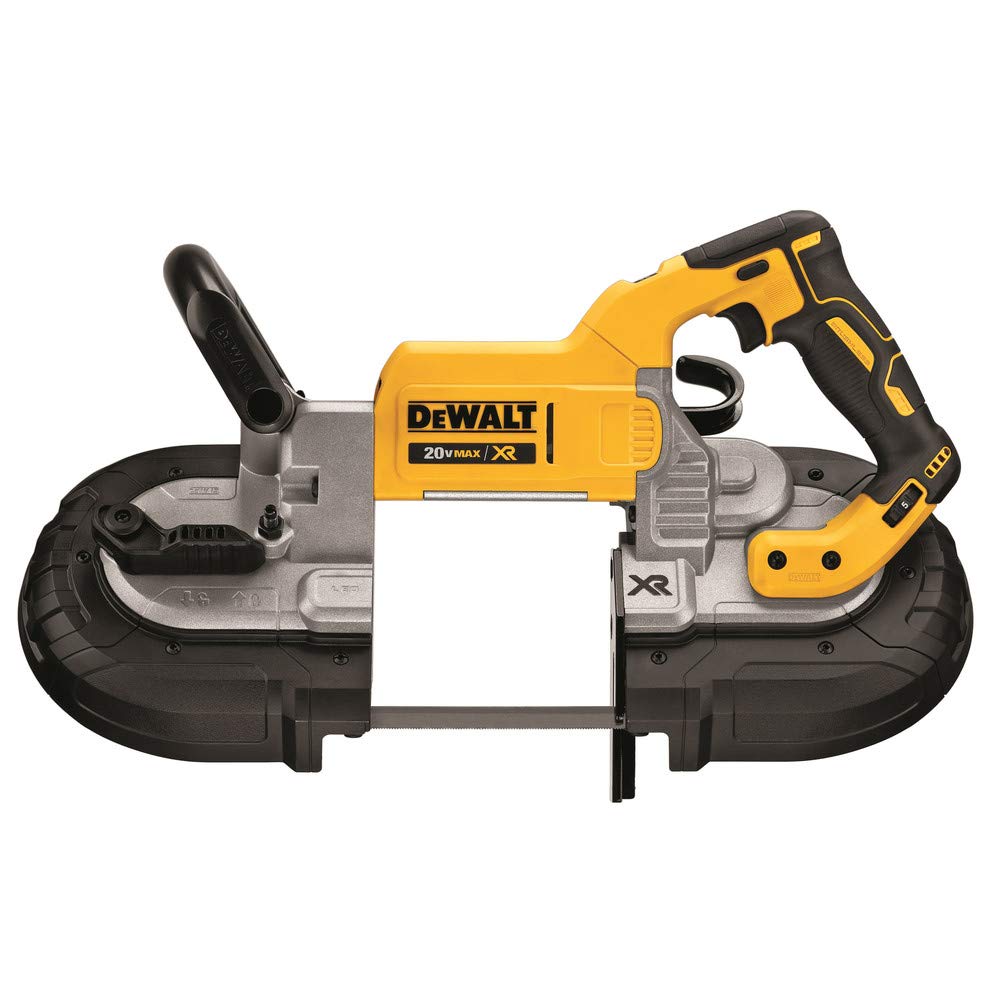
DEWALT DCS374B

95 /100
Craft Score Outstanding

Key details

Motor
Brushless
Weight
12.4 lbs
Power Source
Cordless 20V MAX
Cutting Capacity
5 inches
View on Amazon

The DCS374B delivers a 5-inch cutting depth with a brushless motor that keeps up with corded saws in metal fabrication and conduit work. An integrated LED illuminates the cut line, and the hang hook lets you park it between passes.

In practice, the saw cuts through steel, PVC, and copper cleanly without stalling. The brushless motor extends battery life enough to get through a full shift of light-to-moderate cutting, and blade changes are straightforward with the tool-free tension lever.

This saw is built for tradespeople already on the DEWALT 20V MAX platform who need a portable deep cut for metal work. At 12.4 pounds, it can be fatiguing for overhead or one-handed use — better suited for bench cutting or stable two-handed operation on the ground or sawhorse.

💡 Use the integrated hang hook to rest the saw between cuts — helps reduce arm fatigue during repetitive work.

Pros

  • Solid build that holds up to daily jobsite use and outlasts some corded models in cutting speed.
  • Clean cuts through steel, copper, PVC, and wood with minimal burr or tear-out.
  • Brushless motor paired with 20V MAX batteries delivers long runtime and strong torque for thick material.

Cons

  • At 12.4 pounds, the saw can be tiring for extended overhead work or one-handed operation in tight spaces.
Our verdict

For a professional who needs a cordless deep cut that keeps pace with corded models, the DCS374B is the most proven option in its class.

Check Latest Price
2

Best Corded Deep Cut

DEWALT DWM120K

94 /100
Craft Score Outstanding

Key details

Motor
Brushed (10A)
Weight
15 lbs
Power Source
Corded 10A
Cutting Capacity
5 inches
View on Amazon

The DWM120K’s 10-amp motor drives a 5-inch deep cut through steel with little effort, and the build quality matches what you’d expect from a shop-grade tool. The 15-pound weight and cord limit it to bench or floor use, but for metal fabricators and welders who don’t need jobsite mobility, this saw delivers cleaner, faster cuts than any cordless alternative in its price tier. The included blade can fatigue early at the weld joint — swapping it for a premium blade eliminates that concern and gets the most out of the cutting power.

💡 Replace the stock blade with a high-tension bimetal blade to avoid premature weld failures and extend cutting life.

Pros

  • Professional build that holds up in daily industrial use
  • Cuts through steel quickly and cleanly with minimal effort
  • Good value compared to repeated cutoff wheel expenses

Cons

  • At 15 pounds and corded, it’s not suited for overhead or jobsite work
  • Stock blade may split at the weld joint under heavy use
Our verdict

Best for metal fabricators with a dedicated shop space who want a reliable corded saw that won’t bog down on thick stock.

Check Latest Price
3

Best Cordless for Milwaukee System

Milwaukee 2729-20

93 /100
Craft Score Outstanding

Key details

Motor
FUEL Brushless
Weight
13.6 lbs
Power Source
Cordless 18V M18
Cutting Capacity
5 inches
View on Amazon

The Milwaukee 2729-20 delivers a 5-inch deep cut using the same M18 batteries found across the platform, with a brushless motor, brake, and LED for job-site visibility. The cutting performance matches corded models, handling solid steel rod and large pipe without bogging down. At 13.6 pounds it is heavier than some cordless deep-cut competitors, but the weight is a trade-off for its capacity and build durability.

💡 Using a support strap or resting the saw on the work piece can reduce fatigue during extended cutting.

Pros

  • Cuts through solid steel rod and large pipe with minimal effort.
  • Built to handle daily job-site abuse with a solid feel.
  • Saves time for Milwaukee battery users with professional-grade cordless power.

Cons

  • Overhead or prolonged use may be tiring due to the 13.6-pound weight.
Our verdict

For tradespeople already invested in Milwaukee’s M18 system, the 2729-20 is the natural choice for cordless deep-cut sawing – it delivers professional power and durability without requiring a new battery platform.

Check Latest Price
4

Best One-Handed Compact

DEWALT DCS377B

92 /100
Craft Score Outstanding

Key details

Motor
Brushless
Weight
7.7 lbs
Power Source
Cordless 20V MAX
Cutting Capacity
1-3/4 inches
View on Amazon

Weighing 7.7 lbs with a small footprint, the DCS377B fits where full-size deep-cut saws won't. It cuts conduit, small pipe, and thin metal cleanly, making it ideal for electricians and plumbers working overhead or in tight corners. However, the 1-3/4 inch cutting capacity means it won't handle stock over 1.5 inches, so this is not a general-purpose bandsaw.

💡 If you have larger hands, test the thumb trigger reach before committing to daily use.

Pros

  • Compact and lightweight for one-handed overhead cutting
  • Cuts metal, PVC, and wood effectively despite small size
  • Solid build quality with brushless motor and LED

Cons

  • Thumb trigger safety can feel awkward for larger hands
  • Maximum cutting capacity of 1-3/4 inches restricts it to small stock only
Our verdict

For electricians and plumbers who need a nimble saw for conduit and small pipe, this is the right tool — just respect its size limits.

Check Latest Price
5

Best Benchtop for Hobby Woodworkers

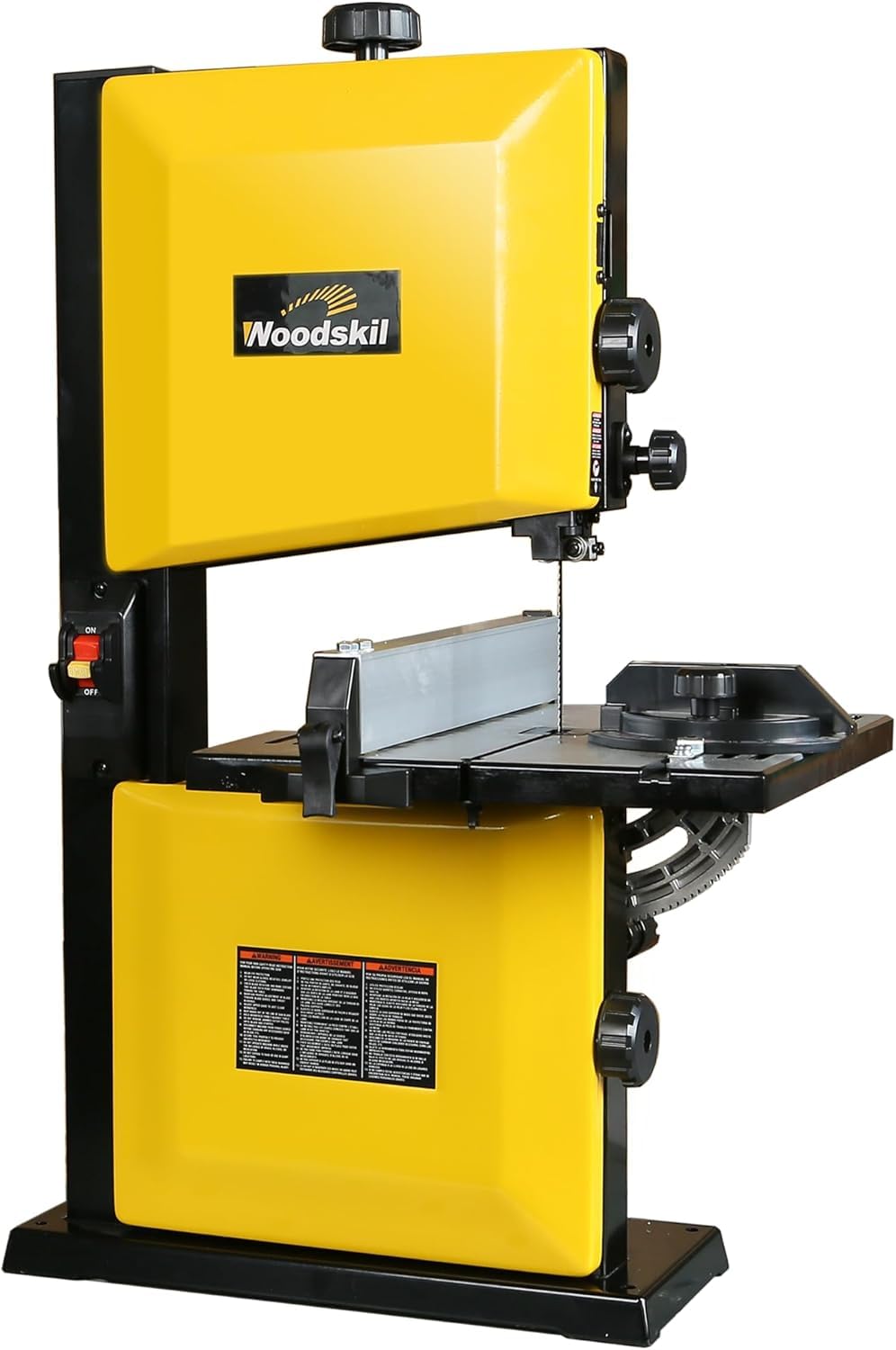
Woodskil BS0901

88 /100
Craft Score Excellent

Key details

Motor
1/2 HP
Weight
40 lbs
Power Source
Corded 3A
Cutting Capacity
9 in throat, 3.5 depth
View on Amazon

Woodskil's 9-inch benchtop delivers a 3.5-inch depth capacity and quiet operation at a budget-friendly price. Assembly is straightforward, and the saw cuts smoothly for typical hobby curves and straight lines. The tradeoff is a finicky table adjustment that makes square cuts a patience-testing exercise - this is a saw for casual users who can spend time on setup, not for those demanding immediate precision.

💡 Regularly check table alignment – it can drift after use.

Pros

  • Good value for a 9-inch benchtop bandsaw
  • Quiet operation with smooth cuts for basic woodworking
  • Easy assembly out of the box

Cons

  • Motor performance may vary, with occasional blade tracking issues after blade changes
Our verdict

Best suited for hobby woodworkers on a budget who value quiet operation and are willing to invest time in setup.

Check Latest Price
6

Best Budget Corded Portable

WEN 94396

91 /100
Craft Score Outstanding

Key details

Motor
Brushed
Weight
14.5 lbs
Power Source
Corded 10A
Cutting Capacity
5 inches
View on Amazon

The WEN 94396 delivers genuine metal-cutting capability for under $130 — steel cuts cleanly and the variable speed allows control over different thicknesses. The tradeoff is blade durability: tensioner parts and stock blades can wear out faster than on professional models. Weight lands around 14.5 lbs, noticeable during longer sessions but manageable for shop or farm tasks. This saw suits DIYers and hobbyists who need occasional cuts on auto repair, rebar, or farm equipment and accept that blade replacement is part of ownership.

💡 Replace the stock blade before heavy use to avoid premature breakage — aftermarket blades improve durability noticeably.

Pros

  • Exceptional value for light to medium metal cutting
  • Cuts steel accurately for its price range
  • Good build quality and easy to operate out of the box

Cons

  • Blade durability
  • Heavier than some similar saws, which can cause fatigue during extended use
Our verdict

A smart buy for budget-focused DIYers who need a metal-cutting band saw for occasional tasks and don't mind swapping blades a bit more often.

Check Latest Price
7

Light Conduit Work

Milwaukee M12 Compact

92 /100
Craft Score Outstanding

Key details

Motor
FUEL Brushless
Weight
6.0 lbs
Power Source
Cordless 12V M12
Cutting Capacity
2.5 in throat
View on Amazon

At 6.0 lbs and designed for one-handed use, this saw reduces fatigue during overhead conduit and small pipe work. However, the brushless motor stalls on materials thicker than 2-inch schedule 40, and the stock blade performs poorly – a replacement is needed for clean cuts. Best for M12 owners doing light-duty cuts, not for heavy metal.

Pros

  • Lightweight 6.0 lb design enables one-handed operation and reduces arm fatigue in overhead or tight spaces.
  • Cuts conduit and strut quickly with clean results on small-diameter stock.

Cons

  • Stalls on materials beyond 2-inch schedule 40 pipe, limiting heavier cutting tasks.
Our verdict

Best for M12 system users who need a lightweight option for conduit, strut, and small pipe – not for thick steel or deep cuts.

Check Latest Price
8

Resawing Hobbyists

WEN BA3962

86 /100
Craft Score Excellent

Key details

Motor
Brushed
Weight
~70 lbs
Power Source
Corded 3.5A
Cutting Capacity
10 in throat, 6 depth
View on Amazon

The WEN BA3962 delivers a generous 10-inch throat capacity and includes a stand at a mid-range price, making it a practical option for hobby woodworkers who need to handle larger curves on smaller projects. However, the guide bearings require frequent readjustment for accurate cuts, and the motor struggles with stock thicker than 3/4 inch at reasonable speeds — best suited for lighter work rather than heavy resawing.

Pros

  • 10-inch throat and included stand give hobbyists a budget-friendly entry point for larger cuts.
  • Capable of resawing boards up to 6 inches tall for small projects.

Cons

  • Guide bearings may require frequent readjustment to maintain cutting accuracy.
Our verdict

A reasonable choice for hobbyists who need the throat capacity on a budget and are comfortable with periodic tuning; not for those seeking consistent precision out of the box.

Check Latest Price
9

Ryobi System Users

RYOBI P590

92 /100
Craft Score Outstanding

Key details

Motor
Brushless
Weight
9.3 lbs
Power Source
Cordless 18V ONE+
Cutting Capacity
2.5 inches
View on Amazon

For Ryobi ONE+ users who need a compact band saw for occasional light-duty cuts on conduit, rebar, or PVC, this 9.3-pound tool delivers easy control and good performance at a budget-friendly price. Cutting capacity stops at 2.5 inches, and the blade has been noted to pop off during use, which limits it to lighter tasks rather than heavy professional work.

Pros

  • Lightweight at 9.3 lbs and easy to handle for overhead or tight-space cuts.
  • Performs well on conduit, rebar, and PVC for the price within the Ryobi system.

Cons

  • Blade may pop off during use, making it unsuitable for demanding or repetitive cutting.
Our verdict

Fits best as a spare or occasional-use saw for existing Ryobi battery owners; skip it if you need reliable all-day cutting.

Check Latest Price
10

Budget Benchtop

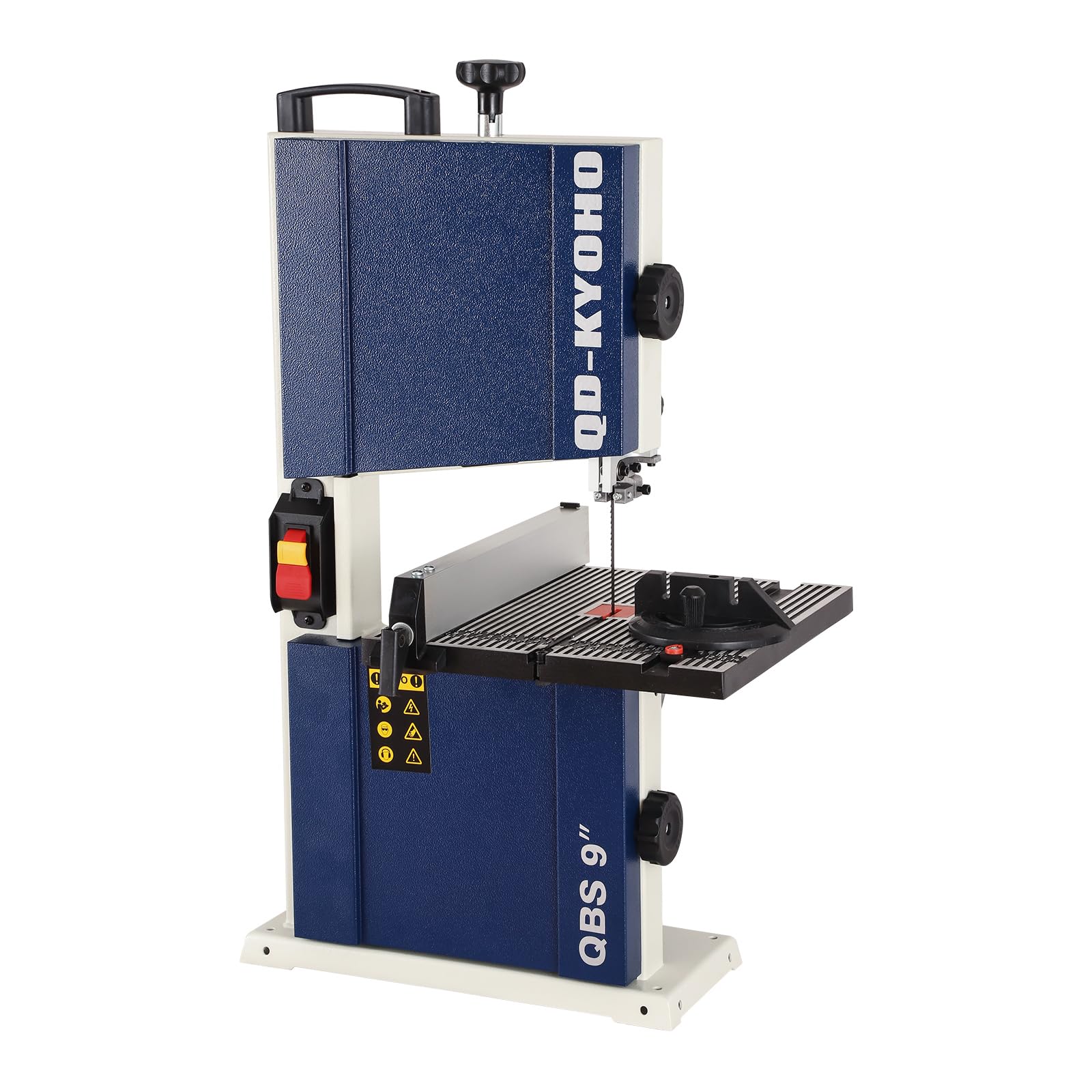
QD-KYOHO 9" Bandsaw

91 /100
Craft Score Outstanding

Key details

Motor
1/3 HP
Weight
~30 lbs
Power Source
Corded 2.5A
Cutting Capacity
9 in throat, 3.5 depth
View on Amazon

This saw offers a 9-inch throat and 3.5-inch depth at a mid-range price, with solid construction that suits hobby woodworking. The tradeoff comes in adjustability — the table can be finicky to get square, and occasional missing screws have been noted. Long-term durability is not yet proven, so it works best for buyers willing to accept some setup fuss for a budget-friendly benchtop.

Pros

  • Solid build quality for the price
  • Performs well on wood and soft metals

Cons

  • Limited adjustability
Our verdict

Best for hobbyists who need a compact bandsaw on a budget and are comfortable with occasional fiddling.

Check Latest Price
11

Occasional Metal Cutting

VEVOR 5" Band Saw

86 /100
Craft Score Excellent

Key details

Motor
1100W
Weight
28.7 lbs
Power Source
Corded 110V 10A
Cutting Capacity
5 inches
View on Amazon

This VEVOR band saw offers a 5-inch cutting capacity, variable speed, and a removable stand with swivel base for angled cuts at a budget-friendly price. Cutting performance is solid on steel, aluminum, and PVC, making it a tempting option for occasional metalwork. However, blade tracking can slip off the wheels during use, and the clamp may crack under load — durability is a gamble. It suits DIYers who are comfortable tinkering and don't need daily reliability.

Pros

  • Solid cutting performance on metal, wood, and PVC at a low cost
  • Includes a removable stand with swivel base for angled cuts

Cons

  • Blade tracking can slip off the wheels during extended use
Our verdict

Best for budget-conscious DIYers who need an occasional metal-cutting band saw and can accept setup adjustments.

Check Latest Price

How to Choose

Cutting Capacity

Cutting capacity is the maximum thickness (depth) and width (throat) the saw can handle. For portable saws, depth is the key number — a 5-inch deep cut can slice through 4-inch steel pipe or a stack of 2x4s. Benchtop saws add throat width, which determines how far from the blade's edge you can cut, critical for curved cuts in large boards.

The hidden trade-off: deeper cut capacity adds weight and bulk. A 5-inch portable saw weighs 12-15 lbs, while a compact 1.75-inch model is under 8 lbs. If you only cut conduit and small pipe, a compact saw saves your arm fatigue. If you regularly cut 4-inch steel or thick hardwood, the extra weight is a necessary trade.

Power Source

Corded saws offer unlimited runtime and consistent power — ideal for shop use where an outlet is always nearby. Cordless saws trade that for portability, but you're locked into a battery platform. Once you invest in two or three batteries and a charger, switching brands becomes expensive.

Battery voltage matters: 12V saws (like Milwaukee M12) are lightweight but stall on thick steel. 18V/20V saws provide enough torque for most metal work. A 10-amp corded motor delivers roughly comparable power to a brushless 20V saw, but without the battery weight penalty.

Weight and Portability

Weight directly affects how long you can use the saw without fatigue. Under 8 lbs is comfortable for one-handed overhead work. 8-12 lbs is manageable for most jobsite tasks. Over 12 lbs is tiring for prolonged use but necessary for deep cuts.

Portability isn't just weight — it's balance. A well-balanced 12 lb saw with a top handle can feel lighter than a poorly balanced 10 lb model. Look for saws with hang hooks or integrated stands if you move between workstations.

Blade Quality and Ease of Change

Blade quality is the most overlooked factor. Budget saws often ship with blades that dull quickly or snap at the weld joint. A good aftermarket blade (like Lenox or Bosch) can transform a cheap saw's performance but adds $15-25 to your upfront cost.

Tool-less blade changes are a major convenience, especially on cordless models. Look for a blade tension knob and guide adjustment that can be turned without wrenches. Some lower-end benchtop saws require special tools for basic tracking adjustments, which adds frustration.

Adjustability and Tracking Accuracy

Adjustability refers to how easily you can set blade tension, track, and table squareness. Benchtop saws often have finicky guide bearings that drift over time, requiring periodic re-alignment. Portable saws have simpler adjustment systems but less tolerance for error.

The consequence: a saw that won't track straight produces wandering cuts, wasted material, and increased blade wear. If you need precise cuts, budget an extra 30 minutes for initial setup and invest in a square and feeler gauge to verify alignment.

Frequently Asked Questions