10 Best Miter Saw 2026: Avoid Overspending on a 12-Inch You Don't Need

Find the miter saw that matches your actual cutting needs — from trim to framing — without paying for features you won't use.

The most common mistake when buying a miter saw is choosing a 12-inch sliding model for work that a 10-inch non-sliding saw could handle just as well. That extra size adds weight, cost, and workshop space without improving cut quality for trim and baseboard.

This guide matches each saw to the type of work it does best — cordless for jobsite trim, compact sliders for crown molding, and heavy-duty 12-inch for framing. The right choice depends on material size and how often you move the saw.

Focus on the trade-off between portability and capacity. A saw that fits your projects is better than one that looks impressive on paper.

1

Best Overall

DEWALT DWS779 12" Sliding

96 /100
Craft Score Outstanding

Key details

Bevel
Double
Motor
15A, 3800 RPM
Sliding
Yes
Blade Size
12 inches
View on Amazon

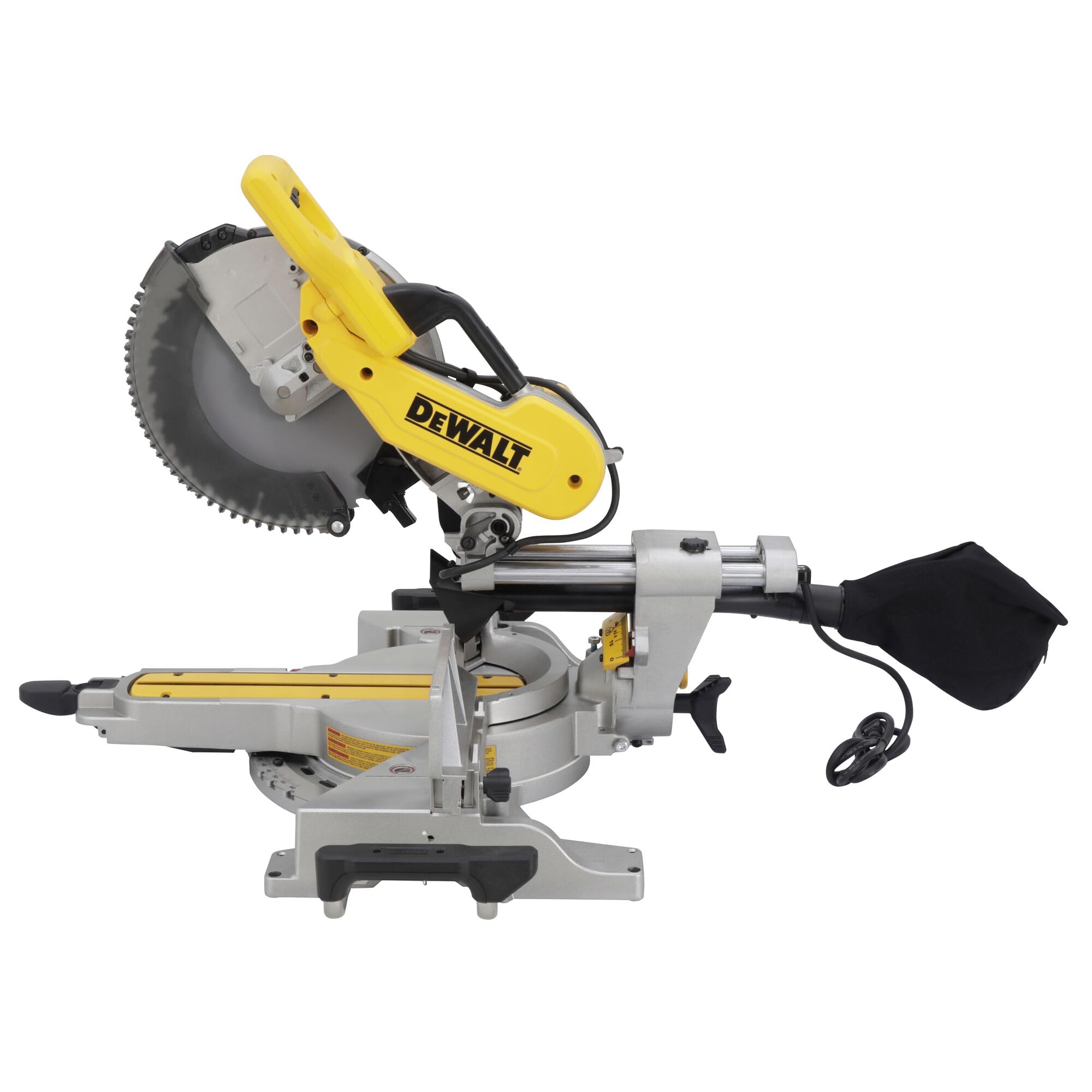
The DWS779's 12-inch blade and 15A motor cut through dimensional lumber and hardwoods with ease, handling crosscuts up to 2x14 at 90 degrees. The double bevel tilts 49 degrees left and right, simplifying crown molding and compound miters. Build quality is solid, and the saw produces accurate cuts without extensive calibration. The 3800 RPM motor maintains consistent power through dense materials, and the sliding rails operate smoothly with a secure lock for repeatable setups. Consistent cut quality across many projects is a hallmark of this saw.

This saw is best suited for professional carpenters and serious DIYers who need large crosscut capacity. At over 67 pounds, it is best paired with a rolling stand for mobility. The plastic rear blade guard can crack under stress in some cases, so inspect it during setup. For buyers who need a lightweight saw for frequent jobsite transport, a compact 10-inch model would be a better fit. For those who can accommodate its size, the DWS779 delivers flagship features at a mid-range price.

💡 A rolling stand not only aids mobility but also provides a stable platform for accurate cuts.

Pros

  • Solid build quality ensures consistent cuts over time.
  • Delivers features found on $600+ saws at a mid-range price.
  • Accurate and clean cuts right out of the box with minimal setup.

Cons

No notable drawbacks to flag.

Our verdict

The DWS779 is the go-to 12-inch sliding saw for anyone who prioritizes capacity and value over portability; the weight and guard concerns are manageable with a stand and careful inspection.

Check Latest Price
2

Best Value Dual Bevel Sliding

SKIL MS6305-00 10" Dual Sliding

93 /100
Craft Score Outstanding

Key details

Bevel
Dual
Motor
15A, 4800 RPM
Sliding
Yes
Blade Size
10 inches
View on Amazon

For the price, the SKIL packs a dual bevel sliding setup and a decent LED shadow line that cuts cleanly across 2x12 stock. The tradeoff shows in the adjustments — bevel fine-tuning can be fussy, and the sliding rails may feel stiff until they wear in. That matters less for home crown molding and baseboard projects where precision is good out of the box, but it would frustrate someone making repetitive angled cuts all day.

💡 Apply a spray lubricant to the rails after a few cuts — the stiffness eases noticeably with use.

Pros

  • Dual bevel and sliding capability at a budget price
  • Cut quality is reliable, helped by a bright LED shadow line that shows the cut path clearly.
  • At roughly 30 pounds, easy to carry to job sites or store between projects.

Cons

  • Bevel adjustments require patience for fine positioning
  • Sliding action can feel stiff initially; a light lubricant helps, but it's not buttery smooth out of the box.
Our verdict

Best pick for DIYers who want sliding and dual bevel without spending premium money — just expect a little break-in on the mechanics.

Check Latest Price
3

Best Premium Glide Saw

BOSCH CM10GD 10" Glide

92 /100
Craft Score Outstanding

Key details

Bevel
Dual
Motor
15A, 4800 RPM
Sliding
Yes
Blade Size
10 inches
View on Amazon

Bosch's axial-glide system replaces traditional rails, delivering butter-smooth sliding action with minimal bench depth — a clear advantage over bulkier rail-type sliders. The saw cuts cleanly out of the box, with accuracy that suits trim and light lumber work.

Best for professional finish carpenters who make hundreds of cuts daily and value ergonomic smoothness. The premium price and possible alignment adjustments during setup are acceptable tradeoffs for those who need a compact, precise slider that saves workspace.

💡 After assembly, check blade-to-fence squareness and adjust per manual; minor tweaks ensure consistent results.

Pros

  • Butter-smooth glide with minimal vibration
  • Compact footprint saves bench space compared to rail-type sliders
  • Accuracy is strong out of the box, often requiring no initial adjustments

Cons

  • Premium price for a 10-inch saw; occasional users may not recoup the cost
  • Achieving perfect squareness can require careful recalibration
Our verdict

A top-tier glide saw for pros who value smoothness and space — but only if the premium and alignment quirks fit your workflow.

Check Latest Price
4

Best Cordless for Trim Jobs

DEWALT DCS361B 7-1/4" Cordless

96 /100
Craft Score Outstanding

Key details

Bevel
Single
Motor
20V MAX, 4500 RPM
Sliding
No
Blade Size
7-1/4 inches
View on Amazon

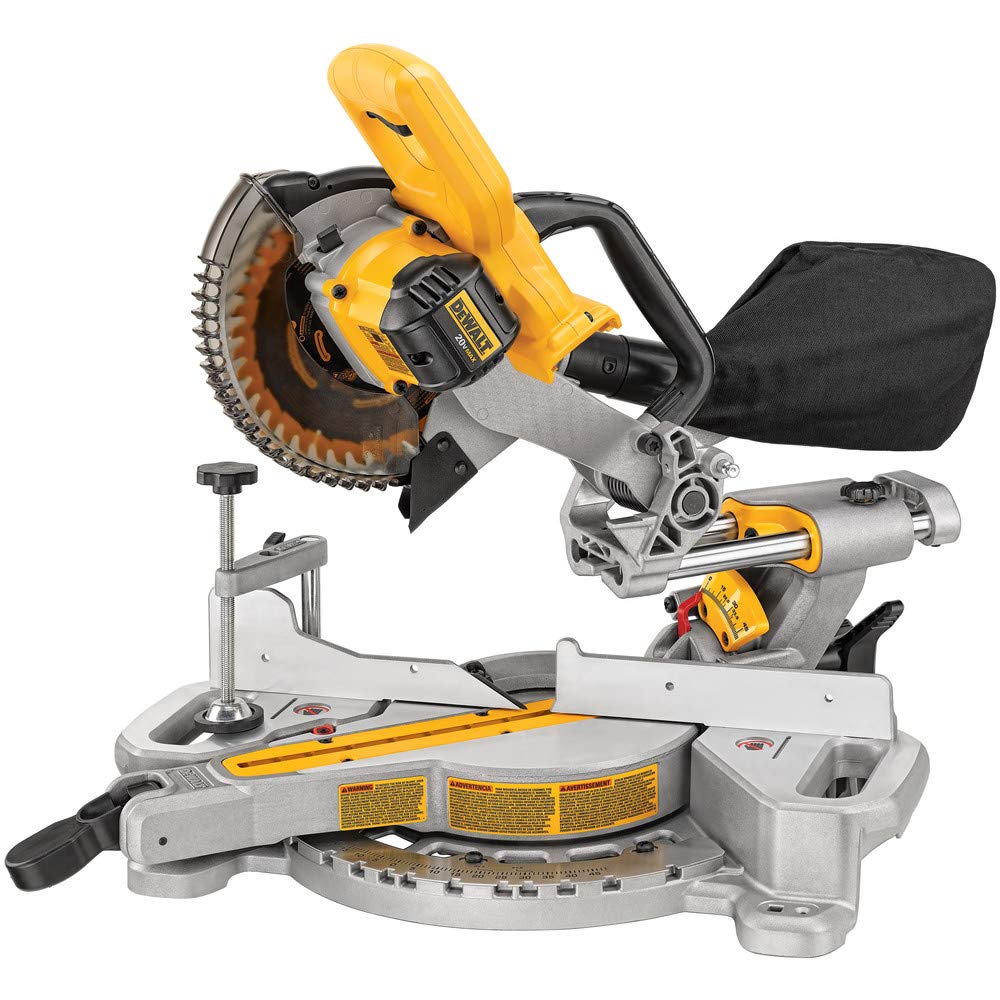
The DCS361B weighs just 30 pounds — light enough to carry up stairs without a dolly — yet delivers enough torque to cut 2x6 at 90 degrees. That makes it the go-to cordless saw for finish carpenters who need to move quickly between cut stations.

This is a trim saw, not a framing saw. It excels on baseboard, crown, and small dimensional lumber, but battery power fades on sustained deep cuts. Plan on using 5Ah or larger packs (sold separately). Without batteries, the mid-range price is fair for DEWALT build quality. If you need 12-inch capacity and sliding action, the corded DWS779 is a better fit.

💡 Keep a spare 5Ah battery charged and swap when cutting heavy material — the saw accepts any DEWALT 20V pack.

Pros

  • Weighs only 30 lbs
  • Cuts 2x6 dimensional lumber and trim with consistent power on 20V batteries.
  • With 5Ah batteries, runs through a full day of trim work without recharging.

Cons

  • Battery life drops noticeably when cutting thick or dense lumber
Our verdict

For finish carpenters who already own DEWALT 20V batteries, this is the most portable cordless miter saw that still handles real cuts. If you need to cut 4x4s all day, stick with a corded slider.

Check Latest Price
5

Best 10-Inch Sliding Premium

Makita LS1019L 10" Sliding

90 /100
Craft Score Outstanding

Key details

Bevel
Dual
Motor
15A, 3200 RPM
Sliding
Yes
Blade Size
10 inches
View on Amazon

The Makita LS1019L pairs a smooth linear ball-bearing slide with a built-in laser guide, delivering precise miter and bevel cuts in a footprint that fits tight shop spaces. The 15A motor starts and stops without lurching, and vibration stays minimal even during heavier cuts. That refinement stands out against bulkier 12-inch sliders, though the 10-inch blade limits you to material up to about 2x10 at 90 degrees.

This saw suits professional finish carpenters who already favor Makita and need clean crosscuts on trim, crown molding, and furniture parts. The tradeoff: some units arrive with slide rails out of parallel, requiring adjustment, and the premium price sits above many 12-inch competitors. For buyers who don't need the extra width or who prefer a larger review-backed option, the DEWALT DWS779 offers more capacity at a similar cost.

💡 Check slide rail parallelism before first use; the adjustment screws are accessible and most misalignments can be corrected with care.

Pros

  • Smooth sliding action with linear ball bearings reduces bench depth needed
  • Accurate laser guide and effective dust collection for clean work
  • Start/stop is smooth with minimal vibration during operation

Cons

  • Slide rail alignment can be inconsistent out of the box, requiring user adjustment
  • Premium price for a 10-inch saw when larger 12-inch options exist at similar cost
Our verdict

The best choice for Makita loyalists who prioritize a compact sliding mechanism and laser precision — but the high price and occasional rail alignment issue make it a specialized pick rather than a broad recommendation.

Check Latest Price
6

Best Budget Basic

Metabo HPT C10FCG2 10" Basic

90 /100
Craft Score Outstanding

Key details

Bevel
Single
Motor
15A, 5000 RPM
Sliding
No
Blade Size
10 inches
View on Amazon

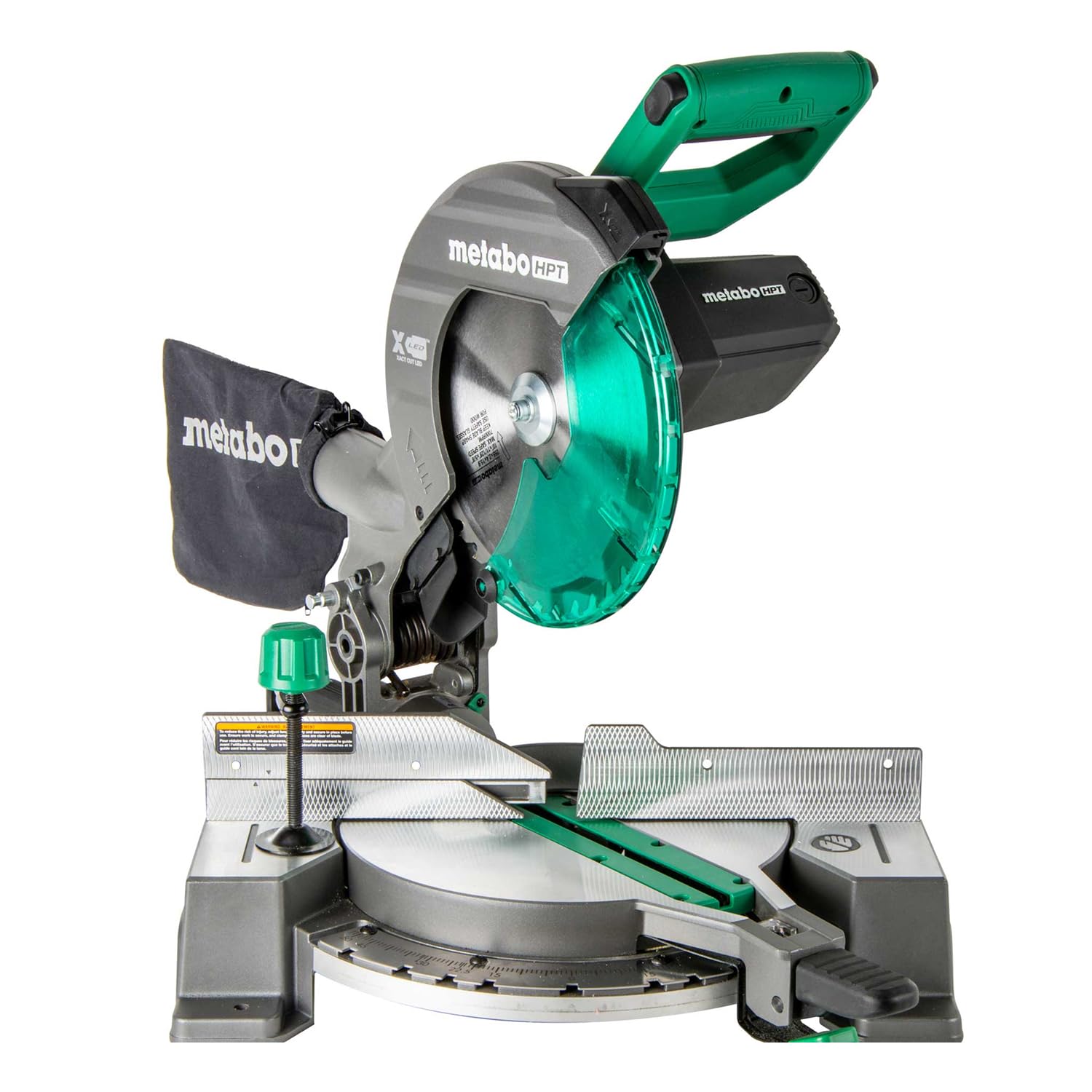
The Metabo HPT C10FCG2 delivers a shadow line cut indicator and a 5-year warranty at a price that undercuts most 10-inch saws. Unlike the top-pick DEWALT sliding saw, this is a non-sliding single bevel model, keeping weight under 25 lbs for easy portability. DIYers who need occasional crosscuts on trim and small lumber will find it capable, but quality control can vary — some units arrive with blade guard or fence misalignment, making it better suited for occasional use than daily jobsite work.

Pros

  • Lightweight 24.2 lb design makes it easy to move around the garage or jobsite.
  • Shadow line system provides clear cut indication without needing a laser.

Cons

  • Blade guard and fence alignment can be inconsistent out of the box, so check before starting a project.
Our verdict

A solid entry-level saw for light DIY tasks, but not the go-to for high-volume or daily cutting.

Check Latest Price
7

Best Budget Cordless

CRAFTSMAN CMCS714M1 7-1/4" Cordless

92 /100
Craft Score Outstanding

Key details

Bevel
Single
Motor
20V MAX, 3800 RPM
Sliding
Yes
Blade Size
7-1/4 inches
View on Amazon

This saw brings cordless sliding capability to home workshops at a price that includes a battery and charger. For crown molding, baseboards, and 2x4 framing it keeps up well, but pushing into 2x6 pressure-treated or thick hardwood will reveal the 20V motor's limits with the included 4.0Ah pack. Best suited for DIYers who want portability without investing in a separate battery platform.

💡 Consider pairing with a 5.0Ah or larger battery for extended runtime on longer cuts.

Pros

  • Lightweight and portable for jobsite use without a cord.
  • Good battery life for trim and light cutting tasks.

Cons

  • Underpowered for thick hardwoods or repeated heavy cuts
Our verdict

If your projects stay in the light-to-moderate range and you value cordless convenience, this Craftsman delivers a lot for the price.

Check Latest Price
8

Multi-Material DIY

Evolution R185SMS+ 7-1/4" Multi

91 /100
Craft Score Outstanding

Key details

Bevel
Single
Motor
1500W (15A)
Sliding
Yes
Blade Size
7-1/4 inches
View on Amazon

This sliding miter saw handles wood, metal, and plastic without needing a blade swap, making it a practical choice for DIYers who occasionally cut both lumber and steel. At a budget-friendly price, it offers sliding capability and multi-material versatility rarely seen in this segment. However, long-term durability under frequent heavy use is unconfirmed – this saw best serves occasional projects where material variety matters more than daily precision.

Pros

  • Cuts multiple materials without changing blades
  • Budget-friendly sliding saw with metal-cutting ability at a low price.

Cons

  • Durability under frequent heavy use is unconfirmed
Our verdict

A good fit if you need one saw for mixed materials on occasional projects, but not for daily professional use where long-term reliability is critical.

Check Latest Price
9

Absolute Beginners

MarvTool JS-1017C3 10" Basic

87 /100
Craft Score Excellent

Key details

Bevel
Single
Motor
15A, 5000 RPM
Sliding
No
Blade Size
10 inches
View on Amazon

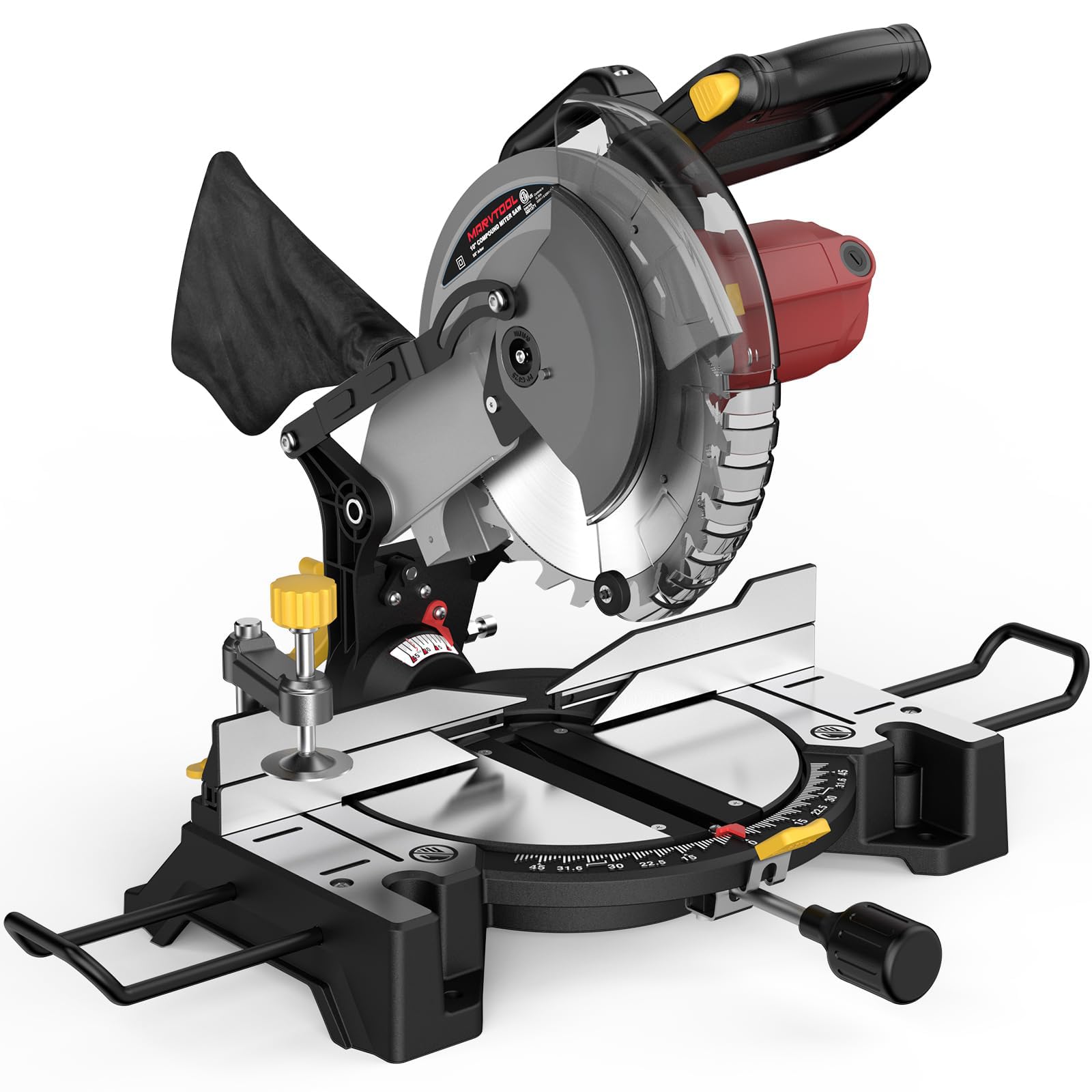
At a budget-friendly price, the MarvTool 10-inch compound miter saw gets beginners started with basic crosscuts and miters. Its lightweight frame and simple assembly help you set up quickly. However, some units have shown flimsy parts (depth stop, fence, handle) that can give out early, and long-term durability under regular use is not assured. This saw fits absolute beginners who need an infrequent tool for small craft projects — not for consistent woodworking or construction work.

Pros

  • Very low entry price for a functional 10-inch miter saw
  • Lightweight build simplifies setup and portability

Cons

  • Some units may experience early breakage of plastic parts (depth stop, fence, handle) under regular use
Our verdict

Consider this saw only if your budget is extremely tight and you need a tool for rare, light craft cuts — not for ongoing projects or precision work.

Check Latest Price
10

Simple, Durable

Makita LS1040 10" Basic

92 /100
Craft Score Outstanding

Key details

Bevel
Single
Motor
15A, 4600 RPM
Sliding
No
Blade Size
10 inches
View on Amazon

The Makita LS1040 is a simple, durable 10-inch compound miter saw that delivers accurate cuts right out of the box. Its lightweight 27-pound design makes it easy to move around the jobsite. However, it lacks sliding and double bevel, and the fence may need recalibration over time — limitations that push it behind similarly priced sliding saws for wider crosscut work.

Pros

  • Durable construction from Makita that holds up over years of use
  • Accurate cuts with minimal setup required

Cons

  • Fence may go out of square over extended use, needing occasional recalibration
Our verdict

Best for buyers who want a basic, no-frills 10-inch miter saw from a durable brand, as long as they don't need sliding or double bevel and are willing to check fence squareness periodically.

Check Latest Price

How to Choose

Blade Size

Blade size determines cutting depth and capacity. A 10-inch blade cuts up to 2x8 lumber at 90 degrees, while a 12-inch reaches 2x14. The trade-off: 12-inch blades cost more, produce rougher cuts with a slower blade speed, and add significant weight to the saw.

For most finish carpentry and light framing, a 10-inch saw is sufficient. Choose 12-inch only if you regularly cut stock wider than 2x8 or need deeper vertical cuts in thick crown molding.

Sliding vs. Non-Sliding

Sliding saws use rails or a glide mechanism to pull the blade forward, doubling crosscut capacity compared to a non-sliding saw of the same blade size. A 10-inch slider can cut 2x12 lumber, while a non-sliding 10-inch stops at 2x6.

The hidden trade-off: sliding mechanisms introduce complexity, cost, and potential alignment drift. They also require significant bench depth (30+ inches) or a dedicated stand. Non-sliding saws are lighter, more rigid, and require less maintenance.

Bevel Type

Single bevel tilts left only for angled cuts; double bevel tilts both directions. For crown molding, double bevel saves time because you don't flip the workpiece between cuts. For most other work, single bevel is adequate.

The extra mechanism of a double bevel adds weight and cost. Many pro finish carpenters use single bevel saws with a simple technique (flipping the miter) to handle crown work. Don't pay for double bevel unless you cut crown frequently.

Motor Power

Nearly all corded miter saws use a 15-amp motor, which delivers sufficient power for 12-inch blades through hardwoods. The key difference is RPM: higher speeds (4800-5000 RPM) produce cleaner cuts in softwoods and composites, while lower speeds (3800 RPM) provide more torque for thick hardwoods.

Cordless models vary significantly. A 20V max system with 4Ah or larger batteries matches 15A corded performance for most trim work, but sustained heavy cuts drain batteries quickly. Plan for spare batteries if you push a cordless saw hard.

Dust Collection & Weight

Dust collection bags on miter saws capture at best 30% of debris. For acceptable dust control on indoor jobs, you need a shop vacuum connected to the dust port. The saw's weight directly affects portability: 12-inch sliders often exceed 65 pounds, making a rolling stand necessary for frequent moves.

Lighter saws (under 30 lbs) are easy to carry but may vibrate more on thin stock. Balance your need for stability against how often you'll transport the saw.

Frequently Asked Questions